Why Do Patients With Kidney Disease Need A High-quality Low-protein Diet?
Mar 28, 2022
Contact: Audrey Hu Whatsapp/hp: 0086 13880143964 Email: audrey.hu@wecistanche.com
Patients with chronic kidney disease, usually hear that there are many basic principles of diet to pay attention to when following the doctor's guidance, such as:
1. It is not recommended to eat beans directly, but it is recommended to limit the consumption of soy products.
2. Patients with hyperuricemia need to control the intake of purine.
3. Foods high in phosphorus should be restricted.
4. Patients with edema, hypertension, and oliguria should limit salt to less than 3 grams per day.
5. Patients with edema should also strictly control the intake of water.
6. High-quality low-protein diet.
Everyone should understand these general probabilities, but for low-protein diets, some patients will always ask, doctor, what is a low-protein diet? What is high-quality low-protein?

cistanche tubolosa extract: treating chronic kidney disease
1. Why do patients with kidney disease need a low-protein diet?
A high-protein diet will produce more "wastes" in the body, and these will be excreted through the "detoxifier" of the kidneys, which will increase the burden on the kidneys, but the human body needs protein, otherwise, it will lack nutrients and be prone to complications. Other diseases, so we have to create a balance - meeting our needs and avoiding malnutrition, and not overproducing waste, which can slow the rate of decline in kidney function.
Then a high-quality low-protein diet is what kidney disease patients need most!

what is cistanche: cistanche stem
2. Which types of kidney disease patients need to eat a high-quality low-protein diet?
Not all people with chronic kidney disease require a high-quality low-protein diet. For patients with glomerular filtration rate less than 60ml/min, that is, chronic kidney disease stage 3-5, renal insufficiency, renal failure, and not on dialysis, a high-quality low-protein diet is required.

cistanche extract
3. What are high-quality protein diets?
The quality of protein is determined by the type and content of amino acids in the composition of the protein. Generally speaking, high-quality protein has the following three characteristics:
* Easily digested and absorbed by the human body.
* After being absorbed by the human body, it has a high degree of utilization.
* It is rich in essential amino acids, with a complete range and an appropriate proportion.
At the same time, the utilization rate of amino acids in a protein is high, and the ratio of various amino acids is in line with the ratio of amino acids in the human protein. Many animal proteins, such as those contained in fish, chicken, milk, and eggs, are high-quality proteins. Eating these high-quality proteins can reduce the excretion of proteinuria in patients with kidney disease, reduce the state of glomerular hyperfiltration, and thus reduce the damage of kidney disease.
Daily protein intake: standard bodyweight × daily protein intake per kilogram of body weight = daily protein intake. For example, the daily protein intake of a patient weighing 65Kg is 65×0.6=39g. It should be noted that high-quality protein should account for more than 50%.
* Chronic kidney disease (GFR<80ml/min) daily protein intake: 0.6g/Kg (of which high-quality protein is 0.4g/Kg)
* Nephrotic syndrome, massive proteinuria, edema, normal renal function (GFR>80ml/min), daily protein intake: 1.0g/Kg (of which high-quality protein is 0.6g/Kg)
* Renal insufficiency azotemia period (GFR25-50ml/min, 130μmol/L<serum creatinine≤450μmol/L) daily protein intake: 0.5g/Kg (of which high-quality protein is 0.3g/Kg)
* Renal insufficiency and renal failure (GFR10-20ml/min, 450μmol/L<serum creatinine≤707μmol/L) daily protein intake: 0.5g/Kg (of which high-quality protein is 0.3g/Kg)
* Renal insufficiency and uremic stage (GFR<10ml/min, serum creatinine>707μmol/L) non-dialysis patients Daily protein intake: 0.5g/Kg (of which high-quality protein is 0.3g/Kg)
* Renal insufficiency and uremic stage (GFR<10ml/min, serum creatinine>707μmol/L) enhanced dialysis twice a week or once every other day. Daily protein intake: 1.0g/Kg (of which high-quality protein is 0.6g/kg) Kg)

cistanche reviews: improve kidney function
4. Cistanche can treat Kidney disease
Cistanche is a well-known tonic herb that can nourish and protect the kidneys. In traditional Chinese medicine theory, Cistanche is the best herb for kidneys. Cistanche is rich in echinacoside, acteoside, and flavonoids. These effective ingredients in Cistanche can reduce kidney cell apoptosis and increase kidney cell proliferation. Therefore, Cistanche is a natural kidney supplement.
Note: The above is for reference only, patients should decide according to their own conditions.
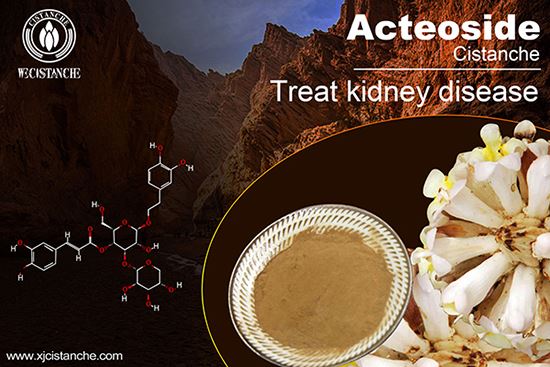
cistanche extract powder: treating kidney diseases