Why Does The Use Of Long-acting ESAs in CKD Patients Reduce The Risk Of Heart Disease?
Apr 19, 2023
Kidney anemia is an important risk factor for cardiovascular events in chronic kidney disease (CKD), and cardiovascular events are the number one cause of death in CKD patients. Previous studies have found that Kidney anemia may be associated with elevated left ventricular mass index (LVMI). So, is improving Kidney anemia beneficial to reduce LVMI and thereby reduce the risk of cardiovascular events in CKD patients?
Click to cistanche tubulosa dosage for chronic kidney disease
On March 25, 2023, BMC Nephrology published a study from Japan, which found that the use of long-acting human erythropoietin (L-ESAs) before and during dialysis can improve patients' hemoglobin levels, and more importantly Yes, LVMI can be reduced or maintained, and the risk of left ventricular hypertrophy can be reduced. This finding is expected to further reduce the risk of cardiovascular events in CKD patients.
Methods
This is a retrospective longitudinal cohort study to investigate whether L-ESAs can reduce the risk of LVMI in patients with Kidney anemia. The study's inclusion criteria were: ① CKD patients expected to receive hemodialysis in the near future; ② no congestive heart failure, valvular disease, left ventricular systolic dysfunction, arrhythmia, or abnormal ECG. The research time was from July 2015 to July 2018, and all patients received hemodialysis successively after enrollment.

The primary endpoint of the study was the relationship between mean hemoglobin and LVMI. The mean hemoglobin level in this study was defined as the average of the hemoglobin levels in 3 laboratory tests, before the start of dialysis (baseline), 3 months, and 6 months after dialysis. Notably, none of the patients were taking iron supplements before receiving hemodialysis treatment.
Results
A total of 32 patients were enrolled in the study, of which 17 received recombinant epoetin β-PEG therapy and 15 received epoetin beta therapy. The researchers divided the patients into three groups according to the average hemoglobin level of the patients, namely, hemoglobin <10.1g/dL (n = 5); hemoglobin between 10.1-11.0g/dL (n = 6), and hemoglobin n = 6). The changes in LVMI of these three groups of patients are shown in Figure 1.

Fig.1 Curve of LVMI changes in patients
Univariate regression analysis showed that LVMI was significantly associated with age (P = 0.024), gender (P = 0.027), hemoglobin at six months (P = 0.006), transferrin saturation (P = 0.040), brain natriuretic peptide ( P = 0.001) and mean hemoglobin (P = 0.040) were both significantly correlated.
However, in the multivariate current regression analysis, the β value was always ≥0.4, suggesting that the relationship between baseline Hb and LVMI was not significant. This indicates that post-dose hemoglobin and LVMI levels are independent of initial LVMI and hemoglobin levels. However, L-ESAs can significantly increase the hemoglobin level of patients (Figure 2), suggesting that the use of L-ESAs before dialysis can help reduce LVMI.
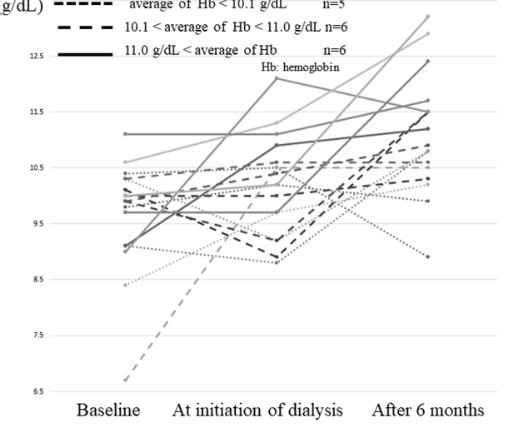
Figure 2 Curves of changes in hemoglobin levels
Discussion
Kidney anemia was significantly associated with cardiovascular events, and in predialysis patients, left ventricular hypertrophy was independently associated with anemia. Existing evidence shows that left ventricular hypertrophy is associated with an increased risk of cardiovascular events in both healthy and CKD populations, and is an important factor affecting the risk of death.
Previous studies have shown that treating anemia can reduce the risk of death and improve the quality of life in people undergoing dialysis. In the non-CKD population, elevated hemoglobin was strongly associated with decreased LVMI. However, there is some controversy about the optimal hemoglobin level in patients with advanced CKD—a prospective dialysis population.

Studies have shown that patients with a hemoglobin level of 13.5g/dL have a higher risk of cardiovascular events than those with a hemoglobin level of 11.3g/dL, and higher hemoglobin levels do not significantly improve the quality of life of patients.
Another study found that patients with a hemoglobin level of 13.0-15.0 g/dL had a higher risk of cardiovascular events than those with a hemoglobin level of 10.5-11.5 g/dL. However, this study found that the LVMI of patients with hemoglobin higher than 11.0 g/dL remained stable or decreased, while the LVMI of patients with hemoglobin <10.1 g/dL or between 10.1 and 11.0 g/dL increased to a certain extent.
In this study, L-ESAs were used instead of short-acting ESAs (S-ESAs), because it was found in previous studies that L-ESAs were more effective than S-ESAs in patients with quasi-dialysis anemia, and it was easier to titrate the dose. The curative effect is stable.

Overall, this study found that the use of L-ESAs can reduce LVMI in pre-dialysis CKD patients with an optimal hemoglobin level of >11.0 g/dL.
What is the mechanism of Cistanche treating kidney disease?
Cistanche is a plant commonly used in traditional Chinese medicine to treat kidney disease. The mechanism by which it works is not fully understood, but it is thought to have the following effects:
1. Anti-inflammatory: Cistanche contains compounds that have anti-inflammatory effects. Kidney disease often involves inflammation, so reducing inflammation can improve kidney function.
2. Antioxidant: Cistanche is rich in antioxidants that can help protect the kidneys from damage caused by free radicals.
3. Immunomodulatory: Cistanche has been shown to modulate the immune system, which can help reduce kidney inflammation and damage.
4. Anti-fibrotic: Cistanche can help prevent the build-up of scar tissue in the kidneys, which can occur in some kidney diseases.
Overall, the exact mechanism by which Cistanche works to improve kidney function is still being studied, but its anti-inflammatory, antioxidant, immunomodulatory, and anti-fibrotic effects may all contribute to its therapeutic effects.
References:
1. Io H, Muto M, Sasaki Y, et al. Impact of anemia treatment for left ventricular hypertrophy using long-acting erythropoietin-stimulating agents from the pre-dialysis to maintenance dialysis period in patients with chronic kidney disease, retrospective longitudinal. BMC Nephrol. 2023 Mar 25;24(1):74.