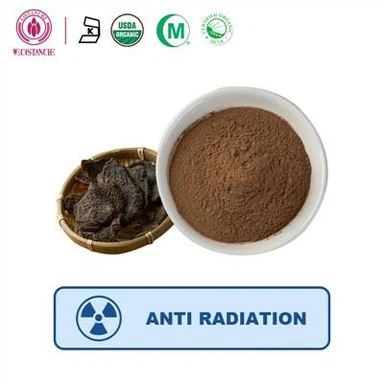
Wilderness Elf Guanhua Cistanche, A Miracle Of Life Carved By Nature
Oct 16, 2025
Encountering Guanhua Cistanche deserticola
Stepping into the vast and boundless desert, the scorching sun poured down without any obstruction, and the sandy ground beneath my feet was scorching hot. Every step felt like stepping on a blazing charcoal fire. The fierce wind howled and swept over, carrying the yellow sand in the sky. The whole world seemed to be shrouded in a hazy yellow veil, chaotic and vast. Just as I was almost overwhelmed by the monotonous and harsh desert scenery, a unique plant came into view - the Cistanche deserticola.

The villagers of Hetian Village in Xinjiang are digging and harvesting Cistanche deserticola
It stubbornly poked out of the sand, its thick stem with a hint of antique texture, covered with diamond-shaped scales, like the carefully carved texture of nature, recording the vicissitudes of time and the resilience of life. At the top of the stem, there are tightly clustered spike-shaped inflorescences, with light purple flowers swaying gently in the wind, like a group of fairies dressed in purple clothes, performing a different kind of prosperity in this barren land. In this desert filled with yellow sand and sparse vegetation, the appearance of Cistanche deserticola is like a sudden miracle, instantly lighting up this lifeless land and igniting my endless curiosity about the mysteries behind it.
Growing environment: harsh desert nurturing unique life forms
The desert where Cistanche deserticola grows is a world baked by the scorching sun. The annual precipitation here is very little, and the total precipitation in a year may be less than that of a rainstorm in humid areas. The extreme drought caused the land to dry up and crack, with each crack resembling the scars left by the earth's painful struggle due to water scarcity. In summer, the ground temperature often rises to 60-70 degrees Celsius, and the sand is scorching hot from the sun, making it easy to cook eggs. At night, the temperature drops sharply again, sometimes even dropping below zero degrees, with a temperature difference of up to 40-50 degrees Celsius between day and night, just like experiencing summer and winter in a short period of time.
The soil in the desert is also extremely poor, mostly sandy soil, with almost no humus, and extremely poor water and fertilizer retention ability. Strong winds frequently visit, often accompanied by sandstorms whistling past, covering the sky and blocking the sun. The entire desert is shrouded in sandstorms, and visibility is extremely low. In such harsh environments, most plants find it difficult to survive, but Cistanche deserticola has taken root here. It has evolved a series of unique survival abilities, and its skin has a special structure that can effectively reduce the loss of water, like putting a waterproof "armor" on itself; It can also tolerate high concentrations of salt in soil and grow tenaciously in saline alkali land. Its salt alkali tolerance has enabled it to establish a firm foothold on this land. In order to adapt to the barren soil, Cistanche deserticola chose to parasitize on the roots of plants in the genus Tamarix, obtaining the necessary nutrients and water for growth from its host, and embarking on a unique life cycle.
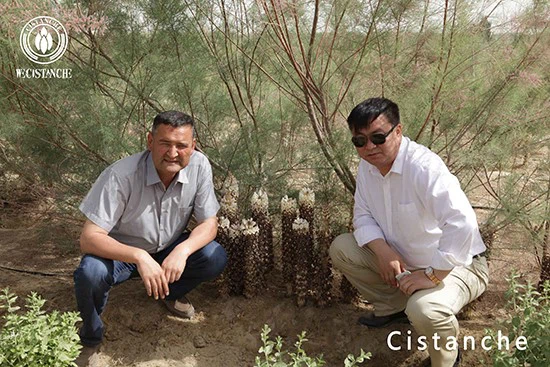
Local villagers grow Cistanche deserticola
Parasitic characteristics: life bonds with red willows
In the seemingly barren world of the desert, there is a wonderful and close life bond between the Cistanche deserticola and the red willow. Their relationship is a symbiotic symphony carefully composed by nature.
Guanhua Cistanche is a parasitic plant that closely links its fate with the red willow and relies on it for its entire life. The seeds of Cistanche deserticola are extremely small, like dust, drifting in the wind and eventually settling in the vast sea of sand. These seeds are quietly waiting in the sand, perhaps for years, even decades, just waiting for the moment when they meet the roots of the red willow. When the root system of the red willow extends into the sand layer and accidentally touches the seeds of the Cistanche deserticola, a wonderful journey of life begins. The seeds are stimulated by a special chemical signal released by the root system of the red willow, like awakened sleepers, and begin to sprout. It will extend a slender bud tube and strive to explore the root system of the red willow. Once successfully contacted, the bud tube will quickly wrap around the root of the red willow, gradually forming a special structure - the suction apparatus.
The suction tube is like a "straw" inserted into the body of the red willow by Cistanche tubulosa. Through it, Cistanche tubulosa can extract the water and nutrients needed for growth from the root system of the red willow. In this process, Red Willow is like a selfless mother, unreservedly delivering the resources she has struggled to obtain from the desert to Cistanche tubulosa, which thrives under the nourishment of Red Willow. This parasitic relationship is crucial for the growth and development of Cistanche deserticola. The harsh environment in the desert leads to extreme scarcity of water and nutrients. Without the support of red willows, Cistanche deserticola would not have been able to survive in such an environment. By parasitizing on the roots of red willows, Cistanche deserticola can obtain a stable water and nutrient supply, thus blooming its own flower of life in the desert.

Planting of Cistanche deserticola
Morphological characteristics: external manifestations that adapt to the environment
The plant height of Cistanche deserticola is usually between 60-100 centimeters. Its stem is very thick, with a base diameter of up to 3-4 centimeters, and it does not branch. This solid and simple structure is like a towering pillar in the desert, providing stable support for the plant in the fiercely windy desert, allowing it to firmly root in the sand and not be easily blown down by strong winds.
Its leaves are also unique, triangular in shape, with a length of 2-3 centimeters and a width of about 5 millimeters. The leaves initially appear milky white, as if they have been moistened by clear springs in the desert. Over time, under the scorching sun and sandstorms of the desert, they gradually turn brown after drying. These leaves are tightly arranged on the stem, extending from the base to the upper part of the stem. The higher the stem, the narrower the leaves gradually become, becoming lanceolate or triangular lanceolate. This change in leaf shape not only helps to reduce water loss but also reduces the damage of sandstorms to plants. Each leaf is like a small shield, protecting the Cistanche deserticola from the invasion of the desert.
The flowers of Cistanche deserticola are a bright color in the desert. Its inflorescence is spike-shaped, measuring 12-18 centimeters in length and 5-6 centimeters in diameter. On the inflorescence, small flowers cluster tightly together, as if holding a grand gathering. The bracts are oblong lanceolate or ovate lanceolate, measuring 2-2.7 cm in length and 5-6.5 mm in width. They are hairless on both sides, but the edges are surrounded by soft hairs, as if a soft lace has been added to the bracts. There are 2 small bracteoles, nearly hairless, in the shape of spoons or linear lanceolate. The sepals are cylindrical in shape, measuring 1.5-1.8 centimeters in length, with 5 lobes at the top to near the middle. The lobes are milky white and turn yellowish white when dried, resembling exquisite white jade carvings. The corolla is cylindrical, funnel-shaped, 4 centimeters long, with 5 lobes at the top. The lobes are purple when the bud is formed, like a dreamy purple elf, and turn brown when dried. The structure of the entire flower is exquisite, standing out particularly against the backdrop of the desert.
After the flowering period, Cistanche deserticola welcomes the moment of fruiting. Its capsule is oblong, measuring 1-1.2 centimeters in length and 7 millimeters in diameter, and contains countless tiny seeds. These seeds are mostly round in shape and turn black or brown after drying. They have a mesh-like pattern on the outside, and although they are small in size, they contain strong vitality, waiting for the right time to embark on a new journey of life.

Cistanche deserticola florescence
Life cycle: Following the natural laws of reincarnation
The life cycle of Cistanche deserticola is a cycle closely intertwined with the natural environment and follows the laws of nature. Each stage is filled with wisdom and miracles of survival.
As autumn approaches, the climate in the desert gradually becomes cooler, and the seeds of Cistanche deserticola mature. Small seeds float out of the cracked capsules and fall into the scorching sand. These seeds are as tiny as dust, yet they contain tenacious vitality. For a long time to come, they quietly lay dormant among the grains of sand, waiting for the turning point of their fate. In the winter of the desert, the cold wind is biting, and the temperature is extremely low. The seeds start the post-ripening process in the low-temperature environment. This process is crucial, like a baptism of life, laying the foundation for the germination of seeds in the future.
Until spring, as the temperature rises, the sandy land gradually warms up and the seeds of Cistanche deserticola begin to sprout. At this moment, the root system of the red willow continued to extend in the sand layer. When they met the seeds of Cistanche deserticola, the seeds were stimulated by a special chemical signal released by the red willow root system. Just like opening the door of life with a magical key, the seed quickly sprouts slender buds. The buds strive to grow towards the root system of the red willow, and once successfully contacted, they will tightly wrap around it, forming a suction apparatus. From then on, Cistanche deserticola parasitized on the roots of the red willow and began to obtain the necessary water and nutrients for its growth, embarking on a new journey of life.
During the parasitic growth stage, Cistanche deserticola grows silently underground for most of the time. Its fleshy stem continuously accumulates nutrients and gradually becomes thick and robust. During this process, the desert's light, temperature, and soil conditions all have a significant impact on its growth. Adequate light provides conditions for the photosynthesis of red willows, enabling them to produce more nutrients and indirectly supporting the growth of Cistanche deserticola. The huge temperature difference between day and night in the desert also helps Cistanche deserticola accumulate more organic matter, making its fleshy stems thicker.
After a period of growth, when the spring sunshine warms the desert again, the fleshy stems of Cistanche deserticola begin to emerge. At this point, its growth pattern underwent a significant transformation. Once stimulated by sunlight, Cistanche deserticola immediately transitions from vegetative growth to reproductive growth. It, which originally grew silently underground, began to grow rapidly and pulled out spike-like inflorescences. The small flowers on the inflorescence gradually bloom, with bright colors and a unique scent that attracts insects to come and pollinate. At this stage, the duration and intensity of light play a crucial role in the flowering of Cistanche deserticola. Appropriate lighting can promote the differentiation and development of flower buds, making the flowers more lush. Temperature also affects the opening and pollination process of flowers. If the temperature is too low or too high, it will have adverse effects on the development and pollination of flowers.
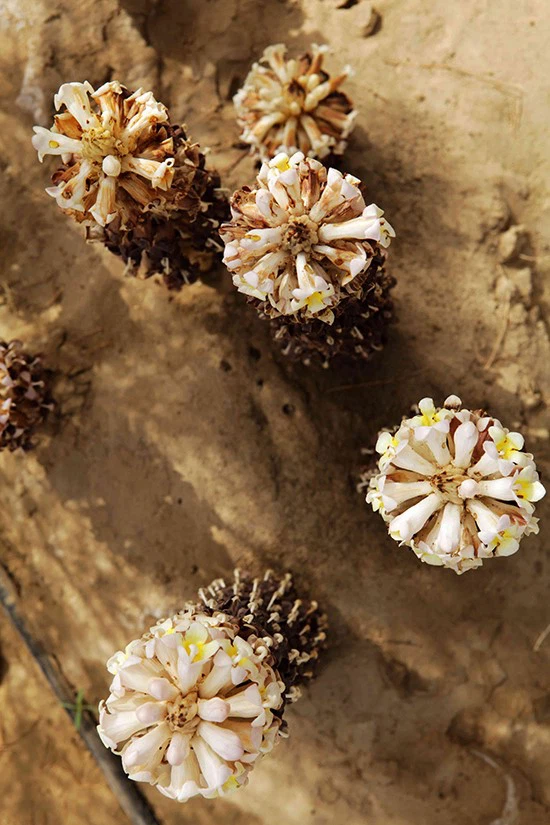
Cistanche deserticola
After successful pollination, Cistanche deserticola begins to bear fruit. As time goes by, the capsule gradually matures and contains countless small seeds. When the fruit cracks and the seeds scatter back into the sand, Cistanche deserticola completes one of its life cycles. Its aboveground parts gradually wither and return to the earth, while the seeds carry new hope, waiting for the next cycle of life.
The symbiotic inspiration between Cistanche deserticola and nature
The unique biological characteristics of Cistanche deserticola are undoubtedly a masterpiece of nature's incredible craftsmanship. Its survival wisdom in the harsh environment of the desert, its wonderful parasitic relationship with the red willow, as well as its exquisite form and unique life cycle, all make people marvel at the wonder and greatness of nature.
From the body of Cistanche deserticola, we deeply realize that every species is an indispensable part of the natural ecosystem. Through a long process of evolution, they gradually adapt to their environment and form unique ways of survival. The close connection between Cistanche deserticola and the desert environment, as well as with red willows, constitutes a subtle and balanced ecosystem.

cistanche body building
Click here to view Cistanche for Kidney disease products
【Ask for more】 Email:cindy.xue@wecistanche.com / WhatsApp: 0086 18599088692 / Wechat: 18599088692
Nowadays, with the continuous expansion of human activities, many natural ecosystems are facing severe challenges, and desert ecosystems are no exception. Overgrazing, unreasonable water resource development, and indiscriminate logging not only damage the vegetation in the desert but also threaten the survival of rare species such as Cistanche deserticola. We should draw inspiration from the symbiotic relationship between Cistanche deserticola and nature, realizing that protecting nature is protecting ourselves. Only by maintaining ecological balance and protecting biodiversity can these magical species continue to thrive on Earth, and the beauty and wonder of nature continue forever. Let us take action with reverence for nature and work together to protect our home planet.