TCM Herb For Prostate Health: Unlock Natural Relief For Benign Prostatic Hyperplasia With Modified Classic TCM Formula
May 12, 2026
Unlocking the secrets of benign prostatic hyperplasia: Adopt the classic Ni Haixia TCM formula with flexible modifications, combined with internal and external holistic conditioning, to unblock the lower jiao and restore prostate wellness naturally.
Benign Prostatic Hyperplasia (BPH), commonly known as enlarged prostate, is a prevalent health issue troubling countless middle-aged and elderly men. The condition becomes far more common after the age of 50. Typical symptoms include frequent urination, urgent urination, incomplete bladder emptying, urinary hesitancy, increased nighttime urination, and difficulty urinating. In severe cases, urine may only drip sparingly with distending lower abdominal pain. It not only severely impacts quality of life but also triggers serious complications, such as stringy mucus in urine and declined sexual function - becoming an embarrassing hidden health struggle for men.
While studying Master Ni Haixia's TCM teachings and sorting through over 1,000 clinical case records from his apprenticeship notes, we summarized his core treatment approach for prostate disorders, referred to as accessory gland issues by Master Ni. His foundational formula is Zhen Wu Tang combined with Asarum and Lindera. This targeted approach addresses the root cause of prostate problems directly. Based on this core prescription, flexible herb modifications are applied according to individual symptoms and disease stages, delivering remarkable therapeutic effects. This article analyzes and concludes this proven method for TCM learners and health enthusiasts.
Ancient TCM did not use the modern term "prostate". Instead, prostate disorders fall under the categories of Long Bi (Dysuria) and Jing Long (Sperm Retention). The underlying pathological mechanisms involve insufficient kidney Yang, depleted kidney essence, and blood stasis blocking the collateral meridians.
I. Understanding the Root Cause: TCM Insight Into Benign Prostatic Hyperplasia
Benign prostatic hyperplasia occurs when prostate tissue becomes congested and swollen, with hyperplasia of glandular tissue and smooth muscle forming multiple spherical nodules. These nodules compress the urethra and obstruct the urinary tract. From a Western medical anatomical perspective, this is a structural tissue change; from the holistic view of Traditional Chinese Medicine, it manifests as dysfunctional circulation of Qi, blood, and body fluids.

TCM offers a profound and systematic understanding of this condition:Insufficient kidney Yang and depleted kidney essence are the fundamental root cause. The kidney governs water metabolism and controls urination and defecation. Abundant kidney Qi ensures normal bladder Qi transformation and unobstructed urination. Natural decline of kidney Qi with aging lays the foundation for developing prostate issues.
Blood stasis and stagnant essence blocking the lower jiao act as the key triggering factor. Multiple factors lead to poor Qi and blood circulation in the lower jiao, generating internal turbidity and stagnation that block the water passage, resulting in the Dysuria syndrome. This theory perfectly connects local prostate hyperplasia to overall bodily function balance.
There are many triggers for prostate disorders. Master Ni Haixia's distinguished disciple Teacher Yang explained the body's water circulation metabolism in a public welfare lecture at Tongxu County First Hospital: When human Yang energy is deficient, body fluids cannot be properly vaporized. Cold stagnant fluid accumulates in the bladder long-term, leaving the prostate constantly "soaked in cold dampness" and gradually enlarged. This is why warming Yang and promoting diuresis is the core therapeutic principle for supporting prostate health.
CISTANCHE CLINICAL TRIAL EVIDENCE FOR PROSTATE HEALTH

II. Early Warning Signs of Prostate Disorders: Seek Timely Natural Conditioning
The early symptoms of benign prostatic hyperplasia develop subtly and worsen gradually. Most patients experience one or more of the following discomforts:Frequent urination is the earliest warning sign, especially increased nighttime urination. Difficulty urinating manifests as urinary hesitancy, thin urine stream, shortened urinary range, intermittent urination, and even dripping urine in advanced stages. A classic local health slogan perfectly sums up these symptoms: frequent urination, urgent need to urinate, incomplete bladder emptying, and post-urination dribbling.
Urinary incontinence often occurs in late-stage BPH, where urine overflows involuntarily due to an overfilled bladder. Hematuria may arise from ruptured blood vessels on the surface of the enlarged prostate. Acute urinary retention is the most urgent condition: sudden inability to urinate accompanied by severe lower abdominal distension and pain.

III. Syndrome Differentiation & Classification: Precise TCM Prostate Care Strategy
TCM treatment for prostate health follows syndrome differentiation and targeted therapy. Patients are categorized into seven core syndromes with customized conditioning principles and herbal solutions:
Damp-Heat Pouring Downward: Yellow turbid urine, burning urethral pain, yellow greasy tongue coating; treated by clearing heat and draining dampness.
Lung Heat Diffusion Disorder: Difficult urination accompanied by dry throat, chest tightness and shortness of breath; treated by dispersing lung Qi to unblock the water passage.
Spleen-Kidney Qi Deficiency: Weak urinary flow, mental fatigue, shortness of breath, cold intolerance and soreness of the waist; treated by tonifying the spleen and warming the kidney.
Kidney Yang Decline: Weak urination, pale complexion, cold limbs and physical chill; treated by strongly warming and tonifying kidney Yang.
Qi Stagnation & Blood Stasis: Difficult dripping urination, severe lower abdominal distension, dark purple tongue texture; treated by removing blood stasis and dissipating nodules.
Kidney Yin Deficiency: Poor urination accompanied by dizziness, tinnitus, tidal fever and five-heart heat; treated by nourishing kidney Yin.
In clinical practice, most patients present with mixed overlapping syndromes, requiring professional TCM practitioners to differentiate symptoms carefully and customize combined conditioning plans.
TCM HERB CISTANCHE HIGH QUALITY SUPPLEMENTS FOR IMPROVING PROSTATE HEALTH

Supportive Service Of Wecistanche-For more details about cooperation
Email:wallence.suen@wecistanche.com
IV. Unblocking Dysuria: In-Depth Analysis of Master Ni Haixia's Classic TCM Prescription
Among all traditional herbal remedies for prostate issues, Master Ni Haixia's time-tested effective formula stands out: Zhen Wu Tang plus Asarum and Lindera. Derived from Treatise on Cold Damage Disorders, this well-composed classic formula targets the core pathogenesis of BPH, warming Yang, promoting diuresis, balancing reinforcement and elimination, and unblocking the urinary tract.
Universal Herbal Prescription for Frequent, Urgent & Incomplete Urination From BPH
Poria Cocos 15g, Paeonia Lactiflora 15g, Fresh Ginger 15g, Atractylodes Macrocephala 10g, Prepared Aconite Root 15g, Asarum Heterotropoides 12g, Lindera Aggregata 20g
Decoct with water, one dose daily, taken warm in the morning and evening.
Efficacy: Unblocks dysuria, promotes diuresis and relieves stranguria.Indications: Benign prostatic hyperplasia, prostatitis, various urinary tract infections, urinary stones, hematuria, enuresis, urinary retention, frequent urination and other lower jiao discomforts.
Master Ni rarely analyzed single herbs individually; instead, he interpreted formula efficacy as a whole or through paired herb combinations.
Zhen Wu Tang: Warms Yang and drains dampness, ideal for Yang deficiency and water flooding syndrome.
Asarum + Lindera Herb Pair: A frequently used combination in Master Ni's clinical cases, excelling at warming Yang, dispelling cold, and eliminating lower jiao cold-damp stagnation with remarkable targeted effects.
Flexible Formula Modifications for Concurrent Symptoms
Severe damp-heat: Add Lysimachia Christinae and Hedyotis Diffusa
Constipation: Add Rheum Palmatum and Cannabis Sativa
Urinary incontinence: Add Alpinia Oxyphylla and Mantidis Ootheca
Qi deficiency & fatigue: Add Astragalus Membranaceus and Codonopsis Pilosula
Severe kidney Yang deficiency: Add Curculigo Orchioides and Morinda Officinalis
Qi stagnation & distension: Add Bupleurum Chinense and Cyperus Rotundus
Severe blood stasis: Add Hirudo Nipponica and Squama Manis
Urinary stones: Add Gallus Gallus Endothelium and Pyrrosia Lingua
Obvious prostate hyperplasia nodules: Add Vinegar-processed Amyda Sinensis and Gleditsia Sinensis
This single classic formula with flexible variations embodies the essence of TCM syndrome differentiation - adhering to core therapeutic principles while adjusting precisely to each individual's physical condition.
V. Internal & External Combined Therapy: Synergistic Effects of Oral & Topical Conditioning
Traditional TCM always advocates holistic regulation and integrated internal-external treatment. External therapy plays an equally vital role in relieving prostate discomfort and enhances the efficacy of oral herbal remedies.
In practical application, external herbal compresses have achieved excellent results for prostatitis and BPH relief. Those suffering from prostate issues can follow the external application recipe listed in Appendix II of the 2024 edition book Ni Haixia Teaches You Self-Healing for Hundred Diseases. Apply the herbal compress to the perineum combined with moxibustion heat therapy for 40 minutes each session, once every other day, for seven consecutive sessions to experience obvious improvements. For detailed operation steps, refer to our previous articles on prostate wellness solutions.
This external formula penetrates the skin directly to target the prostate area, warming meridians, unblocking collaterals, dissipating nodules and reducing swelling. It effectively relieves local congestion and improves urinary symptoms instantly. Herbal potency acts directly on the affected area, forming a synergistic internal-external conditioning effect with oral remedies for twice the result with half the effort.
With consistent conditioning, most users notice gradually reduced nighttime urination, stronger and smoother urinary flow, and fading lower abdominal distension. Unobstructed internal water circulation restores physical vitality and overall quality of life.
Disclaimer: The methods shared in this article are for TCM learning and reference only. Please consult a professional licensed TCM practitioner for personalized diagnosis and treatment if you have health concerns.
Like and share this article to help more men naturally improve prostate health with TCM herb for prostate health wisdom.

Our Cistanche Tubulosa Factory Brand Insert (Optimized for Western Marketing)
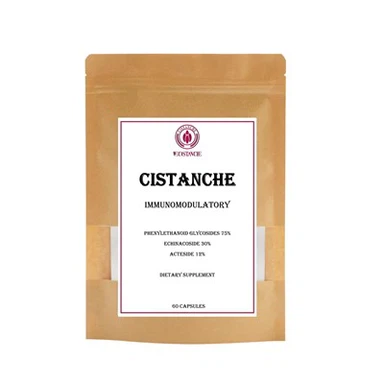
We are a professional manufacturer specializing in high-purity Cistanche Tubulosa extract - the premium desert herb widely recognized as a top TCM herb for prostate health. Our Cistanche Tubulosa extract features higher active ingredient content compared with common varieties, delivering stronger natural conditioning effects for prostate wellness, kidney support, and lower jiao unblocking.
We provide premium raw materials and customized formula solutions for developing prostate health supplement products worldwide.Learn more about our factory strength:https://www.xjcistanche.com/about-usExplore the natural prostate healing secret of Cistanche Tubulosa:https://www.xjcistanche.com/news/the-long-lost-secret-remedy-for-prostate-healt-84975776.html