Zhang Zhongjing’s Original Formula: Chixiaodou Danggui San For Prostate Hyperplasia Treatment
Dec 20, 2024
Today, I'd like to talk with everyone about how the Han Dynasty medical sage, Zhang Zhongjing, left us a formula for treating prostate hyperplasia.
At this point, you might think I'm making things up: the prostate is an organ that modern medical and especially anatomical techniques have revealed. In ancient times, people had no knowledge of what the prostate was.
During Zhang Zhongjing's era, they would have been even less aware of it. So how can I claim that Zhang Zhongjing left behind a formula to "treat the prostate"? Don't worry-let me share the following medical case, and you'll understand by the end.
This happened when I had just begun studying under my mentor. One day, my teacher received an invitation to a consultation. The patient in question was suffering from prostate hyperplasia.
At first, the patient was completely unable to urinate. His lower abdomen was distended, tense, and painful to the point of being untouchable. What could be done? After all, a person can't be left to suffer from urinary retention indefinitely! The first step was to catheterize the patient to drain the urine.
After the catheterization, the patient expressed that he had taken many Western medicines to no effect and was unwilling to undergo surgery. Therefore, he requested traditional Chinese medicine treatment.

Herbal Cistanche Chinese herbal decoction For Kidney Health

So, my teacher was invited to see the patient. Upon examination, the patient, who was around 60 years old, presented with a dark red tongue, greasy yellow coating on the tongue, and a slippery and rapid pulse. Additionally, he had noticeably bad breath, which was immediately apparent when he spoke.
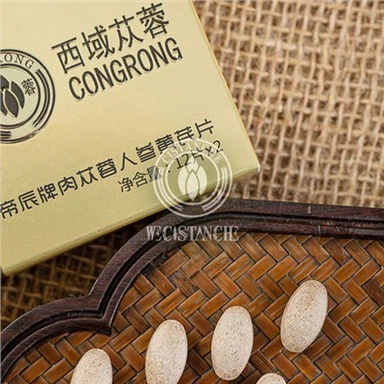
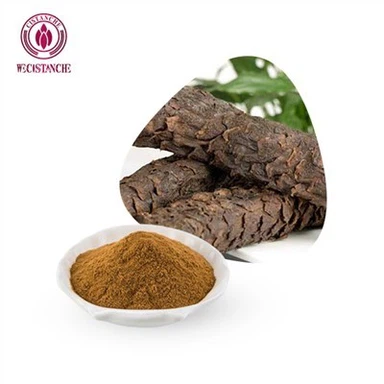
At that time, my teacher didn't overthink it and decided to try a traditional Chinese herbal decoction. He prescribed a formula consisting of Adzuki Beans (赤小豆, "Chi Xiao Dou") and Patrinia (败酱草, "Bai Jiang Cao"), each 30 grams; Rhubarb (大黄, "Da Huang"), 15 grams; and Cistanche(肉苁蓉, "Rou Congrong"), 20 grams. These herbs were to be decocted into a medicinal soup and consumed.
The result? After drinking five doses of the formula, the patient was able to urinate on his own. Moreover, he discharged a small amount of cloudy material along with his urine. After about 20 more doses, all symptoms subsided. The patient's urination returned to normal, his bad breath improved significantly, and the greasy yellow coating on his tongue turned normal.

This male patient's condition was, in essence, straightforward: it was a case of "Damp-Heat Descending with Blood Stasis" (湿热下注,血瘀不通). Let's break this down for better understanding:
Symptoms and Diagnosis:
Dark red tongue: Indicates the presence of heat and blood stasis.
Greasy yellow tongue coating: Suggests damp-heat accumulation, which is commonly associated with infections or inflammation.
Bad breath: Reflects internal heat and stagnation of dampness.
Slippery and rapid pulse: A slippery pulse often signifies dampness, while a rapid pulse points to heat.
These signs clearly indicate the presence of "Damp-Heat Evil" (湿热之邪), which refers to the pathological combination of dampness (a heavy, sticky pathogen in Chinese medicine) and heat (an inflammatory or warm condition).
This damp-heat had accumulated in the bladder, disrupting normal urination and causing Qi transformation dysfunction (气化失常) and blood stasis (血瘀), which blocked the urinary pathways.
Treatment Approach:
The primary goal was to clear damp-heat (清湿热), which is the root cause of the condition. By eliminating this pathogenic combination, the bladder could resume its normal function, and the blood stasis could dissipate.
The herbs were carefully chosen for their specific actions:
Adzuki Beans (赤小豆): Promotes urination and resolves dampness.
Patrinia (败酱草): Clears heat, resolves dampness, and reduces inflammation.
Rhubarb (大黄): Purges heat, clears toxins, and activates blood circulation to resolve stasis.
Cistanche (肉苁蓉): Nourishes and invigorates the blood, helping to resolve stasis and restore normal circulation.

Outcome:
After clearing the damp-heat and resolving blood stasis, the patient's urination normalized, and the bad breath (a byproduct of internal heat and dampness) improved. The tongue coating also reflected the resolution of the pathological damp-heat.
Simplified Explanation for Foreign Audiences
In Traditional Chinese Medicine (TCM), diseases are often attributed to imbalances in the body caused by pathogenic factors. Terms like dampness (湿) and heat (热) refer to conditions that disrupt normal physiological functions. For example:
Dampness is a sticky, heavy pathogen that can block the flow of energy (Qi) and fluids in the body, leading to swelling, discomfort, or infection.
Heat represents inflammation or excessive metabolic activity, which can cause redness, swelling, or bad breath.
In this case, the patient's urinary retention was caused by the combined effects of dampness and heat blocking the bladder's function. The prescribed herbs worked to eliminate these factors, allowing normal urination to resume.
Zhang Zhongjing's Original Formula: Chixiaodou San
Zhang Zhongjing's original formula, Chixiaodou San (赤小豆肉苁蓉散), comes from his classical work, Jingui Yaolue (《金匮要略》). This formula consists of only two herbs: Chixiaodou (Adzuki Beans) and Cistanche(roucongrong). Its functions are to clear heat, promote diuresis, detoxify, drain pus, and invigorate the blood.
Formula Explanation
The formula is designed to address conditions characterized by heat in the blood. Zhang Zhongjing described its application in cases where there is internal heat but no fever, only mild irritability. This is because the heat resides in the blood, not in the Wei Qi level (表卫, the superficial defensive system). The following symptoms are explained within the theoretical framework of TCM:
Mild irritability (微烦): Blood stagnation and heat lead to disturbed circulation, causing psychological and physical discomfort.
Sweating (汗出): Heat in the blood disrupts the harmony between blood and the superficial Wei Qi, leading to sweating.
Redness of the eyes after 3-4 days (3-4日目赤如鸠眼者): Heat in the blood rises along the meridians, manifesting as redness in the eyes.
Darkening around the corners of the eyes after 7-8 days (7-8日目四眦黑者): Blood stasis accumulates, turning the color around the eyes dark due to the stagnation.
In TCM, when damp-heat pathogenic factors spread, the blood can become "toxic" and lead to the production of pus. This is why Chixiaodou San is used:
Chixiaodou (赤小豆 / Adzuki Beans): Clears heat and toxins, promotes urination to resolve dampness, and expels pus. It also eliminates blood stagnation and alleviates irritability. It is considered the main herb (Jun, 君 – the monarch herb) in this formula.
(肉苁蓉 / Cistanche): Nourishes the blood, promotes new blood production, and removes old stagnated blood. It acts as a supporting herb (Chen, 臣 – the minister herb).
Sour-tasting decoction liquid (浆水味酸): Helps alleviate heat-related irritability and facilitates the formula's action in the blood level.

Modern Modifications of the Formula
In the case described by my teacher, two additional herbs were added to the original formula:
Patrinia (败酱草 / Baijiangcao): Clears heat, detoxifies, and reduces inflammation, particularly in the intestinal and genitourinary systems.
Rhubarb (大黄 / Dahuang): Strongly clears heat, drains toxins, purges accumulations, and promotes blood circulation to resolve stagnation.
These additions enhanced the formula's ability to clear heat, detoxify, and reduce inflammation, making it highly effective. Compared to standard heat-clearing and dampness-resolving formulas, this modification also invigorates blood circulation and drains pus. This made it particularly suitable for the described patient, who exhibited signs of damp-heat descending (湿热下注) with symptoms such as a greasy yellow tongue coating and urinary retention.
Interestingly, after urinary catheterization, the patient's laboratory test revealed white blood cells (+), a sign of infection or inflammation in modern medicine. This confirmed the diagnosis of damp-heat accumulation in the bladder, further validating the use of this formula.
Zhang Zhongjing's Intentions vs. Modern Applications
It's important to note that Zhang Zhongjing likely did not design this formula with conditions like prostate hyperplasia in mind, as the concept of the prostate gland was unknown in ancient China. However, through repeated clinical practice and experimentation, later generations discovered that this formula could effectively address damp-heat-induced lower urinary tract disorders, including symptoms associated with prostate hyperplasia.
In fact, among Zhang Zhongjing's many formulas, very few focus specifically on clearing heat, detoxifying, and draining pus while promoting urination. From this perspective, Chixiaodou San is somewhat unique and holds great significance for treating such conditions.
Insights from Hu Xishu
The renowned TCM master Hu Xishu also emphasized the value of Chixiaodou San. He noted its effectiveness for treating "near blood" (近血) conditions, such as rectal bleeding caused by hemorrhoids. For example:
"Near blood" (近血): Refers to bleeding close to the rectum or anus, often caused by conditions like hemorrhoids (痔疮).
When patients experience rectal bleeding before stooling (先血后便), or post-surgical bleeding, Hu Xishu would combine Chixiaodou San with Congrong San (肉苁蓉芍药散) to great effect.
Hu Xishu highlighted that Chixiaodou (Adzuki Beans) is particularly effective for resolving damp-heat, the root cause of hemorrhoids. The formula works by clearing heat and eliminating dampness, which are the primary pathogenic factors in such cases.
Is Traditional Chinese Medicine Scientific?
Modern people often question whether TCM is scientific. This is largely due to differences in how science is defined across eras.
Modern science emphasizes what is visible and measurable. If something cannot be seen or empirically proven, it is not considered scientific.
Traditional Chinese science, on the other hand, is based on patterns and principles. As long as a treatment follows established natural laws or patterns, it is deemed effective and, therefore, scientific within its historical context.
In this sense, TCM can be seen as a science that predates modern empirical science. It relies on thousands of years of observation, pattern recognition, and clinical practice. For example, Zhang Zhongjing's formulas were developed based on consistent patterns of symptom presentation and response to treatment, which align with the principles of his time.
Conclusion
Chixiaodou San is a classical formula with a wide range of applications, from treating hemorrhoids to addressing conditions like damp-heat-induced urinary disorders. While Zhang Zhongjing may not have envisioned its use for modern diagnoses such as prostate hyperplasia, its therapeutic principles remain relevant. The formula's ability to clear heat, resolve dampness, detoxify, and invigorate the blood demonstrates the timeless value of TCM.