5 Key Points To Understand IgA Nephropathy
Jul 25, 2024
IgA nephropathy is a kidney disease characterized by the deposition of IgA (an immunoglobulin) in the glomeruli. It is the most common primary glomerulonephritis in the world. Its clinical manifestations are usually recurrent macroscopic or microscopic hematuria, which may be accompanied by varying degrees of proteinuria. Some patients may develop severe hypertension or renal insufficiency.

Click to Cistanche for kidney disease
The most common symptom of patients with IgA nephropathy is hematuria.
The most common clinical manifestation of IgA nephropathy is microscopic or macroscopic hematuria. Hematuria is usually recurrent and may occur after an upper respiratory tract infection or other infection. The presence of red blood cells in the urine may be intermittent and of varying severity.
Proteinuria is another important feature of IgA nephropathy. It may vary from mild to moderate, and in some cases, it can even develop into massive proteinuria (greater than 3.5 g/d). Persistent and significant proteinuria is associated with an increased risk of progression to chronic kidney disease.
Some IgA nephropathy eventually develops into uremia.
A subset of patients with IgA nephropathy will experience progressive renal decline, with a gradual decrease in estimated glomerular filtration rate (eGFR), leading to chronic renal failure. About 20% of patients develop end-stage renal disease (uremia) within 10 years.

Hypertension is a common complication of IgA nephropathy. Controlling blood pressure is important in the management of IgA nephropathy and helps slow the progression of kidney damage.
A kidney biopsy is required for diagnosis.
This disease requires a kidney biopsy to make a diagnosis, and its characteristic finding is the deposition of IgA in the glomeruli, usually in the mesangial area. The biopsy can also provide information about the degree of inflammation, scarring, and other histologic features that can help guide treatment decisions and predict outcomes. In the absence of a kidney biopsy, the clinical diagnosis may be chronic nephritis, latent nephritis, or nephrotic syndrome.
Five histologic features are used to predict clinical outcomes.
The Oxford classification/MEST score for IgA nephropathy, published in 2009, includes four histological features that are independent predictors of clinical outcomes: mesangial proliferation (M), endothelial cell proliferation (E), segmental glomerulosclerosis (S), and interstitial fibrosis/tubular atrophy (T). In 2017, the IgA nephropathy classification working group added glomerular crescent formation (C) to the Oxford classification to form the MEST-C score.
If any of these features are seen, the disease is generally considered to be progressive. Proteinuria, hypertension, elevated serum creatinine, and decreased estimated glomerular filtration rate (eGFR) are also some of the signals that patients with IgA nephropathy have poor clinical outcomes.
Etiological treatment of IgA nephropathy has not been available until recent years.
The pathogenesis of IgA nephropathy is not yet fully understood. The current mainstream view is that it is an immune deficiency that causes IgA, especially IgA1, to deposit in the mesangial area of the glomerulus, forming immune complexes, which then activate the complement system, attract inflammatory cells, and cause glomerular inflammation.

In 2021, the U.S. Food and Drug Administration approved a targeted-release formulation of the corticosteroid budesonide for the treatment of IgA nephropathy. Budesonide-targeted sustained-release capsules became the first causal treatment for IgA nephropathy, targeting intestinal mucosal B cells and reducing the production of pathogenic galactose-deficient IgA1 molecules (Gd-IgA1) that are key to IgA nephropathy. Although this new drug is expensive and not yet popular, it brings new hope for the treatment of IgA nephropathy.
How Does Cistanche Treat Kidney Disease?
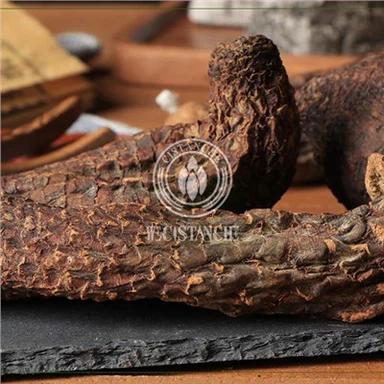
Cistanche is a traditional Chinese herbal medicine used for centuries to treat various health conditions, including kidney disease. It is derived from the dried stems of Cistanche deserticola, a plant native to the deserts of China and Mongolia. The main active components of cistanche are phenylethanoid glycosides, echinacoside, and acteoside, which have been found to have beneficial effects on kidney health.
Kidney disease, also known as renal disease, refers to a condition in which the kidneys are not functioning properly. This can result in a buildup of waste products and toxins in the body, leading to various symptoms and complications. Cistanche may help treat kidney disease ase through several mechanisms.
Firstly, cistanche has been found to have diuretic properties, meaning it can increase urine production and help eliminate waste products from the body. This can help relieve the burden on the kidneys and prevent the buildup of toxins. By promoting diuresis, cistanche may also help Reduce high blood pressure, a common complication of kidney disease.
Moreover, cistanche has been shown to have antioxidant effects. Oxidative stress, caused by an imbalance between the production of free radicals and the body's antioxidant defenses, plays a key role in the progression of kidney disease. ies help neutralize free radicals and reduce Oxidative stress, thereby protecting the kidneys from damage. The phenylethanoid glycosides found in cistanche have been particularly effective in scavenging free radicals and inhibiting lipid peroxidation.
Additionally, cistanche has been found to have anti-inflammatory effects. Inflammation is another key factor in the development and progression of kidney disease. Cistanche's anti-inflammatory properties help reduce the production of pro-inflammatory cytokines and inhibit the activation of inflammation mandatory pathways, thus alleviating inflammation in the kidneys.
Furthermore, cistanche has been shown to have immunomodulatory effects. In kidney disease, the immune system can be dysregulated, leading to excessive inflammation and tissue damage. Cistanche helps regulate the immune response by modulating the production and activity of immune cells, such as T cells and macrophages. This immune regulation helps reduce inflammation and prevent further damage to the kidneys.

Moreover, cistanche has been found to improve renal function by promoting the regeneration of renal tubes with cells. Renal tubular epithelial cells play a crucial role in the filtration and reabsorption of waste products and electrolytes. In kidney disease, these cells can be damaged, leading to damaged renal function. Cistanche's ability to promote the regeneration of these cells helps restore proper renal function and improve overall kidney health.
In addition to these direct effects on the kidneys, cistanche has been found to have beneficial effects on other organs and systems in the body. This holistic approach to health is particularly important in kidney disease, as the condition often affects multiple organs and systems. che has been shown to have protective effects on the liver, heart, and blood vessels, which are commonly affected by kidney disease. By promoting the health of these organs, cistanche helps improve overall kidney function and prevent further complications.
In conclusion, cistanche is a traditional Chinese herbal medicine used for centuries to treat kidney disease. Its active components have diuretic, antioxidant, anti-inflammatory, immunomodulatory, and regenerative effects, which help improve renal function and protect the kidneys from further damage. , cistanche has beneficial effects on other organs and systems, making it a holistic approach to treating kidney disease.