A High-Potency Herbal Formula For Strong Bones & Muscles And Relief Of Physical Fatigue: Composition, Manufacturing Process, And Evidence (With Cistanche Focus)
Oct 19, 2026
Modern life accelerates physical and mental load, and "fatigue" has become one of the most common health complaints in urban populations. In traditional Chinese medicine (TCM), persistent fatigue often corresponds to patterns such as deficiency and internal injury affecting the spleen and stomach, while weakness of tendons and bones is commonly linked to liver–kidney deficiency and insufficient essence and blood.
This article shares practical, development-oriented "dry goods" for formulators, brand owners, and ingredient buyers interested in herbal modulation of kidney function and fatigue symptoms-with a special emphasis on Cistanche (Rou Cong Rong) as a cornerstone tonic herb.
We present a multi-ingredient TCM–nutrition hybrid composition designed to:
Strengthen tendons and bones
Relieve physical fatigue
Deliver multi-target synergy, rather than single-ingredient, one-dimensional effects
SEO keywords / topic clusters: kidney support herbs, adrenal fatigue symptoms, physical fatigue symptoms, low energy symptoms, muscle weakness symptoms, bone density support, Cistanche extract, Rou Cong Rong benefits, anti-fatigue supplement formulation, TCM tonic formula, BCAA taurine CoQ10.
1) Invention Title
Traditional Chinese Medicine Composition for Strengthening Tendons and Bones and Relieving Physical Fatigue, and Its Preparation Method
2) Abstract (Translated & Structured)
A TCM composition is provided for strengthening tendons and bones and relieving physical fatigue, including the following ingredients (by parts by mass):
Epimedium (Yin Yang Huo) 300–500
Cornus officinalis (Shan Zhu Yu) 400–600
American ginseng (Xi Yang Shen) 200–400
Fermented Cordyceps mycelium powder 100–300
Astragalus (Huang Qi) 200–400
Eucommia bark (Du Zhong) 150–300
Achyranthes bidentata (Niu Xi) 100–200
Goji berry (Gou Qi Zi) 150–250
Morinda officinalis (Ba Ji Tian) 100–200
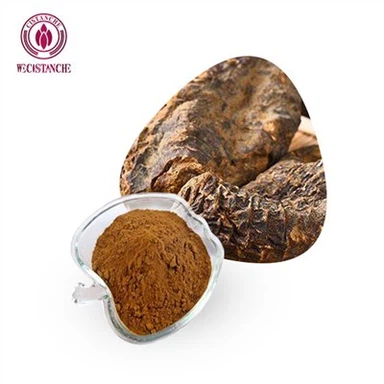
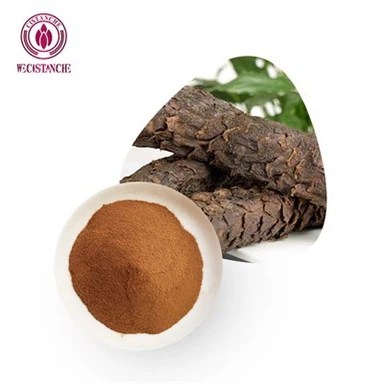
Cistanche deserticola (Rou Cong Rong) 100–200
Cynomorium (Suo Yang) 80–150
Taxillus/Viscum (Sang Ji Sheng) 100–180
Dipsacus (Xu Duan) 80–150
Drynaria (Gu Sui Bu) 60–120
Eleuthero (Ci Wu Jia) 100–200
Rhodiola (Hong Jing Tian) 50–120
Sea buckthorn (Sha Ji) 30–80
Phyllanthus emblica / Amla (Yu Gan Zi) 30–80
Coenzyme Q10 5–20
Branched-chain amino acids (BCAA) 5–20
Taurine 5–20
The composition exhibits significant anti-fatigue and tendon-and-bone strengthening effects, with a notable synergistic enhancement among the components.

3) Why This Matters for Product Developers (Market Gap + Symptoms)
Common "fatigue symptoms" driving demand
From a product-development standpoint, the consumer language typically clusters around symptoms such as:
Low energy, heavy limbs, reduced exercise tolerance
Slow recovery after exertion
Muscle weakness, soreness, "legs feel soft"
Back and knee weakness (classic "kidney deficiency" positioning in TCM wellness narratives)
Aging-related decline in endurance and musculoskeletal resilience
Limitations of many existing products
The background problem addressed is that many market products either:
Rely on hormone-like/strong stimulatory approaches with potential long-term risk, or
Use single ingredients (e.g., ginseng alone) that lack multi-pathway synergy, leading to slow onset and inconsistent improvement in endurance.
This formula's strategy:
TCM tonic framework + modern energy/metabolism nutrients → multi-target, synergy-oriented performance.

4) Claims / Key Composition Ranges (Translated)
Claim 1 (Core formula, parts by mass)
Epimedium 300–500; Cornus 400–600; American ginseng 200–400; fermented Cordyceps mycelium powder 100–300; Astragalus 200–400; Eucommia 150–300; Achyranthes 100–200; goji 150–250; Morinda 100–200; Cistanche 100–200; Cynomorium 80–150; Sang Ji Sheng 100–180; Dipsacus 80–150; Drynaria 60–120; Eleuthero 100–200; Rhodiola 50–120; sea buckthorn 30–80; amla 30–80; CoQ10 5–20; BCAA 5–20; taurine 5–20.
Claim 2 (Preferred embodiment formula, parts by mass)
Epimedium 400
Cornus 500
American ginseng 300
Fermented Cordyceps mycelium powder 200
Astragalus 300
Eucommia 220
Achyranthes 150
Goji 200
Morinda 150
Cistanche 150
Cynomorium 120
Sang Ji Sheng 140
Dipsacus 120
Drynaria 90
Eleuthero 150
Rhodiola 80
Sea buckthorn 50
Amla 50
CoQ10 10
BCAA 10
Taurine 10
Claim 3 (Low-dose embodiment)
Epimedium 300; Cornus 400; American ginseng 200; Cordyceps 100; Astragalus 200; Eucommia 150; Achyranthes 100; goji 150; Morinda 100; Cistanche 100; Cynomorium 80; Sang Ji Sheng 100; Dipsacus 80; Drynaria 60; Eleuthero 100; Rhodiola 50; sea buckthorn 30; amla 30; CoQ10 5; BCAA 5; taurine 5.
Claim 4 (High-dose embodiment)
Epimedium 500; Cornus 600; American ginseng 400; Cordyceps 300; Astragalus 400; Eucommia 300; Achyranthes 200; goji 250; Morinda 200; Cistanche 200; Cynomorium 150; Sang Ji Sheng 180; Dipsacus 150; Drynaria 120; Eleuthero 200; Rhodiola 120; sea buckthorn 80; amla 80; CoQ10 20; BCAA 20; taurine 20.
Claim 5 (Quality specifications)
Fermented Cordyceps mycelium powder: derived from a strain (Cs-4) isolated from fresh Cordyceps specimens and obtained by liquid deep fermentation, then dried.
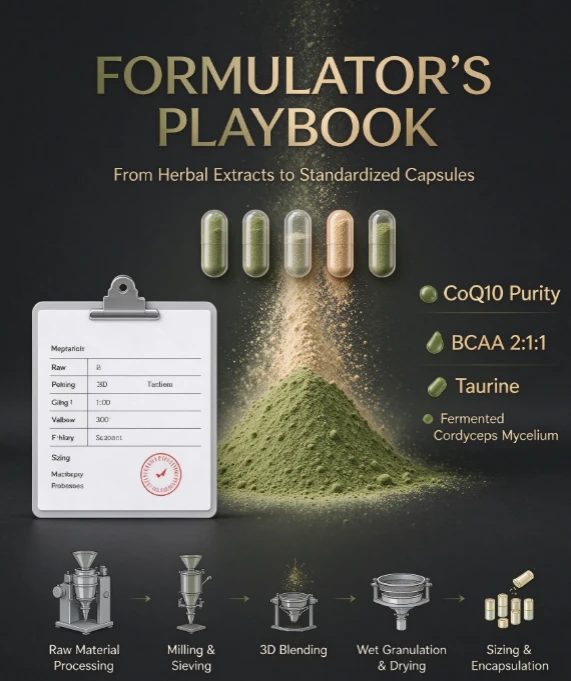
CoQ10: food-grade, microbial fermentation extraction, purity ≥98%.
BCAA: microencapsulated powder blend of leucine:isoleucine:valine = 2:1:1 by mass.
Taurine: food-grade, purity ≥99%.
5) Mechanism Logic (Formulation Architecture)
This composition is framed in TCM roles (monarch / minister / assistant / envoy) while aligning with modern physiology.
Monarch herbs (core for kidney-tonifying + anti-fatigue)
Epimedium (Yin Yang Huo): kidney-yang support, strengthening bones/tendons; associated with endurance and anti-fatigue positioning.
Cornus (Shan Zhu Yu): supports liver–kidney, stabilizing essence; contributes to stamina concept.
American ginseng (Xi Yang Shen): qi and yin support; used for low energy with dryness/heat-type depletion patterns.
Fermented Cordyceps mycelium powder: kidney support + endurance support; positioned for lactate handling and energy reserves.
Minister herbs (tendon/bone strengthening, liver–kidney nourishing)
Astragalus (Huang Qi): qi tonification, immune support narrative, endurance positioning.
Eucommia (Du Zhong) + Achyranthes (Niu Xi): classic tendon/bone pair; joint/back-knee weakness positioning.
Goji (Gou Qi Zi): liver–kidney nourishment; antioxidant narrative.
Morinda (Ba Ji Tian): kidney-yang support; musculoskeletal weakness positioning.
Cistanche (Rou Cong Rong): kidney-yang and essence support; also commonly used for bowel moistening (helpful when tonics are drying).
Cynomorium (Suo Yang): kidney-yang and essence support; endurance/anti-fatigue narrative.
Sang Ji Sheng / Dipsacus / Drynaria: tendon-bone strengthening cluster; supportive in recovery and resilience frameworks.
Assistant herbs (anti-fatigue, anti-hypoxia, adaptogenic stress tolerance)
Eleuthero (Ci Wu Jia): adaptogenic positioning; fatigue and resilience.
Rhodiola (Hong Jing Tian): endurance, anti-hypoxia, recovery positioning.
Sea buckthorn + Amla: antioxidant and metabolic support; broad "vitality" narrative.

Envoy / modern nutrition synergy
CoQ10: mitochondrial energy chain support; oxidative stress control.
BCAA (2:1:1): muscle protein balance, central fatigue theory marketing language.
Taurine: membrane stability, oxidative stress, recovery positioning.
Developer takeaway:
This is not "one herb for one symptom." It's a structured stack that targets:
energy reserve (glycogen)
metabolic waste clearance (lactate/urea nitrogen proxies)
musculoskeletal integrity (bone density + tendon/bone herb cluster)
stress-adaptation and recovery (adaptogens + nutrients)
6) Preparation Method (Translated, Step-by-Step)
A manufacturing method is provided, aimed at producing granules and then capsules.
Step S1 - Raw material processing
Select, wash, and dry:
Epimedium, Cornus, American ginseng, Astragalus, Eucommia, Achyranthes, goji, Morinda, Cistanche, Cynomorium, Sang Ji Sheng, Dipsacus, Drynaria, Eleuthero, Rhodiola, sea buckthorn, amla.
Step S2 - Milling and sieving
Pulverize each dried herb, pass through 100–200 mesh to obtain fine powders.
Mix according to formula ratios → mixed TCM powder.
Step S3 - Add functional nutrients and fermented ingredient
Add fermented Cordyceps mycelium powder, CoQ10, BCAA, taurine to the mixed TCM powder.
Mix in a 3D blender for 15–30 minutes → total blended powder.
Step S4 - Wet granulation (ethanol binder) + drying
Add 50%–80% ethanol as binder at 10%–30% of total powder weight.
Mix to form wet mass, granulate, then dry at 60–80°C until moisture ≤ 5%.
Step S5 - Sizing + encapsulation
Screen granules through 10–20 mesh to size.
Fill into capsules; content weight per capsule: 0.3–0.5 g.
Preferred parameters (claims):
3D blender speed: 10–30 rpm, mixing time 20 min
Ethanol concentration: 65%
Ethanol amount: 20% of total powder weight

7) Evidence: Animal Testing Results (Translated & Highlighted)
Test 1 - Mouse weight-loaded swimming (anti-fatigue)
Design:
90 SPF Kunming male mice, 18–22 g
Grouping: 7 groups, 10 mice/group
Oral gavage once daily for 30 days
Dose: 0.5 g/kg·bw (stated as ~10× human recommended dose)
Swimming protocol: tail-loaded with 5% body weight, water depth 30 cm, water temp 25±1°C
Outcomes: time to exhaustion; blood lactate; serum urea nitrogen; liver glycogen
Key reported outcomes:
Example embodiment swimming times: 1856.3 s, 1658.7 s, 1902.1 s
Blank control: 425.3 s
Reported prolongation rates: 336.5%, 305.3%, 347.3% (vs blank control)
Liver glycogen increased; blood lactate and serum urea nitrogen decreased (all reported as statistically significant in the text).
Synergy / omission findings (very useful for product positioning):
Removing the American ginseng + Rhodiola + Eleuthero group caused the largest drop in swim time: down to 986.2 s, a 46.9% decrease vs the main embodiment.
Removing Epimedium reduced swim time to 1123.6 s (39.5% decrease).
Removing fermented Cordyceps mycelium powder reduced to 1289.5 s (30.5% decrease).
Removing Cornus reduced 26.9%; removing Eucommia + Achyranthes reduced 21.6%.
Sum of decreases across five omission groups: 165.4%, argued as evidence that full-formula effect is not a simple additive sum (synergy).
Test 2 - Bone mineral density (BMD) in osteoporosis model (tendon/bone strengthening)
Design (as provided):
Model: ovariectomy-induced osteoporosis (text describes ovariectomy model; note the animal naming in the text has an inconsistency, but the protocol intent is clear).
Treatment: started 4 weeks post-op, continued 12 weeks
Dose: 0.3 g/kg·bw
Outcomes: femur BMD by dual-energy X-ray; serum osteocalcin (bone formation marker); TRAP (bone resorption marker)
Key reported outcomes:
Model control BMD: 0.225 g/cm²
Sham group BMD: 0.338 g/cm²
Main embodiment BMD: 0.318 g/cm², described as close to sham; "recovery rate" 94.1%
Osteocalcin: 18.6 ng/mL (embodiment) vs 8.2 ng/mL (model control)
TRAP: 8.5 U/L (embodiment) vs 15.8 U/L (model control)
Omission findings:
Removing Epimedium: BMD 0.258 g/cm², 18.9% decrease (largest drop for bone strengthening).
Removing Eucommia + Achyranthes: BMD 0.262 g/cm², 17.6% decrease.
Removing Cornus: 14.5% decrease.
Removing American ginseng + Rhodiola + Eleuthero: 10.4% decrease.
Removing fermented Cordyceps mycelium powder: 12.6% decrease.
Interpretation for developers:
The "anti-fatigue triad" (American ginseng + Rhodiola + Eleuthero) is most critical for endurance outcomes.
Epimedium and the Eucommia + Achyranthes pair are most critical for bone outcomes.
Cistanche sits in the kidney-tonifying, essence-supporting layer that helps unify "fatigue symptoms + musculoskeletal weakness symptoms" into one coherent positioning.
8) Spotlight: Why Cistanche (Rou Cong Rong) Is a Strategic Core for Kidney-Related Fatigue Products
If your brand focus includes "kidney function support" with fatigue as a concurrent complaint, Cistanche is commercially and clinically "story-ready" because it:
Fits the TCM narrative of kidney-yang / essence support, often tied to endurance and recovery concepts
Is commonly paired with other kidney-tonics (e.g., Morinda, Cynomorium, Epimedium) for stacked reinforcement
Offers an additional consumer-friendly benefit: bowel moistening, useful when a product contains multiple warming tonics that may be perceived as "drying"
For a Cistanche-focused independent site, you can build content clusters around:
"kidney deficiency fatigue symptoms" (symptoms-driven SEO)
"Cistanche + Cordyceps + ginseng" endurance stack
"Cistanche for recovery + muscle weakness symptoms"
"Cistanche for aging vitality + bone density support"
Cistanche prostatitis formula sell in china

9) Practical Developer Notes (Formulation + Compliance Mindset)
Synergy claim style:
Instead of "cures fatigue," phrase as:
"supports physical endurance," "helps reduce exercise-induced fatigue," "supports recovery," "supports bone health," "supports musculoskeletal strength."
Dose form advantage:
Granulation + encapsulation improves handling of multi-powder blends and enables scalable production.
Quality specs matter:
CoQ10 purity, taurine purity, and BCAA ratio are explicitly defined-useful for procurement and COA requirements.
10) Summary: What You Can Reuse in Your Product/Content Strategy
A complete formula framework that integrates kidney-tonifying TCM with modern energy nutrients
A manufacturing route compatible with capsule production
Clear "what matters most" insights from omission testing (which ingredient clusters drive outcomes)
A strong narrative bridge from fatigue symptoms to tendon/bone weakness symptoms, especially valuable in aging and active lifestyle markets