A Man's Liver Is A Bit Prone To Injury
May 21, 2024
Liver cancer is one of the most common malignant tumors in China. Epidemiological data show that the incidence rate and mortality of liver cancer in China account for the third place in all malignant tumors, next only to stomach cancer and lung cancer. Liver cancer can occur at any age, but is most common between the ages of 31 and 50, with a male-to-female ratio of approximately 8:1.

Benefits of cistanche tubulosa
Traditional Chinese medicine believes that liver cancer is a malignant disease characterized by a deficiency of qi and blood in the organs, and the combination of qi, blood, dampness, heat, stasis, and toxin. It is mainly characterized by swelling, hardness, pain, emaciation, loss of appetite, fatigue, or jaundice or coma in the right flank.
1, Clinical manifestations
Right flank pain, abdominal lumps, swelling, jaundice, poor appetite, fatigue, and emaciation are the main clinical manifestations.
1. Right flank (liver area) pain is the most common, intermittent or persistent, dull or bloating pain, sometimes causing pain in the right shoulder, back, and waist.
2. Abdominal mass and progressive liver enlargement in the right flank are some of the most common characteristic signs; Patients with combined cirrhosis and portal hypertension may also experience splenomegaly.
3. Abdominal distension is common in patients with ascites caused by late-stage complications such as cirrhosis and portal hypertension.
4. Poor appetite and decreased appetite may be accompanied by symptoms such as nausea, vomiting, and diarrhea.
5. In the early stages, fatigue can be seen, while in the middle and late stages, weight loss gradually occurs. In the late stages, a few patients may present with cachexia.
Patients with liver cancer metastasis may exhibit corresponding symptoms and signs of metastatic lesions.
2, Etiology and pathogenesis
Deficiency of qi and blood in the organs, combined with internal injuries in the seven emotions, resulting in emotional depression; Spleen deficiency and dampness accumulation, phlegm dampness coagulation; The invasion of six evils and toxins, as well as the coagulation of evil and toxins, can cause the combination of qi, blood, dampness, heat, stasis, and toxins to form liver cancer.
Liver cancer is located in the liver, but it is closely related to the gallbladder, spleen, stomach, and kidney due to the close relationship between the liver and gallbladder on the surface and inside, and the liver and spleen on the surface and inside. The spleen and stomach are on the surface and inside, and the liver and kidney are homologous. In the early stage of its disease, it is mainly characterized by qi stagnation, blood stasis, dampness, and heat, and over time, it also shows deficiency of qi and blood, as well as deficiency of yin and yang, becoming a syndrome of deficiency and excess, mixed with deficiency and excess. The evolution of its pathogenesis is complex, and the central link in the evolution of the pathogenesis is the loss of liver function due to pathological changes in the liver itself or other organs affecting the liver. Liver dysfunction and laxity can cause stagnation of qi and blood circulation, leading to qi stagnation and blood stasis, as well as flank pain and liver enlargement; Liver dysfunction leads to abnormal bile secretion and excretion, resulting in jaundice and poor appetite; If the liver loses circulation and qi is not smooth, and it affects the rise and fall of qi in the spleen and stomach, it will lead to dysfunction of the spleen and stomach, lack of biochemical sources of qi and blood, and poor appetite, fatigue, and emaciation. Water and dampness will lose circulation and accumulate dampness, generating phlegm, and dampness will transform into heat, resulting in flank pain and liver enlargement; If liver dysfunction leads to poor circulation of qi and blood, and affects the function of regulating water channels in the lungs, spleen, and kidneys, water and fluid metabolism will be disrupted, resulting in abdominal distension and edema.

Total glycosides of Cistanche deserticola can inhibit liver cancer cells at the early stage of liver cancer
In short, liver dysfunction can lead to pathological changes such as qi stagnation, blood stasis, and dampness and heat, which are intertwined in the liver and exhibit various clinical manifestations of liver cancer. Over time, the moon affects the spleen and kidneys due to the disease. The liver does not store blood and the spleen does not regulate blood, resulting in blood syndrome; The evil toxin is rampant, blinding the pericardium and leading to coma; The liver, spleen, and kidneys become swollen due to illness.
3, Key points of diagnosis and examination
1. Unexplained discomfort or pain in the right flank, with worsening symptoms of liver disease accompanied by systemic discomfort, decreased appetite, fatigue, weight loss, and other symptoms.
2. Progressive enlargement of the right flank liver, with a hard texture and refusal to press, with nodular protrusions on the surface, which is a diagnostic sign, but mostly in the middle and late stages.
3. Combining liver ultrasound, Cr scan, Mm, liver puncture, and serological examination (such as alpha-fetoprotein) can help clarify the diagnosis.
Liver nourishing methods:
1. Frequently eating Cistanche deserticola
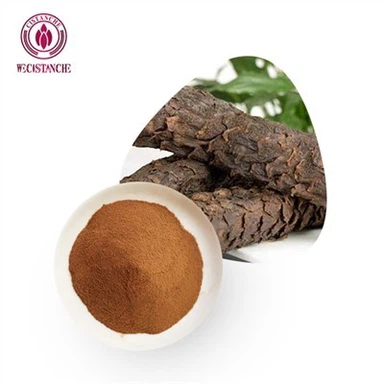
Cistanche deserticola Y.C.Ma or Cistanche tubulosa (Schenk) Wish, traditional Chinese medicine for tonifying the kidney, is recorded in the 2015 edition of the Chinese Pharmacopoeia. It is a succulent stem of the genus Cistanche in the family Lewandaceae, mainly distributed in Inner Mongolia, Ningxia, Gansu, Qinghai, and Xinjiang. Cistanche deserticola and Tubular Cistanche deserticola have extremely high medicinal value. They enter the kidney and large intestine meridians. The Compendium of Materia Medica records that Cistanche deserticola "is a nourishing but not severe substance, so it is called Cistanche deserticola" and "it is warm but can moisten, replenish but not dry, smooth but not diarrhea".

superman herbs cistanche
It has the effects of tonifying kidney yang, benefiting essence and blood, moistening the intestines, and defecating. Traditionally, it is used for kidney yang deficiency, deficiency of essence and blood, impotence, infertility, soreness of the waist and knees, weakness of muscles and bones, and constipation due to intestinal dryness, It is the most frequently used tonifying kidney yang medicine in history. Modern pharmacological research shows that Cistanche deserticola has many effects such as improving sexual function, anti-aging, improving learning and memory ability, anti-Alzheimer's disease, defecation, etc. It is widely used in clinical prescriptions of Chinese medicine, traditional Chinese patent medicines, and simple preparations and health care products.

Total glycosides of Cistanche deserticola can inhibit liver cancer cells at the early stage of liver cancer
The main chemical components of Cistanche deserticola are phenylethanoid glycosides, iridoids, and their glycosides, lignans, and polysaccharides. Modern pharmacological studies have shown that phenylethanoid glycosides are the most important active substances in Cistanche deserticola, and have obvious anti-Alzheimer's disease, Parkinson's disease, myocardial ischemia, and other effects.
The functional component of Cistanche deserticola, total glycosides of Cistanche deserticola, has the effect of reducing cell apoptosis and necrosis, increasing cell survival rate, and achieving protection of primary liver cells; At the same time, it can accelerate the liver's decomposition and metabolism of alcohol, helping the liver detoxify.
Total glycosides of Cistanche deserticola can inhibit liver cancer cells at the early stage of liver cancer.
To sum up, total glycosides of Cistanche deserticola inhibit the proliferation and growth of HepG2 cells by influencing cell cycle progression, destroying cell structure, promoting cell apoptosis, and limiting cell migration.

Cistanche deserticola slice
2. A cheerful mood is the most hepatoprotective
To have a strong liver, the first thing to learn is to control anger. Even if you are angry, do not exceed 3 minutes. Try to be calm, optimistic, and carefree, so that the liver fire can be extinguished and the liver qi can develop and regulate normally. If this natural law is violated, it will harm the liver qi. Therefore, maintaining a cheerful mood can protect the liver.
3. Regular massage
We lie flat on the bed and gently massage the ratio between the gallbladder and liver with both hands, approximately under our right rib. Regular massage of this area can promote blood circulation in the liver and improve metabolic function.
4. Tears detoxification
Compared to men who never cry, women have a longer lifespan, which is inevitably related to tears. Traditional Chinese medicine has already had this understanding, and it has also been confirmed by Western medicine. As excrement, tears, like sweat and urine, do contain some harmful biochemical toxins to the body. So, when feeling uncomfortable, aggrieved, or suppressed, just cry out.
5. Pressing the liver detoxification acupoint
This acupoint is worth too much pressure. It is located in the depression before the junction of the first and second metatarsals on the dorsum of our feet. We rub the acupoint with our thumbs for about five minutes, and if we feel some soreness, it will be fine. Remember not to use too much force, and massage both feet one by one.