Low Back & Knee Cold-Ache, Clear/Long Urination, Frequent Night Urination—In TCM This “Yang Deficiency” Calls For Cistanche (Rou Cong Rong) To Warm And Support
Aug 07, 2026
Last time we talked about lotus leaf and how it helps clear summer heat and dampness-thirst eases, urination feels cleaner, appetite opens up.
Today's character deals with a different kind of problem-when the body's "fire" feels insufficient.
If you're a man in your 40s or 50s and you've started to feel that certain functions are "slipping," you're not alone. Many people first notice it as a collection of small changes:
You're only in your early forties, yet your lower back feels like an older man's back-sit too long and it aches, stand too long and it hurts, bend over to wash dishes and it's hard to straighten up.
You feel colder than others in winter; even in summer you don't want strong A/C-your lower back and knees feel as if cold air is "leaking in."
You wake up to urinate two or three times a night-just as you fall asleep, the urge wakes you up, and daytime energy drops.
Intimacy feels less confident; men worry they're "not the same," women may feel drier and less interested.
Bowel movements are either hard to pass, or thin/soft and incomplete-never quite "finished."
If you recognize one or two of these, in TCM you're not simply "getting old" or "just tired."
In many cases, it matches what Chinese medicine calls "Yang Deficiency" (阳虚).

1) What Is "Yang Deficiency" in TCM-And Why It Creates These Symptoms?
TCM uses a practical, functional model of the body.
Yang is the warming, activating force-think of it as the body's internal "sun" or "pilot flame." When Yang is sufficient, circulation is warm, transformation of fluids is smooth, and the lower body feels strong and steady.
When Yang becomes insufficient, the body may enter a kind of "energy-saving mode":
Low back and knees feel cold and sore because warming power doesn't reach the lower half effectively.
Urine becomes clear and abundant because the body's fluid transformation ("qi transformation," 气化) is weaker.
Frequent night urination because "Kidney Qi" (a TCM functional concept) doesn't "hold" fluids as firmly at night.
Reduced sexual vitality because the "Ming Men fire" (命门火-often translated as the body's deep life-fire) feels diminished.
This is exactly where one of the classic TCM tonics is often introduced:

Enter: Cistanche (Rou Cong Rong, 肉苁蓉)-A "Warm but Moist" Yang-Supporting Herb
2) Who Is Cistanche? A "Warm-and-Moist" Yang Tonic (Not Harsh, Not Overheating)
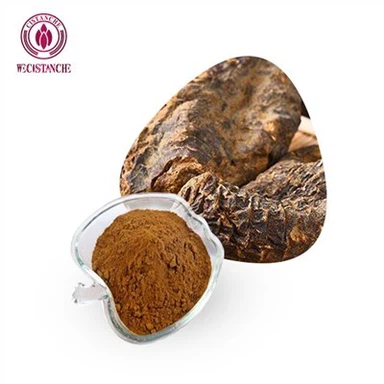
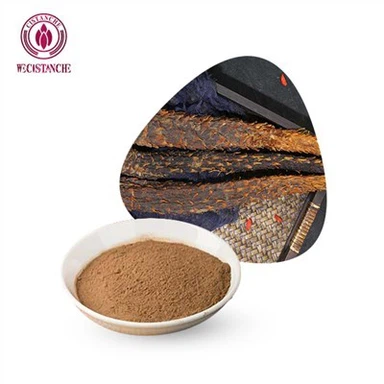
Cistanche is visually distinctive. In the traditional description, it is the dried fleshy stem with scale-like leaves of Cistanche species. It grows like a thick, sturdy stalk, brownish on the outside with layered scales-often described as "sausage-like" in shape.
It is a desert plant that parasitizes the roots of desert shrubs, and it is widely known in folk tradition as "desert ginseng."


TCM Nature & Channels
In TCM terms, Cistanche is often characterized as:
Sweet / Salty / Warm
Sweet → nourishing and harmonizing
Salty → softening, moistening
Warm → supporting warmth and transformation
It traditionally enters the Kidney and Large Intestine channels:
Kidney in TCM governs bones, growth, reproduction, and deep vitality.
Large Intestine governs elimination-hence Cistanche's well-known "moistening" support for bowel regularity.
The Core Advantage in One Sentence
Cistanche supports Yang in a warm, steady way-while also moistening-so it's often viewed as gentler for long-term conditioning compared with very hot, aggressive warming herbs.
That "warm-but-moist" profile is a big reason Western consumers searching for a tcm herb for low back pain, tcm herb for frequent urination at night, or tcm herb for constipation in older adults often become interested in Cistanche.

3) What Cistanche Is Known For in TCM: The Three Main Strengths

(1) Supporting Kidney Yang: Rebuilding the "Lower-Body Fire"
This is Cistanche's main job in classic TCM usage.
When "Kidney Yang" is weak, common patterns include:
low back/knee soreness and cold sensation
fear of cold, wearing more layers than others
clear, long urination
frequent night urination
reduced sexual function and drive
fatigue, low motivation
From a Western-friendly perspective, you can think of it as supporting the body's warming regulation, lower-body vitality, and functional resilience-especially when the pattern includes coldness and weakness.
(2) Nourishing "Essence and Blood" (TCM Framework)
TCM says: "Kidney stores essence; essence can generate blood."
In practice, many people who feel "Yang low" also feel their "foundation" is thin-less recovery, less stamina.
Cistanche is often positioned as a tonic that supports vitality without being overly drying-a key concern for middle-aged users who are cautious about "hot tonics" that may cause discomfort.

(3) Moistening the Intestines: Supporting Comfortable Bowel Movements
A special benefit of Cistanche-compared with many other Yang tonics-is that it traditionally also moistens.
That makes it a classic option when the person has:
cold/weak lower back + frequent urination and
constipation or difficult bowel movements
So it can be "two birds, one stone" in TCM logic: support warmth + support elimination.

4) Quick Self-Check: Do You Fit a "Yang Deficiency" Pattern?
Consider how many apply:
Common TCM signs of Kidney Yang deficiency
low back/knees feel cold and sore
chills or cold intolerance
frequent night urination
clear, abundant urination
reduced sexual performance or desire
low energy, daytime sleepiness
stools: either dry/constipated or loose (depends on the person)
tongue often looks pale/swollen with a moist white coating (TCM observation)
Interpretation (TCM-style)
1–2 signs: mild-warming lifestyle, less cold/raw food
3–4 signs: moderate-may consider a Cistanche-centered tonic approach
5+ signs: clearer pattern-best to consult a qualified practitioner
5) How to Use Cistanche (Traditional Methods) + Practical Guidance
Cistanche is widely used in food-like ways in East Asia. Common traditional formats include:
Tea/infusion: often 3–6 g as a daily infusion for gentle conditioning
Soup/stew: paired with lamb, goji, or other tonics
Herbal wine: traditionally used by some middle-aged men
Congee: for people with sensitive digestion
Formula use: stronger pattern-matching under practitioner guidance
Typical tonic range often cited is 6–15 g/day in traditional usage (individualized; consult professionals if you take medications or have conditions).
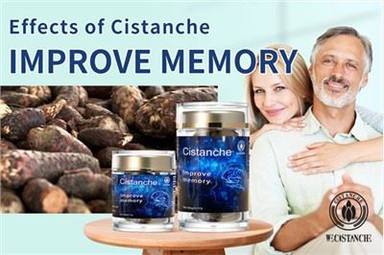
High-content cistanche extract capsules for sale
click the product picture to get more details


Who Should Be Careful (Important, honest note)
Even "gentle" tonics are not for everyone:
If you run hot easily (dry mouth, night sweats, heat in palms/soles), you may not match a warming tonic.
If you have "damp-heat" signs (dark yellow urine, sticky sweating, thick yellow tongue coating), warming tonics may be inappropriate.
If you have chronic diarrhea/very loose stool, moistening herbs may worsen it.
This is why TCM emphasizes pattern matching rather than one-herb-fits-all.
6) Cistanche vs. Morinda (Ba Ji Tian): Similar Goal, Different Focus
Many people ask whether Cistanche and Morinda (巴戟天) are basically the same. TCM says they overlap but differ:
Cistanche: "warm + moist," often chosen when Yang deficiency comes with dryness/constipation.
Morinda: more "warm strengthening," often chosen when Yang deficiency comes with wind-damp discomfort and joint soreness.
In real formulas, they are sometimes combined: one supports warmth gently, the other reinforces strength-balanced teamwork.

7) Why Ingredient Quality Matters: We Use Cistanche tubulosa and a Full Industrial Chain
For Western customers, "Cistanche" is not just a name-it's a supply-chain question: origin, processing, and standardization determine consistency.
This is where we want to be transparent about who we are.
Our Factory Profile (from our company overview)
Our company, Chengdu Wecistanche Bio-Tech Co., Ltd, was established in 2003 with a registered capital of 10.3 billion CNY. We operate what we describe as the world's largest cistanche processing factory supported by a large-scale cistanche base in Xinjiang, China, with an integrated industrial chain including seed breeding, cultivation, collection/storage, and a GMP facility. We focus especially on Cistanche originating from Hotan, Xinjiang.
You can view the full profile here: https://www.xjcistanche.com/about-us
Manufacturing & Compliance Highlights We Publicly List
100,000-class GMP production workshop (National Health Food GMP certificate mentioned)
Advanced ultrafiltration and nanofiltration purification/concentration facilities
10,000-class microorganism incubation laboratory
Certifications listed include China SC, HACCP, SOCA, and NOP
We also list Cistanche-related patents, including membrane separation technology
Why We Emphasize Cistanche tubulosa
In product development, many brands prefer Cistanche tubulosa extract because it can be standardized around recognized active constituents such as:
Echinacoside
Acteoside / Verbascoside
From a consumer perspective, this matters because it supports:
better batch-to-batch consistency
clearer specification-driven formulation
easier quality documentation for international trade
If you're building a men's aging-well formula story, this gives you a clean, Western-friendly narrative: tradition + modern manufacturing standards + measurable actives.
8) A Middle-Aged Men's Perspective: What Cistanche Means (Without Hype)
If you're a man noticing functional decline-energy, recovery, confidence, warmth, nighttime urination-TCM doesn't shame you for it. It frames it as a recognizable functional pattern and offers a long-term conditioning strategy.
Cistanche is not portrayed in TCM as "a quick stimulant." It is more like:
steady warming support
foundation rebuilding
moistening rather than drying
better suited for long-term conditioning when the pattern fits
That's the honest appeal for people who want to age with strength-without pushing the body too hard.
SEO Keyword Integration
To help your readers find this content naturally, you can include these phrases in headings/FAQs:
tcm herb for frequent urination at night
tcm herb for low back and knee pain
tcm herb for cold intolerance
tcm herb for constipation in older adults
tcm herb for male vitality support
tcm herb for age-related fatigue
(If you paste your Excel keyword list, I can weave the exact phrases and search intent clusters into the copy without making it read "stuffed.")
Closing: Real Warming Is "Warm + Moist," Not Just "Hot"
Cistanche's lesson is simple and practical:
True warming support is not about blasting the body with heat.
It's about warming with softness, supporting with moisture-so the body becomes warmer, steadier, and more comfortable over time.
If you'd like, tell me which symptoms your customers ask about most (night urination, low back/knees, fatigue, libido confidence, constipation). I can turn this article into a conversion-focused landing page with:
H1–H3 structure
product positioning blocks (bulk extract / capsules / private label)
compliance-safe claims for US/EU
and a "Why our Cistanche tubulosa extract" section anchored to the About Us facts above.