A Study On The Medication Regularity Of TraditionalChinese Medicine in Treating Benign Prostatie Hyperplasiaand Its Network Pharmacology
Mar 31, 2025
Introduction
Benign prostatic hyperplasia (BPH) is one of the most common benign diseases that cause lower urinary tract symptoms in middle-aged and elderly men. It primarily affects men over the age of 50. The pathogenesis mainly involves the hyperplasia of stromal and epithelial cells in the prostate, leading to an increase in the volume of the prostate gland. This, in turn, causes bladder outlet obstruction (BOO), which clinically manifests as lower urinary tract symptoms (LUTS), such as urinary frequency, urgency, and weak urine stream. BPH is one of the most common urological diseases in China. With the aging of the population, the incidence of BPH continues to rise, posing a serious threat to the health of middle-aged and elderly men. As the burden on medical services increases, further research into the pathogenesis of BPH and the development of more effective and safer drugs has become a key focus.
Although the pathogenesis of BPH is not yet fully understood, it is generally believed that age and androgen levels are the two major risk factors. Its pathogenesis may be related to the imbalance between cell proliferation and apoptosis in the prostate, as well as the decline in androgen levels. Other contributing factors include: hormonal changes, chronic inflammation, oxidative stress, neurotransmitter involvement, and metabolic syndromes. In terms of drug treatment, current medications primarily target the symptoms of LUTS through hormonal or neural pathways, aiming to alleviate symptoms, delay disease progression, and improve quality of life. However, some drugs are not effective for all patients, and adverse effects such as decreased libido, erectile dysfunction, or hypotension may occur. Some patients are unable to tolerate these side effects or are unwilling to accept them, leading to poor compliance. For patients with severe symptoms or complications, surgical treatment may be necessary, which increases both psychological and economic burdens, especially for elderly or high-risk patients.
BPH is classified under the category of "stranguria" and "impediment" in Traditional Chinese Medicine (TCM). TCM treatment for this disease has a long history and rich clinical experience. Chinese herbal medicines are widely used in BPH treatment and have shown certain advantages in multiple aspects such as symptom relief, recurrence prevention, and safety. BPH is one of the key conditions for which TCM offers unique advantages. Although there are many studies and abundant literature, the level of evidence remains low. With the emergence of data mining and internet-based pharmacology, network pharmacology has provided new tools and perspectives for exploring the mechanisms of Chinese medicines.
China National Knowledge Infrastructure (CNKI) contains a vast number of clinical reports and experimental studies on the treatment of BPH with Chinese medicine. By using the data mining platform V3.5, which focuses on the compatibility of Chinese herbal prescriptions, this study aims to explore medication patterns for BPH treatment and provide references for clinical drug use. At the same time, based on network pharmacology methods, the study will analyze the effective components and mechanisms of commonly used Chinese medicines for BPH, aiming to identify their potential mechanisms of action and provide new ideas and directions for future research.
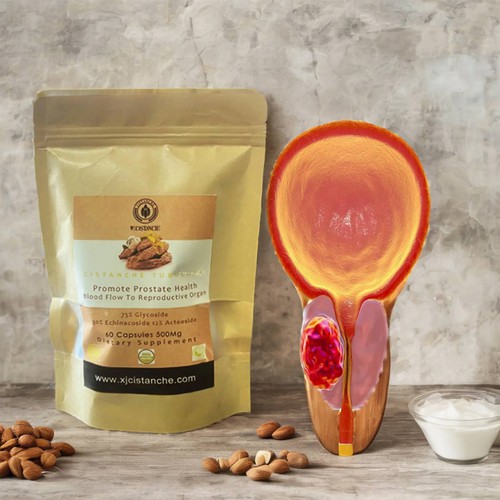
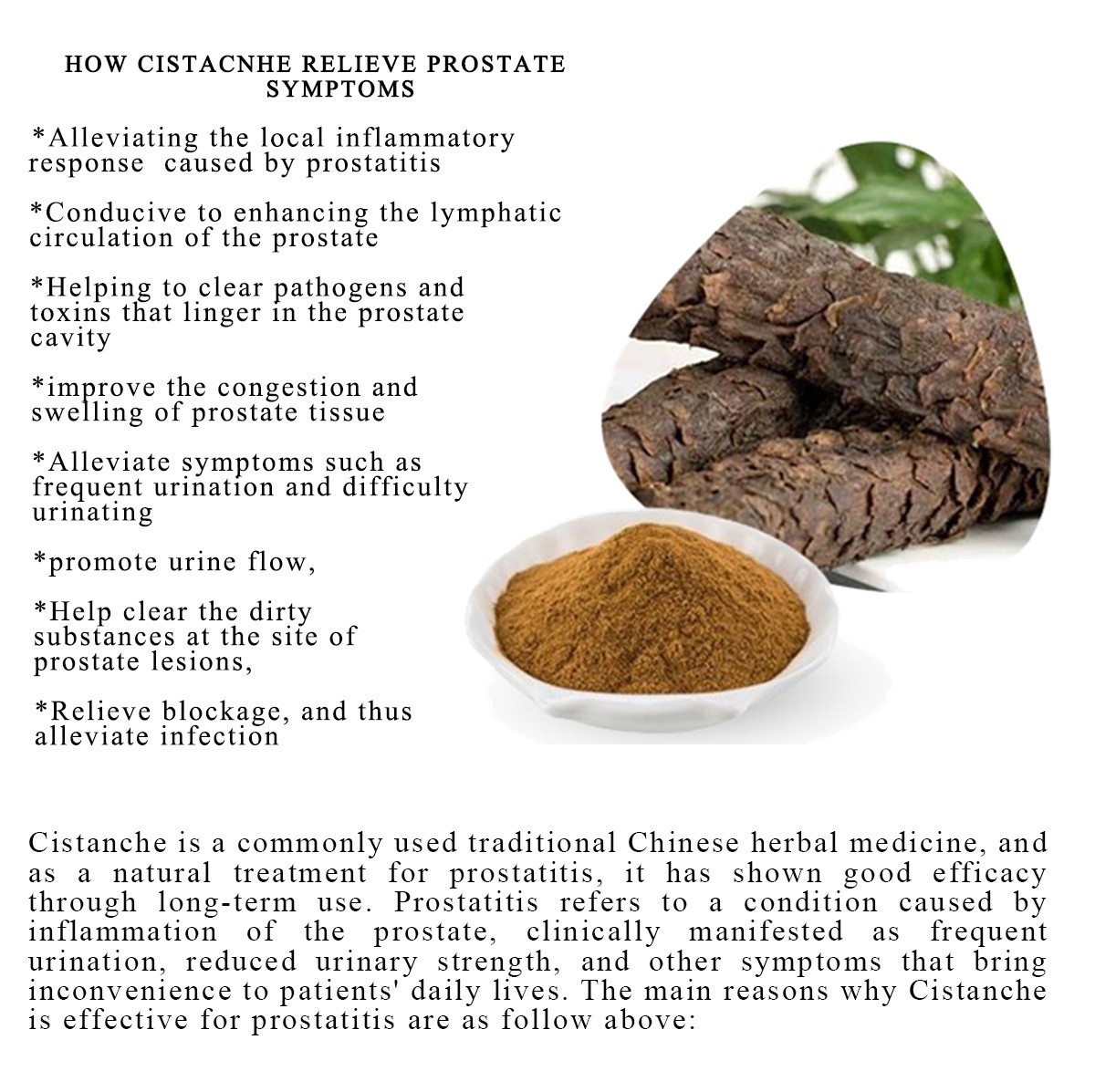
Herbal Cistanche For Prostate Health
Chapter 1: Literature Review
1.1 Progress in Traditional Chinese Medicine (TCM) Research on Benign Prostatic Hyperplasia (BPH)
1.1.1 Historical Development
Traditional Chinese Medicine (TCM) does not have a specific term for benign prostatic hyperplasia (BPH); instead, based on clinical symptoms, it is categorized under conditions such as "Long Bi" (urination difficulty), "Lao Lin" (strangury), and "Xiaobian Bu Li" (urinary dysfunction). The earliest mention can be traced back to the Huangdi Neijing (The Yellow Emperor's Inner Classic), which described urination disorders. In "Ling Shu – Bian Que Lun", it is stated: "Urine retention is due to bladder obstruction; when water cannot be transformed, Qi stagnates, leading to dysfunction." In "Su Wen – Zang Qi Fa Shi Lun", it is written: "When the triple burner is blocked, water pathways are obstructed, leading to urinary difficulty." In "Jingui Yaolue", it says: "With urinary blockage, the evil Qi injures the kidney." These classical texts indicate that BPH-related symptoms had already been observed and recorded in early Chinese medical literature.
In ancient texts, BPH-related symptoms were described using terms such as: Long Bi (urinary obstruction), Xiao Bian Nan (difficulty urinating), Xiao Bian Bu Li (urinary dysfunction), and Xue Lin (bloody urine). The "Su Wen – Ben Zang Lun" states: "The bladder stores fluids and transforms Qi; when there is dysfunction, urination is difficult." In "Jingui Yaolue", the term "Long Bi" is used to describe BPH-like symptoms, and it is classified into five types based on various causes, including Qi stagnation, blood stasis, and damp-heat. These classifications laid the foundation for syndrome differentiation and treatment principles in TCM.
With the development of TCM theory, many physicians have contributed to the understanding of BPH. For example, Zhang Zhongjing emphasized the importance of warming Yang and promoting urination; Sun Simiao advocated the use of acupuncture and herbal prescriptions to treat urinary disorders. During the Ming and Qing dynasties, doctors like Ye Tianshi and Wu Jutong further enriched the theoretical system, focusing on internal organ imbalance and Qi and blood disharmony. They classified urination disorders into syndromes like Yin deficiency with fire, damp-heat in the lower burner, Qi stagnation, and kidney Yang deficiency, and proposed corresponding prescriptions.
In modern times, "Long Bi" and "Xiao Bian Bu Li" are still the primary TCM terms used to describe BPH. Contemporary physicians have developed effective treatment methods based on syndrome differentiation, such as promoting urination, clearing heat, activating blood, regulating Qi, and tonifying the kidney. These methods are often used in combination with acupuncture, moxibustion, and massage therapy, demonstrating good clinical efficacy.
In recent decades, with the advancement of integrative medicine, TCM research on BPH has entered a new stage. The State Administration of Traditional Chinese Medicine has promoted the modernization and standardization of TCM diagnosis and treatment. In 1994, BPH was included in the first batch of diseases for clinical efficacy evaluation of TCM. In 1997, it was listed as a research focus in the national "Ninth Five-Year Plan" project, with the goal of developing comprehensive treatment strategies combining TCM and Western medicine.
1.2 Etiology and Pathogenesis
Professor Wang Yong believes that benign prostatic hyperplasia (BPH) falls under the category of "Long Bi" in Traditional Chinese Medicine (TCM). Aging and kidney Qi deficiency are considered the fundamental causes of BPH. Common contributing factors include overexertion, emotional stimulation, exposure to external cold, improper diet, blood stasis, phlegm accumulation, and internal damp-heat-these are seen as the basic pathological mechanisms. Deficiency is considered the root, while excess is the manifestation.
Professor Li Li also believes that the pathogenesis of BPH lies in kidney deficiency with blood stasis and phlegm obstruction, which leads to the blockage of Qi transformation in the lower burner (i.e., the bladder). As a result, urination becomes difficult. Professor Xie Zhufan points out that kidney deficiency is the primary internal cause of BPH and is often accompanied by Qi stagnation, blood stasis, phlegm obstruction, and damp-heat. Professor Zhang Dayu believes that BPH is mainly caused by the decline of kidney Qi due to aging, which leads to dysfunction of the bladder in storing and discharging urine. Professor Zhou Zhongying proposed that kidney deficiency is the root of BPH, often complicated by external factors such as cold, dampness, and improper diet, leading to internal accumulation of damp-heat and phlegm stasis, which are important triggers for the disease.
In summary, various scholars generally agree that the pathogenesis of BPH is characterized by both deficiency and excess. The primary deficiency lies in the kidneys, bladder, spleen, and liver, while the excess manifests as blood stasis, phlegm, heat, and dampness. The disease mostly involves the liver, spleen, kidneys, bladder, and reproductive system. Kidney Yang deficiency and Qi sinking lead to bladder dysfunction; spleen Qi deficiency fails to transform fluids, resulting in phlegm accumulation; liver Qi stagnation causes blood stasis; and lung Qi deficiency leads to retention of fluids. These imbalances result in urinary obstruction, difficulty, and retention.
1.3 Syndrome Differentiation and Classification
At present, there is no unified standard for the syndrome differentiation of BPH in clinical TCM practice. According to the Guiding Principles for Clinical Research on New Chinese Medicines for Treating BPH, BPH syndromes are generally classified into six major types: lung-spleen Qi deficiency, damp-heat in the lower burner, kidney Yang deficiency, kidney Yin deficiency, liver Qi stagnation, and blood stasis obstruction. According to the 5th edition of Surgery in TCM, the main syndrome types are: Qi deficiency with sinking, damp-heat in the lower burner, kidney Yang deficiency, and kidney Yin deficiency. The 2022 edition of the TCM Clinical Diagnosis and Treatment Guidelines categorizes BPH into: kidney deficiency, blood stasis, phlegm obstruction, damp-heat, liver Qi stagnation, lung Qi deficiency, and spleen Qi deficiency-totaling 9 types of syndromes.
Research from Zhang Xue's team on 500 BPH patients showed that the most common syndromes were blood stasis, damp-heat in the bladder, kidney Yang deficiency, kidney Yin deficiency, and lung-spleen Qi deficiency. Another study of 781 patients found 7 main syndrome types. Some experts also classify the disease into 7 types based on pathogenesis: Qi stagnation with blood stasis, damp-heat, phlegm-dampness accumulation, kidney Qi deficiency, kidney Yang deficiency, kidney Yin deficiency, and mixed deficiency and excess. Other scholars have observed 13 types, while integrated TCM and Western medicine textbooks suggest 14 types. Despite the diversity in classification, most experts generally agree on the basic pathogenesis involving kidney deficiency and complications of phlegm, blood stasis, and damp-heat.
In summary, although a unified classification system is lacking, most scholars believe that BPH's core pathogenesis involves a complex interplay of deficiency and excess. The most common syndromes include kidney deficiency, Qi sinking, phlegm obstruction, blood stasis, and damp-heat, providing important references for syndrome differentiation and treatment.
1.4 Traditional Chinese Medicine (TCM) Treatment
1.4.1 Internal Treatment
Professor Wang Yong believes that kidney Qi deficiency, blood stasis, and phlegm obstruction are the main causes of BPH. Therefore, promoting blood circulation and removing stasis are key treatment principles, supplemented by tonifying the kidney, clearing heat, resolving dampness, and unblocking the urinary tract. Based on syndrome differentiation and clinical experience, the main TCM therapeutic principles for BPH are to strengthen the kidney, eliminate dampness, and unblock the lower burner. Clinical practice has shown that Chinese herbal medicine can achieve satisfactory results in the treatment of BPH. For example, under the guidance of the principle of "tonifying the kidney and unblocking the collaterals," various classic prescriptions such as Liuwei Dihuang Wan, Ba Zheng San, Qianlie Tong Capsules, and others have been applied with good effects.
Professor Wang recommended a prescription combining Yiyong decoction with acupuncture to treat 33 cases of BPH. After 15 days of treatment, B-ultrasound showed significantly reduced prostate volume, and clinical symptoms improved markedly. Another study used Shenqi Pills to treat BPH by tonifying the kidney and warming Yang, which improved urinary symptoms and quality of life scores in elderly patients.
Professor Zhang Lide used a kidney-tonifying and blood-circulation-promoting herbal decoction to treat 30 BPH patients. After treatment, the maximum urinary flow rate (Qmax) increased, and the IPSS score (International Prostate Symptom Score) decreased significantly, with a total effective rate of 66.7%. Another study using Qianlie Tong Capsules showed that the average prostate volume decreased, and the IPSS and QOL (quality of life) scores improved significantly.
Other clinical trials have demonstrated that the combination of TCM herbal formulas with Western medicine can provide better outcomes. For example, in a study of 186 BPH patients, a combination therapy group (herbal + Western medicine) was compared with a Western medicine-only control group. After four weeks of treatment, the clinical effectiveness rate in the combination group was 63.22%, significantly higher than the 47.73% in the control group. The IPSS score also improved significantly, while the QOL and Qmax showed greater improvement in the integrated treatment group.
Professor Xu Hongliang used a combination of Shenqi Dihuang Decoction and acupuncture to treat BPH with kidney Yang deficiency. The herbs used included Cinnamomi Cortex, Aconiti Lateralis Radix Praeparata, Cornus, Alisma, Plantago Seed, Poria, Achyranthes, Epimedium, etc. The IPSS score and Qmax improved significantly, showing that this method is effective for treating kidney deficiency-type BPH.
Another herbal combination including Cornus, Plantago Seed, Poria, Curculigo, Epimedium, and Alpinia showed good results in 57 BPH cases: 23 were significantly improved, 26 improved, 8 showed no change, with a total effectiveness rate of 85.96%.
Chinese herbal medicine is typically well tolerated, easy to prepare and administer, portable, and safe for long-term use. Some formulas have already been developed into patent medicines and tablets, further verifying their safety and effectiveness. Many of these therapies are now included in national and provincial TCM guidelines for BPH.
At the Second Affiliated Hospital of Anhui University of Chinese Medicine, a clinical trial compared a proprietary herbal capsule (Qianlie Shu Capsules) with Tamsulosin in 202 BPH patients. After 90 days of treatment, both groups showed improvements in Qmax and IPSS scores, but the herbal group had fewer adverse reactions and was more cost-effective.
Professor Zhang Guoqiang used a formula of Rehmannia, Cornus, Radix Morindae, Schisandra, and others to treat 440 BPH patients. Results showed that the herbal formula group (320 cases) and Tamsulosin control group (120 cases) both improved significantly in Qmax, IPSS, and QOL scores, but the herbal group had a lower recurrence rate and fewer side effects.
1.4 Traditional Chinese Medicine (TCM) Treatment
1.4.1 Internal Treatment (Continued)
The compound formulation Huangqi Lizhong Capsules consists of Astragalus membranaceus, Peach kernel, Atractylodes, Rhubarb, Poria, Plantago seed, Alisma, Prunella, Semen vaccariae, etc. In clinical trials, this formula was used to treat 869 patients with BPH, divided into three groups. Results showed that the medication improved urinary symptoms and reduced residual urine. In Phase III clinical trials, treatment groups showed notable effectiveness, with total effective rates of 74%, and symptom score improvements after 42 days of use.
Another study on 503 patients with damp-heat and blood stasis-type BPH who were treated with Huangqi Lizhong Capsules found significant improvements in IPSS scores, quality of life (QOL), maximum urinary flow rate (Qmax), and average urinary flow rate (Qave), with no significant adverse reactions. Research teams like Liu Jiansheng and others have confirmed that the formula is effective for improving urinary symptoms, with a high safety profile.
In a study involving 202 patients, Qianlie Shutong Capsules were used as a comparison treatment. Results showed that after 90 days, the treatment group had significantly better outcomes in IPSS, QOL, and Qmax compared to controls. Similarly, Huangqi Lizhong Capsules were tested in 240 patients, and results showed significant symptom improvement, reduced prostate volume, and improved urinary flow. The effective rate was 85.96%.
In another center, 88 patients were treated with oral Huangqi Lizhong Capsules. Statistical analysis showed significant reductions in IPSS and QOL scores, with sustained improvements at 4, 8, and 12 weeks. The overall efficacy rate at 12 weeks was 73.8%, confirming the formula's value in treating BPH and improving patient quality of life.
Another compound, Bazhen Capsules (comprising Angelica sinensis, Ligusticum, Poria, Atractylodes, Rehmannia, Codonopsis, etc.) was tested in 440 patients. The treatment group showed significant improvements in IPSS, QOL, Qmax, and residual urine, surpassing the control group. The same was observed with Shenqi Dihuang Decoction, which also reduced prostate volume and improved urination quality.
1.4.2 External Treatment
In cases where internal medication alone is insufficient, external therapies such as acupuncture and moxibustion have shown clear advantages, particularly in enhancing safety and effectiveness.
Yang et al. conducted a randomized controlled trial (RCT) with 93 BPH patients, dividing them into a drug group (47 cases) and acupuncture group (46 cases). Acupuncture was performed once every other day, 30 minutes per session, for a total of 2 weeks. Results showed that both groups improved in IPSS, urination frequency, and residual urine, but the acupuncture group showed a greater decrease in nocturia and residual urine volume, suggesting better therapeutic outcomes.
Liu et al. treated 276 BPH patients with acupuncture and moxibustion. The treatment group showed significantly improved IPSS, QOL, urination frequency, urinary flow, and residual urine compared to the control group. The acupuncture group had a higher efficacy rate and fewer side effects.
In another study, Xue and colleagues divided 128 patients into acupuncture and drug groups. The acupuncture group received treatment at acupuncture points such as Shenshu, Pangguangshu, Zhongji, and Guanyuan, three times per week for 4 weeks. Results showed significant improvements in IPSS, Qmax, and residual urine, with no significant difference in adverse reactions between the two groups.
Zhao et al. divided 200 patients into moxibustion and drug groups, and after 8 weeks of treatment, the moxibustion group showed better improvements in IPSS, QOL, and urination symptoms. Similarly, Li et al. used a combination of warm-needle moxibustion and herbal retention enemas, showing significant symptom relief in 150 patients.
He et al. treated 240 patients using electroacupuncture combined with moxibustion, targeting points such as Zhongji, Shenshu, and Guanyuan. After a 2-week course, IPSS, QOL, and urinary flow rate improved significantly compared to the control group.
Wang and others applied auricular point pressing combined with moxibustion and found that this method was especially effective in controlling nocturia and improving QOL in elderly BPH patients.
Summary
Both internal and external TCM therapies have demonstrated notable efficacy in treating BPH, particularly in improving IPSS scores, urinary flow rate (Qmax), quality of life (QOL), and reducing residual urine. Compared to Western medications, TCM offers fewer side effects, better tolerance, and holistic benefits. Therefore, combining herbal medicine with acupuncture or moxibustion may offer a comprehensive and effective approach to BPH management.