A Traditional Cistanche Formula For Alzheimer's: What Modern Network Science Has Uncovered
Nov 19, 2026
Introduction: The Search for Better Alzheimer's Treatments
Alzheimer's disease is one of the most devastating and fastest-growing health challenges of our time. It is a progressive neurodegenerative condition in which memory loss is usually the earliest and most visible symptom, followed by a gradual decline across many areas of thinking, language, and daily function. As populations age around the world, the number of people living with Alzheimer's and related dementias continues to climb, placing enormous strain on families, caregivers, and healthcare systems.
One of the most frustrating realities about Alzheimer's is that, despite decades of intensive research, treatment options remain limited. The causes of the disease are still not fully understood, and the medicines that are available today can ease symptoms for a time but cannot stop or reverse the underlying loss of brain cells. This has driven a growing interest in complementary approaches - including traditional herbal medicine - that might help protect the brain, slow decline, or improve quality of life.
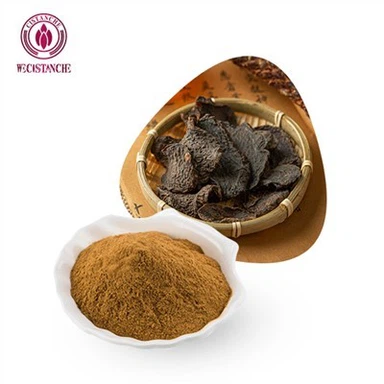
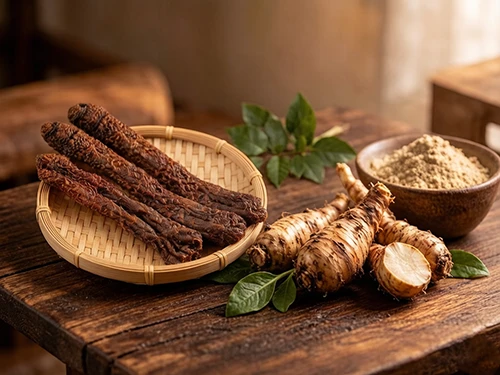
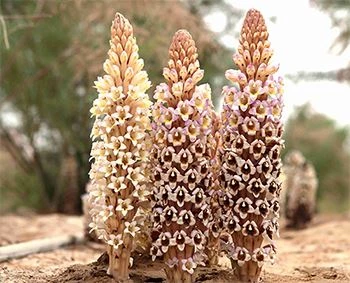
Among the most promising of these traditional approaches is a patented Chinese herbal formula called Compound Congrong Yizhi Capsule (CCYC). At its heart is Cistanche, the same "desert ginseng" herb that has been used for centuries to nourish vitality and support the brain and digestion. This article explains what CCYC is, why it is used for Alzheimer's and related cognitive disorders, and what a modern scientific technique called network pharmacology has revealed about how it may work.

Understanding Alzheimer's Disease: More Than Just "Forgetfulness"
Alzheimer's disease is the most common cause of dementia, but it is important to understand that it is a disease of the brain, not simply a normal part of aging. In Alzheimer's, proteins in the brain begin to behave abnormally, and brain cells gradually lose their connections and eventually die.
Scientists have proposed many explanations for what goes wrong, and these are called "hypotheses." The most prominent include:
The cholinergic hypothesis, which points to a shortage of acetylcholine, a neurotransmitter essential for memory and attention
The amyloid-beta (Aβ) hypothesis, which centers on the buildup of sticky protein fragments called amyloid plaques
The tau hypothesis, which focuses on the formation of tangled protein fibers inside brain cells
The oxidative stress hypothesis, involving damage from unstable molecules called free radicals
The excitotoxicity hypothesis, involving overstimulation and damage to brain cells
Other theories involving the APOE gene, inflammation, insulin resistance, and more
The reality is that Alzheimer's is almost certainly not caused by any single factor. It is a complex, multi-step disease involving protein misfolding, inflammation, energy failure, and the loss of synapses - the tiny junctions through which brain cells communicate. This complexity is one reason why a single "magic bullet" drug has been so hard to find.
Current Treatments: Helpful but Limited
As of the time the study was published, the U.S. Food and Drug Administration had approved only a handful of medications for Alzheimer's disease. These fall into two main categories:
Cholinesterase inhibitors (such as donepezil, rivastigmine, galantamine, and tacrine), which work by boosting levels of acetylcholine in the brain
An NMDA receptor antagonist (memantine), which helps regulate the activity of glutamate, another important neurotransmitter
These drugs can temporarily improve symptoms or slow their worsening for some patients, but they do not stop the disease from progressing. They treat the surface of the problem - the chemical imbalance - rather than the underlying loss of brain cells. Researchers continue to search for therapies that could prevent the disease, delay its onset, slow its advance, or meaningfully improve symptoms. It is in this gap that traditional herbal medicine has drawn increasing attention.
The Traditional Chinese Medicine Perspective
In traditional Chinese medicine, Alzheimer's-like cognitive decline is often understood through the lens of the Kidney, Liver, and brain, with contributing patterns such as deficiency of Kidney essence and blood stasis with turbid phlegm. Rather than targeting a single enzyme or receptor, traditional formulas are designed to work on the whole body - nourishing what is deficient, clearing what is blocked, and restoring balance.
This holistic philosophy has a surprising parallel in modern science. Herbal formulas typically contain many chemical compounds that act on many different targets in the body, and it is now understood that this "multi-component, multi-target" nature may be precisely what makes them useful for complex diseases like Alzheimer's. The scientific field of network pharmacology was developed to study exactly this kind of complexity.
Meet Compound Congrong Yizhi Capsule (CCYC)
Compound Congrong Yizhi Capsule is a patented traditional Chinese medicine developed by the renowned Chinese medicine scholar Academician Wang Yongyan. It was originally designed for mild to moderate vascular dementia, in the pattern of Liver-Kidney deficiency with phlegm and blood stasis, and it has since become widely used in clinical practice. Clinical observations have also reported benefits when it is used for the cognitive dysfunction caused by Alzheimer's disease.
The formula is composed of five herbal ingredients:
Cistanche (Rou Cong Rong) - the "desert ginseng," prized for nourishing the Kidney and replenishing essence
Processed fleeceflower root (Zhi He Shou Wu) - a traditional herb used to nourish the Liver and blood
Lotus leaf (He Ye) - used to clear heat and "turbidity" and invigorate the blood
Rhaponticum root (Lou Lu) - used to clear heat and resolve toxicity
Earthworm (Di Long) - a traditional ingredient used to promote circulation and unblock channels
Together, these five ingredients are described as having the functions of "nourishing the brain and Liver, activating blood and clearing turbidity, and strengthening the mind and intelligence." In the language of the formula's design, Cistanche and fleeceflower root act as the "chief" (principal) herbs that address the root deficiency, while the other herbs support circulation and clear the secondary factors.

A New Lens: What Is Network Pharmacology?
To appreciate the study, it helps to understand the tool it used. Traditional drug research usually follows a simple model: one drug, one target, one effect. But herbal formulas do not fit this model. A single herb can contain hundreds of compounds, and a five-herb formula contains even more, each potentially interacting with dozens of proteins in the body.
Network pharmacology is a research approach built for this complexity. It uses large databases and computational tools to:
Identify the chemical compounds in a medicine
Predict which proteins and genes those compounds are likely to affect
Map those proteins onto known biological pathways
Connect everything back to the disease being studied
The result is a "network" - a visual and mathematical map showing how a medicine's many ingredients touch the many biological processes involved in a disease. This approach has become one of the most important tools in modern traditional Chinese medicine research, because it finally offers a systematic way to understand multi-ingredient, multi-target herbal effects.
The study we review here applied this approach to one specific question: how does Compound Congrong Yizhi Capsule work against Alzheimer's disease?
The Study at a Glance
The research was conducted by a team at Dongzhimen Hospital of Beijing University of Chinese Medicine and published in 2021. The researchers combined database mining, drug-likeness screening, target prediction, network construction, and enrichment analysis to build a detailed picture of CCYC's anti-Alzheimer's mechanism.
Here is the headline result:
CCYC contains 146 key active compounds that act on 207 potential targets involved in Alzheimer's disease. The most important targets include APP, MAPK1, MAPK3, ESR1, ESR2, EGFR, DRD2, and ACHE, and the key pathways involve neurotransmitter receptor activity, neurotransmitter regulation, and the dopaminergic and cholinergic systems. The overall mechanism may involve reducing amyloid-beta (Aβ) production and tau formation, modulating estrogen and epidermal growth factor receptors, and regulating dopamine and acetylcholine signaling.
In plain language: this five-herb formula does not rely on one ingredient or one target. It appears to work through a coordinated, multi-target network that touches several of the most important biological processes implicated in Alzheimer's disease.
Step 1: Identifying the Active Compounds
The first challenge was to figure out which of the hundreds of chemicals in the five herbs actually matter. The researchers gathered chemical data from multiple databases and the published literature, collecting:
Cistanche: 207 compounds
Lotus leaf: 117 compounds
Rhaponticum: 59 compounds
Earthworm: 28 compounds
Fleeceflower root: 25 compounds
They then filtered these using two drug-likeness criteria based on ADME (absorption, distribution, metabolism, excretion) properties: high gastrointestinal absorption and compliance with "Lipinski's rule of five," a well-known guideline for whether a compound is likely to behave like an oral drug. After screening, the qualifying compounds numbered:
Cistanche: 64
Lotus leaf: 44
Rhaponticum: 19
Earthworm: 20
Fleeceflower root: 29
From these, the researchers ultimately identified 146 "key compounds" - the ones that were connected to the disease-relevant targets.
The most important compounds, ranked by their influence in the network, included:
表格
| Compound | Source herb | Degree (connections) |
|---|---|---|
| Rhazine | Rhaponticum | 41 |
| Nuciferine | Lotus leaf | 41 |
| Armepavine | Lotus leaf | 39 |
| O-nornuciferine | Lotus leaf | 38 |
| Lirinidine | Lotus leaf | 37 |
Several of these are alkaloids from lotus leaf, and they have notable biological activity. Nuciferine, for example, has documented anti-inflammatory properties, and nuciferine derivatives have shown acetylcholinesterase-inhibiting activity - the same general mechanism used by the approved Alzheimer's drugs donepezil and galantamine. Lotus leaf extracts have also shown free-radical-scavenging effects that could protect brain tissue.
Step 2: Finding the Targets
Next, the researchers asked which proteins in the human body these compounds affect. They used a tool called SwissTargetPrediction to predict targets for each active compound, then combined the results with targets for Alzheimer's disease gathered from several databases (GeneCards, OMIM, TTD) and from the literature on the five FDA-approved Alzheimer's drugs.
The numbers were substantial:
Active compound targets: 942
Alzheimer's disease targets: 1,543
Overlap (the intersection): 207 potential targets
These 207 targets sit at the crossroads of "what the formula affects" and "what is involved in Alzheimer's disease." They are the molecular bridge through which CCYC is thought to exert its effects.
Step 3: Building the Protein Interaction Network
To understand how these 207 targets relate to each other, the researchers built a protein–protein interaction (PPI) network using the STRING database. After removing proteins with no connections, the network contained 176 nodes and 752 edges, with an average of 7.27 connections per protein. This dense connectivity indicates that the targets are highly interrelated and work together as a system.
Three proteins stood out as the most central "hub" nodes:
APP (degree 51)
MAPK1 (degree 32)
MAPK3 (degree 30)
APP - the amyloid precursor protein - was the single most connected node in the entire network, which is a striking finding given APP's central role in Alzheimer's disease.
The researchers also divided the network into functional "modules" - clusters of proteins that work together. The top-ranked module was enriched for G protein-coupled receptor signaling and neuroactive ligand-receptor interaction, again pointing toward neurotransmitter systems.
Step 4: Zooming In on the Key Targets
Beyond the PPI network, the researchers built a more comprehensive "herb–key compound–target–pathway" network and analyzed it with mathematical measures of centrality. Five targets emerged as especially important, along with several close runners-up:
表格
| Rank | Target | Description |
|---|---|---|
| 1 | ESR2 | Estrogen receptor beta |
| 2 | ESR1 | Estrogen receptor alpha |
| 3 | EGFR | Epidermal growth factor receptor |
| 4 | DRD2 | Dopamine D2 receptor |
| 5 | ACHE | Acetylcholinesterase |
| 6 | SLC6A4 | Serotonin transporter |
| 7 | HTR2A | Serotonin 2A receptor |
| 8 | MAOA | Monoamine oxidase A |
| 9 | HTR2C | Serotonin 2C receptor |
| 10 | GSK3B | Glycogen synthase kinase 3 beta |
Each of these has a meaningful connection to brain health, as we will see shortly.
Step 5: Mapping the Pathways
Proteins do not work in isolation; they operate in signaling pathways. To understand the bigger picture, the researchers performed GO (Gene Ontology) and KEGG pathway enrichment analyses.
The biological processes most strongly enriched included:
Trans-synaptic signaling
Regulation of neurotransmitter levels
Response to toxic substances
Neuron death
The molecular functions included:
Neurotransmitter receptor activity
Acetylcholine receptor activity
Tau protein binding
Protein kinase activity
The cellular components included:
Postsynapse and presynapse
Synaptic vesicles
Dopaminergic synapse
Cholinergic synapse
The top KEGG pathways included:
Neuroactive ligand-receptor interaction
Alzheimer's disease (the pathway itself)
Dopaminergic synapse
Cholinergic synapse
Serotonergic synapse
Glutamatergic synapse
cAMP signaling pathway
Insulin resistance
Taken together, these results paint a clear picture: CCYC's targets are heavily concentrated in the machinery of neurotransmission - the chemical signaling system that allows brain cells to communicate. This is exactly where Alzheimer's disease strikes hardest.
How CCYC May Work: Five Proposed Mechanisms
By connecting the key targets to what is known about Alzheimer's disease, the researchers proposed several specific ways the formula might help. These are computational predictions grounded in the network data, and they provide a scientific rationale for the formula's traditional use.
Mechanism 1: Reducing Amyloid-Beta (Aβ) Production
The buildup of amyloid-beta protein into plaques is one of the defining features of Alzheimer's disease. Amyloid-beta is produced when a larger protein called APP (amyloid precursor protein) is cut by enzymes called beta-secretase (BACE1) and gamma-secretase.
In the study's PPI network, APP was the single most central node, and it was directly connected to BACE1, PSEN1, and PSEN2 - the very enzymes and proteins involved in amyloid-beta production. This suggests that CCYC's compounds may influence the amyloid-processing machinery, potentially helping to reduce the abnormal production of amyloid-beta.
Mechanism 2: Reducing Tau Protein Formation
A second hallmark of Alzheimer's is the formation of neurofibrillary tangles made of a protein called tau. In a healthy brain, tau helps stabilize the structural "scaffolding" of nerve cells. In Alzheimer's, tau becomes excessively phosphorylated (chemically modified), causing it to detach from the cell's skeleton and clump into tangles, which damages neurons.
MAPK1 and MAPK3 - two of the top hub targets in the study - encode enzymes in the MAP kinase family, also known as extracellular signal-regulated kinases (ERK). These enzymes are among the kinases that can phosphorylate tau. By influencing MAPK1 and MAPK3, CCYC may help reduce abnormal tau phosphorylation and the resulting tangles, thereby protecting neurons.
Mechanism 3: Modulating Estrogen Receptors
The study highlighted ESR1 and ESR2, the genes for estrogen receptor alpha and beta, as two of the most important targets. This is a particularly interesting finding because estrogen is known to have protective effects on the brain: it can increase cerebral blood flow, reduce inflammation, enhance synaptic activity, and exert direct neuroprotective and neurotrophic effects. The loss of estrogen with age is recognized as a sex-specific risk factor for Alzheimer's in women, and some gene variants in estrogen receptors have been linked to increased risk.
CCYC's ability to interact with estrogen receptors suggests a potential mechanism for neuroprotection, particularly relevant to age-related cognitive decline.

Mechanism 4: Regulating EGFR for Neuroprotection
EGFR (epidermal growth factor receptor) is a receptor tyrosine kinase involved in cell adhesion, growth, migration, and survival. It has known neuroprotective functions, and its downregulation has been associated with Alzheimer's disease. EGFR function is also influenced by presenilin 1 (PSEN1), a protein directly involved in amyloid processing. By modulating EGFR and its upstream and downstream pathways, CCYC may help support brain cell survival.
Mechanism 5: Regulating Dopamine and Acetylcholine Systems
Perhaps the most consistent theme in the study is the regulation of two key neurotransmitter systems.
Dopamine is a neurotransmitter involved in movement, motivation, reward, memory, and learning. The study identified the dopamine D2 receptor (DRD2) as a key target. Hippocampal D2 receptors are known to be involved in memory in Alzheimer's patients, and reduced dopamine signaling has been linked to the disease's pathology. Dopamine also plays a major role in synaptic plasticity - the brain's ability to rewire itself.
Acetylcholine is the neurotransmitter most classically associated with memory, and its deficiency is the basis of the cholinergic hypothesis of Alzheimer's. The study identified acetylcholinesterase (ACHE) - the enzyme that breaks down acetylcholine - as a key target. Notably, inhibiting acetylcholinesterase is exactly how the leading Alzheimer's drugs work. In animal studies, CCYC has been shown to increase dopamine in the cerebral cortex, increase acetylcholine in the hippocampus, reduce acetylcholinesterase, and improve the ultrastructure of synapses in rats with vascular dementia.
Together, these findings suggest that CCYC may improve cognition by supporting both the dopaminergic and cholinergic systems.
The Role of Cistanche and Lotus Leaf
One of the study's most interesting conclusions concerns the relative contribution of the five herbs. When the researchers looked at how the key compounds and targets were distributed:
Key compounds: Cistanche contributed the most (about 35%), followed by lotus leaf (28%), fleeceflower root (18%), rhaponticum (12%), and earthworm (7%).
Potential targets: Lotus leaf contributed the most (about 36%), followed by Cistanche (26%), fleeceflower root (22%), rhaponticum (12%), and earthworm (4%).
In other words, Cistanche and lotus leaf are the two dominant players in the formula. This makes sense from both traditional and modern perspectives. In the formula's design, Cistanche and fleeceflower root serve as the principal herbs that address the root deficiency, but the network data shows that Cistanche supplies the largest share of key active compounds, while lotus leaf supplies the largest share of disease-relevant targets through its rich alkaloid content.
This is a satisfying convergence: the traditional understanding of the formula's structure aligns remarkably well with what the molecular network reveals.
The Big Picture: Multi-Target, Multi-Pathway Medicine
Stepping back, what does all of this tell us?
The answer is the same recurring theme in modern herbal medicine research: multi-component, multi-target, multi-pathway.
CCYC does not work through a single ingredient or a single receptor. Instead:
Its 146 key compounds work together, with alkaloids from lotus leaf and the rich chemical profile of Cistanche leading the way
These compounds engage 207 targets, concentrated in neurotransmitter signaling
Through those targets, they touch multiple pathways, including the dopaminergic, cholinergic, serotonergic, and glutamatergic synapses
The most important targets - APP, MAPK1, MAPK3, ESR1/2, EGFR, DRD2, and ACHE - connect directly to the core pathology of Alzheimer's: amyloid, tau, neuroinflammation, and synaptic loss
This distributed mode of action is fundamentally different from a single-target pharmaceutical. It is gentler by design, and it may be especially well suited to a complex, multi-cause disease like Alzheimer's.
Important Limitations to Keep in Mind
As promising as these findings are, it is essential to keep the science in proper perspective.
First, this is a computational study. Network pharmacology uses databases, prediction algorithms, and network analysis to generate hypotheses about how a medicine might work. It does not, by itself, prove that these effects happen in a living human brain. The proposed mechanisms need to be confirmed through laboratory experiments and clinical trials.
Second, the researchers themselves noted important limitations. The drug-likeness screening may have filtered out compounds that are present in high amounts but poorly absorbed in the gut. Some active ingredients, such as nuciferine, have relatively low oral bioavailability, meaning that only a fraction reaches the bloodstream. Moreover, the ingredients in a multi-herb formula may interact chemically during preparation, potentially producing new compounds that the database approach cannot account for.
Finally, herbal medicine is not a substitute for conventional Alzheimer's care. Anyone affected by Alzheimer's or another form of dementia should work closely with a qualified healthcare professional.
Practical Takeaways
For a reader interested in the potential of this formula, here is the balanced bottom line:
There is a plausible scientific basis for CCYC's traditional use. Network pharmacology has mapped a coherent, multi-target mechanism connecting the formula's compounds to Alzheimer's-relevant targets and pathways.
The mechanism is multi-faceted. It potentially touches amyloid-beta production, tau phosphorylation, estrogen signaling, EGFR-mediated neuroprotection, and both dopamine and acetylcholine systems - several of the most important processes in Alzheimer's disease.
Cistanche and lotus leaf are the workhorses. Cistanche contributes the most key compounds, while lotus leaf contributes the most targets, which is consistent with the formula's traditional design.
This is hypothesis-generating research, not clinical proof. The findings provide a strong rationale for further study, but they should not be read as a guarantee of benefit.
It is used in clinical practice for cognitive disorders. CCYC is an approved, widely used traditional Chinese medicine in China, and it has been studied for vascular dementia, Alzheimer's disease, and related cognitive conditions.
Frequently Asked Questions
Q: What is Compound Congrong Yizhi Capsule? It is a patented traditional Chinese medicine made from five herbs - Cistanche, processed fleeceflower root, lotus leaf, rhaponticum, and earthworm - used for cognitive disorders including vascular dementia and Alzheimer's-related cognitive dysfunction.
Q: How does Cistanche relate to this formula? Cistanche is one of the two principal herbs in the formula. In the network pharmacology study, it contributed the largest share of key active compounds, consistent with its traditional role of nourishing the Kidney and replenishing essence to support brain health.
Q: Can CCYC cure Alzheimer's disease? No. Current evidence suggests it may help support cognitive function, and network pharmacology predicts mechanisms relevant to Alzheimer's, but it does not cure the disease. Anyone considering it should consult a qualified physician.
Q: Is network pharmacology the same as a clinical trial? No. Network pharmacology is a computational method that predicts mechanisms using databases and algorithms. Clinical trials are needed to confirm actual effects in patients.
Q: Which herb contributes the most active ingredients? Cistanche contributed the highest proportion of key compounds (about 35%), while lotus leaf contributed the highest proportion of disease-relevant targets (about 36%).
Q: What are the key targets identified in the study? The most important targets were APP, MAPK1, MAPK3, ESR1, ESR2, EGFR, DRD2, and ACHE, with additional important targets including SLC6A4, HTR2A, MAOA, HTR2C, and GSK3B.
Conclusion
Alzheimer's disease is a formidable adversary, and no single treatment has yet been able to stop it. But the search for better answers increasingly includes an old idea with new scientific backing: that a well-designed herbal formula, working through many compounds and many targets at once, might offer meaningful support for the aging brain.
The network pharmacology study reviewed here provides a detailed, evidence-based framework for understanding how Compound Congrong Yizhi Capsule - with Cistanche and lotus leaf at its core - might act against Alzheimer's disease. Its 146 key compounds engage 207 targets across neurotransmitter, amyloid, tau, estrogen, and growth-factor pathways, offering a genuinely multi-target explanation for its traditional use.
Of course, predictions are only the beginning. The real test lies in rigorous experiments and clinical studies. But for anyone interested in the intersection of traditional herbal wisdom and modern systems science, this research is a compelling example of how ancient remedies are being decoded, one network at a time.