Analysis Of LV Yong's Medication Pattern in Treating Chronic Renal Failure Based On Data Mining
Mar 25, 2025
ABSTRACT
Objective: To analyze the medication rules of Director LV Yong in the treatment of chronic renal failur(CRF) based on the TCM inheritance auxiliary platform (V2.5) software.
Methods: The outpatient medical records of CRF patients of DirectoR LV who visited the First Affiliated Hospital of Anhui University of Traditional Chinese Medicine from July 2021 to July 2023 were collected, and 110 medical records and 169 valid prescriptions that met the requirements of this study were screened out and entered into the TCM inheritance auxiliary platform (V2.5) software. The frequency, nature, taste, meridians and efficacy of the drugs used were counted, and the association rules of the highfrequency drugs were analyzed to analyze the medication rules of Director LV in the treatment of CRF.
Results: Among the 169 prescriptions, 150 Chinese medicines were involved, and 18 medicines with a frequency of ≥ 55 times were involved. The top 10 Chinese medicines were Astragalus, Rhubarb, Cistanche, Smilax, Licorice, Atractylodes, Plantago, Coix Seed, Drynaria, and Poria. The four Qi were mainly warm, neutral, and cold, followed by cool and hot; the five flavors were mainly sweet, bitter, and pungent, followed by salty, sour, and astringent; the meridians were mainly liver, spleen, kidney, lung, and stomach, followed by heart, large intestine, and gallbladder. 12 core drug combinations and 6 new prescription combinations were obtained.
Conclusion: Director Lu treated CRF based on the pathogenesis of"spleen and kidney deficiency as the root, blood stasis and turbidity as the symptom", established the basic treatment principle of strengthening the root and clearing the source, and the diagnosis and treatment ideas of attacking and supplementing, and combining attack with supplementing, as well as the combination of methods of tonifying the spleen and kidney, removing blood stasis, purging turbidity, and detoxifying.
KEYWORDS Chronic renal failure; Medication rules; Data mining; Traditional Chinese medicine inheritance

The High Quality Cistanche Supplements For Chronic renal failure (CRF)
Chronic renal failure (CRF) is a clinical syndrome characterized by the progressive retention of metabolic waste products, imbalances in water, electrolytes, and acid-base metabolism, as well as symptoms affecting multiple systems throughout the body. It results from the sustained progression of various chronic kidney diseases [1]. The incidence of CRF has been increasing annually, and the high cost of treatment imposes a heavy burden on both patients' families and society [2]. In recent years, traditional Chinese medicine (TCM) has shown promising overall clinical efficacy in treating CRF, making it an important therapeutic approach [3].
Dr. Lü Yong (hereafter referred to as Dr. Lü), a renowned TCM practitioner and recipient of the fourth batch of National Distinguished TCM Clinical Talent Awards in China, as well as a TCM Master of Anhui Province, has extensive clinical experience in treating CRF with TCM. His treatments have demonstrated significant effectiveness. This study collected and organized case data from Dr. Lü's treatment of CRF, utilizing the TCM Inheritance Assistance Platform (Version 2.5) for data mining. The aim was to analyze and summarize Dr. Lü's prescription and medication patterns in TCM treatment of CRF, providing novel insights for clinical management of CRF.

Materials and Methods
1. Data Source
Between July 2021 and July 2023, 110 patient cases meeting the study criteria were selected from Dr. Lü's outpatient clinic at the First Affiliated Hospital of Anhui University of Chinese Medicine. A total of 169 valid prescriptions were collected. Data from these 169 prescriptions were compiled in Excel, including patient names, ages, genders, diagnoses, and prescriptions.
2. Inclusion and Exclusion Criteria
2.1 Inclusion Criteria
Outpatient cases with no gender restriction, aged >18 years and <70 years. Patients had complete TCM diagnostic data and prescription records sufficient to support the determination of TCM syndrome types. They met the 2012 Kidney Disease: Improving Global Outcomes (KDIGO) diagnostic criteria for CRF [4], with chronic kidney disease stages 3 to 5.
2.2 Exclusion Criteria
Patients who had already undergone dialysis treatment, those with a primary diagnosis of other diseases according to Western medicine, and those who did not choose TCM treatment were excluded.
3. Data Standardization and Information Entry
Medication names were standardized according to the Pharmacopoeia of the People's Republic of China [5]. For example, "raw Astragalus membranaceus" and "Astragalus membranaceus" were collectively referred to as "Astragalus membranaceus," and "Cornus officinalis pulp" was collectively referred to as "Cornus officinalis." After standardizing the information from the 169 prescriptions, the data were entered sequentially into the "Clinical Collection System" of the TCM Inheritance Assistance Platform. The recorded information included patients' basic demographic data, diagnostic information, TCM syndrome types, and prescriptions, establishing a database related to Dr. Lü's treatment of CRF. After completing data entry, a second round of verification was conducted to ensure data accuracy for subsequent analysis.

4. Analysis Methods
Based on the database within the TCM Inheritance Assistance Platform (Version 2.5), statistical analysis was performed using the "Statistical Report" and "Data Analysis" systems. This included frequency analysis of individual herbs, statistical analysis of the four natures and five flavors, channel tropism, prescription patterns, and the evolution of new formulas. These analyses were used to explore and summarize Dr. Lü's medication patterns in treating CRF.

Results
1. Analysis of Medication Frequency
Using the "Prescription Statistics" feature within the "Statistical Report" system, the frequency of individual herbs in prescriptions was analyzed. The system automatically identified 150 types of Chinese medicinal herbs used in Dr. Lü's outpatient prescriptions for CRF treatment. The results indicate that 18 herbs appeared with a frequency of ≥55 times (Table 1).
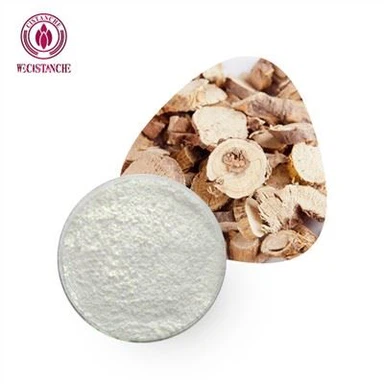
The top 10 herbs in terms of usage frequency were Astragalus membranaceus (Huangqi), Rhubarb (Dahuang), Cistanche (Roucongrong), Smilax glabra (Tufuling), Licorice (Gancao), Atractylodes macrocephala (Baizhu), Plantago asiatica (Cheqian cao), Coix lacryma-jobi (Yiyiren), Drynaria fortunei (Gusuibu), and Poria (Fuling).
Among these, Astragalus membranaceus (Huangqi) was used most frequently, appearing in 146 prescriptions, followed by Rhubarb (Dahuang), which appeared 114 times.
Table 1 Drugs used by Dr. Lu for the treatment of CRF with a frequency of ≥ 55 times
| Rank | Herb | Frequency | Rank | Herb | Frequency |
|---|---|---|---|---|---|
| 1 | Astragalus (Huangqi) | 146 | 10 | Poria (Fuling) | 86 |
| 2 | Rhubarb (Dahuang) | 114 | 11 | Rehmannia (Dihuang) | 87 |
| 3 | Cistanche (Roucongrong) | 104 | 12 | Peach kernel (Taoren) | 86 |
| 4 | Smilax glabra (Tufuling) | 104 | 13 | Dragon bone (Longgu) | 86 |
| 5 | Licorice (Gancao) | 101 | 14 | Cortex moutan (Mudanpi) | 85 |
| 6 | Atractylodes (Baizhu) | 94 | 15 | Epimedium (Yinyanghuo) | 85 |
| 7 | Plantago (Cheqiancao) | 91 | 16 | Tangerine peel (Chenpi) | 85 |
| 8 | Coix seed (Yiyiren) | 91 | 17 | Codonopsis (Dangshen) | 85 |
| 9 | Drynaria (Gusuibu) | 91 | 18 | Rehmannia root (Shengdihuang) | 85 |