Transcriptome Analysis Of Polysaccharide Content Difference Between 2 Hosts Of Cistanche Deserticola
Mar 26, 2025
2.6 Analysis of DEGs Related to Polysaccharide Metabolism and Accumulation
Cistanche deserticola primarily contains glucose, galactose, fructose, rhamnose, arabinose, and mannose as its major monosaccharides. These monosaccharides undergo catalysis by glycosyltransferases and other enzymes to synthesize Cistanche polysaccharides.
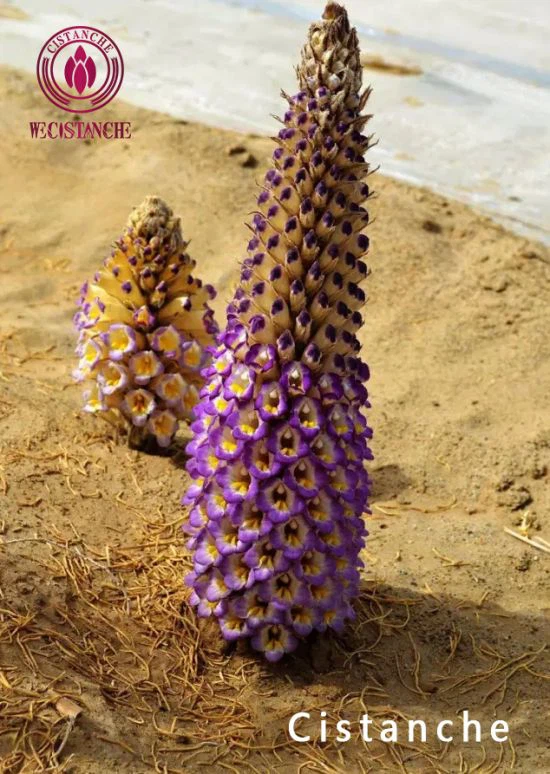
Cistanche deserticola
This study analyzed the polysaccharide metabolism pathways and the DEGs enriched in these pathways in Cistanche deserticola from different host plants. Through the analysis of the following KEGG pathways, key enzymes and genes involved in polysaccharide biosynthesis were identified:
Galactose metabolism (ko00052)
Mannose and fructose metabolism (ko00051)
Amino sugar and nucleotide sugar metabolism (ko00520)
Starch and sucrose metabolism (ko00500)
A total of 13 polysaccharide biosynthesis-related enzymes and several key enzyme genes were identified, including:
β-Amylase (BAM)
Glucose-1-phosphate adenylyltransferase (glgC)
Hexokinase (HK)
β-Fructofuranosidase (sacA)
Sucrose-phosphate hydrolase (SPP)
Glucose-6-phosphate isomerase (GPI)
UDP-glucose dehydrogenase (UGDH)
Mannose-1-phosphate guanylyltransferase (GMPP)
Galactinol synthase (GOLS)
β-Galactosidase (lacZ)
Mannose-6-phosphate isomerase (MPI)
UDP-glucuronate decarboxylase (UXS)
Pyrophosphate-dependent phosphofructokinase (PFP)
These enzymes play significant roles in the biosynthesis of Cistanche polysaccharides.
A hierarchical clustering heatmap was generated using DEG expression data processed by DESeq2. The results showed a significant difference in gene expression between Haloxylon-Cistanche and Atriplex-Cistanche. Specifically:
Haloxylon-Cistanche exhibited significantly higher expression of sacA, HK, and lacZ.
Atriplex-Cistanche exhibited significantly higher expression of UGDH, GMPP, and GOLS.

Cistanche deserticola
2.7 qRT-PCR Validation
To verify the reliability of the transcriptome sequencing data, qRT-PCR was performed using ACTB (β-actin) as a housekeeping gene. Six key enzyme genes involved in Cistanche polysaccharide biosynthesis were randomly selected for validation.
The qRT-PCR results were expressed as log₂(FC) and showed that the expression patterns of DEGs in different host-derived Cistanche were consistent with the transcriptome sequencing results:
GMPP, PFP, and UGDH were upregulated.
lacZ was downregulated.
These findings confirm the high reliability of the transcriptome data, supporting the accuracy of the differential gene expression analysis in Cistanche deserticola.

3 Discussion and Conclusion
Cistanche deserticola is a perennial medicinal plant of the Orobanchaceae family. Due to its unique growth environment and high medicinal value, it is known as the "Ginseng of the Desert." Its bioactive compounds mainly include phenylethanoid glycosides, flavonoids, polysaccharides, and betaine [9]. Currently, research on this medicinal plant has mainly focused on active ingredients and pharmacological effects, while studies at the genetic level remain limited. In particular, there are few reports on the genetic analysis of metabolic differences in polysaccharides, flavonoids, and phenylethanoid glycosides.
The NR database annotation of unigenes indicated that Cistanche deserticola, which lacks a reference genome, is most closely related to Paulownia (Scrophulariaceae), a plant with a sequenced genome [10]. Differential expression analysis of the annotated unigenes identified 14,089 significantly differentially expressed genes (DEGs). This suggests that the transcriptomes of Cistanche deserticola parasitizing Haloxylon ammodendron and Atriplex canescens exhibit significant differences, likely due to variations in host plant metabolism and rhizosphere microbial communities [11].
In the KEGG database, 3,998 unigenes were mapped to 117 metabolic pathways, among which 1,386 DEGs were enriched in pathways related to the biosynthesis of polysaccharides, fatty acids, amino acids, and flavonoids. These genes are involved in different metabolic products of Cistanche deserticola and regulate the accumulation of polysaccharides and flavonoids. Differences in DEG enrichment patterns and expression levels across different host plants lead to variations in biological functions and active compound metabolism [12].
This study identified 20 DEGs encoding 13 key enzymes involved in polysaccharide biosynthesis in the Cistanche deserticola transcriptome. These enzymes and DEGs regulate key processes in the biosynthesis of sucrose, glucose, fructose, and galactose-derived polysaccharides. In polysaccharide-related metabolic pathways, including galactose metabolism and starch-sucrose metabolism, key enzymes such as lacZ, sacA, BAM, HK, SPP, and UGDH were identified.
In Haloxylon-parasitizing Cistanche deserticola, the expression levels of sacA, HK, and lacZ were significantly higher than in Atriplex-parasitizing Cistanche deserticola.
Conversely, the expression levels of UGDH, GMPP, and GOLS were significantly higher in Atriplex-parasitizing Cistanche deserticola.
Transcriptomic studies provide deeper insights into plant growth, development, and secondary metabolite biosynthesis and accumulation [13]. Previous studies have used transcriptomics to analyze polysaccharide biosynthesis pathways in Codonopsis pilosula, Poria cocos, Lycium barbarum, Dioscorea opposita, Polygonatum sibiricum, Polygonatum cyrtonema, and Dendrobium officinale [14]. Additionally, transcriptomic techniques have been extensively applied to study carbohydrate metabolism in potatoes, melons, and mulberries [15-16].

For example:
Ji et al. [17] analyzed the correlation between polysaccharide accumulation and transcriptomic characteristics in different tissues of Codonopsis pilosula. They found that sucrose-1-fructosyltransferase (1-SST) and fructan-1-exohydrolase (1-Feh), key enzymes involved in fructan biosynthesis, were highly expressed in the roots, suggesting that these enzymes are the primary regulators of the high polysaccharide content in Codonopsis pilosula roots, as confirmed by HPLC analysis.
Tao et al. [18] conducted transcriptome sequencing to identify key enzyme genes affecting polysaccharide content in three different Polygonatum species (P. kingianum, P. sibiricum, and P. cyrtonema). They found that β-fructofuranosidase (sacA) expression was positively correlated with polysaccharide content, and that sacA shares structural and functional similarities with fructosyltransferases, making it a key factor influencing polysaccharide variation among Polygonatum species.
Liu et al. [19] combined transcriptomics and metabolomics to explore why tetraploid Dendrobium officinale has higher polysaccharide content than diploid Dendrobium officinale. Their study revealed that CesA/Csl, SWEET, and BGLU gene families were significantly upregulated in tetraploid plants, indicating that high expression of these DEGs drives increased polysaccharide accumulation.
Ma et al. [20] analyzed the regulatory mechanisms of cell wall polysaccharide biosynthesis in Lycium barbarum from Qinghai, Gansu, and Ningxia. Compared to Qinghai and Gansu, Ningxia-grown L. barbarum had significantly higher galactose content in the cell wall, likely due to the higher expression of pectate lyase and pectinesterase genes.
Lu et al. [21] conducted transcriptome sequencing on three Polygonatum species (P. cyrtonema, P. sibiricum, and P. kingianum), analyzing key enzyme genes in polysaccharide biosynthesis pathways. They identified 135 DEGs encoding 18 key enzymes, with 13 genes (including GMPP, MPI, sacA, and fructokinase scrK) showing the highest expression levels in Polygonatum cyrtonema.
This study expands the understanding of polysaccharide metabolism in parasitic medicinal plants by building on previous research on different medicinal plant species and their metabolic pathways. It provides a valuable reference for further investigations into the regulatory mechanisms of polysaccharide metabolism in host-dependent medicinal plants [22].
Currently, high-throughput sequencing research on the Cistanche deserticola transcriptome remains in its early stages. This study conducted a comprehensive gene expression analysis of Cistanche deserticola parasitic on two different host plants and identified key enzyme genes involved in polysaccharide metabolism. These findings have important implications for the selection and evaluation of new host plants for Cistanche deserticola and provide a theoretical foundation for studying the molecular regulation of polysaccharide biosynthesis and the genetic improvement of Cistanche deserticola.