How An Ancient Herb Component Might Combat Cancer - Related Fatigue: A Promising Discovery
Jun 05, 2026
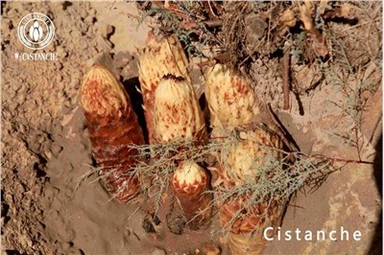
Have you ever wondered how some natural substances could potentially help those dealing with the exhausting effects of cancer treatment? Well, a recent study has been looking into an interesting aspect of Cistanche tubulosa, an herb with a long - standing use in traditional medicine.

The Research Goal
The researchers aimed to find out if a particular component in Cistanche tubulosa, called ACT, could fight against cancer - related fatigue (CRF). They hypothesized that ACT might do this by triggering a process in our skeletal muscles called mitophagy. But how? By suppressing an enzyme known as PHD2. This, in turn, would boost a signaling pathway called HIF - 1α/BNIP3, which is important for the health of our cells.
The Research Methods
Screening for Active Components
First, they used a cool technique called molecular docking virtual screening. It's like a digital detective work, helping them find the active parts of Cistanche tubulosa that could potentially act as PHD2 inhibitors. To confirm these findings, they then used Surface plasmon resonance (SPR) technology. It's a bit like a high - tech microscope that can show how molecules interact.
Animal Studies

They took some BALB/c mice and gave them Paclitaxel (PTX, 10 mg/kg), a common cancer - treating drug that often causes fatigue. Some of the mice also got ACT (50, 100 mg/kg), either alone or along with PTX, for 20 days. Then, they checked how the mice behaved. Did they seem more or less tired? They also looked at how the mice's energy was being used and how their skeletal muscle mitochondria were doing. Mitochondria are like the power plants of our cells, so their health is really important.
Cell - Based Experiments
They also grew and differentiated murine C2C12 myoblast cells in the lab. Then, they added a special mixture made from C26 tumor cells. This was to create a condition similar to cachexia, which is a wasting - away condition often seen in cancer patients. They then looked at things like the amount of reactive oxygen species (ROS) in the cells. ROS can be harmful if there's too much of it. They also checked the mitochondrial membrane potential, the structure and function of the mitochondria, and something called autophagy, which is like the cell's cleaning system. They also studied proteins in the PHD2/HIF - 1 and PINK1/Parkin signal pathways. These proteins are like messengers in the cell, telling it what to do.
Finally, they used interfering RNA technology to "silence" the PHD2 gene. This is like turning off a specific switch in the cell. Then they could see how this affected the action of ACT.

The Results
The study showed that ACT had a strong ability to bind with PHD2. When the mice were given ACT, it seemed to make them less tired. It improved the quality of their muscles and made their mitochondria work better. It also increased mitophagy, which is like a process of cleaning out the old or damaged mitochondria. The levels of some important proteins like COXIV, CytoC, PINK1, Parkin, HIF - 1α, and BNIP3 went up, while the levels of p62, LC3B, PHD2, and Beclin - 1 went down. But here's the interesting part: when they "turned off" the PHD2 gene using the Egln - 1 - RNAi plasmid, the positive effects of ACT disappeared.

What It All Means
These results suggest that ACT could be a really promising natural way to help with CRF. By promoting mitophagy through suppressing PHD2, it helps get rid of the mitochondria that aren't working properly. This discovery gives hope that in the future, ACT from Cistanche tubulosa could be used in clinics to help cancer patients deal with the fatigue that often comes with their treatment.
Supportive Service Of Wecistanche-For more details about cooperation
Business contact: goujinsong@wecistanche.com