Ancient Kidney Nourishing Fairy Grass, Today's Cistanche Tubulosa
Mar 26, 2026
Ancient Kidney Nourishing Fairy Grass, Today's Cistanche tubulosaIn the long river of Chinese health culture, there is a food ingredient that has lasted for thousands of years. From the precious food therapy of ancient ancestors, to the official medicinal herbs of the royal family and nobles, to the kidney nourishing formula of contemporary people, it is known as the "ancient kidney nourishing herb" Cistanche tubulosa. The ancients called it "desert ginseng" and listed it among the "three major nourishing treasures," along with ginseng and deer antler. They praised it for its ability to warm and nourish kidney yang, nourish essence and blood, and it is a natural treasure that nourishes the innate and strengthens the body. Nowadays, in the fast-paced modern life, bad habits such as staying up late, sitting for long periods of time, and high stress are constantly damaging men's kidneys. This ancient desert fairy grass can still protect kidney health in contemporary men with its gentle, nourishing power, continuing the millennium-long legend of kidney care.

Effects of cistanche on anti-fatigue
When it comes to nourishing the kidneys, traditional Chinese medicine has always had the concept of "the kidneys are the foundation of innate nature, storing essence and governing bones". Especially for men, the health of the kidneys directly determines the strength of the body, the prosperity and decline of energy, and even the vitality of life. In ancient times, our ancestors accidentally discovered this succulent and fragrant plant in the desert while interacting with nature. Eating it can relieve soreness and weakness in the waist and knees, and replenish energy. Therefore, they revered it as a "fairy grass" and passed it down from generation to generation. From the Han Dynasty's "Shennong Bencao Jing" which listed it as a "top-grade" herb, recording its "sweet taste, slight warmth, main functions of five labor and seven injuries, tonifying the middle, removing cold and hot pain in the stem, nourishing the five organs, strengthening yin, and nourishing essence and qi", to the Ming Dynasty's Li Shizhen's "Compendium of Materia Medica" which explained in detail its "tonifying but not steep, hence it is called calm", the kidney nourishing effect of Cistanche tubulosa has been repeatedly confirmed in thousand year classics and has become an important part of Chinese health wisdom.
Today, we shed the mysterious cloak of the "fairy grass" and interpret the Cistanche tubulosa from a scientific perspective. We will find that this plant, which grows in the desert, has been revered for thousands of years precisely because it meets the needs of modern people for "gentle kidney nourishment and scientific nourishment". Unlike other nourishing ingredients that are dry or cold, Cistanche tubulosa is warm in nature, sweet and salty in taste, and belongs to the kidney and large intestine meridians. It can warm and nourish kidney yang, as well as nourish essence and blood. Its properties are peaceful and not dry or strong. Long-term moderate consumption can nourish the kidneys without causing side effects such as excessive heat. It is an ideal ingredient for contemporary men to nourish the kidneys for a long time. Next, let's explore the mystery of this ancient fairy grass together and see how it came from ancient times to become a kidney-nourishing remedy for contemporary men.

Effects of Cistanche: Improve kidney function
The Origin of Ancient Fairy Grass: From Desert Secrets to Royal Treasures, the Thousand-Year Inheritance of Kidney Nourishing Wisdom
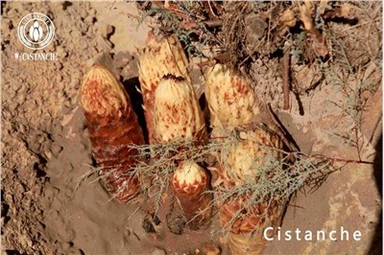
The legend of Cistanche began with the gift of the desert. It grows in arid desert areas such as Inner Mongolia, Xinjiang, and Gansu in China, relying on sand plants such as Haloxylon ammodendron and Salix matsudana. It is a perennial parasitic herbaceous plant that grows in extremely harsh environments and needs to root in the desert in extreme climates ranging from -20 ° C to 50 ° C. It takes several years to mature, making it particularly precious. In ancient times, the ancestors in desert areas discovered during hunting and nomadic activities that consuming this fleshy stem parasitic on the roots of Haloxylon ammodendron could effectively relieve fatigue, enhance physical strength, and especially improve symptoms such as soreness and weakness in the waist and knees, and fear of cold. Therefore, they named it "Cistanche tubulosa" and regarded it as a "kidney nourishing fairy grass" bestowed by heaven.
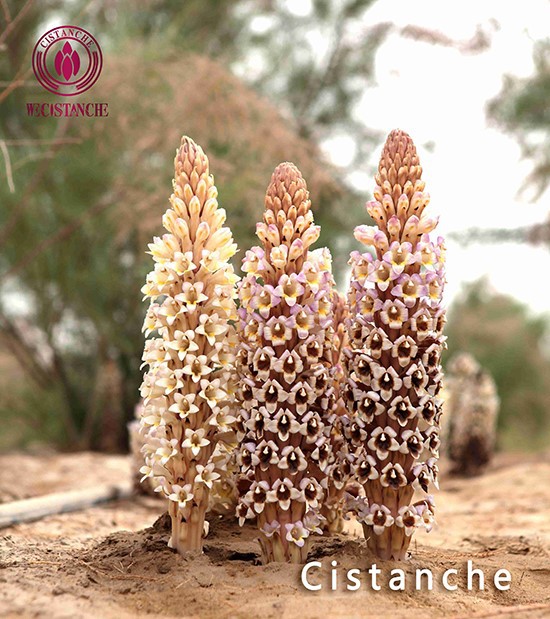
Chinese herb cistanche
There is a legend about Cistanche that has been passed down for thousands of years. Legend has it that in the Battle of the Thirteen Wings, Genghis Khan suffered a defeat and was besieged in the dense desert of Suosuo. His soldiers were thirsty, exhausted, and in the cold weather, their physical strength was exhausted. Zhamuhe's cruel actions angered the gods, who sent divine horses to descend and shoot their essence and blood at the roots of the shuttlecock. They also used their hooves to dig out root tubers resembling the reproductive organs of divine horses, which is called Cistanche tubulosa. After Genghis Khan and his soldiers consumed it, divine power emerged and defeated the enemy in one fell swoop, laying the foundation for the unification of Mongolia. Although this legend has a mythological color, it also confirms the important position of Cistanche in the hearts of ancient ancestors. There is a saying among Mongolian folk that "they would rather have a basket of Cistanche than a bed full of gold and jade", which shows its high nourishing value.

In the era of civilization, the kidney-nourishing effects of Cistanche tubulosa were gradually recorded in classics and became exclusive tonics for the royal family and nobility. The "Shennong Bencao Jing" of the Han Dynasty listed it as a "top-grade" and clearly recorded that it was "light on the body after long-term consumption", meaning that long-term consumption can strengthen the body and delay aging; In the Tang Dynasty's "Qianjin Fang", multiple kidney nourishing formulas with Cistanche tubulosa as the core were recorded, which were used to regulate male kidney yang deficiency, essence and blood deficiency, and other problems; Li Shizhen of the Ming Dynasty further elaborated on its efficacy in the "Compendium of Materia Medica", stating that it is "warm yet moisturizing, smooth yet not laxative, regularly replenishing without steepness, firm yet refined in blood, and promoting yang and helping people", accurately summarizing its mild and nourishing characteristics. In ancient times, Cistanche tubulosa was a tribute offered by the Western Regions to the imperial court, and only the royal family and nobles could enjoy it, becoming a symbol of status and health.
In the millennium inheritance, the kidney nourishing wisdom of Cistanche tubulosa has been continuously continued and developed. The ancients not only discovered its nourishing effects, but also summarized various ways of consumption, such as brewing tea, soup, wine, and medicine, each of which can maximize its kidney nourishing effect. This kind of health wisdom, summarized from practice, spanning thousands of years, can still provide guidance for the kidney health of contemporary men, making this ancient fairy grass shine with new vitality in the new era.

Effects of cistanche-improve kidney function
Click here to view Cistanche for Kidney disease products
【Ask for more】 Email:cindy.xue@wecistanche.com / WhatsApp: 0086 18599088692 / Wechat: 18599088692
The confidence of Xiancao: Why can Cistanche tubulosa become a millennium kidney nourishing formula?
The fact that Cistanche tubulosa can be called the "ancient kidney nourishing herb" is not accidental. It is not only a gift from nature, but also has scientifically proven nutritional and medicinal value. Whether it is the practice summary of ancient Chinese medicine or the research findings of modern medicine, they have confirmed its kidney nourishing effect, which is also the core confidence that it can still be respected for thousands of years.
From the perspective of traditional Chinese medicine, the core efficacy of Cistanche tubulosa is "warming and tonifying kidney yang, nourishing essence and blood", which perfectly meets the needs of male kidney health. Traditional Chinese Medicine believes that men take Yang as the backbone and the kidneys as the root of Yang. If the kidney yang is sufficient, the body will be strong, and the energy will be vigorous; If the kidney yang is insufficient and the essence and blood are deficient, there may be problems such as soreness and weakness in the waist and knees, lack of energy, fear of cold and coldness, cold hands and feet, and even affect reproductive health. Cistanche tubulosa is warm in nature, sweet and salty in taste, and belongs to the kidney and large intestine meridians. It can warm and supplement kidney yang qi, make up for the deficiency of kidney yang, nourish essence and blood, and supplement the nutrients needed by the kidneys, achieving the goal of "supplementing without dryness, nourishing without greasiness". Long-term consumption can regulate kidney function from the root, allowing men to restore their strong nature.

Effects of Cistanche-Improve kidney function
At the same time, traditional Chinese medicine emphasizes that "the kidneys govern the bones and produce the marrow", and the health of the kidneys directly affects the strength of bones and muscles. Cistanche tubulosa can nourish kidney essence, provide sufficient nutrition for bones and muscles, improve problems such as soreness and weakness in the waist and knees, and lower limbs, allowing men to have a strong physique. In addition, it also has the effect of moistening the intestines and promoting bowel movements, which can improve constipation caused by prolonged sitting and a greasy diet in men. Constipation can affect the metabolic function of the kidneys. Therefore, while moistening the intestines and promoting bowel movements, Cistanche tubulosa can indirectly protect the kidneys, achieving the dual effect of "nourishing the kidneys+protecting the kidneys".
From a modern medical perspective, the nourishing value of Cistanche tubulosa is also traceable. Research has found that Cistanche tubulosa contains a variety of active ingredients, including Cistanche glycosides, Echinochlorin glycosides, verbascoside glycosides, amino acids, vitamins, minerals, etc. These ingredients work together to regulate endocrine function, improve kidney function, enhance immunity, resist fatigue, and resist oxidation. Among them, Cistanche tubulosa glycoside and Pinecone chrysanthemum glycoside are the core active ingredients, which can effectively regulate the metabolic function of the kidneys, promote the synthesis and storage of kidney essence, and improve various discomforts caused by insufficient kidney yang; Rich amino acids and vitamins can supplement the nutrients needed by the body, enhance physical strength, relieve fatigue, and restore men's energetic state.
It is worth mentioning that the growth characteristics of Cistanche tubulosa also give it unique nourishing advantages. It grows in desert environments, adapts to extreme climates for a long time, accumulates a large amount of nutrients, and is pesticide-free and pollution-free, making it a natural green nourishing food. Compared with other nourishing ingredients, the biggest advantage of Cistanche tubulosa is its mildness. It is not as warm and dry as deer antler and aconite, and long-term consumption can easily cause internal heat. It will not be as cold in nature as Dendrobium and Ophiopogon japonicus, and people with spleen and stomach deficiency and cold will experience discomfort, such as diarrhea and bloating, after consumption. It is suitable for most men to consume for a long time, especially for those with insufficient kidney yang and a deficiency of essence and blood.
However, it should be noted that although Cistanche tubulosa is good, it is not suitable for everyone. People with a warm nature, yin deficiency, and strong fire (such as frequent internal heat, dry mouth and tongue, sore throat, dry stool, etc.) should not consume it excessively; Minors, pregnant women, breastfeeding women, and people with kidney disease should consult a doctor's opinion before consumption to avoid blind consumption. This is also the core principle of "dialectical treatment and scientific nourishment" in the Millennium Health Wisdom.
Today's Tip: How can contemporary men correctly consume Cistanche tubulosa to nourish the kidneys and strengthen the body?
Over thousands of years, Cistanche tubulosa has entered ordinary households from a royal tribute, becoming the preferred ingredient for male kidney health in contemporary times. Many men know that Cistanche tubulosa can nourish the kidneys, but they do not know how to consume it correctly. Either the method of consumption is improper, or the dosage is unreasonable, resulting in the inability to maximize its effectiveness. In fact, the consumption methods summarized by ancient people have been tested for thousands of years and are still suitable for contemporary people. They are simple and easy to operate, and can be easily consumed in daily office, home life, or family gatherings, allowing the kidney nourishing effects of this ancient fairy herb to be fully utilized.
Classic consumption method, inheriting the thousand-year-old way of nourishing the kidneys
1. Cistanche tubulosa tea: the simplest and most convenient way to consume, suitable for daily office and home consumption, can quickly relieve fatigue and nourish the kidneys. Prepare 5-10 grams of high-quality Cistanche tubulosa, wash it, cut it into thin slices, put it in a cup, add boiling water to brew, cover it with a lid, and let it steep for 10-15 minutes before drinking. It can be brewed repeatedly until the taste fades, and then eat the sliced Cistanche tubulosa. This method can quickly release the active ingredients of Cistanche tubulosa, and drinking it daily can not only warm and nourish kidney yang but also alleviate the soreness and weakness of the waist and knees caused by prolonged sitting, suitable for the fast-paced lifestyle of contemporary men.

Cistanche tubulosa slice
2. Cistanche tubulosa soup: The most suitable for daily family consumption, paired with warm meat, doubles the kidney nourishing effect, has a delicious taste, and is suitable for all ages. Common combinations include stewed lamb with Cistanche tubulosa, stewed pork ribs with Cistanche tubulosa, stewed chicken soup with Cistanche tubulosa, etc. Among them, stewed lamb with Cistanche tubulosa is a classic combination. There is a record in ancient times that "cooking with lamb can cure five labor and seven injuries". Specific method: Prepare 15-20 grams of Cistanche tubulosa, 500 grams of lamb, 3-4 slices of ginger, an appropriate amount of scallions, and a suitable amount of cooking wine, salt, and pepper. Wash and cut the lamb into pieces, blanch it in boiling water to remove blood foam. Wash and slice the Cistanche tubulosa, then add it to a pot along with the lamb, ginger, and scallions. Add an appropriate amount of water and bring to a boil over high heat. Reduce the heat to low and simmer for 1.5 hours until the lamb is soft and tender. Season with seasonings. Lamb itself warms and nourishes kidney yang, and when paired with Cistanche tubulosa, it provides dual nourishment. Eating it in autumn and winter can not only warm the body but also nourish the kidneys, making it a great health product for contemporary families.
3. Cistanche tubulosa infused wine: Suitable for men who enjoy drinking, it can not only provide pleasure drinking, but also has a kidney-nourishing effect, inheriting the wisdom of ancient Chinese "medicinal wine nourishing". Prepare 50-100g Cistanche tubulosa, 1000ml high Baijiu, and a sealed glass bottle. Wash and slice Cistanche tubulosa, put it into a glass bottle, pour in Baijiu, seal the mouth of the bottle before it passes Cistanche tubulosa, place it in a cool and ventilated place, and soak it for 15-30 days before drinking. Drink 1-2 times a day, 15-20 milliliters each time, not excessive. Baijiu can promote the release of active ingredients in Cistanche tubulosa. At the same time, it can warm and dredge the channels and collaterals, and with Cistanche tubulosa, it can better play the role of warming and tonifying the kidney yang, nourishing the essence and blood. However, it is necessary to pay attention to the harmful effects of drinking alcohol and control the amount of drinking to achieve the effect of nourishing the kidneys.
4. Combination consumption of Cistanche tubulosa: In addition to the above methods, Cistanche tubulosa can also be paired with ingredients such as goji berries, red dates, longan, and yams for better kidney nourishing effects. For example, brewing tea with Cistanche tubulosa and goji berries, goji berries nourish the liver and kidneys, benefit the essence and improve vision, and when combined with Cistanche tubulosa, double nourish the kidneys and relieve visual fatigue; Soup made with Cistanche tubulosa and yams. Yam can invigorate the spleen and stomach, nourish the kidneys, and consolidate essence. It can assist Cistanche tubulosa in nourishing the kidneys while protecting the spleen and stomach, avoiding excessive nourishment. It is suitable for men with a weak spleen and stomach.