Application Of Invigorating The Spleen And Soothing The Liver in The Treatment Of Chronic Refractory Constipation
Oct 13, 2023
Author/Ye Liuzhong
During my many years of practicing medicine in the UK, I have encountered many diseases related to constipation. Some come to me directly with the main complaint of constipation, but there are relatively few of these patients. More often, they come to me with other clinical symptoms as the main complaint. Some constipation symptoms are mild and easy to treat, but some are stubborn. It is still relatively difficult to treat.

Click to constipation treatment
In my observation, chronic and stubborn constipation is often a complex pathogenesis, and a considerable part of it is based on spleen deficiency.
Based on spleen deficiency as the basic pathogenesis, it can also be combined with dampness resistance and liver stagnation. Because we know that wood overcomes the earth, the relationship between wood and wood is also very obvious.
Some female patients still have some blood deficiency when they have spleen deficiency, and sometimes some yin deficiency. It is a mixed situation, and it is not easy to differentiate and treat it.
My understanding of constipation is also in the process of gradual iterative updates, and it is not yet completely conclusive. However, through seeking truth and a fine diagnosis, I have some thoughts on some chronic and stubborn constipation. Today I will serve as a starting point, hoping to bring some new thoughts and solutions to everyone’s clinical treatment of chronic refractory constipation.
1. Pure spleen deficiency constipation
The biggest characteristic of this type of patient is that it is called "long-term secretion without suffering", that is, the patient can not defecate for many days, maybe 7 to 10 days, but he does not feel uncomfortable at all and he has no urge to defecate. The first outstanding feature is that there is no urge to defecate, and there is no urge to defecate at all. The second one is that there is no feeling of abdominal distension or bloating. This kind of case is a "long secret without suffering".
When you see this type of patient, what should you ask? Ask him about the nature of his stool. If he can't defecate for 10 days and can't defecate for a week, but his stool is not hard like a stone, it is soft and soft, and it is difficult to defecate.
And for most patients of this type, you can see that they have a fat tongue with a relatively light color. If it is wet, it also has a white and greasy coating. At the same time, if you touch the abdomen of this type of patient, it will During the diagnosis, the abdomen was not tense, and the entire abdomen was soft and collapsed. There was no special symptom of bloating and blockage, and the abdomen felt like a deficiency syndrome. Most of these patients have constipation caused by pure spleen deficiency. For this type of patient, strengthening the spleen is a very important point.
If they are not combined with other syndrome differentiation types, it will be very good if we use spleen-strengthening medicine. For example, give them Guipi Decoction or Guipi Decoction combined with Buzhong Yiqi, etc., it will be very good. Solve the problem of constipation.

Constipation is clinically common in patients with simple spleen deficiency, but it is often combined with other syndrome types. At this time, simply using Guipi Decoction or Buzhong Yiqi will not be effective.
2. Constipation due to liver stagnation and spleen deficiency
The second most common type of stubborn constipation is constipation caused by liver stagnation and spleen deficiency. This kind of constipation is based on "long-term constipation without bitterness". It may also cause abdominal distension and stomach discomfort.
Another very prominent symptom of this type of person is that it is often related to emotions. He is particularly picky about the toilet. For example, when this kind of person goes on a vacation, he will often tell you: "When I go on a vacation, I don't have bowel movements. When I get home, I have a bowel movement." This situation is particularly typical of emotionally tense people, combined with spleen deficiency.
Some patients may have something to do with their menstrual period. Before menstruation, they will have constipation in their bowel movements. At this time, it is often suggested that it is a state of spleen deficiency and liver stagnation.
Another symptom is that she is usually constipated. Before menstruation, she will have diarrhea or diarrhea during menstruation. This reverse situation is a state of constipation caused by liver stagnation and spleen deficiency.
The characteristics of the stool quality of this type of patient are particularly prominent stools that are dry in the front and thin in the back or dry in the front and soft in the back. In the beginning, it is dry or has a thick head, and it is a little difficult to remove. However, the stool that is removed later is kind of soft or not watery but At least this kind of soft and thin stool is mainly soft and rotten. It is a compound type of liver stagnation and spleen deficiency.
For this type of patient, in addition to the idea of strengthening the spleen, it is also necessary to incorporate the idea of soothing the liver. At this time, you can use prescriptions such as Xiaoyao and Bupleurum to soothe the liver. The effect will be better.
3. Pay attention to and combine the identification of Yin deficiency
When it comes to this kind of stool that is dry in the front and soft in the back, we must also pay attention to differential diagnosis. Some patients' stools are dry in the front and soft in the back, but this does not necessarily mean constipation is caused by liver stagnation.
This kind of patient may have liver stagnation, and another type is a patient with spleen deficiency and dampness combined with yin deficiency. In addition to the dry stool, this type of patient will also have some symptoms of yin deficiency.
One is that there will be signs of yin deficiency on his tongue, such as red spots with a peeling coating and strawberries, and a tender tongue. Secondly, this patient will have symptoms such as night sweats, night fever, hot hands and feet at night, and may be particularly thirsty when waking up in the morning, or his hands and feet will stick out of the quilt. These symptoms indicate yin deficiency.
Most of the patients in this category are female patients with a history of blood loss or female patients before and after menopause. They may have a combination of these two conditions, which is also relatively common.
Chronic constipation we are talking about may be a combination of spleen deficiency, qi stagnation, dampness, and yin deficiency.
3. Examples of medical records
It should have been five or six years ago when my truth-seeking therapy had just begun to accumulate and had not yet become a system. At that time, when I was still accumulating some relevant experience and cases, I met such a patient.
When this patient came, he had typical abdominal distension, acid reflux, night fever, night sweats, and hot flashes, with only dry stools.
When this patient came to see me, he said that it was a complication of diabetes for many years. He had to take three packs of laxatives and laxatives given to him by Western medicine every day, and he couldn't get rid of them. Sometimes it took a week. It can only be solved later.
In the first week, I treated him according to the method of constipation due to yin deficiency, and then gave him a prescription, which was to use the idea of nourishing yin, clearing away heat and laxative. In the first week, his bowel movements were better. It was very good, but then I was left scratching my head.
He just had no urge to defecate at all, and his stool was extremely soft and fine. During that period, I used all the ideas and finally settled on replenishing his spleen.
The breakthrough point at that time was that during the abdominal examination, he could not feel the hard and tense signs in his abdomen, but felt a soft sign.
I tried to give him Daheng and Taibai supplements, and when I was taking them, I heard a particularly obvious bowel sound. At this time, I suddenly realized that it turned out that he had Yin deficiency before, but now he is completely in a state of spleen deficiency and constipation.
Later, I gave him the method of replenishing the spleen and qi to relieve constipation. I used a lot of Atractylodes macrocephala, such as Zhi Shu Wan, and his stool finally became smoother. Moreover, after more than ten years of chronic constipation, after two or three weeks of adjustment, it was completely unobstructed.

So this is what I said when it comes to clinical syndrome differentiation of constipation, the most difficult thing is actually to grasp and differentiate the complex conditions of spleen deficiency, liver stagnation, dampness resistance, and yin deficiency, which are combined. We use What is the main thing?
Abdominal diagnosis + experimental treatment
This is about using the truth-seeking method to conduct an abdominal diagnosis:
First, judge the deficiency and excess through the softness of the abdomen and related acupoints on the abdomen;
Second, judge the deficiency and excess status by rubbing the acupuncture points on the abdomen and the distal acupoints: that is, rub the acupoints clockwise and counterclockwise. Clockwise is the method of purging, and counterclockwise is the method of tonic. Then, looking at the intestinal peristalsis and the activity of bowel sounds in the abdomen, we can judge whether this acupoint is the most relevant pathogenesis, which is a trump card for us in the diagnosis and treatment of constipation.
If we use this experimental treatment method well, we can say that if we continue to use this prescription, it can be said to be a hundred hits, and the effect will be very good. It is faster, faster, and more effective than what we have repeatedly tried and tested in clinical practice.
At the same time, you can perform acupuncture based on the experimental treatment results and use different acupuncture points on the patient to target different pathogenesis, which can also achieve very good clinical effects.
Natural Herbal Medicine For Relieving Constipation-Cistanche
Cistanche is a genus of parasitic plants that belongs to the family Orobanchaceae. These plants are known for their medicinal properties and have been used in Traditional Chinese Medicine (TCM) for centuries. Cistanche species are predominantly found in arid and desert regions of China, Mongolia, and other parts of Central Asia. Cistanche plants are characterized by their fleshy, yellowish stems and are highly valued for their potential health benefits. In TCM, Cistanche is believed to have tonic properties and is commonly used to nourish the kidney, enhance vitality, and support sexual function. It is also used to address issues related to aging, fatigue, and overall well-being. While Cistanche has a long history of use in traditional medicine, scientific research on its efficacy and safety is ongoing and limited. However, it is known to contain various bioactive compounds such as phenylethanoid glycosides, iridoids, lignans, and polysaccharides, which may contribute to its medicinal effects.

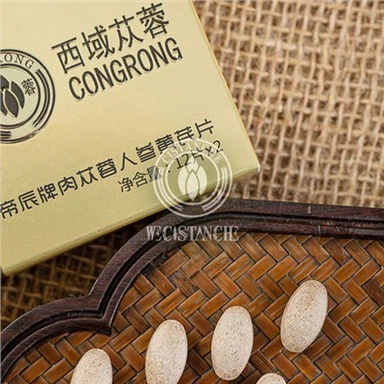
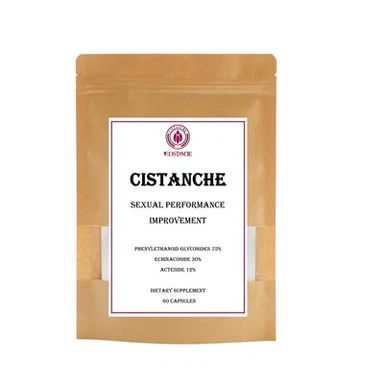
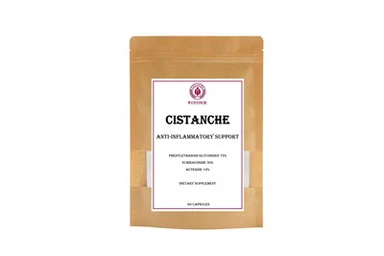
Wecistanche's cistanche powder, cistanche tablets, cistanche capsules, and other products are developed using desert cistanche as raw materials, all of which have a good effect on relieving constipation. The specific mechanism is as follows: Cistanche is believed to have potential benefits for relieving constipation based on its traditional use and certain compounds it contains. While scientific research specifically on Cistanche's effect on constipation is limited, it is thought to have multiple mechanisms that may contribute to its potential to relieve constipation. Laxative Effect: Cistanche has long been used in Traditional Chinese Medicine as a remedy for constipation. It is believed to have a mild laxative effect, which can help promote bowel movements and induce constipation. This effect may be attributed to various compounds found in Cistanche, such as phenylethanoid glycosides and polysaccharides. Moistening the Intestines: Based on traditional use, Cistanche is considered to have moisturizing properties, specifically targeting the Intestines. Promoting hydration and lubrication of the Intestines may help soften tools and facilitate easier passage, thereby relieving constipation. Anti-inflammatory Effect: Constipation can sometimes be associated with inflammation in the digestive tract. Cistanche contains certain compounds, including phenylethanoid glycosides and lignans, that are believed to have anti-inflammatory properties. By reducing inflammation in the intestines, it may help improve bowel movement regularity and relieve constipation.