Characteristics Of TCM Treatment Of Chronic Severe Hepatitis/liver Failure
Mar 10, 2022
Contact: Audrey Hu Whatsapp/hp: 0086 13880143964 Email: audrey.hu@wecistanche.com
XU Lihua
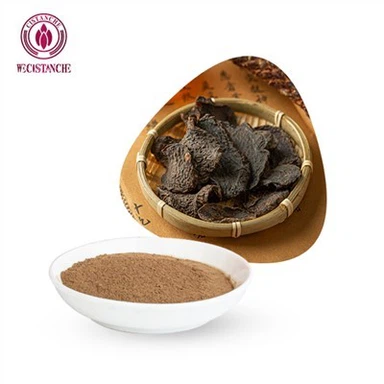
Chronic severe hepatitis/liver failure has complicated etiology, pathogenesis, and symptoms, with many syndromes, combined syndromes, and syndromes, and it is difficult to treat. The case fatality rate is 50% to 70%, and the highest can reach more than 80%. The prognosis is poor, and the survivors have many conditions. Times repeatedly. Cistanche deserticola is a perennial parasitic herb belonging to the genus Cistanche in the Leiden family. It uses dry fleshy stems with scales as medicine. It is a traditional and precious Chinese medicinal material in the arid area of Northwest China. , Anti-aging and other effects, for nourishing.
According to statistics, Cistanche cistanche has the first appearance rate in traditional Chinese medicine prescriptions for increasing strength, and it has great potential for development and application. In recent years, due to uncontrolled logging, the wild resources of Cistanche are on the verge of extinction, and Cistanche has been listed as a second-level national protected plant. This experiment took artificially planted Cistanche as the research object, and conducted a preliminary study on its oral acute toxicity and alleviating sports fatigue effects, in order to clarify whether artificially planted Cistanche can replace wild Cistanche, especially to provide experimental evidence for the function of relieving exercise fatigue.

Cistanche deserticola has many effects, click here to know more
1 Material and equipment
1.1 Medicine Cistanche
Provided by the planting base of Bossica cistanche in Yongning County, Ningxia, the dried fleshy stem with scale leaves of Cistanchedeserticola, a researcher from the Institute of Medicinal Botany, China Academy of Medical Sciences, identified it as a plant of the family Cistanchedeserticola. After crushing the medicinal materials, pass 10-20 meshes, use 10 times the amount of 70% ethanol to heat and reflux for extraction, 1 h/time, 2 times in total, and combine the filtrate after filtration. Reduce the pressure and recover the ethanol, continue to reduce the pressure and concentrate to a thick paste, freeze-dry, and the yield of the dried product is 42%. Before use, use distilled water to dissolve an appropriate amount of distilled water to prepare a medicinal solution of the required concentration.
1.2. Animals ICR mice,
A closed group of non-inbred lines, half male and half female. Weight: 18-22 g, provided by Beijing Weitonglihua Laboratory Animal Technology Co., Ltd. (license number: SCXK (Beijing) 2012—0001). Raised in an SPF animal laboratory.
1.3. Reagents
Urea kit (Urea): Zhongsheng Beikong Biotechnology Co., Ltd., batch number: 110421; LD whole blood reagent: Nanjing Jiancheng Institute of Biological Engineering, batch number: 110914; glycogen reagent: Nanjing Jiancheng Institute of Biological Engineering, batch number: 110714.
1.4 Instrument
7060 HITACHI fully automatic biochemical analyzer (produced by Hitachi, Japan); 752 ultraviolet grating spectrophotometer (produced by Shanghai No. 3 Analytical Instrument Factory); ALIlN electronic balance (produced by METTLER TOLEDO Group).

2. method
2.1. Oral acute toxicity test
Take 40 mice, half male and half male, and randomly divide them into a control group and an administration group, with 20 mice in each group, fasting for 12 hours without water. The administration group was given the maximum concentration and the maximum administration volume that the alcohol extract of Cistanche can be formulated into mice by gavage, three consecutive administrations within 24 hours, and the control group was given an equal volume of vehicle. Routinely reared for 14 days after administration, record the changes in animal quality, diet, appearance, behavior, secretions, excreta, and poisoning reactions. On the 14th day, the mice were weighed and sacrificed. The mice were dissected and the appearance of the heart, liver, spleen, lungs, and kidneys was observed with naked eyes.
2.2 Anti-fatigue test
2.2.1 Weight-bearing swimming experiment
Oral administration was continued for 14 and 17 days. After the last oral administration of the test sample, 30 minutes after the last oral administration of the test sample, the tail of the mouse was loaded with 5% of the bodyweight of the lead wire, and the mouse was placed in a swimming box for swimming. )℃, record the time from the start of swimming to the death of the mouse, that is, the time for the mouse to swim with a load.
2.2.2 Determination of serum urea
Oral administration was continued for 14 days, 30 minutes after the last oral administration of the test product, the mice were placed in 30cC water to swim unloaded for 90 minutes. After 60 minutes of rest, the mice were taken out of the eyeballs to collect about 0.5 mL of whole blood and placed in a refrigerator at 4°C. About 3h, after blood clotting, the blood was centrifuged at 2000r/rain for 15rain, and the serum was collected and the serum urea content was measured at OD340llm with 7060 HITACHI automatic biochemical analyzer.
2.2.3 Determination of liver glycogen
Oral administration was continued for 14 days, fasting 8 hours before the last administration, 30 min after oral administration of the test product, the animals were sacrificed, the liver was rinsed with saline and blotted dry with filter paper, and the sample was prepared according to the manual of the liver glycogen determination kit, using 752 Type UV grating spectrophotometer is OD62013. Measure the absorbance value of liver glycogen at m and calculate and process.
2.2.4 Determination of blood lactic acid
Oral administration was continued for 14 days, and 100 L of blood was collected 30 minutes after the last day of administration of the test article. The mice were placed in water at a temperature of 30°C for unloaded swimming for 10 minutes, and the second blood was collected 100%, and the third blood was collected after 20 minutes of rest. The samples were prepared according to the instructions of the whole blood lactic acid determination kit, and the lactic acid content was determined at OD530am with the 7060 HITACHI automatic biochemical analyzer.

3. Results
3.1 Oral acute toxicity test
Acute toxicity test Cistanche cistanche alcohol extract can be formulated into a drug solution with a maximum concentration of 0.9955g/mL, and the maximum allowable dose of mice in the experiment is 0.8mL/20g body weight. This dose is given for three consecutive doses within 24 hours. The mice appeared to be relatively quiet within 2h after administration, and there was no significant difference from the control group after 2h. Appetite decreased within 48 hours after administration, and then returned to normal. Compared with the control group, there were no significant changes in appearance, behavior, activity, and mental status within 14 days. No animal died within 14 days, and there were no significant changes in liver, kidney, and other organs after anatomy. Therefore, the maximum tolerance of the mice to the alcohol extract of Cistanche is 119.46g/kg. See Table 1 for the physical growth of mice in each group.
3.2 Experiments to relieve sports fatigue
3.2.1 Weight-bearing swimming experiment
After administration for 17 days, the three-dose groups of Cistanche cistanche alcohol extract can significantly prolong the weight-bearing swimming time of mice. Among them, the dose group is the most obvious compared with the control group, which has statistical significance. The results are shown in Table 2. It can be judged that the result of this experiment is positive.
3.2.2 Determination of serum urea content
The alcohol extract of Cistanche and the high-dose group have the effect of reducing the serum urea content of swimming mice. Compared with the control group, there is a very significant difference (P<0.01), which is statistically significant. The results are shown in Table 2. It can be judged that the result of this experiment is positive.
3.2.3 Determination of liver glycogen content
Cistanche cistanche alcohol extract in each dose group has the effect of increasing the liver glycogen content of mice, suggesting that cistanche alcohol extract can reduce liver glycogen consumption after strenuous physical exercise, and there is a very significant difference compared with the control group (P<0. O1), statistically significant, the results are shown in Table 2. It can be judged that the result of this experiment is positive.
3.2.4 Determination of lactic acid content in whole blood
There was no significant difference between the lower volume of the blood lactate curve and the control group in each dose group of Cistanche extract to mice at 3-time points, and it was not statistically significant. It can be judged that the result of this experiment is negative.
The results of the experiment showed that the weight-bearing swimming test of the Cistanche extract in mice was positive, and the three biochemical indicators of blood lactic acid, serum urea, and liver glycogen were positive for serum urea and liver glycogen. It can be judged that the Cistanche extract has relief The role of sports fatigue function.

4. Discussion
The most direct and objective manifestation of fatigue is the decline in exercise endurance. The choice is based on the endpoint index of the animal swimming fatigue test, taking into account the energy supply index and the index of sports metabolites, which can reflect the effect of the test sample in relieving exercise fatigue and also evaluating the body. A common method for anti-fatigue ability under hypoxic conditions with increased oxygen consumption. The results of this study show that artificially grown alcohol extracts of Cistanche can improve the exercise endurance of mice (load-bearing swimming), increase the liver glycogen reserve of mice, and reduce the serum urea level of mice after exercise. Further experimental studies have shown that the anti-free radical effect may be one of the anti-fatigue effects of drugs. According to the "Technical Specification for Health Food Inspection and Evaluation", it can be determined that artificially planted Cistanche has the function of relieving exercise fatigue. Oral acute toxicity experiments showed that none of the mice died within 14 days of continuous gavage. After 14 days, the body weight increased by more than 50% on average. The maximum tolerance of the mice to the alcohol extract of Cistanche was 119.46g/kg. The dosage is equivalent to 882 times the one-time dosage for adults, suggesting that the alcohol extract of Cistanche has very low toxicity, and its clinical application is relatively safe and reliable. It has further research and development value. The above experimental results provide an experimental basis for Cistanche to move from the medicine to health care products market. With the realization of artificial cultivation of Cistanche, it will have a broad market prospect among the occupationally fatigued and the elderly.
References
[1] Zhao Xinjie, Xia Hualing, Wang Sujing. Research progress on the pharmacological effects of Cistanche [J]. China Pharmaceuticals, 2009 (18): 17, 77-78.
[2] State Food and Drug Administration. Technical guidelines for research on the acute toxicity of traditional Chinese medicine and natural medicine [S]. 2005: 1.
[3] Ministry of Health of the People's Republic of China. Technical specifications for inspection and evaluation of health food products [S]. 2003: 82-85.
[4] CaiRL, YangMH, shiY, eta1. Antifatigueactivityofphenyle-thalloid—rich extract from Cistanchedesertieola[J]. Phytother Res, 2010, 24(2): 313-315.