Chicken-Derived Medicinals In Classical TCM For Pediatric Nocturnal Enuresis: Evidence Patterns And Product-Development Takeaways (With Focus On Cistanche Deserticola)
Sep 18, 2026
Who this article is for
This post is written for R&D, formulation teams, sourcing managers, and brand owners who are exploring herbal health products related to pediatric nocturnal enuresis (NE)-and who want to understand how classical Chinese medical texts used certain chicken-derived materia medica (e.g., Ji Nei Jin / chicken gizzard lining) and how those patterns may inform modern botanical product positioning, especially around Cistanche (Rou Cong Rong).
Important compliance note (US & global): Nocturnal enuresis is a medical condition. Dietary supplements and herbal health products cannot claim to diagnose, treat, cure, or prevent diseases. This article is for research and product-education purposes only. Any pediatric use requires extra caution, age-appropriate safety review, and professional guidance.
1. Background: What is pediatric nocturnal enuresis (NE)?
Nocturnal enuresis refers to involuntary nighttime urination in children aged ≥5 years, occurring at least once per month and lasting more than 3 months. 111
A Chinese cross-sectional survey (ages 5–18) reported an overall prevalence of 4.8%, with moderate-to-severe cases accounting for 18.6%. 222
Conventional first-line approaches often include desmopressin and alarm therapy, which may work quickly for some children but can face challenges such as relapse after discontinuation, longer management cycles, and variable outcomes. 333
TCM has a long history of managing enuresis with internal herbal formulas and external therapies, with reports of reduced episode frequency and lower relapse risk in some clinical contexts. 4–54–54–5
2. What are "chicken-derived medicinals" in classical TCM?
"Chicken-derived medicinals" here refer to organs, tissues, or metabolic products from domestic chicken (family Phasianidae) used as materia medica in classical texts. In the enuresis context, common examples include:
Chicken intestine (Ji Chang)
Chicken gizzard lining (Ji Nei Jin)
Chicken liver (Ji Gan)
Chicken droppings-white portion (Ji Shi Bai)
Chicken crop (Ji Su)
Feathers (Ji He Ling)
(As recorded in classical literature.) 6–76–76–7
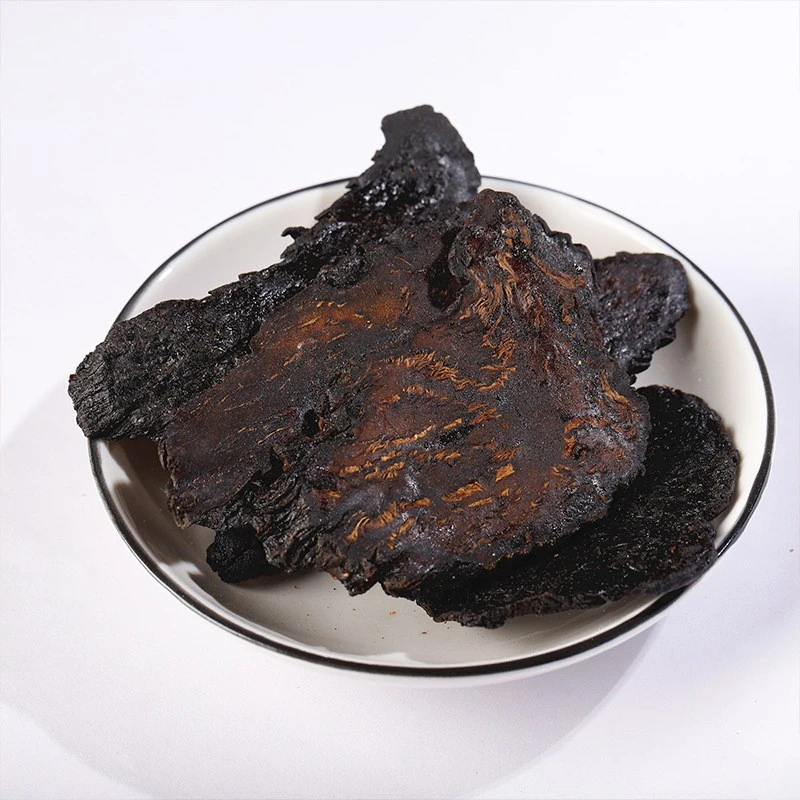
Click the picture to get more details about cistanche
3. Study objective (what this literature-mining work aimed to do)
This research systematically organized classical Chinese medical literature on using chicken-derived medicinals for pediatric enuresis, identifying patterns across:
formula frequency and composition
processing methods (paozhi)
dosage forms and administration methods
association rules, clustering, and network centrality of herb pairs/triads
The goal is to provide evidence patterns that may support modern clinical thinking and inspire structured development directions. (Original study summary.)
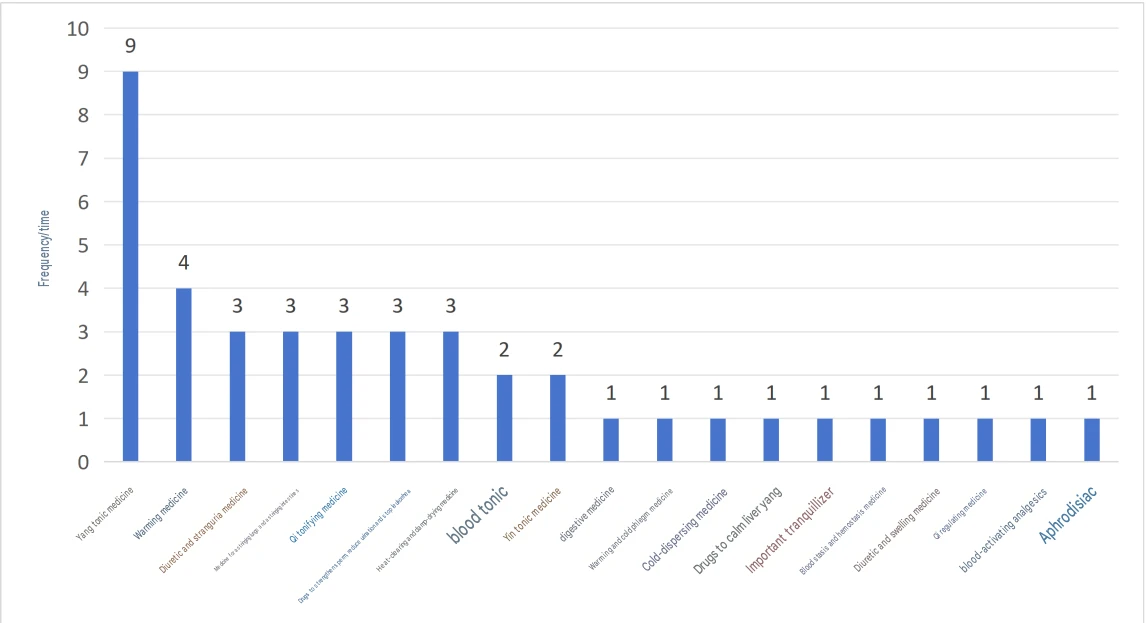
Figure 1 Therapeutic categories of compound prescriptions containing chicken-derived medicinals for the treatment of pediatric enuresis in ancient Chinese medical classics
4. Methods (data source, inclusion, and analytics)
4.1 Data source and search strategy
Records were searched in Zhonghua Yidian V5.0 using terms related to enuresis, urinary incontinence, bedwetting, etc. (e.g., 遗尿,尿床,小便不禁,尿失禁,睡中遗出不觉). When necessary, the original editions were checked for verification.
4.2 Inclusion criteria (classical texts)
Included were records that:
came from TCM classics published in or before 1911 (including 1911),
clearly described single-ingredient or multi-ingredient formulas using chicken-derived medicinals for enuresis with complete composition,
allowed tracing a formula name back to an original source with clear details,
explicitly stated pediatric enuresis, or came from pediatric monographs even if age was not specified.
4.3 Exclusion criteria
Excluded were records where enuresis was only a secondary symptom, or key dosage information remained missing after source tracing.
4.4 Data extraction and analysis
A database was built in Excel 2021, standardizing names using the Chinese Pharmacopoeia (Part I) and Zhonghua Bencao. 8–98–98–9
Descriptive statistics were performed in Excel. Association rules and clustering used R (v4.5.2); complex network analysis used Gephi 0.10.1.

Figure 2 Radar map of the four qi,five flavors,and channel entry of compound prescriptions containing chickenderived medicinals for the treatment of pediatric enuresis in ancient Chinese medical classics
5. Results: What did the classical literature actually use?
5.1 Literature retrieval and sources
A total of 171 records were retrieved. The dataset included 34 formulas (27 compound formulas; 7 single-ingredient formulas) across 64 monographs. By dynasty, the counts of monographs were: Northern Zhou (1), Tang (3), Song (7), Yuan (1), Ming (28), Qing (24). (As reported.)
5.2 High-frequency chicken-derived medicinals
Single-ingredient formulas (36 uses total):
Top items were:
chicken intestine (Ji Chang) - 17 uses (47.22%)
chicken gizzard lining (Ji Nei Jin) - 8 uses (22.22%)
chicken feathers (Ji He Ling) - 5 uses (13.89%)
Compound formulas (27 formulas; 135 occurrences):
Most frequently cited formula names included:
Ji Nei Jin San - 43 (31.85%)
Ji Chang San - 25 (18.52%)
Gui Gan Wan - 24 (17.78%)
Tu Si Zi San - 10 (7.41%)
(and others with lower frequency)
Overall compound-formula ingredient counts:
Across all ingredients used in compound formulas (573 total uses), chicken-derived medicinals accounted for 184 uses (32.11%). The most common were:
Ji Nei Jin - 77 uses (13.44%)
Ji Chang - 68 uses (11.87%)
Ji Gan - 27 uses (4.71%)
5.3 Dosage conversion (classical units to modern grams)
The study used dose conversion references from Chinese metrology history and formula-dosage research. 11–1311–1311–13
Reported modern-equivalent daily dose ranges:
Ji Nei Jin: 0.53–33.57 g, common dose 4.48 g
Ji Chang: 0.25–30.00 g, common dose 17.90 g
Product-development note: these are historical medicinal doses, not supplement serving sizes, and not pediatric recommendations.
5.4 Processing, dosage form, and administration patterns
Processing (paozhi) was common:
"burning/calcining" methods (烧) - 68
roasting (炙) - 37
"carbonizing while preserving properties" (烧存性) - 24
Dosage forms favored:
powder (散) - 117
pill (丸) - 45
decoction (汤) - 9
Administration vehicles frequently included:
taken with wine (酒送服) - 70 (most common)
Compliance note for modern products: "taken with wine" is not suitable for children and is not a modern pediatric-use direction; treat this as a historical administration pattern indicating "warming/activation" intent, not as a literal recommendation.
5.5 Key compatibility pattern
Association rules analysis (support ≥10%, confidence ≥80%, lift >1) highlighted a high-association pair:
Rou Cong Rong (Cistanche) + Ji Nei Jin
And a high-association triad:
Ji Nei Jin + Tu Si Zi (Cuscuta seed) + Rou Cong Rong
Network analysis identified core formula clusters and a core combination set (e.g., involving Ji Nei Jin, Rou Cong Rong, Mu Li (oyster shell), Long Gu (fossil bone), Lu Rong (deer antler), Yi Zhi (Alpinia), and others). (As summarized in the provided text.)
Table 1. Daily dosage of chicken-derived medicinals for the treatment of pediatric enuresis in ancient Chinese medical classics (g)
| Medicinal (Chinese) | Medicinal (English) | Maximum dose (g) | Minimum dose (g) | Average dose (g) | High-frequency dose (g) |
|---|---|---|---|---|---|
| 鸡内金 | Chicken gizzard lining (Ji Nei Jin) | 33.57 | 0.53 | 5.27 | 4.48 |
| 鸡肠 | Chicken intestine (Ji Chang) | 30.00 | 0.25 | 16.41 | 17.90 |
| 鸡肝 | Chicken liver (Ji Gan) | 2.52 | 0.08 | 0.29 | 0.08 |
| 鸡屎白 | Chicken droppings (white portion) (Ji Shi Bai) | 7.46 | 1.00 | 3.95 | 3.60 |
| 鸡翮翎 | Chicken feather (wing/flight feather) (Ji He Ling) | 3.00 | 1.50 | 2.20 | 1.50 |
| 鸡尾毛 | Chicken tail feather (Ji Wei Mao) | 3.00 | 3.00 | 3.00 | 3.00 |
6. TCM interpretation: what "mechanism pattern" do the classics imply?
A classical explanation (from Zhubing Yuanhou Lun) attributes enuresis to "bladder cold" with inability to restrain fluids, rooted in the kidney–bladder relationship and insufficiency of control. In modern TCM pattern language, pediatric enuresis often relates to:
lower burner deficiency-cold
kidney qi deficiency with poor consolidation
bladder failing to restrain
with possible mixed patterns (lung/spleen qi deficiency, heart–kidney disharmony, liver-channel damp-heat, etc.).
This literature-mining analysis found the formula tendency favored:
warming and tonifying,
astringing and stabilizing,
focusing on kidney and liver channels (reported as flavor/temperature/channel tendencies).

Figure 3 Distribution of administration methods of chickenderived medicinals for treating pediatric enuresis in ancient Chinese medical classics
Table 2. Association rule analysis results of compound prescriptions containing chicken-derived medicinals in the treatment of pediatric enuresis in ancient Chinese medical classics
| Consequent | Antecedent | Support (%) | Confidence (%) | Lift |
|---|---|---|---|---|
| Ji Nei Jin (鸡内金) | Rou Cong Rong (肉苁蓉) | 33.33 | 90.00 | 1.43 |
| Rou Cong Rong (肉苁蓉) | Tu Si Zi (菟丝子) | 25.93 | 87.50 | 2.36 |
| Ji Nei Jin (鸡内金) | Tu Si Zi (菟丝子) | 25.93 | 87.50 | 1.39 |
| Ji Nei Jin (鸡内金) | Rou Cong Rong (肉苁蓉), Tu Si Zi (菟丝子) | 25.93 | 100.00 | 1.59 |
| Rou Cong Rong (肉苁蓉) | Ji Nei Jin (鸡内金), Tu Si Zi (菟丝子) | 25.93 | 100.00 | 2.70 |
| Tu Si Zi (菟丝子) | Wu Wei Zi (五味子) | 22.22 | 85.71 | 2.89 |
| Rou Cong Rong (肉苁蓉) | Wu Wei Zi (五味子) | 22.22 | 85.71 | 2.31 |
| Ji Nei Jin (鸡内金) | Wu Wei Zi (五味子) | 22.22 | 85.71 | 1.36 |
| Rou Cong Rong (肉苁蓉) | Tu Si Zi (菟丝子), Wu Wei Zi (五味子) | 22.22 | 100.00 | 2.70 |
| Tu Si Zi (菟丝子) | Rou Cong Rong (肉苁蓉), Wu Wei Zi (五味子) | 22.22 | 100.00 | 3.38 |
7. What this means for a Cistanche (Rou Cong Rong) factory's independent-site blog
7.1 Positioning insights
From the classical compatibility rules, Rou Cong Rong consistently appears as part of a strategy aimed at:
supporting "kidney yang" / foundational warmth
improving "consolidation" and "holding" function in the lower burner
pairing with astringent minerals (e.g., Long Gu, Mu Li) and stabilization herbs
For modern dietary supplements, this can translate into educational positioning such as:
"Traditional vitality & kidney yang support"
"Lower burner support"
"Night-time wellness routine support"
"Support for healthy bladder function" (careful wording; avoid disease framing)
Wecistanche factory
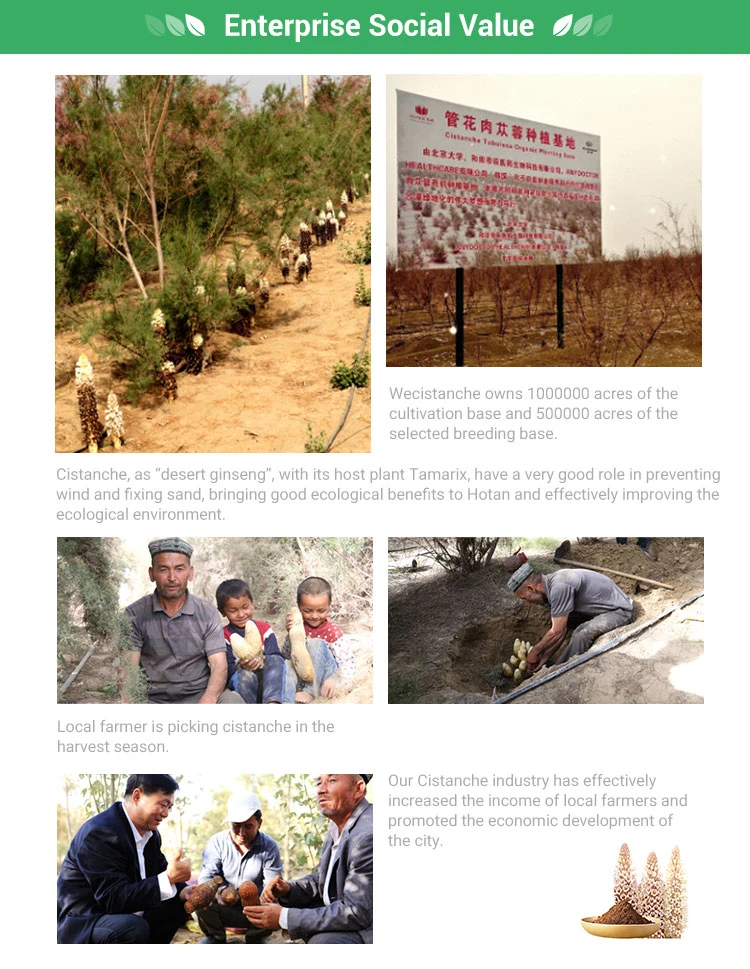
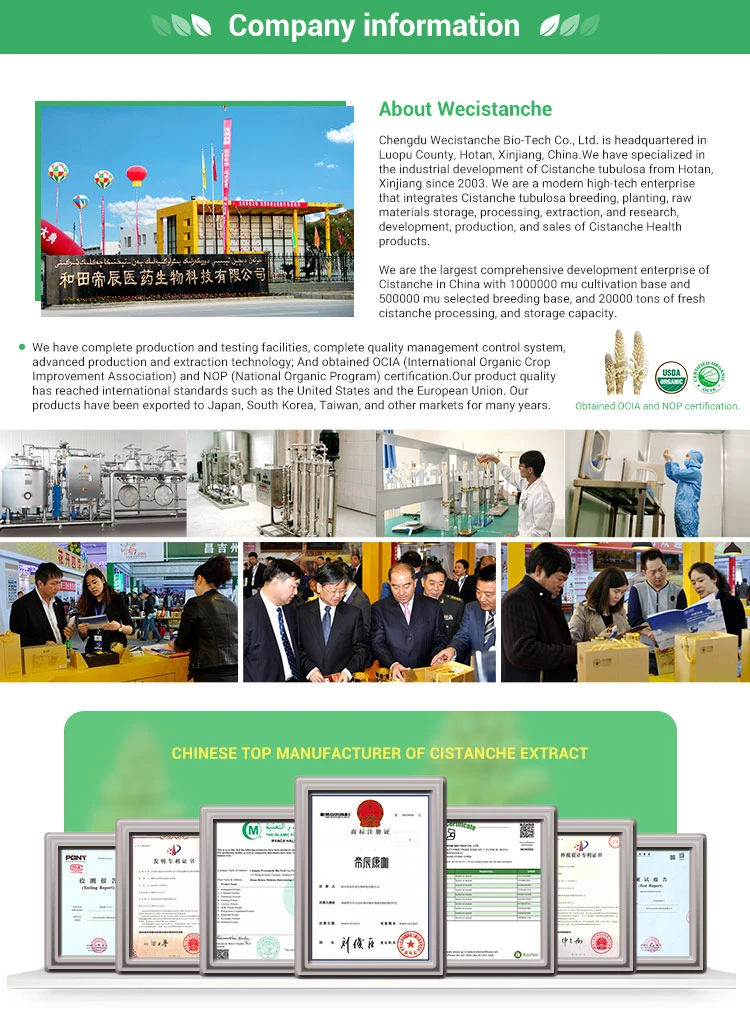
Supportive Service Of Wecistanche-For more details about cooperation
Email:wallence.suen@wecistanche.com
For pediatric audiences, most brands choose parent education and "general wellness" language, not therapeutic claims.
7.2 Formulation architecture ideas
Based on the classical pair/triad patterns found:
Core tonic: Rou Cong Rong
Digestive/transform support component: Ji Nei Jin (historically; modern supplement use may face regulatory/market constraints depending on region/category)
Stabilizing/astringent direction: mineral astringents (Long Gu, Mu Li)-often not ideal for supplements due to heavy metal/spec limits and sourcing QA, but useful as a classical reference point
"Securing essence" direction: Tu Si Zi
A modern, regulation-friendly approach may focus on botanical-only analogues that reflect the same "tonify + secure" logic, while ensuring pediatric safety reviews.
7.3 Processing & dosage-form inspiration
Classics favored powders and pills, which may inspire:
low-dose granules
small tablets
taste-masked powders in stick packs (for adults; pediatric use requires extra caution)
But the historic frequent use of calcining/carbonizing indicates that processing changes function-a research angle for modern QA and standardization.
8. Limitations you should acknowledge (important for credibility)
This work is based on classical text mining; it does not equal modern clinical efficacy.
Several items in the provided excerpt refer to figures/tables (Fig 1–6, Table 1–2) that were not included here.
The discussion cites modern studies [15–25][15–25][15–25] but the full reference list was not provided in your pasted text, so those sources cannot be verified in this draft.
References (as provided in the source text)
Miao Qianfan. Chinese Expert Consensus on Disease Management of Pediatric Enuresis (2025). Journal of Clinical Pediatrics, 2025, 43(7): 483–499.
Miao Qianfan, Li Yanjun, Xu Hong, et al. A cross-sectional survey of enuresis prevalence among Chinese people aged 5–18 years. Chinese Journal of Evidence-Based Pediatrics, 2020, 15(2): 81–86.
Luo Lei, Huang Huimei, Wang Mo. Advances in the treatment of primary nocturnal enuresis in children. Journal of Pediatric Pharmacy, 2024, 30(12): 52–57.
Yu Jiabei, Lin Muxuan, Tong Xinru, et al. Visualized analysis of TCM treatment of pediatric enuresis based on CiteSpace and VOSviewer. (Journal details as listed), 2025, 31(9): 171–177.
Liu Xiaoyu, Zhu Rongxin, Zhang Bo, et al. Developing clinical questions and outcome indicators for an integrative guideline on pediatric enuresis using a modified Delphi method. Chinese General Practice, 2026, 29(15): 2050–2055.
Ma Jixing. Collected Annotations on Shennong Bencao Jing. Beijing: People's Medical Publishing House, 2013: 132.
Liu Hengru, Liu Shanyong, Qian Chaochen, et al. Research on Compendium of Materia Medica (Bencao Gangmu). Beijing: Huaxia Publishing House, 2009: 1715–1717.
Chinese Pharmacopoeia Commission. Pharmacopoeia of the People's Republic of China (Part I). Beijing: China Medical Science and Technology Press, 2020.
Editorial Board of Zhonghua Bencao (State Administration of Traditional Chinese Medicine). Zhonghua Bencao. Shanghai: Shanghai Scientific & Technical Publishers, 2004.
Gao Xueming. Chinese Materia Medica (Zhongyaoxue). Beijing: China Press of Traditional Chinese Medicine, 2002.
Lu Jiaxi. History of Science and Technology in China: Metrology Volume. Beijing: Science Press, 2001: 447.
Yan Wenqiang. A study on the evolution of weights and measures for Chinese materia medica through dynasties. Laozi Studies Journal, 2016(1): 137–144.
Zhang Lin, Tang Ruoshui, Song Jia, et al. Textual research on dosage conversion principles in ancient classic formulas. Chinese Journal of Experimental Traditional Medical Formulae, 2024, 30(10): 196–202.