Research Progress On The Chemical Constituents, Pharmacological Effects, And Clinical Applications Of Zishen Pill (Zishen Wan)
Sep 18, 2026
Abstract
Zishen Pill, also known as Tongguan Pill or Zishen Tongguan Pill, was first recorded in Lanshi Mizang (Lan Shi Mi Cang) during the Yuan Dynasty. It is composed of Phellodendri Chinensis Cortex (Huangbo), Anemarrhenae Rhizoma (Zhimu), and Cinnamomi Cortex (Rougui). As a classic formula, it is still widely used in clinical practice today. Therefore, it is necessary to review the most recent research progress to provide useful references for future studies.
After sorting and reviewing the literature, we found that research on the material basis of Zishen Pill mainly involves quality evaluation and the influence of compatibility on the in vivo distribution of active ingredients. Overall, relevant studies remain limited and insufficient in depth. It is recommended to combine emerging techniques-such as mass spectrometry imaging and target fishing-to comprehensively analyze the chemical constituents of the formula, thereby laying a foundation for establishing rational quality standards.
Pharmacological studies have focused on diseases such as pyelonephritis, diabetes, benign prostatic hyperplasia (BPH), and chronic prostatitis. However, problems exist, including variations in sample preparation processes and prescription composition, conventional evaluation indicators, and insufficient mechanistic depth. It is recommended to clarify the key information of the classic formula Zishen Pill and apply multi-omics technologies to evaluate its pharmacological effects, so that the mechanisms can be clearly elucidated.
Clinically, Zishen Pill is mainly indicated for dysuria with obstruction caused by internal generation of damp-heat, depletion of essence and qi, and dysfunction of qi transformation, and it is often used for chronic kidney diseases and urinary system–related syndromes. However, clinical studies are mostly case-based, and applications are frequently combined with other therapies. It is recommended to conduct more high-quality studies on Zishen Pill as a single formula, including retrospective case analyses and randomized controlled trials (RCTs), to clarify its optimal clinical positioning.
Keywords: Zishen Pill; chemical constituents; pharmacological effects; clinical application; research progress
Introduction
Zishen Pill, also known as Tongguan Pill or Zishen Tongguan Pill, was first recorded in Lanshi Mizang written by Li Gao (Li Dongyuan) in the Yuan Dynasty. The formula consists of three Chinese medicinal materials: Huangbo (Phellodendri Chinensis Cortex), Zhimu (Anemarrhenae Rhizoma), and Rougui (Cinnamomi Cortex) [1].
Cistanche Zishen Pill For Male Vitality And Prostate Problems

Huangbo is the chief herb, clearing heat and drying dampness, and draining fire and detoxifying. Zhimu is the deputy herb, clearing heat and draining fire, nourishing yin and moistening dryness. These two herbs have similar actions and are commonly used together to enhance the effect of nourishing yin and clearing heat, and draining fire and detoxifying [2]. Rougui serves as the assistant and courier, warming and tonifying yang, warming and unblocking the channels, and playing a "counterbalancing" role. It can both supplement the fire of the lower burner to support qi transformation and guide the herbs downward to enter the kidney to dispel pathogenic factors [3]. Together, the three herbs complement one another and exert the combined effect of nourishing yin and tonifying the kidney, promoting urination, and unblocking the passage [4].
At present, Zishen Pill remains widely used and is one of the classic formulas commonly applied in traditional Chinese medicine (TCM) for treating lin syndrome and urinary retention (longbi). Reviewing the research progress of this formula is of great significance for its further application and development. Previous scholars have summarized its research progress; however, with the continuous enrichment and deepening of research in recent years, new findings have emerged. Therefore, it is necessary to compile and summarize the studies from recent years to provide references for the clinical application and formulation development of this classic formula.
1. Chemical Constituents
Overall, there are relatively few reports on the material basis of Zishen Pill [5]. In the past five years, progress in this area has been limited. Combined with aspects not covered by earlier reviews, recent studies mainly involve two areas:
(1) Quality Evaluation
Zishen Pill is used clinically in forms such as proprietary Chinese medicines and hospital preparations. Quality evaluation research helps ensure the safety and effectiveness of clinical medication. Based on this, Zhang Chunling et al. [6] established an overall qualitative evaluation method and a quantitative analysis method based on high-performance liquid chromatography (HPLC) fingerprinting. A total of 11 common peaks were identified in the fingerprint, and six constituents-neomangiferin, mangiferin, phellodendrine, magnoflorine, jatrorrhizine, and berberine-were used for quantitative evaluation.
In addition, some scholars used ultra-high-performance liquid chromatography–tandem mass spectrometry (UHPLC–MS/MS) to identify eight potential quality markers (Q-markers) in Zishen Tongguan capsules [7], which may be used for quality control and evaluation. Other scholars established an HPLC method for determining effective constituents-timosaponin BII and berberine hydrochloride-in the extract of Zishen Pill, and found that the contents of these two constituents were highest in the 70% ethanol elution fraction, which could provide references for quality standard development of this compound preparation [8].
(2) Chemical Constituents and Compatibility Studies
Zishen Pill has a simple compatibility structure. The herb pair of Huangbo and Zhimu is commonly used as a mutually reinforcing combination. At present, studies on the chemical constituents of this herb pair are relatively abundant. Liu Shun et al. [9] retrieved and screened multiple databases and obtained candidate active molecules related to Huangbo and Zhimu. Quercetin, tetrahydropalmatine (as listed in the original), and kaempferol were ranked among the top candidates by degree value, providing a basis for further exploration of the mechanism of the Huangbo–Zhimu herb pair.
Su Meng et al. [10] first predicted-through network pharmacology and molecular docking-that anhydroicaritin might be a core anti-inflammatory constituent of the Zhimu–Huangbo herb pair, and then quantified it using LC–MS, reporting its content as 18.04% in the herb pair.
Because the in vivo environment exerts complex influences on Chinese medicinal materials, only constituents absorbed into the blood may form the material basis of efficacy. Some scholars used rabbits as experimental subjects and applied UHPLC–quadrupole–electrostatic field orbitrap high-resolution mass spectrometry to analyze blood-absorbed constituents of the Zhimu–Huangbo herb pair. They detected 46 prototype constituents absorbed into the blood and nine metabolites produced from berberine, palmatine, jatrorrhizine, and mangiferin [11].
Pathological states may alter the in vivo behavior of Chinese medicines. Therefore, studies on blood-absorbed constituents in pathological model animals are particularly important for deeper evaluation of the material basis of efficacy. Xu et al. [12] used UHPLC–quadrupole–time-of-flight MS to identify chemical constituents of the Zhimu–Huangbo herb pair absorbed into the serum of diabetic rats and detected seven chemical constituents, including one xanthone glycoside and six alkaloids. In addition, Cao et al. [13] established an UHPLC–linear trap quadrupole–orbitrap high-resolution MS method to compare absorbed constituents and metabolites in the plasma of normal rats and type 2 diabetic rats. They found that the categories of 16 absorbed constituents and 11 metabolites showed no differences between normal and model animals, but pharmacokinetic comparisons revealed significant differences.
Adding a small amount of Rougui (Cinnamomi Cortex) to the Huangbo–Zhimu herb pair can promote the distribution of the active constituents phellodendrine and timosaponin AIII in rat liver, heart, spleen, lung, and kidney tissues. It is inferred that the counterbalancing compatibility of Rougui may influence transmembrane transport of active constituents, thereby promoting absorption and distribution in tissues and organs [14].
By summarizing and classifying the chemical constituents reported in the literature [6–14], the main categories include:
Alkaloids: magnoflorine, tetrahydroepiberberine (as listed), phellodendrine, 13-hydroxy-oxyberberine, palmatine, berberine, jatrorrhizine, coptisine (as listed), etc.;
Organic acids: chlorogenic acid, 3-O-feruloylquinic acid, 5-O-feruloylquinic acid, etc.;
Flavonoids: mangiferin, isomangiferin, neomangiferin, etc.;
Saponins: timosaponin BII, timosaponin AIII, timosaponin N, timosaponin C, timosaponin E1, etc.;
Lactones: limonin, etc.;
Glycosides: 2-(p-hydroxyphenyl)ethanol 1-O-β-D-glucoside, etc.;
Others: syringin, nyasol, etc.
2. Pharmacological Effects
2.1 Pyelonephritis
Pyelonephritis is a common infectious disease of the urinary system. According to disease duration, it can be divided into acute and chronic pyelonephritis [15]. Its causes are complex and include urinary tract obstruction, weakened immune function, and unhealthy lifestyle habits. Although pyelonephritis does not directly cause death, delayed treatment can lead to severe complications that endanger life and health.
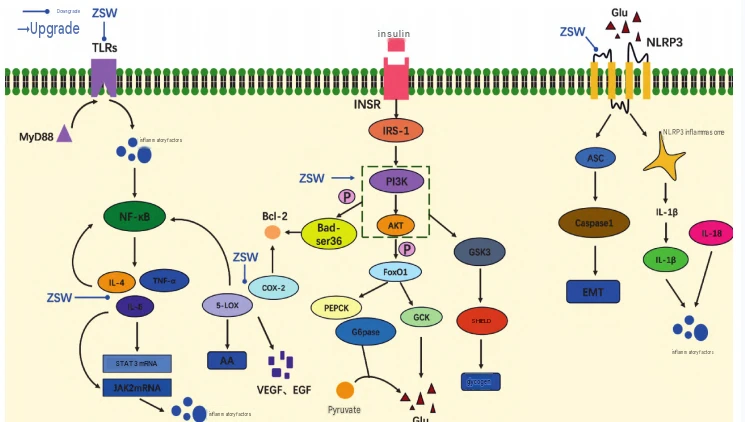
Antibiotic therapy is the main treatment approach, but adverse reactions may occur. In this context, TCM has certain advantages [16–17]. It has been reported that Zishen Pill has notable anti-inflammatory and antibacterial effects. It can enhance urinary mucosal immune responses, increase secretory immunoglobulin A (SIgA) levels in rats, reduce adhesion and proliferation of pathogens in the urinary tract, and significantly decrease levels of interleukins (IL-4, IL-6, IL-10) in urinary mucosal tissues. It can also reduce inflammatory responses and alleviate pyelonephritis symptoms by downregulating Toll-like receptors (TLR4, TLR5) and decreasing the expression of downstream proteins in the myeloid differentiation factor–NF-κB (MyD88–NF-κB) pathway [18–19].
On this basis, in recent years, some scholars established an acute pyelonephritis (AP) model and used inflammatory factors such as IL-1α, IL-1β, tumor necrosis factor-α (TNF-α), monocyte chemoattractant protein-1 (MCP-1), and chemokine ligand 2 (CXCL2) as indicators to explore the effect of Zishen Pill on AP inflammation. Results showed that the formula can modulate immune responses of inflammatory factors, exert anti-inflammatory effects, and protect the kidneys and other urinary organs through bidirectional regulation [4].
2.2 Diabetes
Diabetes is a systemic metabolic disorder characterized mainly by insulin resistance. Insulin resistance manifests as decreased sensitivity of insulin target organs/tissues (such as liver, skeletal muscle, and adipose tissue) to normal levels of insulin's biological effects [20]. When hepatic insulin resistance occurs, dysregulation of gluconeogenesis and glycogen synthesis leads to glucose metabolism disorders. It also excessively stimulates de novo lipogenesis, causing lipid accumulation in the liver and resulting in lipid metabolism disorders [21].
Studies have shown that Zishen Pill can significantly reduce fasting blood glucose and the area under the curve (AUC) of the glucose tolerance test in spontaneous diabetic mouse models, increase fasting insulin levels, and reduce the insulin resistance index. It activates the PI3K/Akt signaling pathway by upregulating upstream growth factors and receptor tyrosine kinases (RTKs). The PI3K/Akt pathway can phosphorylate glycogen synthase kinase 3 (GSK3) to inhibit its activity, thereby increasing the activity of glycogen synthase (GYS), a key factor for glycogen synthesis, and promoting glycogen synthesis. The PI3K/Akt pathway can also phosphorylate forkhead box protein O1 (FoxO1), promoting its export from the nucleus and terminating transcription, which upregulates glucokinase (GCK) expression. The catalytic action of GCK promotes activation of glycogen synthase, increasing glycogen content. Meanwhile, it downregulates glucose-6-phosphatase (G6pase), inhibiting gluconeogenesis and improving glucose metabolism. Zishen Pill can also significantly reduce BMI and decrease serum triglyceride and total cholesterol levels in mice, improving obesity and lipid metabolism, thereby ameliorating insulin resistance and potentially treating type 2 diabetes [22–24].
In addition, Liu Tonghua's team explored possible mechanisms of Zishen Pill in improving glucose and lipid metabolism in db/db mice from the perspectives of intestinal barrier function and skeletal muscle function. Results showed that the formula significantly improved pathological changes in skeletal muscle and ileum, and significantly increased the expression of occludin and zonula occludens-1 (ZO-1) proteins in the ileum. The mechanism may involve improvement of skeletal muscle metabolism and increased insulin sensitivity [25].
2.3 Diabetic Kidney Disease (DKD)
DKD is both the most common and most severe complication of diabetes and a common secondary chronic kidney disease, ultimately potentially leading to renal failure. Inflammatory injury is a key factor in its occurrence and development [26–27].
Hyperglycemia can directly induce cells to secrete inflammatory factors and initiate pyroptosis. Pyroptotic cells activate the NLRP3 inflammasome, converting IL-1β into mature IL-1β. Together with IL-18, it induces other inflammatory cytokines, activates immune cells, and promotes recruitment, accelerating inflammation. NLRP3 is a core protein of the inflammasome that recruits apoptosis-associated speck-like protein containing a CARD (ASC) and activates inflammasome bioeffects. ASC activates caspase-1, thereby promoting epithelial–mesenchymal transition (EMT) in renal tubular epithelial cells.
Zishen Pill can downregulate the expression of NLRP3, ASC, and caspase-1 in renal tissues of diabetic mice, indicating that it can inhibit NLRP3 inflammasome activation. This may be the main mechanism by which it suppresses pyroptosis and EMT in DKD renal tubular epithelial cells [28–29].
Additionally, the authors used network pharmacology to explore core targets of Zishen Pill in improving DKD, selected PI3K-Akt and p38 MAPK signaling pathways as major inflammation-related pathways, and conducted in vivo experimental validation. Results showed that Zishen Pill significantly inhibited excessive release of inflammatory cytokines such as IL-1β, IL-6, TNF-α, and MCP-1 in db/db mice, and downregulated p38 MAPK and PI3K-Akt signaling pathways [30].
2.4 Benign Prostatic Hyperplasia (BPH)
BPH is a hyperplastic disease of glandular and stromal cells caused by multiple factors, including sex hormones, cytokines, and inflammation [31]. Its pathogenesis is mainly related to dysregulation of multiple growth factors and reduced apoptosis.
Chemokine ligands CCL3 and CCL5 can recruit leukocytes to inflammatory sites and induce leukocytes to produce vascular endothelial growth factor (VEGF) and epidermal growth factor (EGF). VEGF is a key driver of angiogenesis and vascular permeability. EGF functions by binding to its specific receptor EGFR, stimulating growth of prostate epithelial cells and participating in the pathogenesis of BPH. Zishen Pill can exert sustained anti-VEGF effects and downregulate CCL3 and CCL5 expression, which may be an important mechanism for improving BPH [32].
Infiltration of T lymphocytes, B lymphocytes, and macrophages in prostate tissue can resist invasion by harmful chemicals and pathogens. These cells maintain chronic immunity by releasing proinflammatory cytokines, leading epithelial cells to produce cyclooxygenase-2 (COX-2). Moreover, prostate cells themselves can release COX-2 and 5-lipoxygenase (5-LOX) in an inflammatory environment. COX-2 promotes the expression of anti-apoptotic protein Bcl-2 and promotes the synthesis of various growth factors, thereby inhibiting apoptosis. 5-LOX regulates leukotriene production and participates in inflammatory signaling pathways such as arachidonic acid (AA), TNF, NF-κB, and VEGF, exerting proinflammatory effects and disrupting homeostasis.
Zishen Pill can effectively downregulate protein and gene expression of COX-2 and 5-LOX and significantly inhibit the release of cytokines such as TNF-α, CCL3, CCL5, IL-4, IL-12, and IL-6 in prostate tissues [33]. Researchers have also screened COX-2 and 5-LOX inhibitors from Zishen Pill extracts, suggesting that the formula may partially regulate AA metabolism by inhibiting COX and LOX expression, thereby reversing the progression of BPH [34–36].
The PI3K/Akt/mTOR signaling pathway can influence the binding of BAD to Bcl-2, inactivate caspase-9 and caspase-3, and thus inhibit apoptosis. This pathway can also regulate the release of inflammatory cytokines, increasing susceptibility of inflammatory cells. Furthermore, it can promote activation of the NF-κB pathway, thereby exacerbating inflammation and worsening disease. Intervention of this pathway by Zishen Pill may be an important approach for improving BPH [33].
CD14, IFIT1, and RCN1 are differentially expressed proteins during the process by which Zishen Pill improves BPH. CD14 can recognize and bind LPS or LPS/LBP complexes and mediate LPS-induced cellular responses, leading to cellular activation and production of proinflammatory cytokines and chemokines. IFIT1 is one of the most effective natural immune proteins produced by mammals during viral infection and can negatively regulate LPS-induced TNF-α. Abnormal cell proliferation and apoptosis are common pathogenic mechanisms of BPH, and RCN1 can inhibit endoplasmic reticulum stress–induced apoptosis. After administration of Tongguan Pill, these differentially expressed proteins were restored in the BPH model, thereby regulating inflammatory responses and potentially playing key roles in BPH improvement [37].
2.5 Chronic Prostatitis (CP)
Modern medicine considers the pathogenesis of CP to involve pathogenic microbial infection, autoimmune abnormalities, oxidative stress responses, endocrine disorders, neurofunctional disorders, and psychosocial factors. Zishen Tongguan Formula-formed by modifying Zishen Pill in combination with Liuwei Dihuang/related additions as described in the original-downregulated IL-1β, IL-6, IL-8, and TNF-α in CP rats, bidirectionally regulated IL-10 expression, and may improve prostate histopathological changes by downregulating IL-6 expression and thus inhibiting JAK2/STAT3 signaling (JAK2 mRNA, STAT3 mRNA, and phosphorylated JAK2). It reduced inflammatory cell infiltration in the interstitium and slowed smooth muscle and collagen fibrosis processes, thereby potentially reversing progression of chronic prostatitis [38].
CP may also lead to increased pathogenic Bacteroides and decreased probiotic Lactobacillus in rat gut microbiota. Zishen Pill can alleviate CP by reducing inflammatory factors such as TNF-α, COX-2, and leukotriene B4 (LTB4), regulate gut microbiota, and show better effects when Huangbo and Zhimu are salt-processed and combined into the formula [39]. In addition, based on the "gut–prostate axis" theory, scholars examined the effects and mechanisms of Zishen Pill and Rougui in improving chronic nonbacterial prostatitis (CNP). Results showed that adding Rougui can optimize gut microbiota composition, thereby promoting anti-inflammatory effects of the immune system in CNP rats, which may be a key mechanism of intervention [40].
In summary, the pharmacological effects of Zishen Pill mainly include anti-inflammatory, hypoglycemic, and lipid-lowering actions, involving diseases such as pyelonephritis, diabetes, DKD, BPH, and chronic prostatitis. The relevant mechanisms are summarized in Table 1 and Figure 1.
Table 1. Mechanistic Analysis of Zishen Wan (Zishen Pill)
| Disease | Targets / Key Factors | Pathways | References |
|---|---|---|---|
| Pyelonephritis | IL-4, IL-6, IL-10, TLR4, TLR5, IL-1α, IL-1β, TNF-α, MCP-1, CXCL2 | MyD88–NF-κB | [4, 18–19] |
| Diabetes | Occludin, ZO-1, GSK3, FoxO1, RTK, GYS, GCK, G6pase | PI3K/Akt | [22–25] |
| Diabetic kidney disease (DKD) | NLRP3, ASC, Caspase-1, IL-1β, IL-6, TNF-α, MCP-1 | MAPK, PI3K–Akt | [28–30] |
| Benign prostatic hyperplasia (BPH) | VEGF, CCL3, CCL5, COX-2, 5-LOX, TNF, IL-4, IL-12, IL-6, CD14, IFIT1, RCN1 | PI3K/Akt/mTOR | [32–37] |
| Chronic prostatitis (CP) | IL-1β, IL-6, IL-8, TNF-α, IL-10, COX-2, LTB4 | JAK2/STAT3 | [38–39] |
3. Clinical Applications
Clinically, Zishen Pill is mainly used to treat chronic kidney diseases and urinary system–related disorders. At present, related studies are relatively few and are mostly case-based studies involving modifications of the formula.
For example, Chen Liping et al. [41] reported extensive clinical experience using modified Zishen Tongguan Pill to treat chronic kidney disease. Chronic kidney disease patients often have deficiency due to prolonged illness; pathogenic factors take advantage of deficiency, damp-heat pours downward, and the kidney and bladder qi transformation function becomes dysfunctional, leading to disordered fluid metabolism and dysuria. In Zishen Pill, Zhimu and Huangbo clear heat and drain fire to dispel pathogenic factors, and Rougui assists yang and promotes qi transformation to normalize qi transformation function. For elderly and frail patients or those with chronic illness entering the collaterals, treatment can be adjusted according to pattern differentiation.
Zhang Peiqing et al. [42] often used Zishen Tongguan Pill combined with Shenqi Dihuang Decoction when treating BPH, to tonify the spleen and kidney, assist yang and promote qi transformation, clear heat and detoxify, and activate blood and resolve stasis, achieving good clinical effects. Zhang Peiqing et al. [43] also flexibly applied modified Zishen Tongguan Pill in treating neurogenic bladder, urinary tract infection, bladder neck sclerosis, urinary retention, and other urinary system diseases, with marked improvement and stable conditions.
Luo Junhui et al. [44] used Zishen Tongguan Pill combined with Jisheng Shenqi Pill to treat diabetic neurogenic bladder. This condition originates from wasting-thirst (xiaoke), with yin deficiency and internal heat affecting the kidney. Yin damage involves yang, kidney yang becomes deficient, and bladder qi transformation becomes impaired. In Zishen Tongguan Pill, Zhimu nourishes yin and moistens dryness, Huangbo drains lower burner heat, and Rougui unblocks yang and promotes qi transformation. Combined with Jisheng Shenqi Pill, the patient showed a tendency toward recovery.
In addition, some scholars used modified Zishen Tongguan Pill combined with Zhuling Decoction to treat bladder cancer of the yin-deficiency blood-heat pattern, aiming to nourish yin and moisten dryness and drain fire and detoxify. This approach is suitable for patients in rehabilitation stages and those with prolonged illness. Chai Kequn et al. [45] noted that the bladder is "yin in substance and yang in function," and using Zishen Tongguan Pill can nourish the spleen and tonify the kidney, considering both substance and function, which is highly appropriate.
Regarding the clinical efficacy of Zishen Pill in prostatitis-related conditions, Dai Ruixin et al. [46] used Zishen Pill as a base formula and added Biejia, Muli, and Wangbuliuxing to prepare "Zishen Tongguan Tablets." Using inclusion criteria of BPH symptoms and the TCM pattern of kidney deficiency and blood stasis, they designed a prospective, controlled, large-sample clinical study to evaluate efficacy. Results confirmed therapeutic effects in mild and moderate BPH patients.
Chen Zhiwei [38] established a "Zishen Tongguan method" based on Zishen Tongguan Pill and, using evidence-based medicine approaches, comprehensively searched randomized controlled studies of Chinese herbal compounds using this method for CP, and performed systematic evaluation of efficacy and safety, providing scientific evidence for its clinical application.
For urinary system infection, Li Huawei [47] used Zishen Tongguan capsules as the treatment group and nitrofurantoin as the positive control. Sixty patients meeting inclusion and exclusion criteria were randomized equally; the cumulative number of recurrences within 12 months was recorded and midstream urine cultures were performed. Results showed no significant difference in average recurrence times between groups, while the Zishen Tongguan group had better effects against drug resistance.
Xia Jinbin [48] selected 60 patients with chronic urinary tract infection from outpatient and inpatient departments of nephrology at Beijing Hospital of Traditional Chinese Medicine (Shunyi Hospital) and randomized them into a modified Zishen Tongguan Pill group and a sensitive-antibiotic control group (30 per group). By comparing urine routine leukocyte counts, colony counts, clinical efficacy, and TCM syndrome efficacy, they found that modified Zishen Tongguan Pill had good clinical efficacy for chronic urinary tract infection.
4. Dosage Form (Formulation) Studies
Current research on dosage forms of Zishen Formula mainly involves pills, capsules, tablets, and hydrogel patch preparations.
Pills are the traditional dosage form of Zishen Formula, with rapid absorption and relatively high drug utilization. However, there are issues such as difficulty in quality control and poor taste. Capsules can mask unpleasant odors and improve stability. Research on Zishen Tongguan capsules [49–52] provides a foundation for expanded production and improved quality controllability. Tablets have accurate dosage, uniform content, high mechanization and automation, and low cost. Basic research on Zishen Formula tablets [53–55] provides evidence for improving the traditional pill dosage form and references for quality evaluation of Zishen Tongguan tablets.
Hydrogel patch preparations are based on the TCM theory of "treating internal diseases externally." In treating chronic prostatitis, they can deliver effects directly to the affected area, improve patient compliance, and reduce long-term oral drug side effects and first-pass effects [56]. Each dosage form has advantages and disadvantages. It is recommended to increase basic research on different dosage forms so that physicians can choose appropriate forms according to patient needs.
5. Discussion and Prospects
In summary, current research on the chemical constituents of Zishen Pill mainly focuses on changes in constituent types and contents before and after salt-processing of Huangbo and Zhimu, as well as the counterbalancing role of Rougui. Establishing HPLC fingerprints to characterize active constituents and determine their contents is the main approach in chemical constituent research. Developing convenient, accurate, and reproducible analytical methods can provide a basis for establishing quality standards and ensuring medication safety.
Pharmacological studies mainly focus on pyelonephritis, diabetes, BPH, and other conditions. Zishen Pill can exert therapeutic effects by regulating inflammatory factors and pathways such as PI3K-Akt, thereby delaying or reversing disease progression. Clinically, Zishen Pill is mainly used for chronic kidney disease and urinary system–related syndromes, but it is often combined with other formulas and modified according to patterns. Overall, research on Zishen Pill remains limited and relatively shallow, with methods and technologies comparatively outdated. Meanwhile, many issues exist in research, such as prescription compositions that do not conform to the dosage proportions and amounts of the classic formula, frequent reliance on network pharmacology in pharmacological research, and clinical studies dominated by case reports.
Based on the review of recent research progress, it is suggested that future research should be strengthened in the following aspects:
According to the key information verification results of classic formulas released by the state, combined with Standards for Pharmaceuticals (Ministry-Issued Drug Standards), determine key information such as prescription composition, herb dosages and proportions, and daily dosage to ensure the accuracy and consistency of research objects.
Material basis research can integrate advanced detection technologies and research methods such as LC–MS, mass spectrometry imaging, and target fishing [57–60], to support deeper research and to lay a foundation for clarifying mechanisms and formulating standards.
Pharmacological research is recommended to go beyond conventional model evaluation indicators and, based on prior research, deeply explore upstream and downstream targets along the relevant pathways to further identify mechanisms and targets.
Clinical research should attempt, on the basis of case reports, to conduct RCTs and retrospective case analyses using the single formula, to determine the optimal diseases for treatment and provide evidence for clinical application.
References
[1] Li Dongyuan. Lanshi Mizang [M]. Edited by Wen Kui and Ding Guohua. Beijing: People's Medical Publishing House, 2012: 97–98.
[2] Zhang Zidong, Bai Haodong, Zeng Yuanning, et al. Research progress on Zhimu and its herb pairs [J]. Chinese Journal of Traditional Chinese Medicine, 2023, 41(10): 98–101.
[3] Liu Tongzhi, Jin Guoe, Hu Xuebing. Li Dongyuan's Zishen Pill for treating dysuria obstruction [J]. Journal of Clinical Traditional Chinese Medicine, 2018, 30(6): 1033–1035.
[4] Wang Xun, Liu Shun, Zou Kaiping, et al. Effects of Rougui compatibility with "Huangbo–Zhimu" herb pair on inflammatory factors in pyelonephritis rats [J]. Chinese Hospital Drug Evaluation and Analysis, 2021, 21(3): 257–261, 268.
[5] Zhang Chunling, Fan Linhong, Fan Shunming, et al. Research progress of Zishen Pill [J]. Traditional Chinese Medicine and Clinic, 2019, 10(5): 59–64.
[6] Zhang Chunling, Fan Shunming, Luo Ting, et al. HPLC fingerprint and multi-component content determination of Zishen Pill [J]. Zhongcaocai (Chinese Medicinal Materials), 2020, 43(5): 1176–1180.
[7] LI C, PENG G, ZOU K, et al. Simultaneous determination of eight potential Q-Markers in Zishen Tongguan capsules based on UHPLC-MS/MS [J]. Curr Pharm Anal, 2021, 17(1): 47–56.
[8] Wu Xiaoying, Shi Zhangpeng, Sun Zhaolin. Comparison of active component contents in macroporous resin elution fractions of Tongguan Pill extract [J]. Asia-Pacific Traditional Medicine, 2017, 13(2): 14–16.
[9] Liu Shun, Zou Kaiping, Dong Chen, et al. Network pharmacology-based study on the material basis and mechanism of the Huangbo–Zhimu herb pair [J]. Central South Pharmacy, 2020, 18(1): 147–153.
[10] Su Meng, Tan Fuxiong, Lü Jie, et al. Study on the anti-inflammatory material basis of the Zhimu–Huangbo herb pair based on network pharmacology, molecular docking and experimental verification [J]. Natural Product Research and Development, 2022, 34(4): 687–698.
[11] Xia Tianli, Wang Yan, Wang Di, et al. Analysis of blood-absorbed constituents of the Zhimu–Huangbo herb pair based on UPLC-Q-Exactive Orbitrap-MS [J]. Chinese Journal of Pharmacy, 2024, 59(4): 330–337.
[12] XU P C, LIN B F, DENG X H, et al. Anti-osteoporosis effects of Anemarrhenae Rhizoma/Phellodendri Chinensis Cortex herb pair and its major active components in diabetic rats and zebrafish [J]. J Ethnopharmacol, 2022, 293: 115269.
[13] CAO Y Y, SUN Z G, HUANG H L, et al. Comparative analysis of absorbed ingredients and metabolites, and pharmacokinetic studies of Zhimu-Huangbai herb pair in the plasma of normal and type 2 diabetes mellitus rats by UHPLC-Linear Trap Quadrupole-Orbitrap MS and LC-MS/MS [J]. J Sep Sci, 2021, 45(3): 664–676.
[14] Sun Lei, Wang Xun, Zhao Chenguang, et al. Influence of Rougui counterbalancing compatibility in Zishen Tongguan Formula on tissue distribution of active constituents of the Huangbo–Zhimu herb pair in rats [J]. China Pharmaceuticals, 2023, 32(1): 36–40.
…
[60] CHEN X, WANG Y T, MA N. Target identification of natural medicine with chemical proteomics approach: probe synthesis, target fishing and protein identification [J]. Signal Transduct Target Ther, 2020, 5(1): 72.