Chinese Medicine in The Treatment Of Intracranial Vascular Stenosis in 1 Case
Mar 10, 2022
Contact: Audrey Hu Whatsapp/hp: 0086 13880143964 Email: audrey.hu@wecistanche.com
Di Wu, Wei-Ying Dai
Highlight
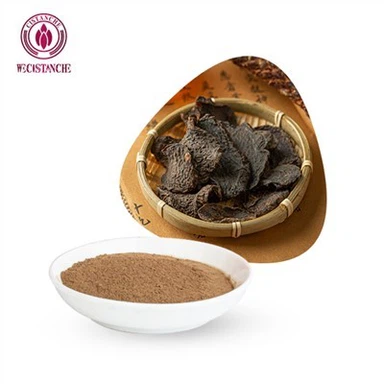
“Intracranial vascular stenosis” has no corresponding name in Chinese medicine literature. The writer summarized it as a vessel impediment whose location was in the brain with weakened body resistance and pathogenic stagnation, phlegm with blood stasis, based on the characteristics of its symptoms, syndromes, and disease. The present study suggested the self-made Chinese herb “Naomaitong” prescription and cistanche treating for bilateral middle cerebral artery stenosis can get a satisfactory effect in the clinic.

Cistanche herb
Abstract
Intracranial vascular stenosis is closely related to transient ischemic attack (TIA) and cerebral infarction, early prevention and treatment of intracranial vascular stenosis can prevent cerebral infarction and improve the prognosis of stroke. Western medicine employs interventional surgery or vasodilator, antiplatelet drugs, lipid-lowering drugs, plaque-stabilizing agents, and other drugs for treating intracranial vascular stenosis. No corresponding disease name with “intracranial vascular stenosis” is found in Chinese medicine literature. Based on the characteristics of syndromes, symptoms, and diseases, “intracranial vascular stenosis” is summarized as weakened body resistance and prevailed pathogenic factors, phlegm with blood stasis, and “obstruction (Bi) syndrome” in the brain. The self-made Chinese herbal “Naomaitong” and cistanche prescription treating for bilateral middle cerebral artery stenosis in 1 case got satisfactory efficacy by transcranial doppler (TCD) and computed tomography angiography (CTA) examination.
Keywords: Intracranial vascular stenosis, “Naomaitong” prescription, Chinese medicine treatment
Background
Internal carotid artery(intracranial segment, extracranial segment) stenosis is an independent risk factor for ischemic cerebrovascular disease. Western medicine adopts interventional surgery or drug treatment based on the degree of vascular stenosis, location, the patient's age, physical condition, and other assessment results. Western medicine mainly focuses on dilating blood vessels, anti-platelet aggregation, lowering lipid, and stabilizing plaque. The self-made Chinese herbal "Naomaitong" and cistanche prescription treating for bilateral middle cerebral artery stenosis in 1 case got satisfactory efficacy by transcranial doppler(TCD) and computed tomography angiography(CTA) examination.

Cistanche extract
Case introduction
Mr. Ding, male,44 years old, went to the traditional Chinese medicine clinic for treatment mainly due to "cerebral vascular stenosis" on April 12th, 2017. The course of the disease: The patient was admitted to the neurology department of our hospital 3 months ago (2017.1.23)due to"paroxysmal barilla. weakness of the right limb for half a day". No abnormality was found in the intraday CT of the head in the emergency department of other hospitals. After hospital admission, the patient was rechecked by magnetic resonance imaging(MRI)of the head and reported that: the abnormal signal was found in diffusion-weighted imaging of the left basal ganglia and left periventricular, which was considered to be acute cerebral infarction(Figure 1-1~Figure 1-4). After taking symptomatic treatment like anticoagulant therapeutic, fiber reduction, lowering lipid, stabilizing plaque, improving cerebral circulation metabolism, protection of gastrointestinal mucosa, and reducing phlegm and others for 10 days, the patient was discharged when the disease was relatively in stable condition. Relevant inspection results during hospitalization: 2017.1.25 TCD reported that left middle cerebral artery stenosis was severe, right middle cerebral artery stenosis was moderate, the velocity of the blood flow of right vertebral artery slowed down, and systolic notch and frequency spectrum of the blood flow was poor. Cervical ultrasound showed no abnormalities.

2017.1.26 Aortic arch-intracranial CTA reported that no abnormalities were found in the aortic arch-carotid artery, the extracranial segment of the vertebral artery system. The bilateral MCA M1 segment was moderately stenotic (Figure 2-1 ~ Figure 2-3). When taking consultation with neurosurgery, the patient had no indications of surgical intervention, it was recommended to strengthen the drug treatment to prevent recurrent strokes.

The patient experienced occasional dizziness, tinnitus celebrity, anxiety and fatigue, and restless sleep without taking any medication after hospital discharge in three months. The patient was a Hepatitis B virus carrier with moderate fatty liver, was reluctant to take western medicine, and sought medical advice from Chinese medicine. Physical examination: Bp133/74 mmHg, lung sounds were clear, and no rhonchi and moist rales were heard. The patient had strong heart sounds and regular heart rhythm, and a pathological murmur was not heard in auscultatory value areas. The abdomen was soft and non-tender, both liver and spleen under ribs were not felt, and lower extremities were not swollen and without deformity of extremities and spine. Physical examination in neurology department: consciousness, language fluency, equal size, and round pupils, left: right = 3mm: 3 mm, light response (+), full eye movement, no nystagmus, symmetric bilateral nasolabial fold, tongue lolls unbiasedly, soft neck, muscle strength of limbs was grade V, normal muscle tone, tendon reflexes (++), Babinski sign bilaterally (-) and symmetric bilateral superficial sensibility. Coordination of four limbs can be checked by. TCD reported: severe left middle cerebral artery stenosis, moderate right middle cerebral artery stenosis, the flow velocity of a right posterior cerebral artery, right vertebral artery slowed down, and blood flow spectrum was poor. Compared with TCD on 25th January 2017, the blood flow velocity of the left anterior cerebral artery (LMCA) and right middle cerebral artery (RMCA) was faster, suggesting the exacerbation of vascular stenosis (Table 1).

Cervical vascular ultrasound showed no abnormalities. Blood glucose. blood lipids, hemorheology, fibrinogen, homocysteine, liver, and kidney function were all normal. Tongue and pulse condition: tongue was dull, the edge of the tongue was with shallow tooth marks, coating on the tongue was white, and wiry pulse was deep.Diagnosis of traditional Chinese medicine: impediment of vessels (obstruction of the cerebral vein).Diagnosis of western medicine: cerebral vascular stenosis (bilateral MCA M1 segment was moderate stenosis). The disease is treated by "Naomaitong" and cistanche prescription: Tianma(Gastrodiae Rhizoma)10 g, Chuanxiong(Chuanxiong Rhizoma) 10 g, Shichangpu(Acori Tatarinowii Rhizoma)10 g, Danshen (Salviae Miltiorrhizae Radix Et Rhizoma)15g, Gegen (Puerariae Lobatae Radix)10 g, Shuizhi (Hirudo) 10 g, Chishao(Paeoniae Radix Rubra) 10g, Sanqi (Notoginseng Radix Et Rhizoma)6 g, Renshen(Ginseng Radix Et Rhizoma)10 g, Ru Xiang(Olibanum)10 g, Xiebai(Alli Macrostemonis Bulbus)10 g, Shanzha (Crataegi Fructus)10 g, Jianghuang(Curcumae Longue Rhizoma)10 g, Jiangcan(Bombyx Batryticatus)10 g, Chantui(Cicadae Periostracum)6 g, Dahuang(Rhei Radix Et Rhizoma)10 g, Yujin(Curcumae Radix)10 g Yuanzhi (Polygalae Radix), Zhenzhumu(Margaritifera Concha)30 g, a total of 14 doses. Instructions:2 packages of all ingredients of Chinese medicine granules per dose,1 bag dissolved and taken with 200 mL warm water for each morning and evening. Second ambulatory treatment on 25h April 2017: the patient complained in half a month he had no dizziness and tinnitus cerebri, and the spirit was better than before, the fatigue improved and he can have a good sleep at night and work normally. BP:110/85mmHg, physical examination was following the former, the tongue was pale, the edge of the tongue has a shallow tooth mark, coating the tongue was yellow and white, and wiry pulse was deep. "Naomaitong" and cistanche prescription plus Lianzixin (Nelumbinis Plumula) and Danzhuye (Lophatheri Herba)10g were continued to taken by 30 doses. Third ambulatory treatment on 25* May 2017: The patient had a good spirit The chief complaint was that in recent months he didn't develop dizziness and tinnitus cerebri and had a good appetite. He could sleep soundly, and his defecate and urinate harmonized. BP: 105/75 mmHg, physical examination was in accordance with the former, tongue was dark with a white coating on the tongue, and wiry pulse was deep. The patient was treated with a "Naomaitong" and cistanche prescription for two months. Fourth ambulatory treatment on 24th July 2017: the patient complained he had no discomfort. BP: 130 / 85mmHg, physical examination was following the former, the tongue was dark with a white coating on the tongue, and wiry pulse was deep. TCD reported that his bilateral middle cerebral artery was slightly stenotic and the spectrum of blood flow was poor. Compared with the TCD reports on 25th January 2017 and 12th April 2017, the blood flow of LMCA and RMCA decreased significantly (Table 1), suggesting that the degree of vascular stenosis reduced. Taking the “Naomaitong” and cistanche prescription for another two months, the patient made an appointment to have a reexamination by CTA. On 4th September 2017 aortic arch-intracranial was checked by CTA and reported that no abnormalities were found in the extracranial segment of the aortic arch-carotid artery and vertebral artery system. The right MCA M1segment was slightly stenosed (Figure 3-1 to Figure 3-3). Blood glucose, blood lipids, hemorheology, fibrinogen, homocysteine, liver, and kidney function were all normal. Fifth ambulatory treatment on 12th October 2017: the patients had no complaints. BP: 110/80 mmHg, physical examination was following the former, the tongue was pale with red coating on the tongue, and wiry pulse was deep. “Naomaitong” and cistanche prescription was taken for another two months. Sixth ambulatory treatment on 7th December 2017: the patients had no complaint. BP: 120/80 mmHg, physical examination was in accordance with the former, the tongue was light red with white coating, and wiry pulse was deep. No abnormality was found by checking the neck vascular ultrasound. TCD reported: blood flow velocity of bilateral middle cerebral artery got slightly faster. Compared with TCD reports on 25th January 2017, 12th April 2017 and 24th July 2017, the blood flow velocity of LMCA and RMCA decreased significantly, which was close to the normal value (Table 1). Blood sugar, blood lipids, hemorheology, fibrinogen, homocysteine, liver, and kidney function were normal.

Cistanche extract
Discussion
In this case, there was no abnormality in head CT examination when there was a symptom of “paroxysmal barylalia and weakness of the right limb” occurred. After 11 hours, MRI showed left basal ganglia and left cerebral ventricle had acute cerebral infarction (Figure 1-1 – Figure 1-4), and the disease progressed rapidly. The patient had a history of smoking for 10 years with an average of 3-4 boxes/day and quitted for 6 years. And he had a history of drinking for 20 years with an average of 5 taels/day. Blood pressure, blood glucose, blood lipids, hemorheology, fibrinogen, homocysteine, and related indicators were normal. He denied a family history of genetic disease. Severe (moderate) bilateral MCA stenosis was found by TCD and CTA. Cerebrovascular stenosis, long-term smoking, and drinking history may be the main risk factors for TIA and cerebral infarction of the patient.
The middle cerebral artery is a branch of the internal carotid artery that continues directly. Most of the blood in the internal carotid artery flowed into MCA The bilateral MCA M1 segment, namely the posterior orbit segment, extended horizontally outward about 3 cm long in the front and back of the radiography [2]. Studies had shown that CTA and digital subtraction angiography can show the stenosis of MCA accurately, though TCD had limitations, nevertheless, the accuracy of the three methods for the diagnosis of MCA M1 stenosis had no significant difference(P>0.05)[3]. Intracranial stenosis can reduce the perfusion pressure of distal vascular, make the watershed area have an insufficient blood supply, and the low perfusion infarction or watershed infarction was formed [4]. Intracranial vascular stenosis is closely related to TIA and cerebral infarction [5]. Early prevention and treatment of intracranial vascular stenosis can effectively reduce the probability ofTIA transforming into cerebral infarction within a week [6] and improve stroke prognosis [4]."Intracranial vascular stenosis" has no corresponding name in Chinese medicine literature. The writer summarized it as a vessel impediment whose location was in the brain with weakened body resistance and pathogenic stagnation, phlegm with blood stasis, based on the characteristics of its symptoms, syndromes, and disease." Sunven-Bilunpiandisishisan"recorded" when the impediment was in the vessel, the blood clotted and stopped flowing"[7]." Yixuezhengzhuan" recorded"Qi is Yang, blood is Yin, blood flows in the vessels, Qi goes
outside of arteries and veins, and they circulate mutually,……..Qi gets pathogenic factors and forms stagnation. Body fluid is sticky, can become phlegm and fluid retention, and seeps into the vein for a long time accumulation. It makes blood turbid, which suggests Yin stagnates Yang. Blood turns stagnation when gets pathogenic factor, and vessels were blocked, then it overflows or knots, it seeps out of the vessels for a long time accumulation, it makes Qi disordered, which suggests Yang stagnates Yin"[8]. It suggests the etiology and pathogenesis of "cerebral artery block disease" formation were due to weakened body resistance and pathogenic stagnation, the mutual stagnation of Yin and Yang, disorder of qi movement, the mutual interference of clear Qi and foul Qi, phlegm with blood stasis, and congestion of the vessels. At the initial stage, patients with intracranial vascular stenosis often have no obvious clinical symptoms. The degree of vascular stenosis increases dizziness, headache, tinnitus cerebri. TIA and symptoms even stroke gradually appear." Suwen-Bilunpiandisishisan," said "patients without plainness and numbness fall ill and get deeply gradually; defensive Qi and Ying Qi were obscure, main and collateral channels were blocked, and skin has no nutrition, which means disturbance of perception"[7].
Chinese medicine"Naomaitong" prescription was established based on the combination of syndromes, symptoms, and disease to form prescriptions and selected drugs aiming at the main pathogenesis of intracranial vascular stenosis. In the prescription, Tianma(Gastrodiae Rhizoma),Chuanxiong(Chuanxiong Rhizoma),Gegen (Puerariae Lobatae Radix), and Shichangpu (Acori Tatarinowi Rhizoma)are monarch, dispelling wind and removing obstruction in the merid ians, eliminating phlegm and inducing resuscitation, dredging blood vessel of brain, and directing the medicine to the sick place;Renshen (Ginseng Radix Et Rhizoma) and Ruxiang (Olibanum) are minister, tonifying Qi and dredging meridian and dredg ing aperture of brain; Danshen (Salviae Miltiorrhizae Radix Et Rhizoma), Shuizhi (Hirudo), Chishao (Paeoniae Radix Rubra), Sanqi (Notoginseng Radix Et Rhizoma) can promote blood circulation and clear and activate the channels and collaterals, invigorate pulse-beat and disperse obstruction;Xiebai(Alli Macrostemonis Bulbus)and Shanzha (Crataegi Fructus) were assistant, promoting qi circulation and removing obstruction in the collaterals, eliminating accumulation and resolving turbidity;Jianghuang (Curcumae Longae Rhizoma), Jiangcan (Bombyx Batryticatus), Chantui(Cicadae Periostracum), Dahuang (Rhei Radix Et Rhizoma) are guide, exerting "rising and falling"effect,promoting blood circulation and attacking accumulation, reduc ing phlegm and resolving masses, elevating clear qi to lower turbid, and draining the vessels of brain. A total of sixteen herbs of Chinese medicine can drain the vessels of the brain, eliminate accumulation and resolve turbidity, the treatment of "cerebral palsy resistance" has a significant effect.
Modern pharmacological studies have shown that: Renshen (Ginseng Radix Et Rhizoma), Chuanxiong
(Chuanxiong Rhizoma) and Gegen (Puerariae Lobatae Radix) can dilate cerebrovascular and increase cerebral blood flow [9-11];Shichangpu(Acori Tatarinowii Rhizoma) resists cerebral ischemia-reperfusion injury, reduces cerebral cortical neuronal apoptosis and protects neurons [12]:Tianma (Gastrodiae Rhizoma) can promote the generation of endogenous vasodilators and inhibit the release of endogenous vasoconstrictor substances, and have a good antihypertensive effect [13];Chishao (Paconiae Radix Rubra) and Jianghuang (Curcumae Longue Rhizoma) exert anti-platelet aggregation effect, Jianghuang(Curcumae Longue Rhizoma) can also prevent PTCA postoperative restenosis [14,15]; Shuizhi (Hirudo) and Jiangcan (Bombyx Batryticatus) can reduce the content of fibrinogen [16,17]; Xiebai (Alli Macrostemonis Bulbus)and Shanzha(Crataegi Fructus)regulate lipid [18,19]; Sanqi (Notoginseng Radix Et Rhizoma)and Danshen (Salviae Miltiorrhizae Radix Et Rhizoma) can improve microcirculation, and have anti-atherosclerosis action [20,21]; Dahuang (Rhei Radix Et Rhizoma) can scavenge free radicals and antioxidant effect [22]. This case shows that the "Naomaitong" prescription can exactly reduce the degree of cerebral vascular stenosis, prevent TIA and cerebral infarction, and have the effect of regulating blood lipid and lowering blood pressure, Long-term use has no adverse effect on liver and kidney function. Its mechanism is worth further study.

Benefit of cistanche
References
1. Jiao MD, Tian JW, Ren WD, et al. Clinical Doppler ultrasound diagnostics. Beijing: Beijing Medical University Union Medical College Joint Press 1997:77.
2. Rao ML, Lin SH. Cerebrovascular disease. Beijing: People's Medical Publishing House,2002:1-10.
3. Li H, Zhang M, Wang XH, et al. Comparison of TCD. CTA, DSA in detecting middle cerebral artery stenosis. Chin J Pract Nerv Dis 2008,11(12): 60-61.
4. Zhou T, Ling QP. Clinical study on the related risk factors of stroke in progression. Clin med & Eng 2016,23(3): 399-400. Li Y, Xiong XP, Wang RY, et al. Correlative study of
5. I CT angiography in patients with transient ischemic attack. China Pharmaceuticals 2014,23(3):80-81.
6. Xiao ZW. The relationship between intracranial stenosis and transient ischemic attack converted to cerebral infarction within 1 week. Proc Clin Med 2016.25(8); 632-633.
7. Guo AC. Huangdineijingsuwen translation. Beijing: People's Medical Publishing House 1996:257-264.
8. Yu T, Medical biography. Guo RH collated. Beijing: Tradit Chin Med Publishing House 2002:350.
9. Zhang YG, Liu TP. Protective effect of total saponins of Panax ginseng on ischemia-reperfusion injury in rat brain. Chin J Pharmacol Toxicol 1994,8(1):12-18.
10. Feng MG, Feng LH, Zhou QG.Effects of methyl orange peel on coronary, renal, and cerebral circulation in dogs. Acta Pharmacologica Sinica 1988, 9(6):548.
11. Pan HP. Progress in pharmacological effects and clinical application of total flavonoids and puerarin in Pueraria. Guangxi MedJ2003,25(10) 1941-1944.
12. Lil He YP Jiang HL, et al. Research on proportions of Acorus Tatarinowii Schott combined with Bomeol and its protective effect on cerebral neurons.Tradit Chin drug res & Clin Pharmacol2003,14(5):19-21.
13. Miu HC, Shen YS. The antihypertensive effect of polysaccharides subtracted from Gastrodia elata Blume. Chin J Hypertens 2006,14(7):531-534.
14. Liu C, Wang J, Yang J.Study on activating blood and eliminating stasis of total paeony glycoside (TPG). J Chin Med Mater 2000,23(9): 557-560.
15. Chen LL, Long MZ, Yang JM, et al.Effect of curcumin on intima hyperplasia after vessel injury. ModJIntergr Tradit Chin Western Med 2003,12(18)1944-1945.
16. Li F. Yuan ZO. He XY, et a. Study on the effect of Hirudin on Thrombolysis. Tianjin J Tradit Chin Med. 1989, (3):26-27.
17. Xing SH, Liu SM. Study on Medicinal Value of Animal Pathological Products.Acta Chin Med Pharmacol 1990,(6): 40-41.
18. Sun WJ, Liu J, Yang SJ, et al.Effect of extracts of long-stemmed barley from different origins on lipid metabolism in hyperlipidemic rats and its antioxidative effect. J Norman Bethune Univ Med Sci 1999,25(3):259-260.
19. Yang YJ, Wang CM, Dang XW, et al. Protection of flavonoids in hawthorn leaf against vascular disfunction of hyperlipidemic rats. Chin Tradit Herb Drugs.2007,38(11): 1687-1690.
20. LiT, Qu DY, Leib, et al.Effect of Sanqi Powder on Experimental Atherosclerosis in Rabbits. Tradit Chin Med Res 2006,19(1): 17-19.
21. Wang SJ, Li DG, Shi RH, et al. Study of the effect of Tetramethyl Pryazine and injection of Salvia Miltiorrhiza Bunge on Cerebral Microcirculation in mice under normal condition and microcirculatory disorders. J Chin Microcirculation 2000, 4(4):213-215.
22. Liu F, Gao SJ.Clinical study of rhubarb in the treatment of gastrointestinal dysfunction aftershock. Chin J Crit Care Med2003,23(1):38-39.