Chinese Medicine Tea Therapy
Nov 04, 2022
Tea appeared in Chinese people's life, never just as a drink. Legend has it that Shennong was the first person to discover and use tea. The book "Shen Nong's Herbal Classic" said: "Shen Nong tasted a hundred herbs and encountered seventy-two poisons a day, and he got rid of them." According to legend, Shennong was in order to cure the common people. I did not hesitate to personally verify the medicinal properties of plants and trees. I went through all kinds of hardships and tried all kinds of herbs. I encountered seventy-two poisons a day, my tongue was numb, my head was dizzy, and when my life was on the verge of dying, a gust of cool wind blew past, bringing fragrance. A piece of fresh and tender leaves fell slowly, Shennong picked it up, put it in his mouth, and chewed it. He felt refreshed and comfortable, and all the poisons were suddenly resolved. In this way, Shennong discovered tea (“tea” means “tea”). Tea").

Click to bioflavonoids tablets and Cistanche tea
"Compendium of Materia Medica," said: "All medicines are the medicine for various diseases, but tea is the medicine for all diseases". The discussion of drinking tea to cure diseases by famous doctors of various generations is also frequently seen in classics, too many to list: "Shen Nong's Materia Medica" records: "Tea tastes bitter, drinking it makes people benefit four, sleep less, light body, eyesight ." Hua Tuo, the originator of surgery, recorded in the book "The Classic of Food" that "bitter tea is good for a long time and food is good for thinking". Zhang Zhongjing, a famous doctor in the Han Dynasty, described it in "Treatise on Febrile Diseases and Miscellaneous Diseases" with "tea is very effective in treating pus and blood in the stool". In the Tang Dynasty, the famous pharmacologist Chen Zangqi was given the title of "the originator of tea therapy" because he cured the illness of Emperor Xuanzong's son with tea.
China's medical culture is as long as the history of tea. During the Ming and Qing Dynasties, the trend of tea therapy prevailed, and tea therapy prescriptions combining tea and traditional Chinese medicine were introduced one by one, not only in various dosage forms but also in the way of drinking medicine instead of tea, such as wolfberry tea, fat sea tea, etc. As for Empress Dowager Cixi, she likes to drink honeysuckle tea during the day, and drink sugar tea before going to bed. Even taking pearl powder, she likes to take it with tea.
It can be seen that my country's tea therapy culture has a long history. my country's tea culture has been inseparable from traditional Chinese medicine since the development of tea culture, and tea has become a medicine for the prevention and treatment of diseases in traditional Chinese medicine. In modern times, with the advancement of science and technology, the nutritional components of tea have been continuously discovered, and the effect of tea therapy has been verified.

Definition of TCM tea therapy
Tea therapy is a health preservation method rooted in traditional Chinese medicine and tea culture. True tea therapy is based on the leaves of traditional Chinese medicinal plants, combined with traditional Chinese medicine and tea processing methods, and made into the form of tea, combining medicine and tea. Perfect combination, so as to achieve the purpose of curing disease and preventing the invasion of exogenous viruses and health care. It has both the therapeutic and health-preserving effects of traditional Chinese medicine and the "shape, color, fragrance, and Tao" of tea, and has four advantages effectiveness, safety, enjoyment, and convenience.
The essence of tea is the homology of medicinal tea. Like any kind of herbal medicine, tea is also divided into cold, cool, and warm, and sex and flavor. Traditional Chinese medicine believes that human beings and nature are dynamic and changing whole. The changes in spring temperature, summer heat, autumn coolness, and winter coldness can have subtle effects on the human body's internal organs, meridians, qi and blood, and yin and yang. The human body can be adjusted to achieve the best balance. Traditional Chinese medicine tea therapy and health care advocate the health care concept of prevention before disease, prevention of disease change, prevention of relapse after disease recovery, and early treatment and the concept of health care that prevention is more important than cure.
The tea prescription in tea therapy can be a single prescription or a compound prescription, but the implementation of tea therapy with tea is basic, and it is also the focus of the popularization and development of tea therapy because it reflects the spirit of prevention and is more economical. At the same time, under normal circumstances, compound herbal tea has a more comprehensive effect and a better curative effect.
For thousands of years, through various practices, people have gradually learned about the 27 medicinal effects of tea: soothe the nerves and eliminate vexation, reduce sleeplessness, improve eyesight, clear head, and head, lower qi, eliminate food, sober up, remove greasy, clear heat and detoxify, stop drinking. Thirst and fluid, expectorant, treat dysentery, cure sore, diuresis, laxative, expel wind and relieve external appearance, replenish energy, strengthen teeth, heal muscle, lose weight, lower blood fat, lower blood pressure, strengthen heart, nourish the blood, anti-aging, anti-cancer, Radiation resistant.

More than one-third of adults worldwide currently suffer from high blood pressure, and this rate increases with age, reaching as high as 50% of people over the age of 50. In China, there are about 400 million patients with "three high" chronic diseases represented by "hypertension, hyperglycemia, and hyperlipidemia", but these patients are all facing an embarrassing situation. One reason is that Chinese people's attention and awareness of chronic diseases are far from enough. Second, the current drugs for the treatment of chronic diseases of the third-high category have great side effects, and many patients with the third-high category are at risk of secondary injury.

Cistanche tea
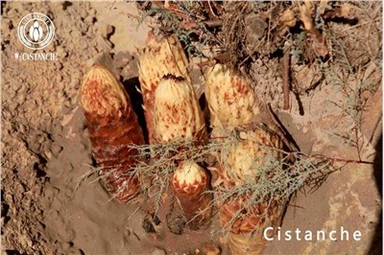
People with insufficient qi and blood have cold hands and feet, and often have the problem of insufficient spleen yang, especially in winter. Experts remind you that in winter, you should pay attention to keeping your legs and feet warm, and soak your feet before going to bed to help you sleep. In addition, you can also "invigorate yang qi" through diet. You can eat foods that warm yang and dispel cold like mutton soup, and you can drink cistanche tea, which is yang tonifying and not dry, to improve yang qi. There is a direct relationship between human aging and kidney decline. Drinking Cistanche tea can make us energetic, age slower, and live longer. Overtime fatigue, drinking and socializing, irregular nightlife, easy fatigue, weak limbs, lack of energy, chills, sore waist and knees, irritability, night sweats, sweating, loss of libido, nocturnal emission, premature ejaculation, memory loss, frequent urination, loss of hair, etc. Take 3-5g of Cistanche Chinese Herbal Pieces, or Cistanche Bushen granule tea, brew with boiling water and add water while drinking until the taste is light, after drinking, you can chew and swallow Cistanche Cistanche, which is beneficial to the conditioning of the human body! Cistanche can warm kidney yang, nourish essence and blood, and delay aging. A good tea for nourishing the kidney - is Cistanche tea! Often drink cistanche tea, and take it for a long time to lighten the body, detoxify the face, and warm the kidney yang.
for more information:Ali.ma@wecistanche.com