Cistanche And Healthy Aging: What A Chinese Herbal Patent Can Teach Botanical Product Developers About Bowel Regularity
Nov 03, 2026
An evidence-aware guide for botanical brands, formulators, and ingredient buyers, with a complete English translation of the supplied Chinese patent text.
Scope and disclaimer
This article examines a traditional Chinese herbal formulation and its potential relevance to botanical research and product development. The patent's therapeutic statements are presented as claims made in the source document, not as independently established facts. This article is not medical advice, a dosing recommendation, or evidence that a Cistanche extract can treat chronic constipation. Market access, safety, clinical substantiation, and intellectual-property considerations require separate assessment.
1. Why Bowel Regularity Matters in Healthy-Aging Product Development
Constipation is not simply a matter of having fewer bowel movements. It may involve hard stools, straining, incomplete evacuation, bloating, and discomfort-even when bowel movements occur relatively often.
For older adults, the causes can be particularly complex. Medication use, reduced mobility, changes in diet, underlying illness, and pelvic-floor dysfunction may all contribute.
This creates an important distinction for botanical businesses:
A product positioned for general bowel regularity is not the same as a treatment for diagnosed chronic constipation.
Established care can include dietary changes, appropriate fluid intake, physical activity, medication review, and clinician-directed treatment. The U.S. National Institute of Diabetes and Digestive and Kidney Diseases provides an overview of these approaches.

Botanical development should therefore begin with a clearly defined question:
Can a well-characterized botanical ingredient or formulation provide a measurable, safe, and legally supportable benefit for a specified population?
Traditional use can help generate that question. It cannot, by itself, answer it.
2. Understanding "Qi and Blood Deficiency" Without Overtranslating It
The supplied patent focuses on chronic constipation associated with what traditional Chinese medicine, or TCM, calls "deficiency of both qi and blood."
Within TCM, this is a pattern classification based on combinations of symptoms and clinical observations. The patent associates the pattern with weakness, fatigue, cold intolerance, difficulty evacuating, and other findings.
For Western readers, three cautions are essential:
Qi deficiency is not a direct synonym for low cellular energy or mitochondrial dysfunction.
Blood deficiency is not automatically equivalent to medically diagnosed anemia.
TCM kidney, spleen, and lung functions do not map directly onto the anatomical organs and their biomedical functions.
These concepts can be explained as part of the formulation's traditional rationale. They should not be presented as proven physiological mechanisms.
For product developers, the practical lesson is to translate the intended user profile into measurable research criteria-not to translate TCM terminology into unsupported biomedical claims.
3. The Formulation at a Glance
The patent describes a 12-ingredient herbal composition and a two-stage water-decoction process.
Cistanche is one component of the formulation. It is not the only ingredient, and the patent does not provide a Cistanche-only comparison group.
Composition and Traditional Formulation Roles
All quantities below are parts by weight, not recommended supplement doses.
| Ingredient | Chinese name | Claimed range | Traditional role described in the patent |
|---|---|---|---|
| Eucommia bark | 杜仲 | 25–30 | Chief herb; traditionally associated with warming and tonifying the liver and kidneys and promoting blood circulation |
| Clematis root and rhizome | 威灵仙 | 10–15 | Chief herb; used together with Eucommia and processed with Chinese rice wine |
| Aster root and rhizome | 紫苑* | 15–25 | Deputy herb; traditionally associated with directing lung qi downward |
| Atractylodes macrocephala rhizome | 白术 | 15–25 | Deputy herb; traditionally associated with strengthening the spleen and addressing dampness |
| Magnolia bark | 厚朴 | 15–25 | Assistant herb; traditionally associated with moving qi and relieving fullness |
| Poria | 茯苓 | 15–20 | Deputy herb; traditionally associated with spleen support and fluid regulation |
| Codonopsis root | 党参 | 20–25 | Deputy herb; traditionally associated with supplementing qi |
| Immature bitter orange | 枳实 | 10–25 | Assistant herb; traditionally associated with moving qi and reducing accumulation |
| Cynomorium | 锁阳 | 10–25 | Assistant herb; traditionally associated with kidney-yang support and moistening the intestines |
| Cistanche | 肉苁蓉 | 15–25 | Assistant herb; traditionally associated with replenishing essence and blood and moistening the intestines |
| Cassia seed | 决明子 | 20–30 | Assistant herb; traditionally associated with promoting bowel movements |
| Honey-fried licorice root | 炙甘草 | 10–20 | Envoy herb; traditionally associated with harmonizing the formula |
*The supplied text repeatedly uses 紫苑. The context indicates the medicinal herb commonly written 紫菀, or Ziwan. This translation uses "Aster root and rhizome," but botanical identity should be verified against the original document and material specifications.
These English ingredient names are descriptive translations. They do not establish the botanical species, plant part, pharmacopoeial grade, or regulatory identity of a commercial material.
Why the Formulation Is Relevant to Cistanche Suppliers
The patent places Cistanche within a broader traditional strategy rather than presenting it as a standalone laxative.
That offers a useful research perspective: bowel-related formulation development may consider not only bowel-movement frequency, but also stool consistency, evacuation difficulty, abdominal comfort, and tolerability.
However, the patent does not establish that:
Cistanche alone produced the reported improvement;
a standardized Cistanche extract is equivalent to the decocted herb;
higher echinacoside content produces a better bowel-related outcome;
the formula is suitable for all older adults;
the formulation is safer or more effective than established treatments.
The commercial opportunity is a research direction-not a ready-made efficacy claim.
4. What the Patent's Clinical Observations Actually Show
The patent reports a retrospective series of 20 patients treated with the Example 1 decoction for one month.
According to the source:
| Reported outcome | Number of patients |
|---|---|
| Marked improvement | 7 |
| Improvement | 11 |
| No improvement | 2 |
| Total | 20 |
The patent reports an overall response rate of 90%, based on its own outcome definitions.
This observation is hypothesis-generating, but it has substantial limitations:
No control group is reported.
Randomization and blinding are not reported.
The sample is small.
Only five participants were older than 60.
The youngest age is not specified; five participants were under 20.
There are no separate outcome data for the older subgroup.
The treatment contained 12 ingredients.
Systematic adverse-event monitoring is not described.
The two case reports cannot establish long-term effectiveness or safety.
The patent's "effective" category includes a bowel movement once every three days with improved ease and abdominal symptoms. This is not automatically equivalent to the responder criteria used in contemporary clinical trials.
An appropriate summary is:
"The patent reports an uncontrolled, 20-patient retrospective observation of a multi-herb decoction, with improvement in 18 patients under the author's stated criteria."
An inappropriate commercial conclusion would be:
"Cistanche extract is clinically proven to treat chronic constipation with a 90% success rate."
The latter is not supported by the supplied material.

5. From Raw Herb to Extract: The Most Important Manufacturing Gap
The source describes raw herbal materials extracted together in water. It does not describe a finished product made by blending 12 independently manufactured extracts.
That difference matters.
5.1 Confirm Botanical Identity First
For Cistanche, a development specification should identify:
accepted botanical name;
species;
plant part;
geographic origin;
cultivation or collection conditions;
authentication method;
storage and processing history.
Do not assume that evidence associated with one Cistanche species or preparation applies to another.
The source uses the general medicinal name Roucongrong and does not provide sufficient information to establish the exact species used.
5.2 Define the Extraction Process
A commercially meaningful specification should describe more than "10:1 extract" or a single marker percentage.
Important information includes:
| Specification element | Why it matters |
|---|---|
| Extraction solvent | Influences which constituents are recovered |
| Extraction temperature and time | Can affect yield and chemical composition |
| Native drug-to-extract ratio | Describes the relationship between starting herb and native extract |
| Carrier or excipient content | Distinguishes native extract from the supplied commercial powder |
| Drying method | Can affect stability and physical properties |
| Chromatographic fingerprint | Helps evaluate identity and batch consistency |
| Marker assay method | Determines whether reported percentages are comparable |
| Stability data | Supports shelf-life and packaging decisions |
Marker standardization supports quality control; it does not, by itself, establish clinical efficacy.
5.3 Do Not Convert Raw-Herb Grams Into Extract Doses by Ratio Alone
The examples specify 15 g of raw Cistanche per stated daily herbal prescription. That is a description of the source formulation, not a validated daily dose for a Cistanche extract.
Dividing that amount by a supplier's advertised extraction ratio would not establish an equivalent supplement dose.
Equivalence would require consideration of:
extraction yield;
constituent recovery;
native extract versus finished powder;
chemical fingerprint;
processing-related changes;
interactions within the co-decocted formula;
safety at the intended exposure;
evidence for the actual finished product.
A capsule, sachet, or beverage should be treated as a new development project unless meaningful comparability has been demonstrated.
5.4 Preserve the Original Process Before Optimizing It
The source method involves:
A first decoction with water weighing eight times the raw-material weight.
Filtration.
A second decoction with water weighing three times the residue's own weight.
Combining the filtrates.
Concentration to one-quarter to one-fifth of the combined volume.
For industrial development, several missing details need clarification:
Does "residue weight" mean wet residue or dry-equivalent residue?
How is filtration standardized?
What are the concentration endpoint and solids content?
What is the extraction yield?
What are the finished liquid's microbiological specifications?
What packaging and shelf-life controls are required?
Resolving these gaps is part of process development, not a reason to silently alter the translated method.
6. Older-Adult Formulations Require a Higher Safety Standard
"Natural" does not mean universally safe.
Older adults may use multiple medicines and may have cardiovascular, kidney, metabolic, or neurological conditions. A 12-herb product creates more safety questions than a single characterized ingredient.
A formulation-specific review should address, among other issues:
Licorice: glycyrrhizin-containing preparations can contribute to hypertension, fluid retention, and low potassium, with implications for susceptible users and certain medicines.
Immature bitter orange: constituent levels, including relevant alkaloids, require characterization and exposure assessment.
Cassia seed and other bowel-active ingredients: monitor diarrhea, cramping, dehydration, and tolerability.
Clematis material: verify identity, processing, toxicological information, and suitability for the intended route and market.
Wine processing: define the procedure and assess any residual-solvent or alcohol-related specification needs.
The complete formulation: assess potential herb–drug interactions and cumulative exposure.
Absence of adverse-event reporting in a patent is not evidence of absence of harm.
Persistent or newly developing constipation in an older adult should not automatically be attributed to aging or a TCM pattern. Rectal bleeding, unexplained weight loss, severe abdominal pain, vomiting, or inability to pass gas require medical assessment.
7. U.S. and European Market Access: Separate the Research Story From Product Claims
7.1 United States
A dietary supplement should not be marketed as treating, curing, or preventing chronic constipation.
Structure/function language may be possible where it is appropriately substantiated and the full presentation is not misleading. However, changing a headline to "supports regularity" does not resolve a page that otherwise promises disease treatment.
FDA explains the distinction in its Structure/Function Claims guidance.
For qualifying supplement-labeling claims, requirements include substantiation, the prescribed disclaimer, and notification to FDA within 30 days after first marketing. See FDA's notification requirements.
Ingredient eligibility must also be assessed separately, including whether new dietary ingredient requirements apply.
A disclaimer does not legalize an otherwise impermissible disease claim.
7.2 European Union
For EU development, assess:
the exact ingredient and preparation;
novel-food status and any applicable authorization;
permitted conditions of use;
national botanical requirements;
food-versus-medicinal-product classification;
applicable health-claim rules.
A particularly relevant caution concerns a specific water extract of Cistanche tubulosa stems assessed by EFSA in 2021. EFSA concluded that the safety of that proposed novel food had not been established. The assessment identified concerns related to reported adverse events and limitations in the supporting studies.
See the EFSA assessment of Cistanche tubulosa stem water extract.
This conclusion is preparation-specific. It should not be generalized to every Cistanche material, but it must not be ignored or reframed as a positive safety endorsement.
An application appearing on a European Commission website is not, by itself, evidence of authorization. Verify the current legal status of the exact preparation before commercialization.
7.3 Patent Status Is a Separate Question
The supplied text does not include a publication number, applicant, jurisdiction, or legal-status information.
Consequently, this article cannot establish:
whether the application was granted;
whether any rights remain in force;
whether a proposed product falls within enforceable claims;
whether other patents affect commercialization.
A patent publication is neither regulatory approval nor freedom to operate.
8. A Practical Development Roadmap for Botanical Brands
| Stage | Action | Deliverable |
|---|---|---|
| 1. Define the intended product | Distinguish general regularity support from disease treatment | Target product profile and claim strategy |
| 2. Verify legal feasibility | Assess ingredient eligibility, intended use, and market-specific restrictions | Regulatory feasibility review |
| 3. Authenticate materials | Confirm species, plant parts, processing, and traceability | Botanical identity dossier |
| 4. Characterize the preparation | Define extraction, native extract content, fingerprints, and markers | Reproducible ingredient specification |
| 5. Assess safety | Review toxicology, interactions, contaminants, and target-user risks | Safety assessment |
| 6. Establish comparability | Compare the proposed extract or blend with the reference decoction | Analytical comparability report |
| 7. Study the actual product | Conduct appropriately designed human research after necessary approvals | Product-specific evidence |
| 8. Finalize claims | Align wording with evidence and local rules | Reviewed labels and website copy |
For a bowel-related human study, useful outcomes may include:
complete spontaneous bowel movements per week;
stool consistency;
straining and incomplete evacuation;
validated constipation symptom and quality-of-life scores;
rescue-medication use;
diarrhea, cramping, and other adverse events.
An older-adult study should also account for medication use, frailty, relevant comorbidities, and predefined stopping criteria.
A multi-herb decoction study cannot substitute for a Cistanche-only trial or a trial of a different extract-based finished product.
9. What a Cistanche Extract Factory Should Provide to Buyers
A credible supplier's contribution is not simply a higher marker percentage. It is a material that buyers can identify, evaluate, reproduce, and assess for their intended market.
A useful technical package should include:
botanical identity and traceability;
plant-part confirmation;
extraction-process description;
native extract and carrier information;
validated marker assays and chromatographic fingerprints;
batch certificates of analysis;
testing for heavy metals, pesticides, microbiological contamination, and other relevant contaminants;
residual-solvent results where applicable;
stability and packaging data;
available safety evidence and its limitations;
market-specific regulatory documentation, where available;
a clear distinction between traditional-use literature and product-specific clinical evidence.
For an independent supplier website, the strongest takeaway is:
Traditional formulations can generate valuable research hypotheses. Commercial credibility comes from authenticated materials, reproducible processing, preparation-specific safety assessment, and evidence that matches the actual product.

Translation Notes
No patent publication number or legal status was supplied. This is a translation of the provided text, not authentication of an official patent record.
"Parts" means parts by weight, unless the source explicitly states grams.
TCM terms-including qi, blood stasis, essence, dampness, and organ-meridian functions-are retained as traditional concepts.
Therapeutic and pharmacological statements below are the source author's claims. They have not been independently endorsed.
The source writes the Aster herb as 紫苑; this translation renders it as Aster root and rhizome (Ziwan) based on context. Botanical identity requires verification.
Minor typographical errors are rendered according to apparent intended meaning. Substantive ambiguities are noted rather than resolved by invention.
(54) Title of the Invention
A Traditional Chinese Herbal Composition for Treating Chronic Constipation and a Method for Its Preparation
(57) Abstract
The invention discloses a traditional Chinese herbal composition for treating chronic constipation and a method for its preparation. The composition comprises Eucommia bark, Clematis root and rhizome, Aster root and rhizome, Atractylodes macrocephala rhizome, Magnolia bark, Poria, Codonopsis root, immature bitter orange, Cynomorium, Cistanche, Cassia seed, and licorice root.
In view of the etiology and pathogenesis of patients with deficiency of both qi and blood or longstanding constipation, the invention rationally combines the herbs according to the traditional Chinese medicine principles of chief, deputy, assistant, and envoy.
Together, the herbs are intended to promote blood circulation and dispel blood stasis; warm and tonify the liver and kidneys; tonify the kidneys and replenish essence; facilitate the dispersing and descending of lung qi; strengthen the spleen and supplement qi; and dry dampness and promote urination.
These actions are intended to promote the generation of body fluids, moisten and nourish the intestines, facilitate the smooth movement of qi, and restore the transporting function of the large intestine, thereby effectively treating constipation, particularly chronic constipation in older people or individuals with qi and blood deficiency.
Claims
1.
A traditional Chinese herbal composition for treating chronic constipation, characterized in that it comprises the following raw materials in parts by weight:
Eucommia bark, 25–30 parts; Clematis root and rhizome, 10–15 parts; Aster root and rhizome, 15–25 parts; Atractylodes macrocephala rhizome, 15–25 parts; Magnolia bark, 15–25 parts; Poria, 15–20 parts; Codonopsis root, 20–25 parts; immature bitter orange, 10–25 parts; Cynomorium, 10–25 parts; Cistanche, 15–25 parts; Cassia seed, 20–30 parts; and honey-fried licorice root, 10–20 parts.
2.
The traditional Chinese herbal composition for treating chronic constipation according to Claim 1, characterized in that it comprises the following raw materials in parts by weight:
Eucommia bark, 30 parts; Clematis root and rhizome, 10 parts; Aster root and rhizome, 20 parts; Atractylodes macrocephala rhizome, 20 parts; Magnolia bark, 20 parts; Poria, 15 parts; Codonopsis root, 20 parts; immature bitter orange, 15 parts; Cynomorium, 20 parts; Cistanche, 15 parts; Cassia seed, 20 parts; and honey-fried licorice root, 15 parts.
3.
The traditional Chinese herbal composition for treating chronic constipation according to Claim 1, characterized in that it comprises the following raw materials in parts by weight:
Eucommia bark, 25 parts; Clematis root and rhizome, 10 parts; Aster root and rhizome, 15 parts; Atractylodes macrocephala rhizome, 15 parts; Magnolia bark, 15 parts; Poria, 15 parts; Codonopsis root, 20 parts; immature bitter orange, 10 parts; Cynomorium, 10 parts; Cistanche, 15 parts; Cassia seed, 20 parts; and honey-fried licorice root, 10 parts.
4.
The traditional Chinese herbal composition for treating chronic constipation according to Claim 1, characterized in that it comprises the following raw materials in parts by weight:
Eucommia bark, 30 parts; Clematis root and rhizome, 10 parts; Aster root and rhizome, 25 parts; Atractylodes macrocephala rhizome, 25 parts; Magnolia bark, 25 parts; Poria, 20 parts; Codonopsis root, 25 parts; immature bitter orange, 25 parts; Cynomorium, 20 parts; Cistanche, 15 parts; Cassia seed, 25 parts; and honey-fried licorice root, 20 parts.
5.
The traditional Chinese herbal composition for treating chronic constipation according to any one of Claims 1–4, characterized in that the Clematis root and rhizome is processed using Chinese rice wine, or huangjiu.
6.
The traditional Chinese herbal composition for treating chronic constipation according to Claim 5, characterized in that pharmaceutically acceptable excipients are added to prepare an oral dosage form.
7.
The traditional Chinese herbal composition for treating chronic constipation according to Claim 6, characterized in that the oral dosage form is a liquid decoction prepared through the following steps:
S1: Measure the raw materials in the specified quantities. Add water weighing eight times the weight of the raw materials. Bring to a boil over high heat, then decoct over low heat for 35–40 minutes.
S2: Filter and collect the filtrate. Add water weighing three times the weight of the remaining residue. Bring to a boil over high heat, then decoct over low heat for 15–20 minutes. Filter and collect the filtrate.
S3: Combine the two filtrates and simmer over low heat until the liquid volume is reduced to one-quarter to one-fifth of the combined filtrate volume.
A Traditional Chinese Herbal Composition for Treating Chronic Constipation and a Method for Its Preparation
Technical Field
[0001] The invention relates to the technical field of traditional Chinese medicinal preparations, particularly a traditional Chinese herbal composition for treating chronic constipation.
Background Art
[0002] Constipation is a condition in which stool remains in the intestines for an excessively long period, becomes retained and difficult to pass, and the interval between bowel movements is prolonged. Alternatively, the interval may not be prolonged, but the stool may be dry and hard and difficult to expel. In other cases, the stool is not hard, but evacuation remains difficult despite an urge to defecate.
The condition is often accompanied by abdominal distension, abdominal pain, bad breath, poor appetite, fatigue and lack of strength, dizziness, palpitations, and other symptoms.
In traditional Chinese medicine, functional constipation falls within the category of "constipation." Its principal disease location is the large intestine, and dysfunction of intestinal transport constitutes the mechanism of its occurrence.
Although Western medical treatment can achieve a degree of efficacy, prolonged use may affect the intestinal environment, interfere with intestinal function, and lead to dependence. Surgical treatment also cannot resolve the underlying problem.
Traditional Chinese medicine has distinctive advantages in treating constipation: it can improve patients' clinical symptoms and is associated with relatively few adverse reactions and complications. However, some existing herbal compositions are complex and costly and may readily cause intestinal irritation, while others provide unsatisfactory results.
Editorial clarification: The preceding statements are translated from the patent. Its broad assertions about conventional treatment, dependence, and comparative herbal safety should not be treated as established clinical conclusions.
Summary of the Invention
[0003] Accordingly, in view of the foregoing background, the invention provides a traditional Chinese herbal composition for treating chronic constipation and a method for its preparation.
[0004] The technical solution of the invention is as follows.
[0005] A traditional Chinese herbal composition for treating constipation comprises the following raw materials in parts by weight.
[0006] Eucommia bark, 25–30 parts; Clematis root and rhizome, 10–15 parts; Aster root and rhizome, 15–25 parts; Atractylodes macrocephala rhizome, 15–25 parts; Magnolia bark, 15–25 parts; Poria, 15–20 parts; Codonopsis root, 20–25 parts; immature bitter orange, 10–25 parts; Cynomorium, 10–25 parts; Cistanche, 15–25 parts; Cassia seed, 20–30 parts; and honey-fried licorice root, 10–20 parts.
[0007] Preferably, the composition comprises the following raw materials in parts by weight.
[0008] Eucommia bark, 30 parts; Clematis root and rhizome, 10 parts; Aster root and rhizome, 20 parts; Atractylodes macrocephala rhizome, 20 parts; Magnolia bark, 20 parts; Poria, 15 parts; Codonopsis root, 20 parts; immature bitter orange, 15 parts; Cynomorium, 20 parts; Cistanche, 15 parts; Cassia seed, 20 parts; and honey-fried licorice root, 15 parts.
[0009] Preferably, the composition comprises the following raw materials in parts by weight.
[0010] Eucommia bark, 25 parts; Clematis root and rhizome, 10 parts; Aster root and rhizome, 15 parts; Atractylodes macrocephala rhizome, 15 parts; Magnolia bark, 15 parts; Poria, 15 parts; Codonopsis root, 20 parts; immature bitter orange, 10 parts; Cynomorium, 10 parts; Cistanche, 15 parts; Cassia seed, 20 parts; and honey-fried licorice root, 10 parts.
[0011] Preferably, the composition comprises the following raw materials in parts by weight.
[0012] Eucommia bark, 30 parts; Clematis root and rhizome, 10 parts; Aster root and rhizome, 25 parts; Atractylodes macrocephala rhizome, 25 parts; Magnolia bark, 25 parts; Poria, 20 parts; Codonopsis root, 25 parts; immature bitter orange, 25 parts; Cynomorium, 20 parts; Cistanche, 15 parts; Cassia seed, 25 parts; and honey-fried licorice root, 20 parts.
[0013] Preferably, the Clematis root and rhizome is processed using Chinese rice wine before use.
[0014] Preferably, pharmaceutically acceptable excipients are added to prepare an oral dosage form.
[0015] Preferably, the herbal oral liquid is a liquid decoction prepared through the following steps.
[0016] S1: Measure the raw materials in the specified quantities. Add water weighing eight times the weight of the raw materials. Bring to a boil over high heat, then decoct over low heat for 35–40 minutes.
[0017] S2: Filter and collect the filtrate. Add water weighing three times the weight of the remaining residue. Bring to a boil over high heat, then decoct over low heat for 15–20 minutes. Filter and collect the filtrate.
[0018] S3: Combine the two filtrates and simmer over low heat until the liquid volume is reduced to one-quarter to one-fifth of the combined filtrate volume.
[0019] The pharmacological properties of the medicinal raw materials used in the invention are described below.
Traditional Properties of the Ingredients
[0020] Eucommia bark is sweet in flavor and warm in nature and enters the liver and kidney meridians. Its sweet and warm properties provide a tonifying action. Entering the liver and kidney meridians, it has relatively strong medicinal activity and is particularly suited to warming and tonifying the liver and kidneys, strengthening the sinews and bones, and stabilizing pregnancy. It also lowers blood pressure.
It is an important medicinal material for lower-back and knee soreness or weakness of the sinews and bones associated with kidney deficiency, and is also suitable for vaginal bleeding during pregnancy or threatened miscarriage associated with liver and kidney deficiency. It tonifies the kidneys and strengthens yang, promotes blood circulation and dispels blood stasis, and strengthens the sinews and bones.
[0021] Clematis root and rhizome is acrid and salty in flavor and warm in nature. It enters the bladder meridian, or, according to some accounts, all twelve meridians. It is highly mobile and penetrating in action, with strong and rapid effects. It warms and tonifies the liver and kidneys, strengthens the spleen and stimulates appetite, and promotes blood circulation and unblocks the channels.
[0022] Aster root and rhizome is acrid and bitter in flavor and warm in nature. Its acrid quality disperses, while its bitter quality directs downward. It is warm and moistening without being drying and specifically enters the lung meridian.
It is particularly suited to moistening the lungs, directing qi downward, transforming phlegm, and relieving cough. It may be selected for cough arising from either externally contracted conditions or internal disorders.
[0023] Atractylodes macrocephala rhizome is bitter and sweet in flavor and warm in nature. Its sweet quality tonifies and promotes the drainage of dampness, while its bitter and warm qualities dry dampness. It enters the spleen and stomach meridians.
Its principal action is to warm and tonify and support healthy qi, while also eliminating dampness and fluid accumulation. It supplements qi and strengthens the spleen, dries dampness and promotes urination, checks sweating, and stabilizes pregnancy.
It is used for spleen and stomach qi deficiency, edema associated with spleen deficiency, phlegm-fluid retention, spontaneous sweating associated with exterior deficiency, and threatened miscarriage. In the invention, it is used in its raw, unprocessed form.
[0024] Magnolia bark is bitter and acrid in flavor and warm in nature. Its bitter quality dries and directs downward, while its acrid quality disperses, warms, and facilitates movement. It enters the spleen, stomach, and large-intestine meridians.
It eliminates gastrointestinal damp stagnation and food accumulation and also regulates gastrointestinal qi stagnation. It is therefore an important medicinal material for abdominal fullness and distension caused by damp obstruction, food accumulation, or qi stagnation.
Entering the lung meridian, it can direct qi downward, eliminate phlegm-dampness, and relieve wheezing, and is commonly used for cough and wheezing with abundant phlegm.
[0025] Poria is sweet and bland in flavor and neutral in nature. Its sweet and bland qualities promote the drainage of dampness while also providing a tonifying action. Its neutral nature is balanced.
Entering the spleen and kidney meridians, it promotes the drainage of dampness and urination to eliminate retained fluids, and strengthens the spleen to support the transformation and transportation of water and dampness.
It also enters the heart meridian, calming the heart and settling the spirit, and is appropriate for conditions in which retained fluids disturb the heart.
It is suitable for dampness and fluid retention, whether associated with cold or heat and whether or not spleen deficiency is also present, and is particularly suitable for edema associated with spleen deficiency or pronounced dampness.
[0026] Codonopsis root is sweet in flavor and neutral in nature. Its sweet and neutral tonifying action is neither drying nor cloying. It enters the spleen and lung meridians and is commonly used for relatively mild spleen and lung qi deficiency.
It also generates body fluids and nourishes blood and may be used for patterns involving body-fluid depletion or blood deficiency.
[0027] Immature bitter orange is bitter, acrid, and sour in flavor and slightly cold in nature. Its bitter quality directs downward, its acrid quality promotes movement and dispersal, and its nature is slightly cold rather than warm. Its medicinal action is relatively strong.
It enters the spleen, stomach, and large-intestine meridians. It breaks up qi stagnation and reduces accumulation to relieve fullness and distension, and also moves qi and transforms phlegm to relieve obstruction.
It is therefore an important medicinal material for gastrointestinal accumulation and stagnation and for chest obstruction associated with phlegm stagnation. It may also be used for organ prolapse.
[0028] Cynomorium is sweet in flavor and warm in nature and enters the liver, kidney, and large-intestine meridians. Its sweet and warm properties provide moistening and tonifying actions.
Its functions are similar to those of Cistanche. It tonifies kidney yang, replenishes essence and blood, and moistens intestinal dryness. It is used for impotence associated with kidney deficiency, depletion of essence and blood, and constipation associated with intestinal dryness.
[0029] Cistanche is sweet and salty in flavor and warm in nature. Its salty flavor enters the kidneys, while its sweet and warm properties provide tonifying and moistening actions. Its action is relatively gentle and is not excessively drying or heating.
Entering the kidney meridian, it tonifies kidney yang and replenishes essence and blood. Entering the large-intestine meridian, it moistens intestinal dryness and gently promotes bowel movements.

[0030] Cassia seed is sweet, bitter, and salty in flavor and slightly cold in nature. Its bitter and slightly cold properties clear and drain, while its sweet quality provides a moistening action.
Entering the liver and kidney meridians, it clears liver fire, benefits kidney yin, and improves vision. It is an important medicinal material for red, swollen, painful eyes and dim or impaired vision.
Entering the large-intestine meridian, it clears heat, moistens the intestines, and promotes bowel movements, and is suitable for constipation associated with heat accumulation and intestinal dryness.
[0031] Licorice root is sweet in flavor and neutral in nature and enters the heart, lung, spleen, and stomach meridians. Its sweet quality tonifies, moistens, and moderates.
In its raw form, it is neutral with a tendency toward cooling; after honey-frying, it is neutral with a tendency toward warming. It primarily enters the spleen and lung meridians and also enters the stomach and heart meridians.
It supplements qi and tonifies the middle burner, relieves spasms and pain, moderates the properties of other medicinal materials, transforms phlegm and relieves cough, and resolves toxicity. Honey-frying strengthens its qi-tonifying and spasm-relieving actions.
Traditional Rationale for the Composition
[0032] The fundamental pathogenesis of constipation is "failure of the large intestine to perform its transporting function."
In physically weak older people, postoperative patients, and individuals with qi and blood deficiency or longstanding constipation, impaired circulation and slow blood movement may cause blood to stagnate within the vessels, readily producing obstruction from blood stasis.
Qi is regarded as the commander of blood. When qi is deficient, blood lacks the force necessary to propel its circulation, which may also lead to blood stasis.
Once formed, blood stasis interferes with the ascending and descending movement of qi and disrupts the transporting and transforming functions of the hollow organs. Blood stasis obstructing the intestinal region affects intestinal qi movement and can thereby lead to constipation.
Furthermore, prolonged daily retention and accumulation of stool will inevitably affect qi and blood circulation in the intestines, further aggravating blood stasis or causing it to form.
Thus, blood stasis and constipation can mutually contribute to one another: longstanding constipation can generate blood stasis, and blood stasis can also cause longstanding constipation.
[0033] Accordingly, treatment of longstanding constipation in individuals with qi and blood deficiency should take the elimination of blood stasis as a principal therapeutic approach.
The present application therefore combines Eucommia bark and Clematis root and rhizome in a mutually reinforcing manner to promote blood circulation and dispel blood stasis, facilitate smooth qi movement, and promote the unobstructed transportation of essential substances, namely body fluids, within the intestines.
These actions are intended to moisten and nourish the intestines and restore balance to the transporting function of the large intestine.
[0034] Although constipation is located in the large intestine, it is closely related to the lungs, kidneys, spleen, stomach, and other organs.
The kidneys are regarded as the foundation of congenital constitution and the lower source of water. Kidney qi regulates water metabolism, and the ability of other organs to transform, transport, and distribute body fluids depends on the kidneys.
If kidney regulation of water becomes abnormal, insufficient yin fluids in the organs or uneven distribution of body fluids may lead to body-fluid deficiency in the large intestine and cause constipation.
The chief herbs, Eucommia bark and Clematis root and rhizome, can also warm and tonify the liver and kidneys, restoring fluids to their proper locations so that the intestines are moistened and nourished, thereby helping defecation.
The same herbs thus serve two purposes.
[0035] The invention uses Aster root and rhizome, Atractylodes macrocephala rhizome, Codonopsis root, and Poria as deputy herbs.
Aster root and rhizome facilitates the dispersing and descending of lung qi to assist the large intestine in transporting waste. This is likened to "lifting a teapot and opening its lid": once the lid is opened, the water pours out smoothly.
Atractylodes macrocephala rhizome, Codonopsis root, and Poria are combined in a mutually reinforcing manner to strengthen the spleen and supplement qi, dry dampness, and promote urination.
These actions help generate and mobilize qi. When qi transformation is supported, body fluids can be generated. When blood circulation is vigorous, intestinal obstruction and sluggishness can be relieved, and the gastrointestinal tract can be effectively moistened.
Cistanche Raw Material Supplement For Anti-aging Condition
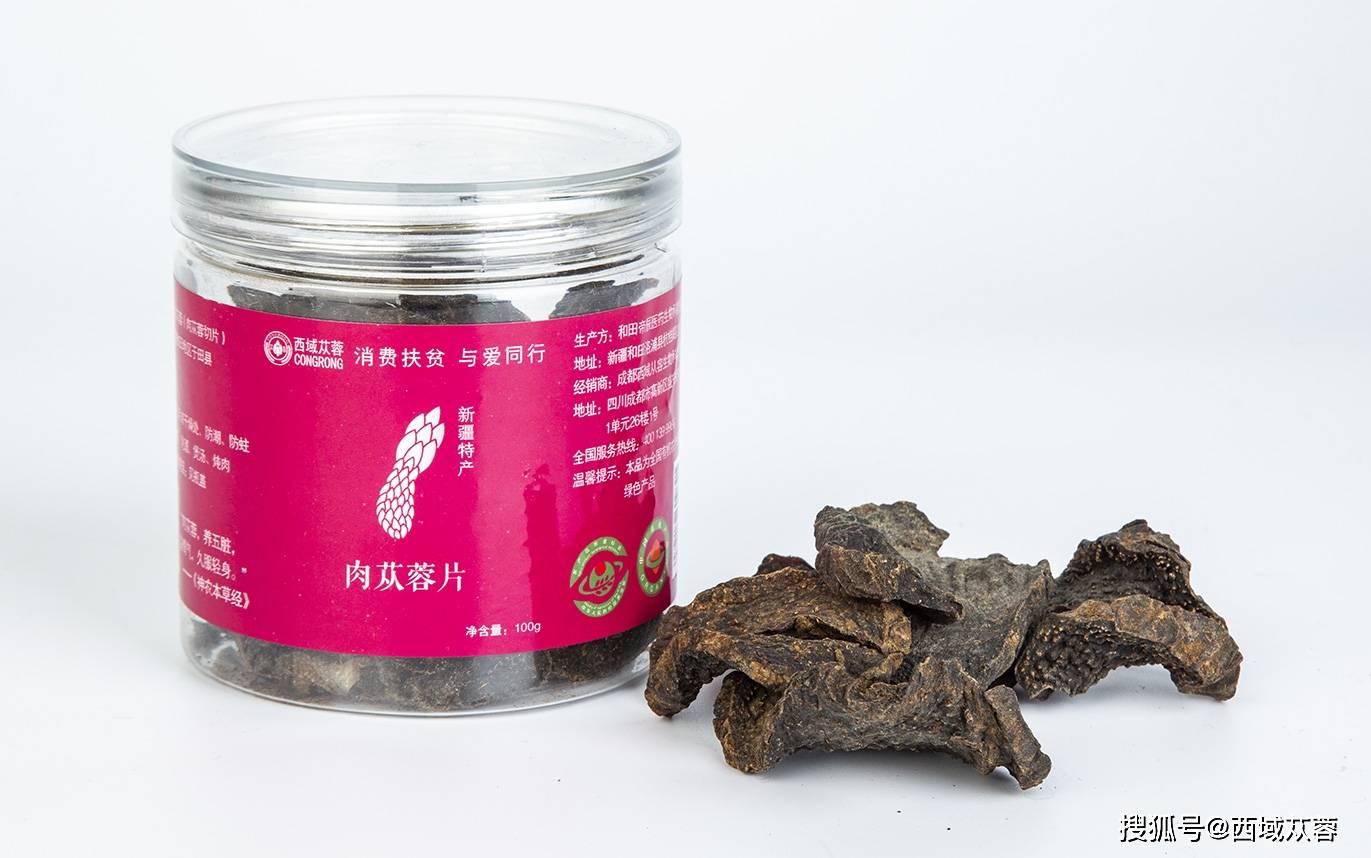
[0036] Magnolia bark, immature bitter orange, Cistanche, Cynomorium, and Cassia seed are used as assistant herbs.
Magnolia bark and immature bitter orange reinforce one another in moving qi and relieving distension.
Cistanche and Cynomorium assist the chief herbs in tonifying kidney yang, replenishing essence and blood, and moistening intestinal dryness.
Cassia seed provides a purgative action, moistens the intestines, and promotes bowel movements.
Honey-fried licorice root is used as the envoy herb to harmonize the other medicinal materials, tonify the spleen, and harmonize the stomach.
[0037] In view of the etiology and pathogenesis of individuals with deficiency of both qi and blood or longstanding constipation, the invention rationally combines the herbs according to the traditional Chinese medicine principles of chief, deputy, assistant, and envoy.
Together, the herbs are intended to promote blood circulation and dispel blood stasis; warm and tonify the liver and kidneys; tonify the kidneys and replenish essence; facilitate the dispersing and descending of lung qi; strengthen the spleen and supplement qi; and dry dampness and promote urination.
These actions are intended to promote the generation of body fluids, moisten and nourish the intestines, facilitate smooth qi movement, and restore the transporting function of the large intestine.
The composition is thereby intended to effectively treat constipation, particularly chronic constipation in older people or individuals with qi and blood deficiency.
Detailed Embodiments
[0038] To make the objectives, technical solution, and advantages of the invention clearer, the invention is described in further detail below with reference to its examples.
It should be understood that the specific examples described herein are provided solely to explain the invention and are not intended to limit it.
Example 1
[0039] Example 1: A traditional Chinese herbal composition for treating chronic constipation comprises the following raw materials in parts by weight.
[0040] Eucommia bark, 30 parts; Clematis root and rhizome, 10 parts; Aster root and rhizome, 20 parts; Atractylodes macrocephala rhizome, 20 parts; Magnolia bark, 20 parts; Poria, 15 parts; Codonopsis root, 20 parts; immature bitter orange, 15 parts; Cynomorium, 20 parts; Cistanche, 15 parts; Cassia seed, 20 parts; and honey-fried licorice root, 15 parts.
[0041] In a specific implementation, one prescription consists of the following quantities of raw materials.
[0042] Eucommia bark, 30 g; Clematis root and rhizome, 10 g; Aster root and rhizome, 20 g; Atractylodes macrocephala rhizome, 20 g; Magnolia bark, 20 g; Poria, 15 g; Codonopsis root, 20 g; immature bitter orange, 15 g; Cynomorium, 20 g; Cistanche, 15 g; Cassia seed, 20 g; and honey-fried licorice root, 15 g.
Example 2
[0043] Example 2: A traditional Chinese herbal composition for treating chronic constipation comprises the following raw materials in parts by weight.
[0044] The composition comprises the following raw materials in parts by weight.
[0045] Eucommia bark, 30 parts; Clematis root and rhizome, 10 parts; Aster root and rhizome, 25 parts; Atractylodes macrocephala rhizome, 25 parts; Magnolia bark, 25 parts; Poria, 20 parts; Codonopsis root, 25 parts; immature bitter orange, 25 parts; Cynomorium, 20 parts; Cistanche, 15 parts; Cassia seed, 25 parts; and honey-fried licorice root, 20 parts.
[0046] In a specific implementation, one prescription consists of the following quantities of raw materials.
[0047] Eucommia bark, 30 g; Clematis root and rhizome, 10 g; Aster root and rhizome, 25 g; Atractylodes macrocephala rhizome, 25 g; Magnolia bark, 25 g; Poria, 20 g; Codonopsis root, 25 g; immature bitter orange, 25 g; Cynomorium, 20 g; Cistanche, 15 g; Cassia seed, 25 g; and honey-fried licorice root, 20 g.
Example 3
[0048] Example 3: A traditional Chinese herbal composition for treating chronic constipation comprises the following raw materials in parts by weight.
[0049] Eucommia bark, 25 parts; Clematis root and rhizome, 10 parts; Aster root and rhizome, 15 parts; Atractylodes macrocephala rhizome, 15 parts; Magnolia bark, 15 parts; Poria, 15 parts; Codonopsis root, 20 parts; immature bitter orange, 10 parts; Cynomorium, 10 parts; Cistanche, 15 parts; Cassia seed, 20 parts; and honey-fried licorice root, 10 parts.
[0050] In a specific implementation, one prescription consists of the following quantities of raw materials.
[0051] Eucommia bark, 25 g; Clematis root and rhizome, 10 g; Aster root and rhizome, 15 g; Atractylodes macrocephala rhizome, 15 g; Magnolia bark, 15 g; Poria, 15 g; Codonopsis root, 20 g; immature bitter orange, 10 g; Cynomorium, 10 g; Cistanche, 15 g; Cassia seed, 20 g; and honey-fried licorice root, 10 g.
Processing and Decoction Method for Examples 1–3
[0052] The Clematis root and rhizome used in Examples 1–3 is processed with Chinese rice wine using conventional methods before use.
[0053] When the traditional Chinese herbal compositions of Examples 1–3 are administered as liquid decoctions, their preparation method comprises the following steps.
[0054] S1: Measure the raw materials in the specified quantities. Add water weighing eight times the weight of the raw materials. Bring to a boil over high heat, then decoct over low heat for 35–40 minutes.
[0055] S2: Filter and collect the filtrate. Add water weighing three times the weight of the remaining residue. Bring to a boil over high heat, then decoct over low heat for 15–20 minutes. Filter and collect the filtrate.
[0056] S3: Combine the two filtrates and simmer over low heat until the liquid volume is reduced to one-quarter to one-fifth of the combined filtrate volume.
Translation clarification: The source specifies water based on the residue's "own weight" for the second extraction. It does not define whether this means wet residue or dry-equivalent residue. It also gives no fixed final volume in milliliters.
Example 4: Retrospective Clinical Data
[0057] Example 4: Retrospective clinical data.
[0058] The patients were individuals diagnosed with chronic constipation who attended our hospital for treatment between June and October 2019.
There were 9 male and 11 female patients. Five patients were under 20 years of age, 10 were aged 20–60 years, and 5 were over 60 years.
Six patients had a disease duration of less than 3 years, 10 had a duration of 3–10 years, and 4 had a duration of more than 10 years.
All of the above patients were confirmed through traditional Chinese medicine pattern differentiation to have deficiency of both qi and blood, and none showed concurrent intestinal excess-heat patterns.
[0059] Western medical diagnosis was based on the diagnostic criteria for chronic constipation in Functional Gastrointestinal Disorders: Rome III International Criteria (2006) and the Chinese Guidelines for the Diagnosis and Treatment of Chronic Constipation (2019).
[0060] Exclusion criteria: use of antibiotics, microbial preparations, or medicines affecting intestinal motility within the preceding six months.
[0061] All of the above patients were treated with the liquid decoction prepared according to Example 1.
One prescription was administered daily, divided into a morning administration and an evening administration.
Patients returned for follow-up after one month of continuous treatment, and efficacy was evaluated statistically according to their condition at the one-month follow-up.
[0062] Criteria for evaluating efficacy:
[0063] Markedly effective: the patient had one bowel movement daily, the stool was formed, and all symptoms had disappeared.
[0064] Effective: the patient had one bowel movement every three days, evacuation was relatively smooth, and abdominal distension and abdominal pain had improved.
[0065] Ineffective: the patient's bowel-movement condition remained unchanged and showed a tendency to worsen.
[0066] The response rate was calculated as follows:
Response rate=Number of markedly effective cases+Number of effective casesTotal number of patients×100%.\text{Response rate} = \frac{ \text{Number of markedly effective cases} + \text{Number of effective cases} }{ \text{Total number of patients} } \times 100\%.Response rate=Total number of patientsNumber of markedly effective cases+Number of effective cases×100%.
[0067] The treatment outcomes were as follows.
[0068] Seven patients were classified as markedly effective, 11 as effective, and 2 as ineffective. The response rate was 90%.
Example 5: Typical Cases
[0069] Example 5: Typical cases.
[0070] Patient 1: female, 26 years old, first seen on June 11, 2019.
[0071] Chief complaint: difficulty with bowel movements for six months.
The patient had a bowel movement once every five days. The stool was relatively dry and pellet-like, resembling sheep droppings. Evacuation was difficult, and passage of gas was infrequent.
She reported fatigue, lack of strength, and intolerance of cold. Her symptoms had worsened one month before presentation.
At the consultation, she appeared thin, her limbs were cold, and she reported lower-back soreness and a cold sensation.
The recorded diagnostic findings were a pale tongue, white tongue coating, and a deep, slow pulse. The diagnosis was insufficiency of qi and blood.
Abdominal examination showed a flat abdomen. A firm, elongated mass was palpable in the left lower abdomen without tenderness.
The patient was treated with the water decoction prepared according to Example 1, with one prescription divided between morning and evening administration.
At follow-up on July 11, 2019, she reported one bowel movement daily and reduced cold intolerance.
She then continued taking the decoction for another half month.
At subsequent follow-up, bowel movements were normal, the stool was soft, and bowel-movement frequency remained once daily. Her general condition was good, and she had resumed normal work.
[0072] Patient 2: female, 60 years old, first seen on October 1, 2019.
[0073] Chief complaint: difficulty with bowel movements, lack of strength during defecation, generalized weakness after defecation, and spontaneous sweating associated with weakness.
Her appetite was acceptable, and sleep was normal.
The recorded diagnostic findings were a pale tongue, white tongue coating, and a deep, slow pulse.
She was treated with the water decoction prepared according to Example 1 of the invention, with one prescription divided between morning and evening administration.
At follow-up on November 1, 2019, she reported being able to have one bowel movement daily.
Concluding Statement
[0074] The foregoing descriptions represent only preferred embodiments of the invention.
It should be noted that a person of ordinary skill in the relevant technical field may make various improvements and refinements without departing from the principles of the invention.
Such improvements and refinements should also be regarded as falling within the scope of protection of the invention.