Cistanche Championship: Who Is The King Between Hotan, Xinjiang And Inner Mongolia?
Mar 12, 2025
Mysterious Cistanche deserticola, a treasure in the desert
In the vast world of traditional Chinese medicine, Cistanche deserticola is like a brilliant pearl, occupying a unique and important position. It is known as the "Desert Ginseng", which not only highlights its unique growth environment - mostly found in the desert - but also implies its medicinal value comparable to ginseng. From the ancient medical book 'Shennong Bencao Jing' which classified it as a top-grade herb, to modern medicine's in-depth research on it, Cistanche deserticola has always been a focus of attention. It can nourish kidney yang, nourish essence and blood, moisten the intestines, and promote bowel movements. It has significant therapeutic effects on various symptoms such as kidney yang deficiency, essence and blood deficiency, impotence, and infertility, soreness and weakness of the waist and knees, intestinal dryness, and constipation. That's why people pay special attention to the quality and origin of Cistanche deserticola, especially in the two main production areas of Hotan in Xinjiang and Inner Mongolia. What are the differences between the Cistanche deserticola they produce and which one has stronger medicinal properties? This has become a hot topic among many health enthusiasts, practitioners of traditional Chinese medicine, and consumers.

cistanche body building
Unveiling the Growth Environment
Hotan, Xinjiang: A Miracle of Unique Desert Fertility
Hotan, Xinjiang, this magical land located on the northwest border of China, is like a natural cradle for cultivating Cistanche deserticola. It is located in the hinterland of the Eurasian continent, with the Kunlun Mountains to the south and the Taklamakan Desert to the north. This is a typical warm temperate extreme arid desert climate with scarce annual precipitation, with an average annual precipitation of only 35 millimeters, but an annual evaporation of up to 2480 millimeters, making it a "thirsty" world. But miraculously, such a dry environment happens to meet the growth needs of Cistanche deserticola. It doesn't need too much water, an overly humid environment can make it 'sick'.
Hotan has extremely abundant sunshine resources, with long sunshine hours throughout the year. The abundant sunshine injects a continuous stream of energy into the Cistanche deserticola. Under the sunshine, Cistanche deserticola undergoes sufficient photosynthesis and accumulates various nutrients. The large temperature difference between day and night is also a major characteristic of the Hotan climate. During the day, the temperature is higher, and Cistanche deserticola can grow rapidly and engage in various physiological activities; The temperature drops sharply at night, slowing down the growth rate. This temperature difference helps Cistanche deserticola lock in nutrients and make its medicinal ingredients more concentrated. It's like a person working hard during the day to accumulate wealth, and resting peacefully at night to protect their wealth.

Cistanche deserticola
From the perspective of soil conditions, the Hotan area is mostly composed of sandy soil with high porosity, good air permeability, suitable temperature, humidity, and acidity, providing a good habitat for the growth of Cistanche deserticola. Cistanche deserticola is a parasitic plant that usually parasitizes the roots of red willows. Red willows can grow well in such soil, with developed root systems deep underground, providing a stable parasitic foundation for Cistanche deserticola. Cistanche deserticola is like a "little tenant", relying on the red willow as its "landlord" to absorb the water and nutrients needed for growth from its roots and grow vigorously.
Inner Mongolia: The Gift of Vast Desert
Inner Mongolia, with its vast and boundless land, is also an important production area for Cistanche deserticola, among which the Cistanche deserticola in the Alxa region is particularly famous. This belongs to a typical temperate continental climate, characterized by drought and little rainfall. The annual precipitation ranges from 32.8-208.1 millimeters, and like Hotan, water resources are extremely scarce. The winter is dry and cold, with a minimum temperature of -34.4 ℃, and the summer is hot, with a maximum temperature of 44.8 ℃. The huge temperature difference makes this land full of "personality". Meanwhile, there are many sandstorms and strong winds here, with an average annual wind speed of 2.8-4.7 meters per second, and sandstorms seem to never stop.
The soil types in Inner Mongolia are diverse, and the areas where Cistanche deserticola grows are mostly sandy soil, brown calcareous soil, or gray desert soil. Although these soils have low fertility, they have a special structure and properties that are suitable for the growth of Cistanche deserticola. In such an environment, the host of Cistanche deserticola, the Haloxylon ammodendron, grows tenaciously. The Haloxylon ammodendron has extremely strong drought resistance, cold resistance, and wind and sand resistance. Its root system is very developed and can penetrate more than ten meters underground to search for water sources. Cistanche deserticola parasitizes at the roots of the Haloxylon ammodendron tree, utilizing its strong water absorption ability to obtain the necessary water and nutrients for growth. Under the baptism of sandstorms, Cistanche deserticola gradually adapted and evolved, forming unique growth characteristics. Its skin is more resilient and able to resist the erosion of wind and sand, and its internal structure is more compact to store more nutrients to cope with harsh environments.

Cistanche deserticola
Significant differences in morphological features
Xinjiang Hetian Cistanche deserticola
The main product produced in Hotan Prefecture, Xinjiang is Cistanche deserticola, which is like a mysterious desert elf with unique appearance characteristics. From the overall shape, the Cistanche deserticola presents a spindle shape, with slightly pointed ends and a full center, as if it were a carefully crafted work of nature. Its surface is covered with a layer of scales, which are tightly arranged, like a strong armor covering the Cistanche deserticola, protecting it from growing in harsh desert environments. When it is still fresh, the meat is tender and juicy, like a just ripe fruit, full of vitality and energy. Its color is dark brown, with a skin color of brown. This deep color seems to be a unique imprint given to it by the desert, while also emitting the unique aroma of this product, which is a unique scent mixed with soil, plants, and sunlight, making it unforgettable when smelled.
After drying, the texture of Cistanche deserticola becomes very hard, almost unable to be pinched by hand, as if it has turned into a hard stone. This is because during the drying process, it loses most of its moisture and its internal structure becomes more compact. At this time, its cross-section is generally point-like and densely distributed, with these small dots arranged like twinkling stars in the night sky. This is also the reason why Cistanche deserticola is known as the "hard big cloud" by medicine.
Inner Mongolia Cistanche deserticola
The Alxa region in Inner Mongolia is an important production area for Cistanche deserticola, and the Alxa Gehua Cistanche and other varieties produced here are also unique. From their appearance, they generally take on an elliptical and elongated shape, resembling a sturdy wooden stick. Its silk threads are small and dense, like traces left by time, recording the growth process of Cistanche deserticola. The color presents a dark brown color, which gives people a mysterious and heavy feeling, as if telling the story of countless days and nights it has experienced in the desert.
The cross-section of Alxa Cistanche deserticola will have obvious chrysanthemum patterns, which are like blooming chrysanthemums, beautiful and unique, which is also one of the most prominent features of Alxa Cistanche deserticola. It is hard in texture, slightly flexible, and not easy to break, just like a strong warrior with unwavering qualities. In a dry environment, it can still maintain its shape and texture, thanks to its unique internal structure and rich nutritional content. Moreover, the oily foot, thick flesh, and floral patterns of Alashanke Cistanche make it stand out among many varieties of Cistanche and become a treasure in people's eyes. It is like a treasure trove of nutrients, containing rich oils and meat, providing people with precious medicinal value.
Comparison of medicinal properties can be found in the real chapter
Traditional cognition and ancient book records
In traditional cognition, Cistanche deserticola has always been regarded as a nourishing medicine, and different regions of Cistanche deserticola have different evaluations in ancient texts. Since ancient times, people have noticed the medicinal value of Cistanche deserticola and recorded it in various medical texts. The "Shennong Bencao Jing" lists Cistanche deserticola as a top-grade herb, believing that it "mainly deals with five labor and seven injuries, replenishes the middle, removes cold, heat, and pain in the stem, nourishes the five organs, strengthens yin, benefits essence and qi, has many children, can cure women's ailments, and can be light when taken for a long time." However, it does not explicitly mention the relationship between its origin and medicinal properties. However, in some subsequent ancient books, we can find some clues about Cistanche from different origins.
In ancient times, the Cistanche deserticola produced in Inner Mongolia was highly regarded. According to ancient Chinese literature, the production areas of Cistanche deserticola are mainly concentrated in Qinghai, Gansu, Shaanxi, Shanxi, Hebei, and Inner Mongolia provinces, with Inner Mongolia and Gansu being the best, which is similar to the current distribution of Cistanche deserticola production areas. The Cistanche deserticola in Inner Mongolia, especially in the Alxa region, is considered to have unique medicinal properties due to its unique growth environment. The Cistanche deserticola grows on dunes in the Haloxylon ammodendron desert, with moderate altitude, arid climate, and abundant sunshine, all of which contribute to the accumulation of rich nutrients in the Cistanche deserticola.
For the Cistanche deserticola in Hotan, Xinjiang, although there are relatively few records in ancient books, its unique qualities have gradually been recognized by people over time. Hetian Cistanche is parasitic on the roots of red willows, and its unique parasitic environment and local climate and soil conditions give it its characteristics in terms of medicinal properties.
Modern research data speaks for itself.
With the development of modern science and technology, research on the medicinal properties of Cistanche deserticola has become more in-depth and precise. Modern research mainly determines the strength of the medicinal properties of Cistanche deserticola by detecting the content of active ingredients in it. The active ingredients in Cistanche deserticola mainly include phenylethanolic glycosides, polysaccharides, etc. These ingredients have the effects of tonifying kidney yang, nourishing essence and blood, moistening intestines, and promoting bowel movements.
Research data shows that Cistanche deserticola from Hetian, Xinjiang has certain advantages in the content of certain effective ingredients. Among them, echinacoside and verbascoside (ergosterol glycoside) are the main active ingredients of fresh Cistanche deserticola, with a general content ranging from 1.5g to 4g in 100g. The higher the age, the more their content increases, but it will decrease with the loss of water. These ingredients have significant effects in tonifying kidney yang and antioxidation. For example, echinacoside can enhance the anti-fatigue ability of Yang-deficient mice and strengthen the body's immune system.

Main Chemical Constituents of Cistanche deserticola
The Cistanche deserticola from Alxa, Inner Mongolia also has outstanding performance. Although its content of pineal chrysanthemum glycoside is relatively low, about 0.3g in 100g, it has high sugar content, high oil content, and rich nutrition. It is rich in 17 amino acids such as valine, lysine, methionine, arginine, etc. In every 100g of dry sample, the total amino acid content is over 4.8%, and the crude sugar content is over 2%. These rich nutrients make Alashan Cistanche unique in nourishing the body, moisturizing the intestines, and promoting bowel movements.
From the feedback of clinical application, both have certain therapeutic effects in treating symptoms such as kidney yang deficiency and essence blood deficiency, but there may be differences in specific manifestations. Due to its high content of active ingredients, Xinjiang Hetian Cistanche deserticola may have more significant effects in tonifying kidney yang and nourishing essence and blood; However, Inner Mongolia Alashan Cistanche deserticola may excel in moisturizing the intestines, promoting bowel movements, and nourishing the skin due to its rich nutritional content and oiliness.
Market situation and purchasing guide
A mixed market of fish and dragons
With the deepening of people's understanding of the medicinal value of Cistanche deserticola, its market demand is also increasing day by day. However, behind this thriving market, there are many hidden problems. There is often a phenomenon in the market where Xinjiang Cistanche is sold as Inner Mongolia Cistanche. Due to the high quality and relatively expensive price of Inner Mongolian Cistanche in the traditional perception, some unscrupulous merchants, in pursuit of high profits, label Xinjiang Cistanche as Inner Mongolian Cistanche and pass it off as good. This behavior not only harms the interests of consumers but also disrupts market order.
The quality of Cistanche products on the market varies greatly. Some growers abuse chemical fertilizers and pesticides in pursuit of high yields, resulting in a decline in the quality of Cistanche deserticola. Some merchants use non-standard processing techniques during the processing to reduce costs, resulting in the loss of effective ingredients in Cistanche deserticola. After this low-quality Cistanche deserticola enters the market, it becomes difficult for consumers to distinguish between genuine and fake, posing potential risks to their health. If consumers purchase poor-quality Cistanche deserticola, not only will it fail to achieve the expected health benefits, but it may also cause damage to the body due to the intake of harmful substances.
The market for Cistanche deserticola still faces the problem of a wide variety of products and disorderly branding. In addition to traditional dried Cistanche products, there are also various derivative products such as Cistanche wine, Cistanche tea, and Cistanche health products. There are significant differences in quality and price among products from different brands, leaving consumers dazzled and unsure of how to choose. Some unscrupulous merchants may exaggerate the efficacy of their products, falsely advertise, and mislead consumers into making purchases.
Choose the right goods with sharp eyes and a golden vision.
Faced with such a complex market environment, how can consumers choose high-quality Cistanche deserticola? We can distinguish Xinjiang Hetian and Inner Mongolia Cistanche from aspects such as morphology, texture, and section. The Cistanche deserticola in Hotan, Xinjiang generally presents a spindle shape, short and thick, and has a smooth surface; The Cistanche deserticola in Alxa, Inner Mongolia, is mostly elliptical, flattened, elongated, and has scales on the surface. In terms of texture, the dried Cistanche deserticola has a hard texture that cannot be pinched by hand; Alashan Cistanche has a soft and resilient texture and is not easily broken. On the section, the cross-section of Cistanche deserticola is dotted and densely distributed; Alashan Cistanche has obvious chrysanthemum patterns.
Price is also an important factor in judging the quality of Cistanche deserticola. Generally speaking, the Cistanche deserticola from Alxa, Inner Mongolia, has high quality, a long growth cycle, a relatively low yield, and a relatively high price. If you encounter the low-priced 'Alashan Cistanche', it is likely to be counterfeit or of poor quality. The price of Cistanche deserticola in Hotan, Xinjiang is relatively low, but its quality cannot be judged solely by price, and other factors need to be considered comprehensively.
Choosing legitimate channels and brands to purchase Cistanche deserticola is crucial. You can choose to purchase from legitimate places such as pharmacies, traditional Chinese medicine stores, and supermarkets, where there are usually professional Chinese medicine practitioners and pharmacists who can provide consultation and guidance on Cistanche deserticola. When purchasing online, choose reputable merchants and brands, and check product reviews and certification information. You can also pay attention to some well-known brands of Cistanche deserticola, which usually have their planting bases and strict quality control systems to ensure the quality and safety of their products.

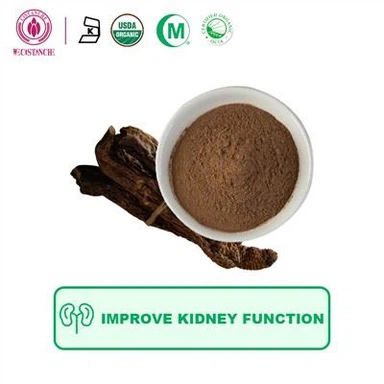
desert living cistanche-improve kidney function
Click here to view Cistanche for Kidney disease products
【Ask for more】 Email:cindy.xue@wecistanche.com / Whats App: 0086 18599088692 / Wechat: 18599088692
Conclusion: Each has its advantages, rational choice
The Cistanche deserticola from Hotan, Xinjiang, and Inner Mongolia are like two martial arts masters with their characteristics, with significant differences in growth environment, morphological features, medicinal properties, and other aspects. The Cistanche deserticola in Hotan, Xinjiang grows in a unique desert environment and parasitizes on the roots of red willows. It has a spindle-shaped appearance and a hard texture and is rich in effective ingredients. It performs well in nourishing kidney yang and nourishing essence and blood; The Cistanche deserticola in Inner Mongolia is rooted in the vast desert, hosted by the Haloxylon ammodendron tree, presenting an elliptical and elongated shape with obvious chrysanthemum patterns and rich nutrients. It has unique advantages in moisturizing the intestines, promoting bowel movements, and nourishing the body.
Both have irreplaceable unique value, and it cannot be simply judged which is better or has stronger medicinal properties. Consumers should make rational choices based on their own needs and actual situations, just like choosing a weapon that suits them. If you pay more attention to the effects of nourishing kidney yang and nourishing essence and blood, Cistanche deserticola from Hotan, Xinjiang may be your best choice; If you want to moisturize your skin and improve intestinal function, Inner Mongolia's Cistanche deserticola may better meet your needs. At the same time, when purchasing Cistanche deserticola, it is important to develop a pair of discerning eyes and purchase through legitimate channels to avoid being deceived by unscrupulous merchants, so that this treasure in the desert can truly protect our health.