The Legend Of Symbiosis Between Red Willow And Cistanche in The Desert
Mar 19, 2025
Red Willow: A tenacious guardian in the desert
Red willow, scientifically known as multi-branch tamarisk, is a plant widely distributed in desert and semi-desert areas of northwest China. It belongs to the genus of shrubs or small trees in the tamarisk family. Its branches are slender, reddish brown, and can reach a height of 1-6 meters. Its leaves are lanceolate and 2-5 centimeters long. The inflorescence grows densely on the current year's branches, forming a terminal large cone-shaped inflorescence, and the fruit is a triangular cone-shaped capsule.

Host of Desert Ginseng and Cistanche deserticola - Red Willow
Red willow has strong adaptability, prefers light, and is resistant to cold and drought. It has a certain tolerance to high temperatures and severe colds and is relatively water-resistant. It can grow tenaciously in saline-alkali land. Its root system is extremely developed, with the main root able to penetrate more than ten meters underground to obtain deep water sources, while the lateral roots are widely distributed and can firmly fix the soil. With these characteristics, red willows can survive tenaciously in the desert and have become an indispensable part of the desert ecosystem.
From the distribution area perspective, red willows are mainly concentrated in northwest China, including Xinjiang, Qinghai, Gansu, Inner Mongolia, and other areas. Red willow can be seen in the Tarim Basin, the Junggar Basin, and the Turpan Basin in Xinjiang, as well as in many desert areas such as the saline-alkali land in Gansu Hexi Corridor, Badain Jaran Desert in Inner Mongolia, Ulanbuhe Desert, etc. Foreign countries are located in Afghanistan, Iran, Türkiye, Mongolia, Russia, and other countries.
Red willows play an irreplaceable and important role in desert ecosystems. It is an excellent windproof and sand fixing defender, with a large and deep underground root system that is like a tough "sand fixing net", tightly binding the dunes, greatly reducing the speed of sandstorms, effectively blocking the rampant spread of quicksand, and gradually changing the ecological pattern of sandy land. For example, in some desert edge areas of Xinjiang, large red willow forests form a natural windbreak barrier, protecting surrounding farmland and villages from sandstorms.
Red willows can also maintain soil and water. Its dense branches and leaves can slow down the direct impact of rainwater on the ground, reduce rainwater runoff, and increase groundwater infiltration, thereby preventing soil erosion and playing a role in soil and water conservation. In addition, the dead branches, fallen leaves, and root exudates of red willows can improve soil structure, increase soil fertility, create conditions for the growth of other plants, and maintain the biodiversity of desert ecosystems.

Host of Cistanche deserticola - Red Willow
Cistanche deserticola: the unique origin of "desert ginseng"
Cistanche deserticola, a perennial parasitic herbaceous plant belonging to the family Liliaceae, is also known as Dayun, goblin, and golden bamboo shoots. It is known as the "desert ginseng" and is a precious traditional Chinese medicinal herb in China. In ancient times, it was regarded as a precious tribute to the imperial court by various countries in the Western Regions.
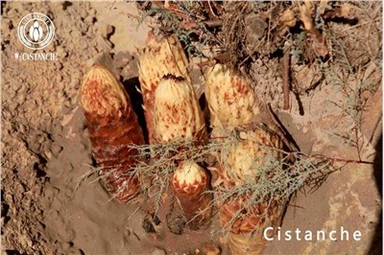
From a morphological perspective, Cistanche deserticola plants are tall and can reach heights of 40-160 centimeters, with most of them growing underground. The stem is fleshy, cylindrical in shape, usually unbranched, with a few branching from the base to 2-3 branches. The diameter of the lower part can reach 5-15 centimeters, gradually narrowing upwards to a diameter of 2-5 centimeters. Its leaves are mostly scaly, arranged in a spiral pattern, with a pale yellow-white color and no petioles. The lower leaves are tightly arranged and are broadly ovate or triangular-ovate in shape, measuring 0.5-1 cm in length and 1-2 cm in width; The upper leaves are relatively sparse, with a linear lanceolate shape, measuring 1-4 cm in length and 0.5-1 cm in width, and both sides are hairless. The spike-like inflorescence of Cistanche deserticola grows at the top of the stem and is 15-50 centimeters long; Calyx bell-shaped, 1-1.5 cm long, 5-lobed, lobes nearly circular; The corolla is cylindrical and bell-shaped, 3-4 centimeters long, with 5 lobes. It unfolds into a nearly semi-circular shape and is yellow white or light purple. After drying, it turns brown. There are 2 longitudinal bright yellow protrusions inside the tube.

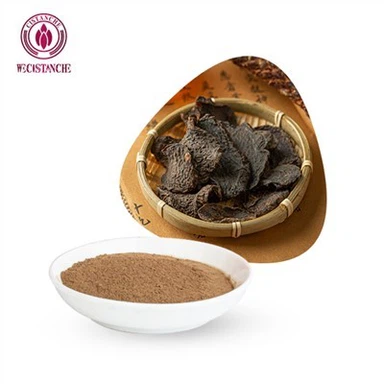
dragon herbs cistanche
Cistanche deserticola mainly grows in the Gobi desert environment with extreme drought climate, strong sunshine, annual precipitation less than 250mm, drastic changes in temperature and heat, strong wind and sand, poor soil development, medium-fine sand, thin soil layer, and coarse texture, neutral or slightly alkaline, high salt content and lack of organic matter. Its main hosts are plants such as red willows and red willows. In China, Cistanche deserticola is mainly distributed in Inner Mongolia, Ningxia, Gansu, and Xinjiang, and is also distributed in Russia and Mongolia abroad.
The medicinal value of Cistanche deserticola is extremely high. According to the Compendium of Materia Medica, it has a sweet taste, mild temperature, and is non-toxic. It has the effects of tonifying kidney yang, nourishing essence and blood, moistening intestines, and promoting bowel movements. It can be used to treat diseases such as kidney yang deficiency, essence and blood deficiency, impotence, infertility, soreness and weakness of the waist and knees, muscle and bone weakness, intestinal dryness, and constipation. Modern research has shown that Cistanche deserticola contains various beneficial components for the human body, such as phenylethanoid glycosides, cyclohexene ether terpenes, lignans, polysaccharides, over a dozen amino acids, and various alkaloids. Among them, phenylethanoid total glycosides are the main active ingredient, with functions such as enhancing sexual function, antioxidant, anti-aging, improving immunity, and enhancing memory.

Desert ginseng-Improve immunity
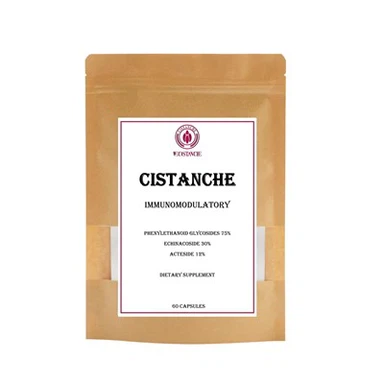
Click here to view Cistanche Enhance Immunity products
【Ask for more】 Email:cindy.xue@wecistanche.com / Whats App: 0086 18599088692 / Wechat: 18599088692
Parasitic relationship: dependence of Cistanche deserticola on Salix matsudana
(1) Complete analysis of parasitic process
The unique parasitic relationship between Cistanche deserticola and Red Willow is a wonderful survival strategy in desert ecosystems. The parasitic process of Cistanche deserticola is like a carefully planned relay of life, full of magical colors.
The seeds of Cistanche deserticola are extremely small, but their quantity is considerable. After leaving the capsule, these seeds fly to the sandy land. In a dry environment, they can maintain their vitality for a long time, drifting with the wind, and searching for their destined host - the red willow. When the seeds of Cistanche deserticola luckily encounter the hair root cells of the red willow, a wonderful fusion of life begins. The seeds tightly bind with the hair root cells of the red willow, as if finding a warm harbor. With the nourishment of the red willow root system, gradually grow the head of Cistanche deserticola. The powerful root system of red willow penetrates deep into the ground, extracting water and nutrients from the deep soil, providing sufficient material basis for the growth of reed heads. As time goes by, the reed head continues to develop and gradually thickens, and the roots of the red willow also grow synchronously. Lu Tou is like a cradle that nurtures life, from which circular sprouting tips sprout. These sprouting tips store energy, ready to welcome the birth of new life.
From a microscopic perspective, the seeds of Cistanche deserticola undergo a series of complex physiological changes upon contact with the root system of Salix matsudana. The cells inside the seed begin to actively divide, forming special suction tissues that resemble tiny tentacles that penetrate the intercellular spaces of the red willow root system, establishing connections with the vascular bundle system of the red willow. Through these connections, Cistanche deserticola can continuously obtain water, inorganic salts, and organic nutrients from the red willow, meeting its own growth and development needs. In this process, the physiological activities of Cistanche deserticola and Salix matsudana are closely linked, forming a symbiotic relationship and surviving and reproducing together in harsh desert environments.

Local villagers grow Cistanche deserticola
(2) The Effect of Red Willow on the Growth of Cistanche deserticola
The growth status of red willow plays a crucial role in the growth and development of Cistanche deserticola, and there is a close interdependence between the two.
The vitality of the red willow root system directly affects the growth of Cistanche deserticola. A healthy and vibrant red willow root system can more effectively absorb water and nutrients from the soil, providing sufficient material support for Cistanche deserticola. When the root system of red willow grows well, it can create a stable and rich nutritional environment for Cistanche deserticola, allowing it to grow vigorously. Research has shown that Cistanche deserticola grown next to red willow plants with well-developed roots and vigorous vitality usually has larger individuals and better quality. On the contrary, if the root system of red willow is invaded by pests and diseases or grows poorly due to environmental factors, its ability to provide nutrients for Cistanche deserticola will be greatly reduced, resulting in slow growth and even poor development of Cistanche deserticola. For example, when red willow is infected with root rot disease, the absorption function of the root system is impaired, and Cistanche deserticola may become thin and small due to a lack of sufficient water and nutrients, and its medicinal value will also decrease accordingly.
The nutrient reserves of red willows also have a significant impact on the quality and yield of Cistanche deserticola. During the growing season, red willows accumulate abundant organic matter through photosynthesis, which is not only used for their growth and maintenance of life activities but also absorbed and utilized by Cistanche deserticola during its growth process. When the nutrient reserves in the body of red willow are sufficient, Cistanche deserticola can obtain more nutrients, thereby synthesizing more beneficial components for the human body, such as phenylethanoid glycosides, polysaccharides, etc., enhancing its medicinal value. In terms of yield, nutrient-rich red willows can support the growth of more Cistanche deserticola and increase its yield. In some areas where Cistanche deserticola is artificially planted, measures such as reasonable fertilization and irrigation are taken to promote the growth of red willows and increase their nutrient reserves, thereby achieving a dual improvement in the yield and quality of Cistanche deserticola.
The significance of symbiosis: a win-win situation for ecology and economy
(1) Ecological benefits
The symbiotic relationship between Cistanche deserticola and Salix matsudana plays an indispensable role in maintaining the balance of desert ecosystems.
Cistanche deserticola parasitizes the roots of red willows, and their symbiosis provides diverse habitats and food sources for desert organisms, increasing biodiversity. The Red Willow Forest provides a habitat and breeding ground for many desert animals, such as sand rats, jumping rats, and other small mammals, as well as various bird species. The flowers of Cistanche deserticola attract numerous insects to pollinate during their flowering period, which in turn become food for other small animals, forming a complex food chain. In some red willows and Cistanche deserticola symbiotic areas in Xinjiang, researchers have found through long-term monitoring that the species and quantity of organisms in this area are significantly higher than those in the surrounding desert areas with single vegetation. For example, in a 10 square kilometer red willow and Cistanche deserticola symbiotic area, more than 20 bird species and over 5 small mammal species were recorded, while in a single red willow area of the same area, there were only about 10 bird species and around 3 small mammal species. This fully demonstrates the positive impact of the symbiosis between Cistanche deserticola and Salix matsudana on biodiversity.
From the perspective of improving soil quality, the root system of red willow secretes some organic substances during its growth process, which can improve the structure of the soil, and increase its permeability and water retention. At the same time, the dead branches and leaves of the red willow provide abundant organic matter to the soil after decomposition, improving soil fertility. During the growth process of Cistanche deserticola, although it obtains nutrients from red willows, its metabolites also have an impact on soil microbial communities, promoting the growth and reproduction of beneficial microorganisms. These microorganisms can participate in the transformation and cycling of nutrients in the soil, further improving soil quality. Research has shown that in the red willow and Cistanche deserticola symbiotic area, the organic matter content in the soil is 20% -30% higher than that in ordinary desert soil, and the number of microorganisms in the soil also increases significantly. Good soil quality creates conditions for the growth of other plants, which is conducive to the restoration and succession of desert vegetation and enhances the stability of desert ecosystems.
(2) Economic benefits
The symbiosis between Cistanche deserticola and Salix chinensis not only brings significant ecological benefits but also contains enormous economic value, injecting new vitality into the local economic development.
As a precious traditional Chinese medicine, Cistanche deserticola is expensive in the market and has extremely high economic value. Its medicinal value is widely recognized, and market demand continues to grow. From ancient traditional Chinese medicine formulas to modern health products and drug research and development, Cistanche deserticola plays an important role. In the traditional Chinese medicine market, the price of high-quality Cistanche deserticola can reach hundreds or even thousands of yuan per kilogram. Taking Cistanche deserticola as an example, its fresh price can reach 50-100 yuan per kilogram in some production areas, while the price of processed dry products is even higher. In some large traditional Chinese medicine trading markets, such as the Bozhou Traditional Chinese Medicine Market in Anhui and the Anguo Traditional Chinese Medicine Market in Hebei, the trading volume of Cistanche deserticola has been increasing year by year, becoming one of the popular varieties in the market.
The industrial model of artificially planting red willows and Cistanche deserticola has brought considerable economic benefits to residents. In the main production areas of Cistanche deserticola such as Xinjiang and Inner Mongolia, many farmers have achieved poverty alleviation and prosperity by planting red willows and inoculating Cistanche deserticola. In the Hotan area, local farmers, guided by the government and enterprises, have planted red willows on a large scale and developed the industry of Cistanche deserticola. A farmer who grows 50 acres of red willows and Cistanche deserticola can generate an annual sales revenue of 100000 to 200000 yuan from the sale of Cistanche deserticola alone. In addition to direct planting income, the Cistanche deserticola industry has also driven the development of related industries, such as processing, sales, logistics, etc. of Cistanche deserticola. In the processing of Cistanche deserticola, enterprises produce sliced Cistanche deserticola tea, Cistanche deserticola wine, extracts, and other products, further enhancing the added value of Cistanche deserticola. In the sales process, the combination of online and offline sales models has expanded the sales channels of Cistanche deserticola, not only meeting the needs of the domestic market but also exporting overseas. The development of these related industries has created a large number of job opportunities and promoted the prosperity of the local economy.
Protection and Development: A Sustainable Future
Although the symbiotic relationship between Cistanche deserticola and Salix matsudana is of great ecological and economic significance, they are currently facing many severe survival challenges.
In terms of Cistanche deserticola, due to its extremely high medicinal value and market demand, the phenomenon of excessive harvesting has been repeatedly prohibited. Wild Cistanche grows slowly, taking several years from seed to maturity, and illegal harvesters often disregard its growth patterns and engage in predatory exploitation of wild resources. In some desert areas such as Xinjiang and Inner Mongolia, illegal excavation of wild Cistanche deserticola occurs from time to time, leading to a sharp decrease in the population and population of this species, posing a serious threat to its survival and reproduction. For example, in a certain region of Xinjiang, due to long-term overexploitation, the yield of wild Cistanche deserticola has decreased by more than 70% in the past decade. At the same time, changes in the ecological environment, such as rising temperatures and changes in precipitation patterns caused by global warming, as well as intensified desertification, have had adverse effects on the growth environment of Cistanche deserticola. Rising temperatures may lead to disrupted growth cycles of Cistanche deserticola, while reduced precipitation can affect the growth of its host, Salix matsudana, indirectly impacting its growth and development.
Red Willow is also facing difficulties. The interference of human activities, such as overgrazing and engineering construction, has caused damage to the living environment of red willows. In some grassland areas, overgrazing makes it difficult for young red willows to grow, and adult plants are also damaged by livestock grazing. In some infrastructure construction projects on the edge of the desert, the red willow forest has been extensively cut down, leading to a weakening of its windproof and sand-fixing functions, and threatening the stability of the ecosystem. In addition, the invasion of pests and diseases has also brought tremendous pressure on red willows. Red willows are susceptible to diseases and pests such as leaf beetles and root rot, which can cause damage to their leaves, root rot, and even death in severe cases. In some areas of Xinjiang, the outbreak of red willow leaf beetle has caused damage to large areas of red willow forests, affecting their normal growth and ecological functions.
To achieve sustainable development of Cistanche deserticola and Salix matsudana, we must take a series of practical and effective measures. In terms of protecting Cistanche deserticola, the government should strengthen supervision, strictly enforce relevant laws and regulations, and crack down on illegal harvesting of wild Cistanche deserticola. Establish a nature reserve to prioritize the protection of wild Cistanche deserticola and its growth environment, restrict human activities within the reserve, and create favorable conditions for the growth and reproduction of Cistanche deserticola. At the same time, we will vigorously promote artificial planting technology and encourage farmers and enterprises to participate in the artificial planting of Cistanche deserticola through policy support, technical training, and other means. For example, in Hotan Prefecture, Xinjiang, the government provides subsidies and technical guidance to farmers who grow Cistanche deserticola, promoting the development of the artificial planting industry of Cistanche deserticola. Increase research investment in the cultivation technology and medicinal value of Cistanche deserticola, improve its yield and quality, and promote the sustainable development of the Cistanche deserticola industry.
For the protection of red willows, it is necessary to strengthen the protection of their growth environment and reduce the interference of human activities on them. Reasonably plan grazing areas, control the number of livestock, and avoid the damage of overgrazing to red willows. In engineering construction, fully consider the ecological value of red willows, take effective protective measures, and reduce damage to red willow forests. Strengthen the prevention and control of pests and diseases, establish a monitoring system for pests and diseases, and promptly detect and deal with pest and disease problems. Using a combination of biological control, physical control, and chemical control methods to reduce the harm of pests and diseases to red willows. For example, in some areas of Xinjiang, good results have been achieved by releasing natural enemies of the red willow leaf beetle to control its population size. In addition, red willow planting and ecological restoration projects can be carried out to increase the planting area of red willow and improve its ecological function.