Cistanche Deserticola, A Natural Remedy For Regulating Intestinal Microbiota Imbalance
Jan 20, 2025
Antibiotics and gut microbiota imbalance
In the field of modern medicine, antibiotics are undoubtedly powerful weapons against bacterial infections and are widely used in the treatment of various diseases. Whether it is common colds and fevers, or severe pneumonia, meningitis, etc., antibiotics play an indispensable role.
But as the saying goes, 'medicine is three parts poison', and antibiotics are no exception. While killing harmful bacteria, it often "accidentally kills" beneficial bacteria in the gut, leading to gut microbiota imbalance. When the balance of gut microbiota is disrupted, harmful bacteria will take advantage of the opportunity to multiply in large numbers, while the number and types of beneficial bacteria will sharply decrease, causing serious damage to the gut microbiota environment.
Dysbiosis of gut microbiota is not a small issue, it can lead to a range of health problems. From discomfort in the digestive system, such as abdominal pain, diarrhea, and constipation, to impaired immune system function, increasing the risk of infection; From the appearance of metabolic syndrome, such as obesity, diabetes, and hypertension, to the potential association of nervous system diseases, such as Parkinson's disease, depression; Even the occurrence of cancer is intricately linked. These issues not only seriously affect the quality of life of patients, but may also cause long-term damage to their physical health.
Reasons and hazards of intestinal microbiota imbalance
The mechanism and Impact of antibiotics
Antibiotics mainly achieve the goal of killing or inhibiting bacterial growth by inhibiting the synthesis of bacterial cell walls, affecting the synthesis of bacterial proteins, and interfering with the synthesis of bacterial nucleic acids. But there are many types of microorganisms in the intestine, and antibiotics cannot accurately identify harmful bacteria when targeting them, which leads to many beneficial bacteria becoming "victims". For example, commonly used broad-spectrum antibiotics not only inhibit harmful bacteria but also extensively damage beneficial bacteria such as bifidobacteria and lactobacilli in the intestine. Research has shown that the use of antibiotics can reduce the number of beneficial bacteria in the gut by more than 50% in a short period, which undoubtedly has a huge impact on the gut microbiota.
Symptoms of intestinal microbiota imbalance
After the imbalance of gut microbiota, the body will issue a series of "alarms". Diarrhea is one of the most common symptoms, which may manifest as increased frequency of bowel movements, watery stools, or accompanied by mucus, pus, and blood. This is because the number of beneficial bacteria decreases, making it difficult to effectively inhibit the growth of harmful bacteria, leading to intestinal inflammation and dysfunction of intestinal mucosal secretion. Constipation also occurs from time to time. The reduction of beneficial bacteria slows down intestinal peristalsis, causing feces to stay in the intestine for too long and water to be excessively absorbed, leading to difficulty in defecation.

Effects of cistanche
There may also be obvious discomfort in the digestive system, such as indigestion, bloating, abdominal pain, etc. Due to the imbalance of gut microbiota, the digestion and absorption of food are affected, and undigested food ferments in the intestines, producing a large amount of gas and leading to bloating; At the same time, the intestinal mucosa is stimulated, causing abdominal pain.
The decline in immunity is also a significant threat to the imbalance of gut microbiota. The intestine is an important immune organ in the human body, with about 70% of the immune system concentrated in the intestine. Beneficial bacteria not only help with digestion and absorption but also stimulate the development and function of the immune system. When the microbiota is imbalanced, the immune system does not receive sufficient stimulation and support, and the body's ability to resist pathogens weakens. People are more likely to suffer from various diseases such as colds and flu, and the recovery time after illness will also be prolonged.
The miraculous effects of Cistanche deserticola
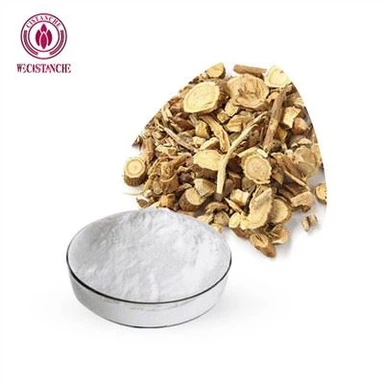
Cistanche deserticola, a precious traditional Chinese medicine known as the "desert ginseng," mainly parasitizes the roots of the desert plant Salix. It grows in the Gobi Desert environment with extreme drought, strong sunshine, annual precipitation of less than 250 millimeters, drastic changes in temperature, and strong winds and sand. The unique growth environment endows Cistanche deserticola with magical medicinal value.

Cistanche male benefits
Cistanche deserticola has a long history of medicinal use, and its frequency of use is extremely high in prescriptions for kidney tonifying and yang strengthening throughout history. According to the Compendium of Materia Medica, Cistanche deserticola has a sweet and slightly warm taste, is non-toxic, and is known for its five functions and seven injuries. It can nourish the middle organs, relieve cold, heat, and pain in the stems, nourish the five organs, strengthen yin, nourish essence and qi, and produce more children. It can also treat women's ailments and relieve their health after prolonged use. This fully confirms its medicinal value. It can not only tonify kidney yang and nourish essence and blood but also moisten the intestines and promote bowel movements, especially suitable for erectile dysfunction, infertility, lumbar and knee soreness, muscle weakness, as well as intestinal dryness and constipation caused by kidney yang deficiency and insufficient essence and blood.
Research on the Regulation of Intestinal Microbiota by Cistanche deserticola
Experimental setup and process
To investigate the regulatory effect of Cistanche deserticola on gut microbiota, researchers conducted a series of rigorous experiments. Taking the study published by Han Tianyu, Yang Dong, and others in the Chinese Journal of Applied Physiology as an example, they randomly divided 48 Balb/c mice into control (CON) group, AAD group, inulin (INI) group, Cistanche deserticola (RCR) group, Cistanche deserticola polysaccharide (RCRDT) group, and echinacoside (ECH) group, with 8 mice in each group. Firstly, mice were orally administered lincomycin hydrochloride (3g/kg) for 7 consecutive days, successfully creating a mouse diarrhea model. Subsequently, 0.2ml of inulin (5g/kg), Cistanche deserticola (5g/kg), Cistanche deserticola polysaccharide (200mg/kg), and echinacoside (60mg/kg) were orally administered to mice in the INO group, RCR group, RCRDT group, and ECH group, respectively, once a day for 7 days; The CON and AAD groups of mice were given the same volume of physiological saline by gavage.

Cistanche deserticola experiment
Experimental results and analysis
The experimental results are surprising. Compared with the CON group, the AAD group mice showed significant weight loss, severe diarrhea symptoms, inflammatory changes in colon tissue, and a significant decrease in gut microbiota diversity, indicating successful modeling. Compared with the AAD group, the mice in each group treated with Cistanche deserticola and its active ingredients gradually recovered in weight and showed significant improvement in diarrhea symptoms. Among them, the colon pathology of ECH group mice even recovered to normal levels. In terms of gut microbiota, the RCR group, RCRDT group, and ECH group mice showed a significant decrease in Firmicutes content, an increase in Blautia and Lachnoclostridium content, and a decrease in Clostridium-sensu_stricito_1 content. In addition, the abundance and diversity of gut microbiota in ECH group mice were restored to normal levels, and the structure of gut microbiota was positively adjusted. The contents of Bacteroidetes, Flavonifractor, Agathobacter, Lachnoclostridium, Prevotella-9, and other genera were significantly increased.
This fully demonstrates that Cistanche deserticola and its active ingredients, Cistanche deserticola polysaccharides, and Echinochlorin, can effectively regulate antibiotic-induced gut microbiota dysbiosis and improve AAD symptoms, with Echinochlorin having the most significant effect. Another study conducted by He Mengmeng, You Lin, and others also showed that the water extract of Cistanche deserticola can alleviate the weight loss and thymus growth inhibition caused by antibiotics in mice, significantly increase the content and B/E value of bifidobacteria and lactobacilli in the feces of mice with intestinal microbiota disorder, and have a certain inhibitory effect on the growth of enterococci and Escherichia coli. It can also improve the phenomenon of intestinal villi shortening and crypt depth increase induced by intestinal microbiota disorder in mice.
The active ingredients and mechanism of action of Cistanche deserticola
The role of polysaccharides from Cistanche deserticola
The regulation of intestinal microbiota by Cistanche deserticola relies on its various effective ingredients. Cistanche polysaccharides are one of them, which can regulate the balance of intestinal microbiota and promote the growth of beneficial bacteria in the intestine.
Multiple studies have shown that polysaccharides from Cistanche deserticola can significantly increase the number of beneficial bacteria such as bifidobacteria and lactobacilli. These beneficial bacteria play an important role in the gut by fermenting dietary fiber to produce short-chain fatty acids such as acetic acid, propionic acid, and butyric acid. Short-chain fatty acids not only provide energy for intestinal epithelial cells, promote their growth and repair, but also regulate the pH value of the intestine and inhibit the growth of harmful bacteria.
Cistanche polysaccharides can also maintain intestinal barrier function. The intestinal barrier is like a sturdy defense line, composed of intestinal mucosal epithelial cells, tight junction proteins, mucus layer, and intestinal microbiota, which can prevent the invasion of harmful substances and pathogens. Research has found that polysaccharides from Cistanche deserticola can increase the secretion of immunoglobulin A (IgA) in the intestinal mucosa. IgA is an important component of intestinal mucosal immunity, which can specifically bind to pathogens and toxins, prevent their adhesion to intestinal epithelial cells, and protect intestinal mucosa from damage. In addition, polysaccharides from Cistanche deserticola can regulate the expression of tight junction proteins, enhance the connections between intestinal epithelial cells, reduce intestinal permeability, and prevent harmful substances from entering the bloodstream.

cistanche herb-Treat constipation
The efficacy of pineal chrysanthemum glycoside
Pinecone chrysanthemum glycoside, as another key active ingredient in Cistanche deserticola, also performs well in regulating intestinal microbiota. It can optimize the structure of gut microbiota, increase the relative abundance of beneficial bacteria, and reduce the number of harmful bacteria. In a study on mice with gut microbiota dysbiosis, after intervention with echinacoside, the number of beneficial bacteria such as Bacteroides and Lactobacillus in the mouse gut significantly increased, while the number of harmful bacteria such as Escherichia coli and Enterococcus significantly decreased.
Inflammatory reactions often occur in conjunction with dysbiosis of the gut microbiota, and echinacoside has significant anti-inflammatory effects. It can inhibit the release of inflammatory factors and alleviate intestinal inflammation. When inflammation occurs in the intestine, a large amount of inflammatory factors are produced, such as tumor necrosis factor - α (TNF - α), interleukin-6 (IL-6), etc. These inflammatory factors further damage the intestinal mucosal barrier and exacerbate the imbalance of intestinal microbiota. Pinecone chrysanthemum glycoside can reduce the production and release of inflammatory factors by inhibiting the activation of inflammatory signaling pathways such as nuclear factor kappa B (NF - κ B), thereby alleviating intestinal inflammation and promoting the recovery of intestinal microbiota.
Clinical case witness
In practical clinical applications, the efficacy of Cistanche deserticola in regulating intestinal microbiota imbalance has also been extensively validated. A 45-year-old female patient suffered from gastrointestinal dysfunction due to long-term work fatigue and irregular diet. She often feels abdominal pain and bloating, accompanied by severe constipation, and her body is very weak. Dizziness also occurs from time to time. After diagnosis by the doctor, it is recommended to use traditional Chinese medicine for conditioning, among which Cistanche deserticola is an important medicinal herb. After persistently taking traditional Chinese medicine of Cistanche for a period of time, her appetite significantly increased and her bowel movements gradually became more regular. In the end, the symptoms that had troubled her for a long time completely disappeared, and her physical condition greatly improved.
There is also a study targeting Parkinson's disease patients. Researchers Sun Yongqi, Hu Yunxin, and others divided 80 Parkinson's patients into two groups. The control group was treated with compound levodopa, while the observation group was treated with a combination of Cistanche deserticola wall-breaking granules on this basis. The results showed that after treatment, the constipation symptoms of the observation group patients were significantly improved, and the nonmotor symptom scale scores were significantly reduced. This indicates that Cistanche not only helps regulate intestinal function but also has a positive effect on improving the overall symptoms of Parkinson's disease patients.

effects of cistanche-treat constipation
Click here to view Cistanche deserticola tea products
【Ask for more】 Email:cindy.xue@wecistanche.com / Whats App: 0086 18599088692 / Wechat: 18599088692
Application and Prospect of Cistanche deserticola
Application of Cistanche deserticola in the field of medicine
The application of Cistanche deserticola in the field of medicine is extremely extensive. In traditional Chinese medicine formulas, it is often used to treat conditions such as kidney yang deficiency, essence and blood deficiency, intestinal dryness, and constipation. Like the classic Ji Chuan decoction, Cistanche deserticola is one of the main medicinal herbs, which, when combined with Danggui, Achyranthes, Alisma, Cimicifuga, Fructus aurantii, etc., plays a role in warming the kidneys, nourishing essence, moistening the intestines, and promoting bowel movements.
In the modern health product market, Cistanche deserticola is also a highly favored raw material. Health products mainly composed of Cistanche deserticola, such as Cistanche deserticola soft capsules, oral liquids, tablets, etc., are constantly emerging. These health products utilize the benefits of Cistanche deserticola, such as tonifying the kidneys and strengthening yang, anti-fatigue, and antioxidant effects, to help people improve their immunity, enhance bodily functions, and alleviate fatigue. They are highly favored by consumers.
Future research directions
There is still vast research space for Cistanche deserticola in regulating gut microbiota. In terms of mechanism of action, although it is currently known that polysaccharides from Cistanche deserticola and compounds such as echinacea glycosides have regulatory effects on gut microbiota, the specific molecular mechanisms are not yet fully understood. In the future, researchers can delve into the signaling pathways between the active ingredients of Cistanche deserticola and the gut microbiota, as well as their effects on gene expression of gut microbiota.
The preventive and therapeutic effects of Cistanche deserticola on specific diseases also need further research. For example, the intestinal flora is closely related to chronic diseases such as obesity, diabetes, and cardiovascular diseases. In the future, it can be studied whether Cistanche deserticola can play a preventive and therapeutic role in these diseases by regulating the intestinal flora.
The development and utilization of Cistanche deserticola are also worthy of attention. With the continuous advancement of technology, new extraction techniques and formulation processes will continue to emerge, which will help improve the extraction and utilization rate of effective ingredients in Cistanche deserticola, and develop more efficient and safe Cistanche deserticola products. At the same time, quality control and standardization research of Cistanche deserticola are also crucial. Establishing a scientific and comprehensive quality standard system can ensure the stability, safety, and reliability of Cistanche deserticola products.
As a traditional and precious Chinese medicinal herb, Cistanche deserticola has shown significant efficacy in regulating antibiotic-induced dysbiosis in the gut microbiota of mice. The active ingredients contained in it, such as Cistanche deserticola polysaccharides and echinacea glycosides, can regulate the balance of intestinal microbiota through various mechanisms, improve intestinal barrier function, alleviate inflammatory reactions, and are of great significance for maintaining intestinal health.