Sand Sea Fairy Grass: The Legend Of Hotan Cistanche
Aug 17, 2026
On the southern edge of the Taklamakan Mountains, soaked by Kunlun snow and water, a plant without a single green leaf silently absorbs the root fluid of the red willow and grows into the warmest tonic in traditional Chinese medicine under the dark sand layer. It is called Cistanche tubulosa - it grows with ease, is used as medicine with ease, and has nourished the land of China for two thousand years with ease.

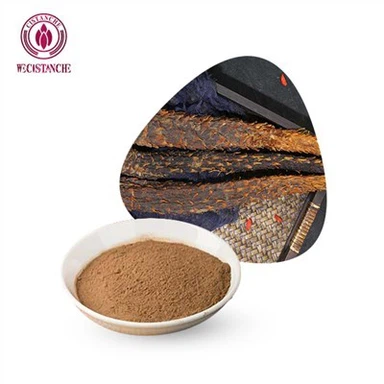
cistanche powder health benefits
1, The 'Desert Gold' on the Silk Road
1. An ancient path, a miraculous medicine
In 644 AD, Master Xuanzang returned from India to retrieve Buddhist scriptures and passed through Khotan (now Hotan). He left a meaningful record in his book "Records of the Western Regions of the Great Tang Dynasty": "The land is covered with dunes and produces exotic grass that looks like pine roots and can last for years." This high monk who traveled throughout the South Asian subcontinent remembered not Buddhist pagodas and temples, but the medicinal value of a plant in the sandy oasis of Khotan. This exotic herb is actually Cistanche tubulosa.
Khotan is located at the southern gateway of the ancient Silk Road and has been a crossroads of Eastern and Western civilizations since the Han and Tang dynasties. The caravan carried silk and porcelain westward, bringing back pepper and precious stones, while Cistanche tubulosa was the most inconspicuous but precious "Chinese medicine envoy" on this millennium-old trade route. It was excavated from the dunes of Taklamakan, packed in cowhide bags, and transported to the Central Plains station by station along the Silk Road. Eventually, it entered the imperial medical offices in Chang'an and Luoyang and became a top-quality tonic for the royal family.

2. The 'Longevity obsession' of emperors throughout history
Emperor Qin Shi Huang sent Xu Fu to cross the East to seek elixirs, Emperor Wu of Han opened up the Western Regions to search for strange remedies, and Emperor Xuanzong of Tang ate Hu Ma Ren and Cistanche tubulosa - the desire for "longevity" in Chinese history has run through almost every powerful dynasty. And Cistanche tubulosa has always been at the forefront of the "elixir" list.
Genghis Khan's iron cavalry swept across Europe and Asia. It is said that during his western expedition, there was a shortage of food and supplies, and the soldiers were exhausted. The local guide offered a type of "meat root" dug out from the sand, which was boiled into soup and consumed, boosting morale. This grassland overlord regarded Cistanche tubulosa as a "divine gift" and ordered military physicians to develop it into pills to carry with them. Although there is no clear record in official history, this legend has been passed down on the Mongolian grasslands for 800 years, which indirectly confirms the sacred status of Cistanche in the hearts of northern nomadic peoples.
In the Qing Dynasty, Emperor Qianlong pushed the consumption of Cistanche tubulosa to the extreme. According to the "Qing Palace Medical Cases", in the later years of Emperor Qianlong's reign, he had to take the "Cistanche Kidney Nourishing Pill" every day. His imperial physician Liu Yuduo wrote only eight words in the pulse case: "Warm and tonify kidney yang, nourish essence and fill marrow". This longest-lived emperor in Chinese history (who passed away at the age of 89) spent his days reviewing memorials until late at night, but his energy did not decline. The contribution of Cistanche tubulosa is indispensable.

During the suppression of the Zunghar rebellion by Emperor Kangxi, a large army was stationed in Hotan. The local leader, Burk, presented him with "Cistanche tubulosa wine". After drinking it, Kangxi was greatly pleased and inscribed the words "Desert ginseng" with his pen. Although this plaque has long disappeared in the long river of history, the title of "Desert Ginseng" has been passed down among the people and has become the most well-known alias for Cistanche tubulosa.
2, The ecological code of Taklamakan
1. Miracle of Life at 37 ° North Latitude
Open the world map and focus on the line of 37 ° north latitude - you will find that this is an incredible "magical latitude zone": the pyramids of Egypt, the ancient Greek civilization, the Mesopotamian plain, and the Himalayas are densely arranged on both sides of this line. And in the southernmost part of Xinjiang, China, the Hotan region on the southern edge of the Taklamakan Desert happens to be located on this line.
The average annual sunshine here exceeds 3500 hours, and the frost-free period lasts for 210 days throughout the year. The temperature difference between day and night can reach over 28 degrees Celsius. The high temperature during the day causes the surface temperature of the sandy land to soar to 60 ℃, while the cold at night can cause the temperature to plummet to the freezing point. This extreme temperature difference is deadly for the vast majority of plants, but for Cistanche tubulosa, it is a natural "alchemy furnace" for accumulating effective ingredients.
Scientific research has shown that extreme temperature differences can force plants to activate stress metabolism mechanisms and synthesize a large amount of secondary metabolites, including active ingredients such as phenylethanolic glycosides, iridoids, and polysaccharides. The content of pineal glycoside in Hotan Cistanche tubulosa is as high as 3.8%, which is more than seven times the pharmacopoeia standard (0.5%). This is not a victory of breeding technology, but a masterpiece polished by nature in the harshest environment.

The villagers of Hotan Village in Xinjiang are digging and harvesting Cistanche tubulosa
2. The 'Contract of Life and Death' between Red Willow and Cistanche tubulosa
Cistanche tubulosa is a parasitic plant that relies on a "host" throughout its life - the Chinese tamarisk, also known as the red willow in folk culture. This is a shrub that grows on the edge of the desert, and its roots can penetrate more than ten meters underground to search for water sources. And the seeds of Cistanche tubulosa must perceive the special chemical substances secreted by the root system at the moment of contact with it, to germinate, invade, parasitize, and ultimately complete the entire life process of pollination and fruiting under the sand layer.
This is like a carefully arranged 'life and death contract': the red willow desperately absorbs water from its roots in the desert, while the Cistanche tubulosa silently absorbs nutrients from its roots. Without red willows, Cistanche tubulosa cannot survive; Moderate parasitism of Cistanche tubulosa can actually stimulate the branching growth of the root system of Salix matsudana, forming a wonderful symbiotic balance. Professor Tu Pengfei metaphorically compares this relationship to 'the twin branches in the desert'.
What's even more amazing is that the seeds of Cistanche tubulosa can 'sleep' in desert soil for decades, waiting for a rainfall, a temperature change, and the approach of a red willow root. It is neither impatient nor impatient, choosing to hibernate at the most inappropriate time and waking up at the most appropriate time. This' calm 'wisdom of life may be the true origin of its name.

Host of Cistanche tubulosa- Red Willow
3. The 'Green Great Wall' in the wind and sand
Hotan is located on the southern edge of the Taklamakan Desert and is one of the most severely affected areas by sandstorms in China. In the 1980s, quicksand pushed towards the oasis at a speed of 5-10 meters per year, and Hotan County was forced to relocate three times. Today, when you stand on the map of Hotan and overlook it, you will find a winding "Green Great Wall" gradually pushing the desert back - this is the windproof and sand-fixing forest belt mainly composed of red willows.
In 1983, Hotan District launched the "Three-North Shelterbelt Program" project, which planted Salix koraiensis, Haloxylon ammodendron and other desert plants on a large scale. No one expected that this ecological project, originally designed for wind and sand prevention, would unexpectedly create excellent conditions for the artificial inoculation of Cistanche tubulosa. The red willow forest is growing denser and denser, and there are more and more hosts for Cistanche tubulosa. The wild medicinal herbs that originally needed to be searched for all over the mountains and fields are now being "settled" on a large scale in artificial forests.
Today in Hotan, the area of red willow forests has exceeded 2 million acres, of which 530000 acres have been inoculated with Cistanche tubulosa. This means that every acre of Cistanche tubulosa forest is a barrier against wind and sand; The harvesting of every Cistanche tubulosa plant does not damage the root system of the red willow - harvesting large and leaving small, and rotating harvesting and planting, making this desert truly achieve the ecological miracle of "greener with more harvesting".

3, Kunlun Snow Water: The 'Liquid Gold' Flowing in the Medicine Vein
1. A sacred mountain, a lifeline
In the hearts of Hotan people, Kunlun Mountain is not a geographical concept, but a belief. This giant mountain range, stretching 2500 kilometers with an average elevation of 5500 meters, was known as the "ancestor of ten thousand mountains" by ancient Chinese people. It was the residence of the Queen Mother of the West and a legendary place at the source of the Yellow River. And its true 'miracle' is hidden in the billion-year-old glaciers on the mountaintop.
The Hotan section of the Kunlun Mountains is home to the most densely packed group of valley glaciers in western China. Every spring and summer, as temperatures rise and glaciers slowly melt, snow flows down countless canyons and streams, passing through the gravel layers of the Gobi Desert, undergoing hundreds of kilometers of natural filtration, and finally flowing into the Hotan River, nourishing the oases on the southern edge of the Taklamakan Desert. This snowy river, which surges from an altitude of 5000 meters to an altitude of 1000 meters, is the source of all life in Hotan.

2. The "medicinal code" irrigated by snow water
The fundamental difference between Kunlun Mountain snow water and ordinary river water lies in its "mineralization process". When snow flows at the bottom of glaciers, it undergoes a long geological contact, dissolving more than ten minerals and trace elements such as calcium, magnesium, potassium, sodium, strontium, selenium, etc. in rocks. When these snow waters seep into the ground, are absorbed by the roots of the red willow, and ultimately transmitted to the Cistanche tubulosa through parasitic relationships, it has become a natural "mineral cocktail".
A research team from the School of Pharmacy at Peking University conducted a systematic mineral fingerprint analysis of Cistanche tubulosa in Hotan. The results showed that the content of strontium (Sr) in Cistanche tubulosa from the Hotan production area was significantly higher than that in other production areas such as Inner Mongolia and Gansu. Strontium is closely related to bone health and anti-aging. Researchers speculate that this is the result of Kunlun Snow Water imprinting special minerals into the body of Cistanche tubulosa during its long geological filtration process.
In other words, the piece of Cistanche tubulosa you take is not just a crystallization of the red willow root fluid, but also the precipitation of Kunlun Mountain glaciers for billions of years. Every mouthful of snow carries the chill and vastness of the Qinghai-Tibet Plateau, sealed most warmly by Cistanche tubulosa under the scorching sun of Taklamakan.

cistanche body building
4, The Legend of Youth in the Laboratory
1. From empirical medicine to molecular biology
The use of Cistanche tubulosa in traditional Chinese medicine has a history of over two thousand years, which can tonify the kidneys, strengthen yang, lubricate the intestines, and promote bowel movements. But in the past twenty years, modern science has truly begun to 'understand' the molecular language of this ancient medicinal herb. Professor Tu Pengfei's team at Peking University conducted a systematic study on the chemical composition of plants in the Cistanche genus over 35 years ago. They isolated and identified more than 100 compounds and found that their core active ingredients, phenylethanoid glycosides (especially pinealoside and verbascoside), have strong free radical scavenging ability and neuroprotective effects.
In 2018, the Shanghai Institute of Materia Medica of the Chinese Academy of Sciences published a blockbuster study: Cistanche tubulosa extract significantly prolonged life in animal models, and its mechanism is closely related to the activation of the SIRT1 gene pathway (commonly known as the "longevity gene"). This discovery provides direct molecular evidence for the traditional efficacy of Cistanche tubulosa in prolonging life. After the publication of the paper, there was a wave of "Cistanche tubulosa fever" in the international anti-aging research field, and multiple multinational pharmaceutical companies have successively launched cooperative research and development.
2. The 'medicine of hope' for Alzheimer's disease
In 2021, the National Medical Products Administration approved the world's first new drug, "Cistanche Total Glycosides Capsules," mainly composed of Cistanche tubulosa extract, for the adjuvant treatment of mild cognitive impairment. Behind this approval is 12 years of clinical trial data from the Ministry of Medicine at Peking University. Research has shown that phenylethanolic acid glycosides in Cistanche tubulosa can directly act on the cerebral cortex and hippocampus through the blood-brain barrier, inhibiting the deposition of β - amyloid protein, which is the core pathological feature of Alzheimer's disease.

cistanche-prevent Alzheimers disease
Click here to view Cistanche Improving Memory Preventing Alzheimer's Disease products
【Ask for more】 Email:cindy.xue@wecistanche.com / WhatsApp: 0086 18599088692 / WeChat: 18599088692
From the "exotic herbs" on the Silk Road to the prescription drugs of modern neurology, Cistanche tubulosa has traveled a long journey of two thousand years. And the starting point of this road is nothing more than an unknown parasitic plant in the Taklamakan Desert and the bent waist of a herbalist.
5, From the Desert to the World's Gold Industry '
1. The rise of an industry
In 2002, Hotan Cistanche was listed as a second-class protected plant in China, and wild harvesting was strictly prohibited. This policy once caused panic in the market, but it also forced a comprehensive breakthrough in artificial vaccination technology. The "Cistanche tubulosa red willow" agroforestry model developed by Professor Tu Pengfei's team allows farmers to harvest Cistanche tubulosa in windproof and sand-fixing forests, achieving a win-win situation of "ecological governance" and "economic benefits".
Today in Hotan, the planting area of Cistanche tubulosa has reached 530000 mu, with an annual output value exceeding 2.8 billion yuan, driving more than 50000 local farmers to increase their income and become prosperous. A complete industrial chain has been formed from planting, harvesting, initial processing, to deep extraction. The Hotan farmers who were once forced to leave their hometown by sandstorms are now living a good life right at their doorstep by "planting Cistanche and raising red willows".

The villagers of Hetian Village in Xinjiang are digging and harvesting Cistanche tubulosa
2. Geographical Indications and Brand Protection
In 2015, "Hotan Cistanche" won the national certification of geographical indications for agricultural products, becoming the second "national brand" card in Hotan after "Hotan Jade". The protection of geographical indications not only means endorsement of quality, but also strict restrictions on the place of origin - only the Cistanche tubulosa grown under specific latitude and longitude, specific soil conditions, and specific water source irrigation in the Hotan area can be named "Hotan".
In recent years, with the promotion of the "Belt and Road" initiative, cistanche hotan has begun to go abroad. Health product companies from Japan, South Korea, and Singapore have come to negotiate procurement, while pharmaceutical companies from Germany and Switzerland have shown strong interest in the extract of Cistanche tubulosa. This "old medicinal herb" that used to only appear in traditional Chinese medicine hospitals is becoming the new favorite of the global health industry.

3. The story behind the numbers
Let's take a look at a set of numbers: there are currently 37 Cistanche tubulosa processing enterprises in Hotan area, including 12 deep processing enterprises that have passed GMP certification; The products related to Cistanche tubulosa cover four categories: traditional Chinese medicine decoction pieces, health food, cosmetics, and functional beverages, totaling more than 160 types; In 2023, the export value of Hotan Cistanche exceeds 80 million US dollars, a year-on-year increase of 35%.
Behind these numbers are specific faces: the old farmer in Cele County who relies on growing Cistanche tubulosa to support his two children's college education, the "post-90s" e-commerce girl in Luopu County who gave up her urban job and returned home to start a business, and the local enterprise in Hotan City that sells Cistanche tubulosa extract to a pharmacy in Tokyo. Cistanche is no longer just a medicinal herb; it is the "golden key" for Hotan people to lift themselves out of poverty and become prosperous, and the "green bank" that grows in the desert.
6, Future: The infinite possibilities of a single blade of grass
1. New attempts in space breeding
In 2022, a batch of Cistanche tubulosa seeds will be carried into space by the Shenzhou XIV manned spacecraft, and a six-month space mutation experiment will be carried out. This is the boldest attempt in the breeding history of Cistanche tubulosa - using microgravity and a strong radiation environment in space to induce beneficial mutations in seeds, thereby screening for superior strains with higher content of active ingredients and stronger stress resistance.
In 2023, this batch of 'Space Cistanche' seeds will return to the ground and begin the first generation of ground breeding in the greenhouse of Hotan National Agricultural Science and Technology Park. Preliminary observations show that the germination rate of the space mutagenesis group increased by 12%, and the root biomass of the seedlings increased by about 20%. If subsequent chemical composition analysis confirms a significant increase in its active ingredients, it will be a qualitative leap for the Cistanche tubulosa industry.
2. Challenges in Synthetic Biology

Cistanche tubulosa experiment
Meanwhile, in the laboratory, another 'revolution' is brewing. In 2023, the Tianjin Institute of Industrial Biotechnology, Chinese Academy of Sciences, announced that a microbial cell factory for echinacin, the core active ingredient of Cistanche tubulosa, had been successfully constructed. Through genetically engineered yeast, echinacin could be directly "produced" in fermentation tanks, with a yield of 1.2 grams per liter.
The maturity of this technology means that in the future, we may no longer need to plant large areas of Cistanche tubulosa to obtain effective ingredients. A fermentation tank of a few square meters may be worth thousands of acres of planting land. This is undoubtedly good news for ecological conservation - reducing dependence on wild resources and allowing deserts to return to nature; But for the local area of Hotan, it also means the urgency of industrial transformation. From selling raw materials to selling technology, from planting medicinal herbs to exporting standards, there is still a long way to go in the industry of Hotan Cistanche.

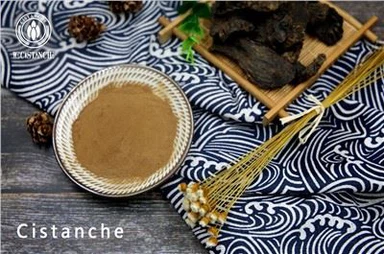
Cistanche tubulosa extract
3. The 'one medicine' for cultural confidence
The story of Cistanche tubulosa is ultimately a microcosm of the 'Chinese story'. It comes from the bamboo slips of the "Shennong Bencao Jing", crosses the sandstorms of the Silk Road, undergoes modern scientific testing, and is moving towards the stage of global health. It tells us that the most advanced medicine is sometimes hidden in the oldest wisdom; The most precious resources often grow on the most barren land.
While the world is searching for the 'next artemisinin', there are countless sleepers like Cistanche tubulosa in China's treasure trove of traditional Chinese medicine, waiting to be rediscovered, re-understood, and re-narrated. And Hotan, this ancient city nourished by the snow and water of the Kunlun Mountains for thousands of years, will continue to guard this desert, this medicine, and the most profound warmth and resilience of Chinese civilization with its most calm posture.