

Cistanche Deserticola: A Potential Savior For Elderly Dementia? Experimental Data Tells You The Truth
Jan 23, 2026
Alzheimer's disease: an increasingly severe health challenge

Dragon Herbs cistanche-Anti Alzheimers disease
Under the global trend of an aging population, the incidence of Alzheimer's disease is increasing at an alarming rate and has become a major health issue that cannot be ignored in modern society. According to relevant data from the World Health Organization, an elderly person is diagnosed with dementia every 3 seconds worldwide, and Alzheimer's disease, as the most common type of dementia in the elderly, accounts for about 60% -80% of all dementia cases. In China, the situation is also not optimistic. It is estimated that one in every 20 elderly people aged 65 and above may suffer from Alzheimer's disease, and the number of patients has exceeded 10 million. With the acceleration of the aging process, this number is still increasing.
Alzheimer's disease not only seriously affects the quality of life of patients, gradually causing them to lose their ability to take care of themselves, forget their loved ones, friends, and even basic life skills; It will also bring heavy burdens to families and society. From a family perspective, family members need to invest a lot of time and energy to take care of patients, and bear enormous mental pressure and economic burden. From a social perspective, the increasing number of elderly dementia patients has put forward higher requirements for medical resources, elderly care services, etc., becoming an urgent medical problem that needs to be solved.
Cistanche deserticola: the "wisdom fairy grass" in the desert
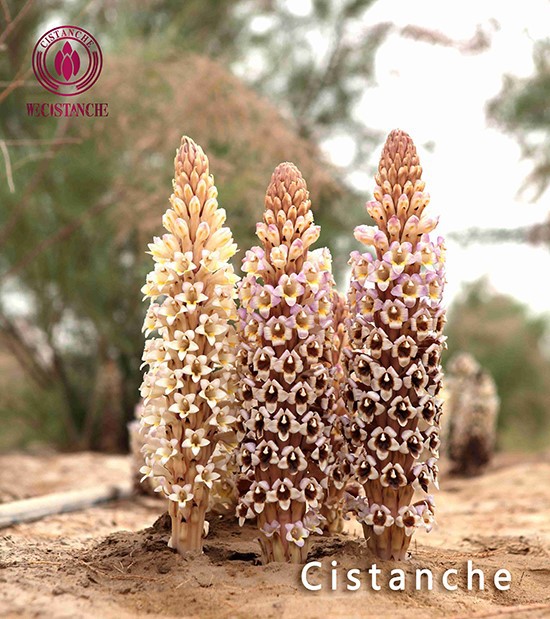
desert ginseng
In the vast and boundless desert, there is a mysterious and precious plant that grows tenaciously, which is the Cistanche deserticola known as the "desert ginseng". As a traditional and precious Chinese medicinal herb, Cistanche deserticola has a long history of medicinal use, dating back to the "Shennong Bencao Jing," and is listed as a top-grade herb. The book records that it "mainly works on the five aspects of labor and seven injuries, replenishes the middle, removes cold, heat, and pain in the stem, nourishes the five organs, strengthens yin, benefits essence and qi, has many children, and can alleviate women's symptoms. Long term consumption can lighten the body". In ancient times, Cistanche deserticola was a precious item presented to the imperial court by various countries in the Western Regions. It was highly praised by medical practitioners throughout history and demonstrated outstanding effects in tonifying the kidneys and yang, nourishing essence and blood, moistening the intestines, and promoting bowel movements.
With the deepening of modern medical research, the medicinal value of Cistanche deserticola is constantly being explored, especially its potential role in alleviating elderly dementia, which has attracted widespread attention from researchers and brought new hope for overcoming this medical problem. So, how does this magical plant that grows in the desert actually contribute to Alzheimer's disease? Let's explore the truth through specific experimental cases.
Experiment reveals: How Cistanche deserticola fights against senile dementia
Experimental background and purpose

Cistanche deserticola experiment
Due to the lack of effective cure methods for Alzheimer's disease, existing treatment methods often only alleviate symptoms and cannot prevent disease progression. Therefore, it is urgent to find new treatment methods and drugs. Cistanche deserticola, as a traditional Chinese medicine, has gradually attracted the attention of scientific researchers. Studying the alleviating effect of Cistanche deserticola on Alzheimer's not only helps to reveal the new field of its medicinal value, but also may provide a theoretical basis and experimental basis for the development of new anti Alzheimer's drugs.
Experimental subjects and methods
The experiment selected SAMP8, a rapidly aging mouse, as the research object. This mouse has similar characteristics to human aging, especially in terms of decreased learning and memory abilities and neuropathological changes in the brain, which are similar to the symptoms of elderly dementia patients. It is an ideal animal model for studying elderly dementia. The experiment randomly divided SAMP8 mice into multiple groups, including a control group and a group treated with total glycosides of Cistanche deserticola. The treatment group was given different doses of total glycosides of Cistanche deserticola by gavage, while the control group was given an equal amount of physiological saline to ensure the accuracy and comparability of the experiment.
In order to comprehensively evaluate the learning and memory abilities of mice, various behavioral testing methods, such asthe Morris water maze test and the Y maze test, were used in the experiment. The Morris water maze experiment evaluates the spatial learning and memory abilities of mice by recording their time and path to find hidden platforms in water; The Y-maze experiment detects the spontaneous alternation behavior and short-term memory ability of mice by observing their exploratory behavior between different arms.

cistanche powder
Experimental process and key details
During the 30-day experiment, mice were kept in an environment with suitable temperature, humidity, and a fixed light cycle to ensure that environmental factors did not interfere with the experimental results. Every day, researchers strictly follow the experimental design and administer corresponding drug interventions or saline gavage to different groups of mice. During the administration process, the dosage and timing of the drug are precisely controlled to ensure that each mouse receives the predetermined amount of the drug accurately. At the same time, closely observe the daily behavior of mice, including diet, activity, mental state, etc., and record in detail any possible abnormal situations.
The experimental results are publicly available

cistanche-prevent Alzheimers disease
Click here to view Cistanche Improving Memory Preventing Alzheimer's Disease products
【Ask for more】 Email:cindy.xue@wecistanche.com / WhatsApp: 0086 18599088692 / Wechat: 18599088692
After a 30 day experiment, the mice in the group treated with total glycosides of Cistanche deserticola showed a significant reduction in the time to find the hidden platform and a significant increase in the number of times they crossed the platform in the Morris water maze experiment, indicating a significant improvement in their spatial learning and memory abilities; In the Y-maze experiment, the spontaneous alternation behavior of mice treated with total glycosides of Cistanche deserticola was significantly increased, indicating a significant improvement in their short-term memory ability.
Further histological analysis revealed that the number of hippocampal neurons in mice treated with total glycosides of Cistanche deserticola increased significantly, and the morphology of neurons became more complete. The damage to dendrites and axons was significantly improved. Through immunohistochemistry and Western blot techniques, it was found that total glycosides of Cistanche deserticola can regulate protein expression related to Alzheimer's disease, such as reducing the deposition of β - amyloid protein (A β), decreasing the phosphorylation of tau protein, and increasing the expression of neuroprotective factors such as brain-derived neurotrophic factor (BDNF), thereby protecting nerve cells and improving cognitive function.
Deep analysis of experimental conclusions
dragon herbs cistanche-prevent Alzheimers disease
Through in-depth analysis of the experimental results, we can find that the mechanism by which total glycosides of Cistanche deserticola improve the learning and cognitive abilities of mice is closely related to the regulation of the PI3K Akt signaling pathway and P-Tau protein expression. In the pathogenesis of Alzheimer's disease, abnormalities in the PI3K Akt signaling pathway are closely associated with neuronal apoptosis, synaptic dysfunction, and cognitive decline. Under normal circumstances, the activation of the PI3K Akt signaling pathway can promote the survival, growth, and differentiation of neurons, enhance synaptic plasticity, and thus play a positive regulatory role in learning and memory functions. However, in elderly dementia patients or model animals, this signaling pathway is often inhibited, leading to impaired neuronal function and ultimately causing cognitive impairment.
Research has found that the total glycosides of Cistanche deserticola can significantly activate the PI3K Akt signaling pathway, leading to a significant increase in the expression of PI3K and p-Akt/Akt. This activation effect is like injecting a "vitality factor" into damaged neurons, which can promote the survival and repair of nerve cells through a series of cascade reactions, enhance the connections and communication between nerve cells, and thus improve the learning and cognitive abilities of mice.
The abnormal phosphorylation of tau protein (P-Tau) caused by excessive phosphorylation of tau protein can aggregate and form neurofibrillary tangles, disrupting the normal structure and function of neurons, and is one of the important pathological features leading to Alzheimer's disease in the elderly. The total glycosides of Cistanche deserticola can significantly reduce the expression of P-Tau/Tau, effectively reducing the formation of neurofibrillary tangles, thereby reducing damage to neurons, protecting the normal function of nerve cells, and providing strong support for improving cognitive function.
You Might Also Like
-

100% Natural Cistanche Deserticola Extract
-

Desert Ginseng Tea
-

Wecistanche Black Platinum 50° herbal liquor health liquo...
-

Cistanche Dietary Supplement Energy Supply Phenylethanoid...
-

Cistanche Dietary Supplement Testosterone Supplement Phen...
-

Cistanche Dietary Supplement Constipation Relief Suppleme...