Cistanche Deserticola: Can Echinacoside Help Fight Oxidative Stress And Neuroinflammation Linked To Parkinson’s Disease?
Oct 15, 2026
Introduction to Cistanche Deserticola
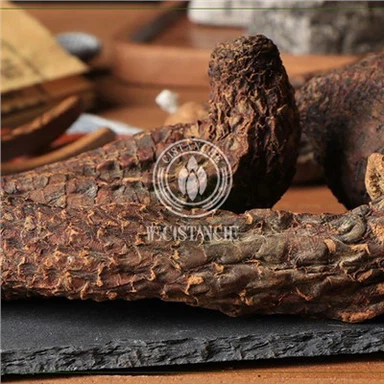
Cistanche deserticola, commonly known as desert ginseng, is a well-known parasitic medicinal plant that mainly grows in arid and semi-arid desert regions across Northwest China. It attaches its root system to the roots of desert shrubs such as Haloxylon ammodendron to obtain water and nutrients for survival. For hundreds of years, this herb has occupied an important position in traditional herbal medicine systems. Local residents and herbal practitioners have used dried Cistanche deserticola stems for tonic purposes, supporting energy maintenance, aging-related physical decline and body regulatory balance.
In modern times, natural plant-derived active substances have attracted widespread attention from pharmacology and neuroscience researchers. Many natural compounds extracted from traditional medicinal plants are screened for their biological activities. Among dozens of chemical ingredients separated from Cistanche deserticola, phenylethanoid glycosides represent the most valuable class of active molecules. Echinacoside is one of the most representative phenylethanoid glycosides inside Cistanche deserticola. A large number of laboratory studies have pointed out that echinacoside owns antioxidant, anti-inflammatory and cell-protective properties. These observed biological effects make scientists curious: could echinacoside extracted from Cistanche deserticola provide protective effects for nerve cells threatened by Parkinson's-related pathological damage?
Parkinson's disease ranks as one of the most common progressive neurodegenerative illnesses worldwide. It mainly affects middle-aged and elderly populations. Typical clinical manifestations include hand tremors at rest, slow physical movement, limb stiffness, and unstable posture. Pathologically, Parkinson's disease is characterized by gradual loss of dopaminergic neurons located in the substantia nigra region of the human brain. When a substantial number of dopaminergic neurons die, the brain cannot synthesize sufficient dopamine neurotransmitters. Dopamine is critical for human motor control. Insufficient dopamine directly triggers the series of motor symptoms observed in Parkinson's patients.
Current mainstream clinical treatments for Parkinson's disease mainly focus on symptom relief. Medicines can supplement dopamine-related substances or adjust brain neurotransmitter balance to improve patients' daily movement performance. However, existing therapies cannot completely stop or reverse the progressive death of nerve cells. Long-term medication may also bring unwanted side effects for some patients. Against this background, researchers keep exploring neuroprotective substances from natural plant sources. The goal is to find candidate compounds that may slow down neuronal damage progress, which is exactly why echinacoside from Cistanche deserticola has become a popular research object in pre-clinical laboratory experiments.
Core Pathological Mechanisms Behind Parkinson-Related Nerve Damage
Oxidative Stress Damages Nerve Cells
Oxidative stress refers to an imbalance status inside human cells: excessive reactive oxygen species (ROS) accumulate, while the body's endogenous antioxidant defense system cannot clear these harmful substances in time. Reactive oxygen species are highly chemically active small molecules. They can attack cell membranes, intracellular proteins and genetic material DNA, triggering cell structure injury and even programmed cell death.
The brain tissue consumes large amounts of oxygen during normal metabolic activities. Brain nerve cells contain abundant polyunsaturated fatty acids in cell membranes. Such biochemical characteristics make brain neurons particularly vulnerable to oxidative stress damage. The substantia nigra area of the brain, where dopaminergic neurons gather, is exposed to higher oxidative pressure. Continuous oxidative stress injury is regarded as one of the key driving factors for dopaminergic neuron loss in Parkinson's disease.
Human cells have built-in antioxidant defense pathways to counteract oxidative stress harm. The Nrf2/HO-1 signaling pathway belongs to one of the most important endogenous antioxidant regulatory systems. Under normal physiological conditions, Nrf2 protein stays in the cytoplasm of cells. When oxidative stress stimulation occurs, Nrf2 protein translocates into the cell nucleus. Inside the nucleus, Nrf2 binds to specific antioxidant response elements on gene segments, further starting the expression of downstream antioxidant-related proteins. HO-1 (heme oxygenase-1) is a classic downstream effector protein activated by Nrf2. Increased HO-1 expression can enhance cell antioxidant capacity, reduce reactive oxygen accumulation and ease oxidative damage to neurons. Once the Nrf2/HO-1 pathway function is suppressed, cells will face greatly raised risks of oxidative injury.
Neuroinflammation Accelerates Neuron Degeneration
Apart from oxidative stress, neuroinflammation is another vital pathological factor promoting Parkinson's disease progression. Microglia are the main immune cells residing inside brain tissue. When brain tissue suffers external stimulation or pathological damage, microglia will be activated. Activated microglia release multiple pro-inflammatory cytokines, including tumor necrosis factor-alpha (TNF-alpha), interleukin-1beta (IL-1beta) and other inflammatory mediators. Moderate inflammatory response helps clear damaged cell fragments. But sustained over-activation of microglia leads to long-term excessive neuroinflammation. Massive pro-inflammatory factors continuously poison surrounding dopaminergic neurons, aggravating neuronal apoptosis loss. Oxidative stress and neuroinflammation also interact mutually: oxidative stress can trigger microglia activation; activated microglia in turn secret more reactive oxygen substances, forming a vicious cycle that continuously worsens nerve tissue damage.

Research Background: Exploring Echinacoside from Cistanche Deserticola as a Neuroprotective Candidate
Echinacoside is a water-soluble phenylethanoid glycoside compound extracted from Cistanche deserticola. Modern separation and purification technology can obtain high-purity echinacoside samples for cell-level and animal-level laboratory testing. Previous preliminary pharmacological researches have confirmed multiple biological properties of echinacoside: it can scavenge free radicals, restrain inflammatory factor release, and reduce cell apoptosis induced by harmful stimuli. These research conclusions gave rise to the core research question: can echinacoside exert protective effects on dopaminergic neurons under Parkinson-mimicking pathological conditions, and whether its working process relates to regulating the Nrf2/HO-1 signaling pathway?
It is critical to emphasize at this point: all relevant experimental data discussed in this article are derived from in-vitro cell culture experiments and in-vivo animal model tests. No completed large-scale human clinical trials have proven that oral intake of Cistanche deserticola or echinacoside can treat or cure Parkinson's disease. Pre-clinical experimental results only provide theoretical direction for follow-up medical research, and cannot be directly equivalent to human therapeutic effects.
Experimental Observation 1: Echinacoside Relieves Oxidative Stress Injury in Nerve-Related Cells
Researchers set up an in-vitro oxidative damage cell model. They applied hydrogen peroxide to induce oxidative stress injury on neuronal-like cells. Hydrogen peroxide can produce abundant reactive oxygen species, simulating the oxidative attack state that neurons endure during Parkinson's pathological progress.
Experimental groups were designed with different concentration gradients of echinacoside. Before hydrogen peroxide damage treatment, cells were pre-incubated with echinacoside of different dosages. Control group cells received no echinacoside intervention and only accepted hydrogen peroxide stimulation. After the experiment processing cycle, multiple detection indicators were measured.
Cell viability detection results showed that hydrogen peroxide treatment significantly lowered cell survival rate. A large quantity of cells went through apoptosis. In contrast, cell groups pre-treated with echinacoside presented obvious improvement in cell survival status. As echinacoside concentration increased within the effective dose range, the protective effect against oxidative damage became more prominent.
Next, researchers detected changes in intracellular reactive oxygen species level. The hydrogen peroxide-damaged group displayed sharp ROS accumulation. Cells pre-processed with echinacoside showed distinctly decreased reactive oxygen content. This phenomenon proved that echinacoside can reduce free-radical load inside damaged cells.
Further molecular biology tests analyzed the protein expression level of the Nrf2/HO-1 pathway. In oxidative-stress-injured cells, the nuclear translocation activity of Nrf2 was restrained, and the expression quantity of downstream antioxidant protein HO-1 dropped markedly. After echinacoside intervention, more Nrf2 protein transferred from cytoplasm to cell nucleus. Meanwhile, the expression level of HO-1 protein went up significantly. These test outcomes suggested that echinacoside may exert anti-oxidative cell protection function partly by activating the Nrf2/HO-1 signaling axis.
When the Nrf2 pathway was artificially inhibited in additional control tests, the neuroprotective effect brought by echinacoside was largely weakened. This result further supports the inference: the Nrf2/HO-1 pathway occupies an indispensable position in echinacoside-mediated antioxidant protection.

Experimental Observation 2: Echinacoside Inhibits Excessive Neuroinflammation Triggered by Activated Microglia
To simulate neuroinflammation in pathological brain environments, researchers built an in-vitro neuroinflammation model. Lipopolysaccharide (LPS) was used to stimulate microglia cells and induce microglia over-activation. Once activated, microglia secrete large volumes of pro-inflammatory cytokines.
In this set of experiments, part of microglia cell samples were co-cultured with echinacoside before LPS stimulation. Later test results indicated that LPS stimulation caused microglia to turn to an over-activated phenotype. The gene and protein expression levels of pro-inflammatory mediators TNF-alpha and IL-1beta rose sharply. However, in groups treated with echinacoside, the secretion and expression of these pro-inflammatory factors were obviously suppressed.
Subsequent co-culture simulation imitated the real-world tissue interaction situation: activated microglia culture medium containing inflammatory toxins was transferred onto dopaminergic neuronal cells. Neurons cultivated with inflammatory medium presented high apoptosis rates. If microglia were pre-treated with echinacoside before LPS stimulation, their culture medium brought much slighter lethal damage to dopaminergic neurons. This observation demonstrates that echinacoside can indirectly protect nerve cells by restraining microglia-derived excessive neuroinflammatory response.
Molecular detection also proved that echinacoside could still promote Nrf2 nuclear translocation and elevate HO-1 expression in the neuroinflammation cell model. It hints that the Nrf2/HO-1 pathway participates in both the anti-oxidation and anti-neuroinflammation effects of echinacoside. By activating this antioxidant pathway, echinacoside helps lower the over-active inflammatory reaction of microglia, so as to cut down inflammatory toxicity toward neurons.
Experimental Observation 3: Echinacoside Shows Neuroprotective Phenomenon in MPTP-Induced Parkinson's Mouse Model
Cell-level experiments can verify compound action mechanisms in controlled laboratory conditions, yet cell culture systems cannot fully replicate complex physiological environments of living organisms. Therefore, researchers adopted MPTP-induced Parkinson's disease mouse model to carry out animal-level verification. MPTP is a chemical toxin that can specifically damage dopaminergic neurons in the substantia nigra of mice brains. After MPTP administration, experimental mice will display motor dysfunction similar to Parkinson's disease symptoms, together with pathological changes of dopaminergic neuron loss.
Experimental mice were divided into multiple groups: normal blank control group, MPTP model group, and several echinacoside administration groups with different dosages. Mice in the model group received MPTP toxin injection to build Parkinson-like pathological conditions. Mice in echinacoside groups obtained intraperitoneal injection of echinacoside solution of corresponding dosage for continuous days, while model group and blank control group got equivalent solvent treatment.
Behavioral evaluation experiments were conducted to observe motor capacity changes of mice. Compared with blank control mice, MPTP-model mice showed obvious movement disorder: shorter movement distance, reduced autonomous activity, slower movement speed, and poorer performance in pole-climbing behavioral tests. Mice that received echinacoside intervention displayed partial improvement in behavioral indicators. Their motor function damage was alleviated in contrast to pure MPTP-model animals.
After behavioral tests finished, mouse brain tissue samples were collected for histological and molecular biological detection. Tissue staining results showed that the quantity of dopaminergic neurons in the substantia nigra area decreased significantly in the MPTP-model group. For mice treated with appropriate-dose echinacoside, the loss of dopaminergic neurons was effectively mitigated, and more nerve cells maintained complete morphological structures.
Biochemical testing of brain tissue further confirmed the mechanism trend observed in cell experiments. In the MPTP-model mouse brain, oxidative stress markers increased, pro-inflammatory cytokine levels went up, and the activity of Nrf2/HO-1 antioxidant pathway was suppressed. After echinacoside administration, brain tissue oxidative stress status improved, inflammatory factor levels dropped, Nrf2 nuclear translocation level increased, and HO-1 protein expression was distinctly up-regulated.
The outcomes from animal experiments are consistent with cell-level findings. It suggests that under pre-clinical animal experimental circumstances, echinacoside can relieve MPTP-triggered dopaminergic neuron loss and improve partial motor symptoms of model mice. Its working mechanism is related to activating the Nrf2/HO-1 pathway, reducing oxidative stress and restraining neuroinflammation inside brain tissue.

Interpretation of Pre-clinical Research Results and Existing Limitations
What Can We Learn From These Experiments?
Series of cell and animal laboratory studies tell us that echinacoside extracted from Cistanche deserticola possesses noticeable neuroprotective potential in pre-clinical test systems. It works through multiple linked pathways: activating Nrf2/HO-1 antioxidant signaling to reduce oxidative stress injury of nerve cells; inhibiting excessive activation of microglia, cutting down the release of harmful pro-inflammatory factors, and mitigating neuroinflammation-mediated neuron damage. Oxidative stress and neuroinflammation are two core pathological links of Parkinson's disease progression. The dual-regulation characteristic of echinacoside makes it a valuable candidate substance for follow-up neurodegenerative disease research.
Cistanche deserticola is a natural herbal resource with long-term usage records. If follow-up human clinical research can verify its related active ingredients' safety and effectiveness, it may bring new ideas for auxiliary research of neurodegenerative diseases in the future. Nevertheless, we must keep a rational attitude toward pre-clinical data.
Important Limitations of Current Research
First of all, all data above are obtained from in-vitro cell culture and MPTP mouse model. Animal models cannot perfectly simulate the complete pathological course of human Parkinson's disease. Human neurodegeneration progress is slow, multi-factor driven, and affected by aging, genetics, living habits and other variables. The toxin-induced mouse model only partially simulates partial pathological features.
Secondly, there are huge differences in drug absorption, metabolism and effective dose between experimental animals and human bodies. The effective dosage applied in cell and mouse experiments cannot be directly converted into human oral dosage. We cannot guarantee that taking Cistanche deserticola products will reach enough echinacoside concentration inside the human brain to produce similar protective effects. The blood-brain barrier is another key obstacle. Whether oral echinacoside can pass through the human blood-brain barrier in sufficient quantity to act on brain nerve tissue still needs more verification.
Thirdly, there is still a lack of large-sample, randomized, double-blind human clinical trial data. Up to now, there is no reliable clinical evidence proving that consuming Cistanche deserticola or echinacoside can prevent, treat or reverse Parkinson's disease in human patients.
In addition, Cistanche deserticola raw material quality varies from origin, planting environment and processing technology. The content of echinacoside in different commercial Cistanche products differs greatly. Unstandardized products may not contain enough active ingredients. Potential safety risks including herb-drug interaction also deserve attention. If patients are taking prescription medicines, random intake of herbal supplements may bring unknown interaction consequences.
Frequently Asked Questions
Does eating Cistanche deserticola cure Parkinson's disease?
No. At present, there is no clinical evidence proving that eating Cistanche deserticola can cure Parkinson's disease. The existing positive results are only observed in cell experiments and animal model studies. These pre-clinical findings cannot be directly extrapolated to human therapeutic effects. Parkinson's disease is a complex degenerative disorder. Patients should strictly follow the guidance of professional neurologists and take standard clinical treatment. Herbal materials cannot replace formal medical intervention.
Is echinacoside the only active compound inside Cistanche deserticola?
No. Cistanche deserticola contains a variety of phenylethanoid glycosides, polysaccharides and other plant metabolites. Echinacoside is the most widely-studied component for neuroprotection research, yet other ingredients may also exert synergistic biological effects. More comparative research is needed to clarify the comprehensive function of the whole-herb extract versus single isolated compound.
Can healthy people take Cistanche deserticola-related supplements for neuroprotection prevention?
There is insufficient human evidence to support preventive oral supplementation for neuroprotection purpose. Individual physical conditions, drug interactions and product quality should be fully considered before taking any herbal supplement. It is strongly recommended to consult a qualified medical practitioner before starting long-term intake.

Medical Disclaimer
This article is a popular science introduction based on published pre-clinical laboratory research data only. It is for educational and reference purposes and does not constitute any medical advice, diagnosis or treatment recommendation. None of the statements herein have been evaluated by medical regulatory authorities. Cistanche deserticola and echinacoside cannot replace prescription medication for Parkinson's disease or other neurological disorders. If you suffer from any disease, please seek professional medical help from licensed physicians.