Cistanche Deserticola, Lockyang And Morinda Officinalis: How To Accurately Distinguish Them
Oct 31, 2024
1, The distinction between Cistanche deserticola and Cynomorium songaricum

Chinese medicinal materials
Although Cistanche deserticola and Cynomorium songaricum are similar, they differ in terms of parasites, color, composition, and efficacy.
(1) Parasites are different
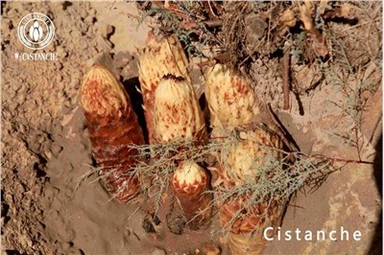
Most of the Cistanche deserticola parasitizes on the Haloxylon ammodendron tree, which serves as its host and provides the necessary nutrients and environment for its growth. And Lockyang prefers to parasitize on the white thorns of plants in the desert. These different parasitic organisms determine their differences in growth environment and nutrient acquisition methods.
(2) Different colors
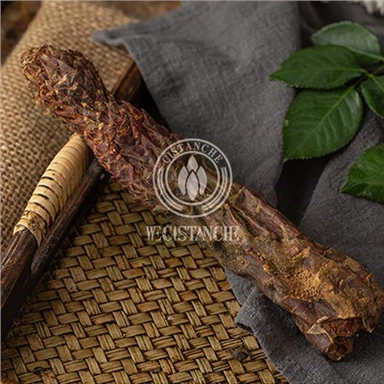
The color of Cistanche deserticola is mostly dark yellow, and its color does not change significantly after processing. In contrast, Lockyang is mostly dark purple or red, and this color difference can be distinguished with the naked eye even if not a professional Chinese medicine practitioner. In the market, it is relatively easy to distinguish between the two through the difference in color.
(3) Different components
The highest content in Suoyang is starch, which makes it suitable for brewing wine. At the same time, Lockyang also contains a large amount of Lockyang glycosides, which are relatively useful. The main components of Cistanche deserticola are alkaloids and brassinosteroids, in addition to lignin and motherwort alkaloids. These different ingredients determine their differences in efficacy.
(4) Different effects
The main function of Cistanche deserticola is to tonify the kidneys and strengthen yang, which is helpful for the recovery of male sexual dysfunction and can also enhance the body's immunity. Although it has a certain anti-aging effect, it is not very strong. Lockyang not only tonifies the kidneys and strengthens yang, but also enhances beauty and beauty, making it a great anti-aging product. For example, in some beauty and health formulas, Lockyang is often used to make skincare or health products to exert its anti-aging effect.
In short, although Cistanche deserticola and Cynomorium songaricum have similarities in appearance and efficacy, by carefully observing their differences in parasites, color, composition, and efficacy, we can accurately distinguish these two Chinese medicinal herbs. When using, appropriate Chinese medicinal herbs should be selected under the guidance of a doctor according to one's own needs and physical condition.

chinese herb cistanche
2, The difference between Cistanche deserticola and Morinda officinalis
(1) Different growth environments
Cistanche deserticola mainly grows in desert areas and parasitizes on desert plants such as Haloxylon ammodendron. And Morinda officinalis mainly grows in tropical and subtropical regions, commonly found in moist environments such as valleys and stream banks.
(2) The efficacy focuses on different aspects
Cistanche deserticola is mainly effective in tonifying the kidneys, promoting yang, moistening the intestines, and promoting bowel movements. For constipation caused by Yang deficiency, especially in elderly people with symptoms of frequent urination and urgency, using Cistanche deserticola is more suitable. Morinda officinalis is mainly used to tonify the kidneys, promote yang, dispel wind and dampness. It has similarities with Cistanche deserticola in the treatment of erectile dysfunction, frequent urination, less abdominal cold pain, lower back and knee soreness, weakness, etc., but Morinda officinalis focuses more on dispelling wind and dampness, and can be used for lower limb cold dampness and pain.
(3) Compositional differences
The main components of Cistanche deserticola are alkaloids, coumarin, lignin, and motherwort alkaloids. Morinda officinalis is rich in various nutrients, such as protein, amino acids, polysaccharides, trace elements, etc.
(4) Suitable for different audiences
Cistanche deserticola is suitable for people with kidney yang deficiency, intestinal dryness and constipation. Morinda officinalis is more suitable for people with insufficient kidney yang and accompanied by rheumatism and lower back and knee pain. It should be noted that those with yin deficiency and excessive fire, constipation caused by heat accumulation, and loose stools and diarrhea should avoid taking Cistanche deserticola; Individuals with Yin deficiency and excessive fire, blood deficiency and blood heat, as well as pregnant women, should not take Morinda officinalis in large quantities for a long time.
In short, although both Cistanche deserticola and Morinda officinalis have the effect of tonifying the kidneys and promoting yang, there are certain differences in their growth environment, emphasis on efficacy, composition, and applicable population. When using, appropriate Chinese herbal medicines should be selected under the guidance of a doctor based on one's specific situation to achieve better therapeutic effects.
3, The difference between Lockyang and Morinda officinalis
(1) Different growth environments
Lockyang mainly grows in desert grasslands, grassland desertification and desert areas, and often parasitizes on plants such as white thorns. Morinda officinalis mainly grows in tropical and subtropical regions, commonly found in moist environments such as valleys and streams.
(2) Difference in efficacy
Suoyang has a sweet taste and a warm nature. It belongs to the liver, kidney, and large intestine meridians and has the effects of tonifying kidney yang, nourishing essence and blood, moistening the intestines, and promoting bowel movements. It is suitable for diseases such as insufficient kidney yang, deficiency of essence and blood, weakness of the waist and knees, impotence and slippery semen, and intestinal dryness and constipation. Morinda officinalis has a sweet and spicy taste, a slightly warm nature, and is beneficial for the kidneys and liver meridians. It has the effects of tonifying kidney yang, strengthening muscles and bones, and dispelling wind and dampness. It is suitable for conditions such as erectile dysfunction, nocturnal emission, uterine cold infertility, menstrual disorders, cold pain in the lower abdomen, rheumatism and rheumatism, and weak muscles and bones. It can be seen that Lockyang tends to moisten the intestines, promote bowel movements, and nourish essence and blood, while Morinda officinalis tends to dispel rheumatism and strengthen muscles and bones.

Cistanche deserticola efficacy-Tonifying kidney
Click here to view Cistanche for Kidney disease products
【Ask for more】 Email:cindy.xue@wecistanche.com / Whats App: 0086 18599088692 / Wechat: 18599088692
(3) Different components
The most abundant substance in Lockyang is starch, which also contains a large amount of Lockyang glycosides. Morinda officinalis is rich in various nutrients, such as protein, amino acids, polysaccharides, trace elements, etc.
(4) Suitable for different audiences
Lockyang is suitable for people with insufficient kidney yang, deficiency of essence and blood, and constipation caused by intestinal dryness. Individuals with yin deficiency and excessive fire, spleen deficiency leading to diarrhea, and constipation due to excess heat are prohibited from taking it. Morinda officinalis is more suitable for people with insufficient kidney yang and accompanied by rheumatism and lower back and knee pain. Those with yin deficiency and excessive fire should avoid using it.
In summary, there are certain differences between Lockyang and Morinda officinalis in terms of growth environment, efficacy, composition, and applicable population. When using, appropriate Chinese herbal medicines should be selected under the guidance of a doctor based on one's specific situation to achieve better therapeutic effects.
4, Summary
As common Chinese medicinal herbs, Cistanche deserticola, Cynomorium songaricum, and Morinda officinalis have some similarities in efficacy, but there are significant differences in multiple aspects. Accurately distinguishing them is crucial for the proper use of traditional Chinese medicine.

cistanche supplement near me
From the perspective of growth environment, Cistanche deserticola mainly grows in desert areas and parasitizes on Haloxylon ammodendron trees; Lockyang grows in desert grasslands and other areas, parasitizing on white thorns; Morinda grows in humid environments such as valleys and streams in tropical and subtropical regions. The different growth environments determine the ways in which they obtain nutrients and the differences in their composition.
In terms of efficacy, Cistanche deserticola is mainly used to tonify the kidneys and strengthen yang, moisten the intestines and promote bowel movements, which can help male sexual dysfunction and enhance immunity; In addition to tonifying the kidneys and strengthening yang, Suoyang can also promote beauty, anti-aging, and have the effect of moistening the intestines and promoting bowel movements; Morinda officinalis is used to nourish kidney yang, strengthen muscles and bones, dispel wind and dampness, and focuses more on treating rheumatism, lower back and knee pain.
In terms of composition, Cistanche deserticola mainly contains alkaloids, coumarin, lignin, and motherwort alkaloids; The main components of Lockyang are starch and Lockyang glycosides; Morinda officinalis is rich in protein, amino acids, polysaccharides, trace elements, and more.

Cistanche experience
The target audience also varies. Cistanche deserticola is suitable for people with kidney yang deficiency, intestinal dryness and constipation; Lockyang is suitable for people with insufficient kidney yang, deficiency of essence and blood, and constipation caused by intestinal dryness. However, it is contraindicated for those with yin deficiency and excessive fire, spleen deficiency and diarrhea, and constipation caused by excess heat; Morinda officinalis is more suitable for people with insufficient kidney yang and accompanied by rheumatism, waist and knee pain. It should be avoided for those with yin deficiency and excessive fire.
When using these traditional Chinese medicinal herbs, it is important to choose according to one's specific situation under the guidance of a doctor, in order to avoid adverse effects on the body caused by misuse or abuse. Only by accurately distinguishing and using Cistanche deserticola, Cynomorium songaricum, and Morinda officinalis in a reasonable manner can their medicinal value be fully utilized to safeguard our health.