Cistanche Deserticola Market Size, Industry Trends, And Sustainable Growth Strategy: A Case Study Of Luopu County, Hotan Prefecture, Xinjiang, China
Jan 14, 2026
Executive Summary
Cistanche deserticola, known as "Desert Ginseng", is an endangered yet highly valued medicinal herb in Traditional Chinese Medicine (TCM). Xinjiang's Luopu County, located on the southern fringe of the Taklimakan Desert, has become a global center for Cistanche production, thanks to its unique desert climate, large-scale afforestation, and national-level geographical indication (GI) protection. This report provides a comprehensive overview of the Cistanche industry's current landscape, market size, growth potential, and development challenges, with a special focus on Wecistanche, a Hotan-based enterprise that exemplifies high-quality, cost-effective deep processing and international trade capabilities.

1. Cistanche and Its Global Significance
Cistanche is a parasitic plant in the Orobanchaceae family, renowned in TCM for its ability to nourish the kidneys, replenish essence, and combat fatigue. Of the 22 known species globally, China is home to five, with Cistanche tubulosa and Cistanche deserticola being the most commercially cultivated. In 2019, Cistanche deserticola was included in China's pilot list of food-medicine homologous materials, opening new regulatory doors for the industry.
Cistanche base in Xinjiang Hetian

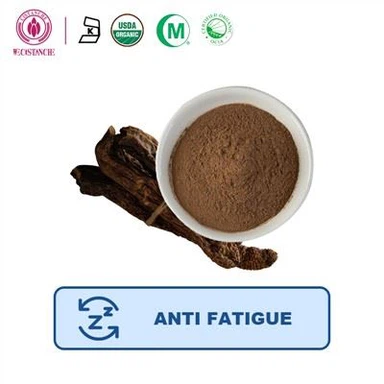
Cistanche extract manufactorer in Hetian, China-the origin of cistanche

Supportive Service Of Wecistanche-For more details about cooperation
Email:wallence.suen@wecistanche.com
2. Market Size and Industry Landscape in Luopu County
2.1 Production Scale
Hotan Prefecture has pioneered the integration of desert greening and medicinal herb cultivation by planting over 40,000 hectares of saxaul and tamarisk, with 27,000 hectares inoculated with Cistanche. This yields approximately 7,500 tons of dried Cistanche annually, accounting for 75% of China's output.
In Luopu County, the 2024 planting area reached 2,281.1 hectares, producing 2,579.16 tons of fresh Cistanche, translating to an industry value of approximately $4.07 million USD.
3. Competitive Advantages of Luopu County
3.1 Ideal Natural Conditions
With 74.6% desert coverage, Luopu enjoys a hot, arid desert climate with high solar radiation, large diurnal temperature variation, and long frost-free periods-ideal for desert medicinal crops such as Cistanche, fennel, and safflower.
3.2 High-Quality Raw Material
Cistanche tubulosa in Luopu is cultivated under wild-simulated, organic conditions without chemical inputs. Rich in Echinacoside and Verbascoside, the plant meets the green agricultural standards, ensuring both efficacy and safety.
3.3 Socioeconomic Impact
With 218,700 rural residents, Luopu boasts a large, underemployed labor pool. As a "lazy crop" with simple management needs, Cistanche offers farmers a sustainable path to income growth and rural revitalization.
4. Cost-Benefit Analysis and Yield
| Item | Value (Per Hectare) | USD Equivalent |
|---|---|---|
| Seed cost | ¥4,500 | $652 |
| Irrigation & labor | ¥9,180 | $1,330 |
| Total cost | ¥13,680 | $1,982 |
| Yield (fresh) | 3,000–4,500 kg | - |
| Market price (fresh) | ¥9–24/kg | $1.30–$3.48/kg |
| Gross income | ~¥75,000 | ~$10,869 |
| Net profit | ~¥60,000 | ~$8,695/ha |
Autumn harvests are priced higher due to better bioactive content. A 4:1 shrink ratio is used for drying.
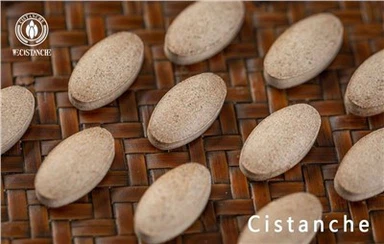
Cistanche extract manufactorer in Hetian, China-the origin of cistanche

5. Wecistanche: A Model of Local Industrial Upgrading
5.1 Company Overview
Wecistanche, headquartered in Hotan Prefecture, is a leading enterprise in deep processing of Cistanche tubulosa, with an annual capacity of 10,000 tons. Its product portfolio includes:
Premium dried Cistanche slices
Active ingredient extracts
Nutraceutical raw materials for export and OEM
5.2 Cost Control and Quality Strategy
Wecistanche operates next to the largest raw material base in China, allowing the company to purchase fresh Cistanche at lower-than-market prices, directly from farmers. This reduces procurement and logistics costs significantly.
Rather than compromising quality through additives or fillers, Wecistanche leverages its cost advantage to:
Use only the highest-grade raw material
Avoid all non-medicinal excipients
Comply with international food safety and pharmaceutical standards
This positions Wecistanche as a premium supplier offering pure, high-efficacy products to discerning global buyers.
5.3 Export and Global Reach
With strong ties to local authorities and experience navigating domestic compliance systems, Wecistanche is uniquely capable of:
Facilitating export documentation
Obtaining inspection and quarantine certificates
Accelerating cross-border trade
It is actively expanding in markets such as Europe, Southeast Asia, and the Middle East, offering OEM partnerships and private-label solutions.

6. Industry Challenges
6.1 Oversupply and Ecological Pressure
National production exceeds 7,000 tons/year, while demand is only ~4,000 tons, leading to falling prices.
Shrub afforestation increases ecological water use by 70 million m³/year, straining fragile ecosystems.
6.2 Weak Processing Chain
Most enterprises lack R&D capacity and product differentiation.
Heavy reliance on raw exports leaves little room for premium margins.
6.3 Regulatory Bottlenecks
Cistanche tubulosa is not yet listed as a food-medicine homologous item by the National Health Commission.
Licensing for health food production and international sales remains difficult for smaller firms.
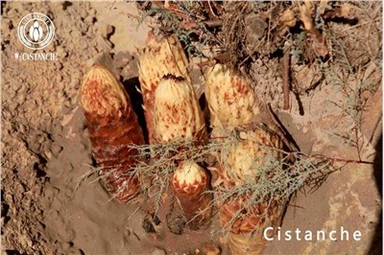
Cistanche tubulosa bollosum in desert

7. Recommendations for Sustainable Development
7.1 Foster Sand-Based Industrial Ecosystems
Promote efficient irrigation systems to balance ecology and productivity.
Stabilize planting area while enhancing per-hectare yield and quality.
7.2 Support Leading Enterprises
Encourage investment in Wecistanche and similar firms to upgrade value chains.
Offer tax incentives, R&D funding, and infrastructure support.
7.3 Reform Policy and Licensing
Accelerate approval of Cistanche tubulosa as a food-medicine homologous item.
Simplify production license and export certification procedures.
7.4 Build Global Brand Identity
Certify Cistanche as an organic green product.
Promote via e-commerce, international expos, and cross-border livestreaming.
Position "Hotan Cistanche" as a premium regional brand.
Wecistanche base in Hetian, China

8. Conclusion
The Cistanche industry in Luopu County exemplifies a successful model of desert economy, ecological restoration, and rural revitalization. With enterprises like Wecistanche taking the lead in deep processing, quality assurance, and global trade, the region is poised to become a world-class hub for medicinal plant innovation. Strategic policy support, international branding, and sustainable water management will be key to unlocking its full economic and ecological potential.
🔗 To explore partnerships, OEM services, or bulk export of premium Cistanche products, visit:
www.xjcistanche.com
References
[1] Ni H, Jia X G, Qing D G, et al. Research, Development and Application of Key Technologies for Industrialization of Cistanche tubulosa, a Unique Resource in Xinjiang [Z]. Urumqi: Xinjiang Institute of Chinese Materia Medica and Ethnic Materia Medica, 2016.
[2] Niu Y Q, Zhao Y, Yu X M, et al. Analysis of Bioactive Substances and Habitat Differences of Cistanche tubulosa in Xinjiang [J]. Journal of Light Industry, 2022, 37(6): 25-33.
[3] Wu M, Shen F. Current Situation and Countermeasures of Cistanche Industry Development in Xinjiang [J]. Xinjiang Forestry, 2022(3): 24-26.
[4] Ge T J, Lv R H, Wang F, et al. Cultivation Technology of Cistanche tubulosa in Northern Xinjiang [J]. Shaanxi Forest Science and Technology, 2021, 49(3): 110-112.
[5] Ma X L, Zhao G. Current Situation of Cistanche Industry and Key Points of Cultivation Technology [J]. Special Economic Animals and Plants, 2022, 25(8): 150-152.
[6] Ge T J, Lv R H, Wang F, et al. Cultivation Technology of Cistanche tubulosa in Northern Xinjiang [J]. Shaanxi Forest Science and Technology, 2021, 49(3): 110-112.
[7] Zhang J, Zhu T T, Jin L, et al. Research Progress on High Quality Formation of Cistanche [J]. Chinese Journal of Experimental Traditional Medical Formulae, 2023, 29(18): 259-266.
[8] Cao H. Xinjiang Cistanche Enters the New Food Track [N]. Xinjiang Daily (Chinese Edition), 2024-01-22(5).
[9] Wang X. Germplasm Collection and Quality Evaluation of Cistanche tubulosa in Xinjiang [D]. Beijing: Peking Union Medical College, 2017.
[10] Palhati Wutuke, Dilibai'er Wutuke, Dilimulati. Current Situation, Popularization and Application of Cistanche Planting Technology in Xinjiang [J]. Xinjiang Forestry, 2006(3): 34-35.