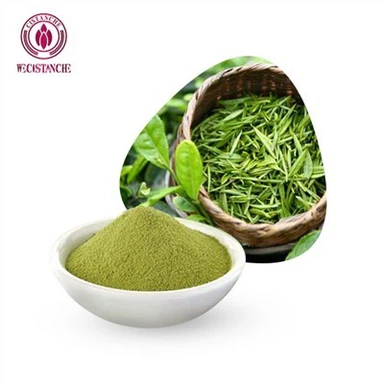
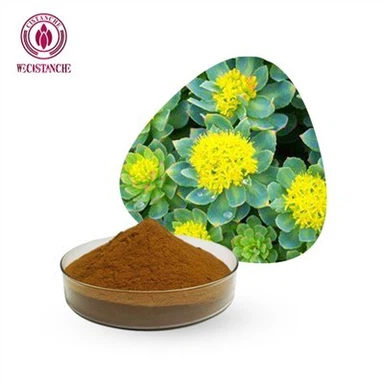
Cistanche Tubulosa Extract Against Chronic Nonbacterial Prostatitis (CP/CPPS)
Aug 03, 2026
Network Pharmacology and Molecular Docking Study to Uncover Mechanisms of Cistanche tubulosa Extract against Chronic Nonbacterial Prostatitis (CP/CPPS)
Abstract
Objective: This study systematically predicts the potential bioactive compounds, core target proteins and molecular mechanisms of Cistanche tubulosa against chronic nonbacterial prostatitis via network pharmacology and molecular docking simulations. Methods: Active ingredients and corresponding targets of Cistanche tubulosa were screened using TCMSP, PubChem, SwissTargetPrediction and other public databases. Disease-associated targets for chronic nonbacterial prostatitis were retrieved from GeneCards and OMIM databases. Intersection targets of herb and disease were imported into the STRING platform to construct the Protein–Protein Interaction (PPI) network. The DAVID database was adopted for Gene Ontology (GO) functional enrichment and Kyoto Encyclopedia of Genes and Genomes (KEGG) pathway enrichment analyses. Cytoscape software was used to build a "Herb–Compound–Target–Pathway–Disease" network for screening core targets and key signaling pathways. AutoDock Vina and PyMOL were utilized to perform molecular docking validation between representative bioactive compounds and hub targets. Results: A total of 24 potential bioactive compounds from Cistanche tubulosa were identified, and 45 overlapping targets linked to its intervention against chronic nonbacterial prostatitis were obtained. PPI network analysis revealed that TNF, Akt1, EGFR, STAT3 and MAPK1 act as core hub targets. GO and KEGG enrichment results indicated that the therapeutic effects of Cistanche tubulosa are mainly associated with biological processes including positive regulation of PI3K signaling, negative regulation of apoptosis, and cellular response to lipopolysaccharide. Key enriched signaling pathways cover the HIF-1 pathway, AGE-RAGE signaling pathway in diabetic complications, and prostate cancer-related pathways. Molecular docking results demonstrated that echinacoside, acteoside and cistanoside A exhibit binding energies lower than −6.0 kcal/mol when interacting with Akt1, EGFR and TNF, which confirms robust binding affinity. Conclusion: Cistanche tubulosa exerts protective effects against chronic nonbacterial prostatitis mainly through bioactive constituents including echinacoside, acteoside and cistanoside A. These compounds modulate hub proteins such as TNF, Akt1, EGFR and STAT3, and coordinately regulate HIF-1, AGE-RAGE and other signaling pathways. By delivering anti-inflammatory, immunomodulatory and anti-apoptotic effects, these compounds jointly suppress the pathological progression of chronic nonbacterial prostatitis.
Keywords: Cistanche tubulosa; chronic nonbacterial prostatitis; network pharmacology; molecular docking; mechanism of action; echinacoside; acteoside; phenylethanoid glycosides

Introduction
Chronic nonbacterial prostatitis, clinically classified as Chronic Prostatitis/Chronic Pelvic Pain Syndrome (CP/CPPS), is one of the most prevalent urinary disorders affecting men, accounting for roughly 90% of all prostatitis cases. Typical symptoms include persistent perineal discomfort, pelvic pain and urinary dysfunction, which severely impair patients' quality of life and mental wellbeing. In Traditional Chinese Medicine (TCM), this condition falls under the diagnostic categories of "Essence Turbidity" and "Sperm Leakage". Its pathogenesis is generally attributed to kidney essence deficiency, damp-heat accumulation and blood stasis.
Conventional Western treatments mainly rely on alpha-blockers and nonsteroidal anti-inflammatory drugs to relieve symptoms. However, these approaches are limited by drug resistance, noticeable side effects and high recurrence rates, lacking targeted and stable therapeutic regimens. Importantly, clinical and epidemiological evidence confirms that sustained chronic inflammation within prostate tissue serves as a key driver of prostate cancer progression. The inflammatory microenvironment triggers oxidative stress, accelerates cell proliferation and inhibits normal apoptosis, promoting malignant transformation of prostate epithelial cells. Therefore, effective early intervention for chronic nonbacterial prostatitis not only alleviates uncomfortable symptoms but also helps curb the risk of prostate cancer development.
Cistanche tubulosa, commonly known as Desert Ginseng, is the dried fleshy stem of Cistanche tubulosa, a holoparasitic plant of the Orobanchaceae family. According to TCM theories, it carries sweet and salty flavors with warm properties, acting primarily on the Kidney and Large Intestine meridians. It tonifies kidney yang, replenishes essence and blood, and has been valued for millennia to support male reproductive and urinary health.
Key Advantage: Among commercially available Cistanche varieties, extracts derived from Cistanche tubulosa naturally contain significantly higher concentrations of phenylethanoid glycosides (echinacoside, acteoside) compared with Cistanche deserticola, delivering stronger pharmacological activity. Our factory specializes in standardized Cistanche tubulosa raw material extracts.
Click Picture To Get More Details


Supportive Service Of Wecistanche-For more details about cooperation
Email:wallence.suen@wecistanche.com
Modern pharmacological research has verified that Cistanche tubulosa is abundant in phenylethanoid glycosides, polysaccharides, iridoids and lignans. These compounds exert anti-inflammatory, antioxidant, immunoregulatory and anti-apoptotic bioactivities. Its core TCM function of tonifying kidney essence perfectly matches the root pathogenesis of kidney deficiency and chronic pelvic inflammation observed in CP/CPPS patients, highlighting its great therapeutic potential for prostate health support.
Traditional Chinese herbal medicines work via a characteristic multi-compound, multi-target and multi-pathway mode of action. This study integrates network pharmacology and molecular docking to systematically screen bioactive compounds and core molecular targets of Cistanche tubulosa. We construct interactive biological networks and conduct pathway enrichment analysis. Molecular docking further verifies the direct binding capacity between signature compounds and key protein targets. This research aims to clarify the molecular mechanism by which Cistanche tubulosa relieves chronic nonbacterial prostatitis. It provides scientific evidence to guide clinical application and support new dietary supplement and herbal drug development targeting prostate wellness.

1 Materials and Methods
1.1 Screening of Bioactive Compounds and Corresponding Targets of Cistanche tubulosa
We searched the TCMSP database using "Cistanche tubulosa" as the keyword to identify candidate bioactive compounds. Screening thresholds were set as Oral Bioavailability (OB) ≥30% and Drug-Likeness (DL) ≥0.18 to retain compounds with favorable absorption and druggability. The chemical structure and canonical SMILES strings of each candidate compound were retrieved from PubChem.
All SMILES data were imported into the SwissADME platform. Only compounds graded "High" for gastrointestinal absorption and satisfying at least two drug-likeness criteria were retained as core bioactive ingredients for CP/CPPS intervention. Potential protein targets of qualified compounds were predicted using the SwissTargetPrediction database based on canonical SMILES information.
1.2 Collection of Disease Targets for Chronic Nonbacterial Prostatitis
We used the keyword "nonbacterial prostatitis" to retrieve disease-related targets from the GeneCards and OMIM databases. Duplicate entries were removed to establish a unified target dataset for chronic nonbacterial prostatitis.
1.3 Identification of Overlapping Herb–Disease Targets
Target datasets of Cistanche tubulosa bioactive compounds and chronic nonbacterial prostatitis were mapped and compared. The Venny 2.1.0 online tool was used to generate Venn diagrams and screen overlapping targets, which represent the potential therapeutic targets of Cistanche tubulosa against CP/CPPS.
1.4 Construction of Protein–Protein Interaction (PPI) Network
Overlapping targets were uploaded to the STRING database. The organism was set as Homo sapiens, confidence threshold = 0.400, with all other parameters kept default. The resulting PPI network was exported for subsequent visualization and topological analysis.
1.5 GO Function and KEGG Pathway Enrichment Analysis
The DAVID database was applied to interpret biological functions and signaling pathways enriched by overlapping targets. Species was set as Homo sapiens, with the significance threshold P < 0.05. The top 10 enriched GO terms and top 20 KEGG pathways were selected. The Bioinformatics online platform was used to visualize results via bar charts and bubble plots.
1.6 Construction of "Herb–Compound–Target–Pathway–Disease" Network
All standardized target data were imported into Cytoscape 3.10.0 to build a multi-layer network. Node categories include Herb (Cistanche tubulosa), Bioactive Compound, Target Protein, Signaling Pathway and Disease (chronic nonbacterial prostatitis). Topological parameters were calculated to identify hub compounds and core targets. Nodes were colored by category, and network layout was optimized to display interactive relationships intuitively.
1.7 Molecular Docking Validation
To verify predictions from network pharmacology, we selected the top 5 hub targets from PPI network (ranked by degree value) and top 3 bioactive compounds of Cistanche tubulosa for molecular docking. Three-dimensional crystal structures of target proteins were downloaded from the RCSB PDB database. PyMOL software was used for preprocessing: removing water molecules and co-crystallized native ligands. Molecular structures of bioactive compounds were downloaded from PubChem and converted into SDF format.
AutoDock Vina was adopted for molecular docking with default parameters. Binding affinity was used to evaluate ligand-receptor interaction strength; binding energy ≤ −5.0 kcal/mol was defined as effective binding. PyMOL was used to visualize docking poses and intermolecular interactions.
2 Results
2.1 Screening of Bioactive Compounds and Targets of Cistanche tubulosa
A total of 24 bioactive compounds were screened from TCMSP, mainly phenylethanoid glycosides, polysaccharides, iridoids and lignans. After target prediction via SwissTargetPrediction and deduplication, 604 potential protein targets linked to these compounds were collected.
2.2 Screening of Disease Targets for Chronic Nonbacterial Prostatitis
After merging and deduplicating data from GeneCards and OMIM, 553 disease-associated targets for chronic nonbacterial prostatitis were obtained. Target mapping generated 45 overlapping herb–disease targets, visualized in a Venn diagram.
2.3 Construction and Analysis of PPI Network
The 45 overlapping targets were imported into STRING, forming a PPI network containing 42 nodes and 658 edges, visualized in Cytoscape. Hub targets with the highest degree values included TNF, Akt1, Bcl-2, EGFR and PTGS2. Other key nodes with high connectivity were STAT3, mTOR, MAPK3, PPARG and GSK3B. These proteins are speculated to serve as core regulatory nodes for the protective effects of Cistanche tubulosa against CP/CPPS.
2.4 GO and KEGG Enrichment Analysis of Core Targets
GO enrichment analysis identified 350 Biological Process (BP) entries, 56 Cellular Component (CC) entries and 59 Molecular Function (MF) entries. Top biological processes included positive regulation of PI3K signaling, negative regulation of apoptotic process and cellular response to lipopolysaccharide. Major cellular components covered cytosol, cytoplasm, axons and early endosomes; dominant molecular functions contained protein kinase activity and serine/threonine kinase activity.
KEGG pathway enrichment yielded 142 significantly enriched pathways (P < 0.05). The top 20 pathways were selected for bubble plot visualization, including the HIF-1 signaling pathway, AGE-RAGE signaling pathway, prostate cancer pathway, PD-L1 expression and PD-1 checkpoint pathway in cancer, and C-type lectin receptor signaling pathway. These pathways participate broadly in inflammation, immune balance, cell proliferation and apoptosis, confirming that Cistanche tubulosa regulates CP/CPPS pathology through multi-pathway coordination.
2.5 "Herb–Compound–Target–Pathway–Disease" Network Analysis
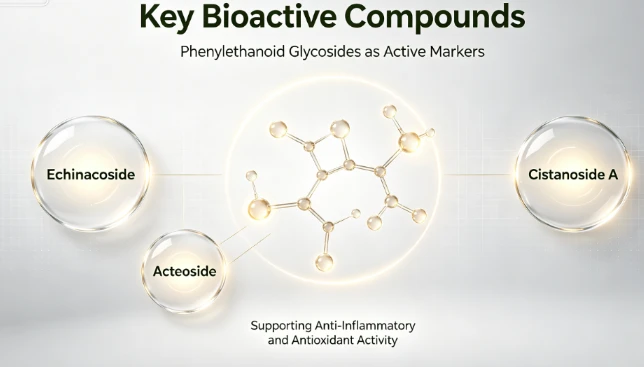
The top 10 enriched KEGG pathways, associated targets and corresponding bioactive compounds were imported into Cytoscape. Compounds with the highest degree values were echinacoside, acteoside and cistanoside A, recognized as primary active constituents of Cistanche tubulosa. Key targets included mTOR, MAPK1, MAPK3, EGFR, Akt1 and STAT3. Highly connected pathways were prostate cancer pathway, HIF-1 signaling pathway, AGE-RAGE signaling pathway and PI3K/Akt related signaling.
The network demonstrated that a single compound of Cistanche tubulosa can bind multiple targets to modulate HIF-1, AGE-RAGE and PI3K/Akt cascades to deliver anti-inflammatory, immunomodulatory and anti-apoptotic benefits. Meanwhile, different compounds can simultaneously act on multiple nodes within the same pathway to achieve synergistic efficacy. This strongly supports the multi-component, multi-target, multi-pathway regulatory characteristic of Cistanche tubulosa.
2.6 Molecular Docking Results
Docking simulations between core compounds and hub targets confirmed reliable binding activity: Echinacoside showed binding energies of −9.4 kcal/mol (Akt1) and −8.8 kcal/mol (EGFR); Acteoside achieved binding energies of −9.6 kcal/mol (Akt1) and −8.8 kcal/mol (EGFR); Cistanoside A reached −9.2 kcal/mol (Akt1) and −8.3 kcal/mol (EGFR). All binding energies were below −6.0 kcal/mol, indicating stable binding interactions between bioactive compounds and target proteins.
3 Discussion
Chronic nonbacterial prostatitis (CP/CPPS) is a refractory male urinary disorder. Persistent chronic inflammatory microenvironment not only reduces patients' quality of life, but also raises long-term risks of prostate cancer progression. From the TCM perspective, its pathology arises from damp-heat stagnation combined with kidney essence deficiency, which aligns perfectly with the traditional application of Cistanche tubulosa as a kidney-tonifying essence herb. Contemporary pharmacological evidence confirms that Cistanche tubulosa modulates inflammatory signaling networks via multi-compound synergism, balancing the inflammatory microenvironment and slowing CP/CPPS progression.
This study adopted network pharmacology combined with molecular docking to systematically dissect the bioactive compounds, core targets and signaling pathways responsible for the protective effects of Cistanche tubulosa against chronic nonbacterial prostatitis.
Among the 24 identified bioactive compounds, echinacoside and acteoside (primary phenylethanoid glycosides) exhibit the highest connectivity within the network. Multiple studies have validated the anti-inflammatory potency of phenylethanoid glycosides, capable of suppressing pro-inflammatory factor release and alleviating inflammatory infiltration within prostate tissue. Echinacoside inhibits NF-κB cascades to downregulate TNF-α, IL-6 and other pro-inflammatory cytokines. Acteoside regulates the PI3K/Akt pathway to suppress inflammatory responses and modulate cellular apoptosis. As signature compounds of Cistanche tubulosa, phenylethanoid glycosides function synergistically with polysaccharides and iridoids to remodel the disordered inflammatory microenvironment in CP/CPPS patients.
Commercial Note: Cistanche tubulosa contains far higher phenylethanoid glycoside concentrations than other cistanche species, making extracts of this variety the superior raw material for prostate-support supplement formulations.
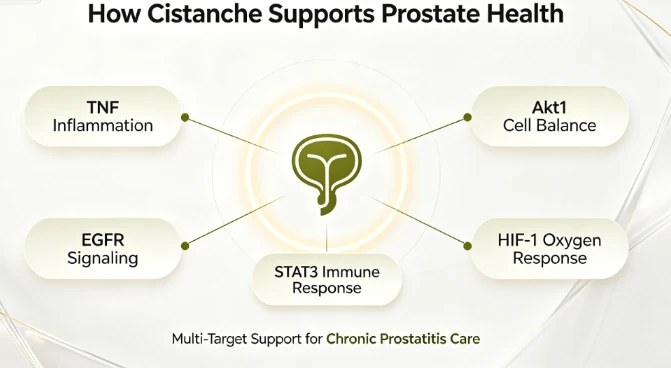
PPI network analysis identified TNF, Akt1, EGFR, STAT3 and MAPK1 as core therapeutic targets. TNF acts as a central driver of inflammatory cascades in CP/CPPS, activating NF-κB and MAPK pathways to trigger massive secretion of IL-1β, IL-6 and other inflammatory mediators. Akt1 and EGFR are vital kinases governing cell proliferation, differentiation and apoptosis. Suppression of excessive EGFR activation relieves prostate inflammation and tissue fibrosis. Chronic prostatitis triggers prostate epithelial hyperplasia and tissue remodeling; overactivated EGFR and STAT3 amplify inflammatory signaling and represent critical biomarkers linking chronic inflammation to prostate tumorigenesis. By targeting these proteins, Cistanche tubulosa bioactives block inflammatory storms and restore the balance between cell proliferation and apoptosis.
GO enrichment results revealed that core targets participate in PI3K signaling regulation, apoptotic modulation and responses to bacterial lipopolysaccharide, highlighting the focus on inflammation control and cell survival balance. KEGG enrichment further identified key pathways: The HIF-1 pathway is activated under inflammatory hypoxia, driving VEGF and iNOS expression to promote tissue injury; Activation of the AGE-RAGE pathway induces oxidative stress and inflammation, accelerating chronic disease progression; C-type lectin receptor signaling modulates innate immune responses under sterile inflammatory conditions.
Notably, the prostate cancer pathway appears prominently in enrichment results, suggesting that Cistanche tubulosa may limit tissue hyperplasia and fibrosis triggered by prolonged CP/CPPS. Enrichment of the PD-L1/PD-1 immune checkpoint pathway also implies regulatory effects on T-cell immune responses, matching the persistent low-grade inflammation characteristic of CP/CPPS.
Molecular docking results proved that echinacoside, acteoside and cistanoside A form stable complexes with Akt1, EGFR, TNF and other hub proteins. Acteoside displayed the strongest binding affinity with Akt1, indicating its potential to regulate the PI3K/Akt signaling cascade. Although binding affinity toward TNF was relatively moderate, all values satisfied the effective binding threshold. These structural simulation data validate the predictions generated by network pharmacology and provide preliminary structural evidence for direct interactions between Cistanche tubulosa bioactive compounds and core target proteins.
Summary
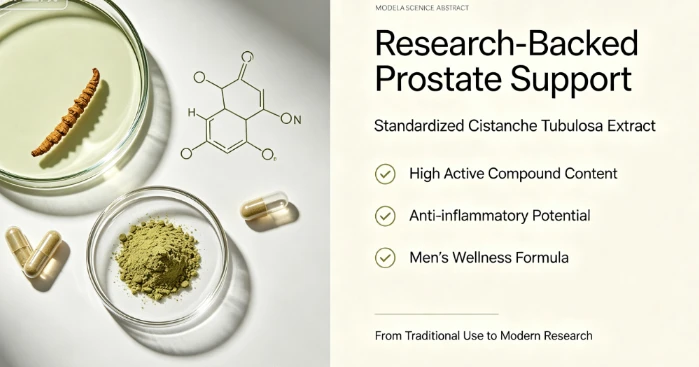
Using network pharmacology and molecular docking, this research systematically predicted the bioactive compounds, core protein targets and signaling pathways through which Cistanche tubulosa alleviates chronic nonbacterial prostatitis. The findings illustrate its multi-component, multi-target and multi-pathway working mechanism. Cistanche tubulosa primarily relies on phenylethanoid glycosides (echinacoside, acteoside and related glycosides) to interact with TNF, Akt1, EGFR, STAT3 and other hub proteins. It modulates HIF-1, AGE-RAGE and C-type lectin receptor signaling pathways to deliver anti-inflammatory, immunomodulatory and anti-apoptotic effects. This study clarifies the molecular foundation of Cistanche tubulosa for prostate health support, offering scientific reference for standardized herbal application and novel natural product development for men's wellness.