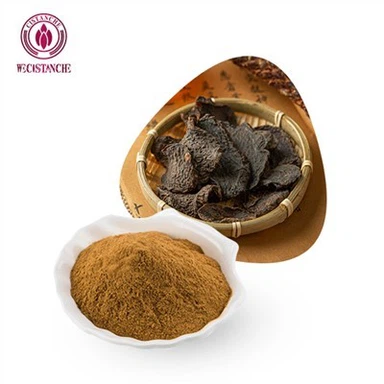
Cistanche Extract: Research Breakthroughs, Application Trends, And Future Vistas
May 19, 2025
In the arid deserts of Central Asia, where the harsh environment poses a formidable challenge to life, Cistanche plants have thrived for centuries. These parasitic botanical wonders, with a rich historical legacy in traditional medicine, have now emerged as a focal point of modern scientific research. Cistanche extract, derived from these resilient plants, is undergoing intensive investigation, leading to remarkable research breakthroughs and the discovery of diverse application trends. This article explores the latest developments in Cistanche extract research, its expanding range of applications, the challenges it faces, and the promising future vistas that lie ahead.

click to Cistanche for kidney disease
The Desert Habitat and Cistanche's Adaptation Strategies
The deserts of China, Mongolia, and adjacent regions are characterized by extreme environmental conditions. During the day, the sun's intense rays can elevate the temperature of the sandy terrain to scorching levels, often surpassing 45°C, creating a searing and inhospitable landscape. As night descends, the temperature plummets dramatically, sometimes dropping close to freezing, resulting in a stark contrast between the day and night environments. The soil, predominantly sandy, is nutrient - poor and has minimal water - holding capacity. Water, the life - sustaining resource, is scarce, with only sporadic rainfall and limited underground sources.
Cistanche deserticola and Cistanche tubulosa, as parasitic plants lacking chlorophyll, have evolved unique and specialized adaptation strategies. They establish a symbiotic relationship with desert shrubs, primarily Haloxylon ammodendron. Through specialized structures known as haustoria, Cistanche penetrates the roots of the host plant, enabling it to absorb the essential water and nutrients required for growth and survival. This harsh and unforgiving environment has been a catalyst for the development of Cistanche's bioactive compounds. The extreme conditions, including high levels of ultraviolet radiation, prolonged drought, and significant temperature fluctuations, have compelled the plant to produce a diverse array of chemical substances as a defense mechanism, which now hold great scientific and medical significance.
Cistanche in Traditional Medicine: A Historical Tapestry
Traditional Chinese Medicine
In Traditional Chinese Medicine (TCM), Cistanche, commonly referred to as "Rou Cong Rong," has a history spanning over two millennia. It holds a highly esteemed position in the TCM pharmacopeia and is regarded as a tonic for the kidneys. According to TCM theory, the kidneys are considered the root of vitality, essence, and reproductive function within the body. Cistanche was believed to nourish and strengthen the kidneys, thereby promoting overall well - being and restoring the body's internal balance.
TCM practitioners utilized Cistanche to address a wide spectrum of health conditions. For individuals suffering from kidney deficiency, symptoms such as fatigue, weakness, dizziness, frequent urination, and lower back pain were commonly treated with this herb. In men, it was prescribed to enhance sexual function, improve sperm quality, and treat infertility. In women, Cistanche played a crucial role in regulating the menstrual cycle, reducing menstrual discomfort, and promoting fertility. Additionally, its mild laxative effect made it a natural remedy for constipation, contributing to digestive health.

Mongolian Medicine
Mongolian medicine also recognized the significant value of Cistanche. Mongolian healers, with their profound understanding of the natural environment and traditional healing practices, incorporated Cistanche into their treatments to boost overall vitality and combat various ailments. In the nomadic lifestyle of Mongolia, where the harsh climate and limited resources posed substantial challenges to health, Cistanche was used to strengthen the body's resistance to diseases and improve general health. It was commonly employed to address digestive problems, such as indigestion and poor appetite, by promoting healthy digestion and nutrient absorption. Similar to its use in TCM, Cistanche was highly esteemed for its positive impact on reproductive health in both men and women.
Extraction and Chemical Composition of Cistanche Extract
Extraction Techniques
**
The extraction of Cistanche extract has witnessed remarkable technological advancements, enabling the isolation of its bioactive components with enhanced precision and efficiency.
Ethanol Extraction: Ethanol extraction remains one of the most widely adopted methods. Ethanol, as a solvent, effectively extracts lipophilic compounds, especially phenylethanoid glycosides (PhGs). These PhGs, including acteoside, isoacteoside, and tubuloside A, are renowned for their potent antioxidant, anti - inflammatory, and neuroprotective properties. The extraction process involves soaking dried Cistanche in ethanol, allowing the solvent to penetrate the plant cells and dissolve the PhGs. Subsequently, through filtration and evaporation of the ethanol, a concentrated extract rich in these beneficial compounds is obtained.
Water Extraction: Water extraction is primarily employed to isolate hydrophilic substances, mainly polysaccharides, from Cistanche. Cistanche polysaccharides exhibit significant immunomodulatory, anti - inflammatory, and antioxidant effects. The process typically entails boiling the dried Cistanche in water to break down the plant cells and release the polysaccharides into the solution. Following filtration and evaporation of the water, a concentrated extract containing these important polysaccharides is achieved.
Microwave - Assisted Extraction: Microwave - assisted extraction is an emerging technique that has gained popularity due to its ability to reduce extraction time and increase the yield of bioactive compounds. Microwave energy is absorbed by the solvent and the plant material, generating heat and creating pressure within the plant cells. This pressure causes the cells to rupture, facilitating the release of bioactive components into the solvent.
Chemical Composition
Cistanche extract is a complex mixture of various chemical compounds, each contributing to its unique health - promoting effects.
Phenylethanoid Glycosides (PhGs): PhGs are among the most prominent bioactive compounds in Cistanche extract. Their chemical structure, consisting of a phenylethanoid moiety linked to sugar units, endows them with strong antioxidant capabilities. PhGs can scavenge free radicals, protecting cells from oxidative damage and reducing the risk of chronic diseases such as cancer, cardiovascular diseases, and neurodegenerative disorders. They also play a crucial role in modulating cell signaling pathways, influencing processes such as cell growth, differentiation, and apoptosis.
Polysaccharides: Cistanche polysaccharides are composed of various monosaccharide units, including glucose, galactose, mannose, arabinose, and rhamnose. These polysaccharides play a vital role in immune system modulation. They can activate immune cells, such as macrophages, T - lymphocytes, and B - lymphocytes, enhancing the body's ability to defend against pathogens. Additionally, Cistanche polysaccharides have prebiotic effects, promoting the growth of beneficial bacteria in the gut and improving gut microbiota balance.
Flavonoids: Flavonoids are another class of bioactive compounds found in Cistanche extract. They have antioxidant, anti - inflammatory, and anti - allergic properties. Flavonoids can inhibit the activity of enzymes involved in the production of reactive oxygen species and inflammatory mediators, thereby protecting cells from damage and reducing inflammation.
Amino Acids and Other Compounds: Cistanche extract also contains a diverse range of amino acids, including essential amino acids that the body cannot produce on its own. These amino acids are involved in numerous physiological processes, such as muscle repair and growth, neurotransmitter synthesis, and the production of enzymes and hormones. Additionally, the extract contains alkaloids, which may have pharmacological effects on the nervous system, and trace elements like iron, zinc, and selenium, which are essential for various biological functions in the body.
Recent Research Breakthroughs
Neuroprotective Mechanisms
Recent research has made significant progress in understanding the neuroprotective mechanisms of Cistanche extract. Studies have shown that Cistanche extract can protect neurons from oxidative stress, inflammation, and apoptosis. The PhGs in Cistanche extract can increase the activity of antioxidant enzymes, such as superoxide dismutase and catalase, reducing the production of reactive oxygen species in neurons. Additionally, Cistanche extract can inhibit the activation of microglia, the immune cells of the brain, reducing the release of pro - inflammatory cytokines and preventing neuroinflammation. These findings suggest that Cistanche extract may have potential applications in the treatment of neurodegenerative diseases, such as Alzheimer's and Parkinson's.
Anti - cancer Effects
Cistanche extract is also being investigated for its anti - cancer effects. Research has shown that Cistanche extract can inhibit the growth and proliferation of cancer cells, induce apoptosis, and suppress tumor angiogenesis. The PhGs in Cistanche extract can modulate multiple signaling pathways involved in cancer development, such as the PI3K/AKT and MAPK pathways. Additionally, Cistanche extract can enhance the sensitivity of cancer cells to chemotherapy and radiotherapy, reducing the side effects of these treatments. These results indicate that Cistanche extract may be a promising candidate for the development of new anti - cancer drugs.

Metabolic Regulation
Recent studies have explored the role of Cistanche extract in metabolic regulation. Cistanche extract has been shown to improve glucose metabolism, lipid metabolism, and insulin sensitivity. The polysaccharides in Cistanche extract can promote the uptake of glucose by cells, reduce blood glucose levels, and prevent the development of diabetes. Additionally, Cistanche extract can reduce the levels of total cholesterol, triglycerides, and low - density lipoprotein cholesterol in the blood, while increasing the levels of high - density lipoprotein cholesterol, reducing the risk of cardiovascular diseases.
Diverse Application Trends
Functional Foods and Beverages
The functional food and beverage industry is experiencing a growing trend in the use of Cistanche extract. Cistanche - enriched products, such as energy bars, sports drinks, and health - promoting beverages, are becoming increasingly popular among health - conscious consumers. These products are formulated to provide specific health benefits, such as enhancing physical performance, improving cognitive function, and boosting immune system activity. For example, Cistanche - based sports drinks can help athletes reduce exercise - induced oxidative stress and inflammation, accelerate muscle recovery, and improve endurance.
Cosmetics and Personal Care
In the cosmetics and personal care industry, Cistanche extract is highly sought after for its anti - aging, antioxidant, and skin - nourishing properties. It is incorporated into a wide range of skincare products, including anti - aging creams, serums, masks, and lotions. Cistanche extract can help reduce the appearance of wrinkles, fine lines, and age spots by promoting collagen synthesis and protecting the skin from oxidative damage. Its moisturizing and soothing effects make it suitable for products designed for sensitive skin. Additionally, the anti - inflammatory properties of Cistanche extract can help calm irritated skin and reduce redness.
Veterinary Medicine
The application of Cistanche extract in veterinary medicine is also on the rise. Cistanche extract can be used to enhance the immune function of animals, improve their reproductive performance, and support digestive health. In livestock farming, Cistanche - based supplements may contribute to better growth and development, reducing the need for antibiotics and other synthetic drugs. For companion animals, such as dogs and cats, Cistanche extract can be used to address age - related health issues, such as joint pain and cognitive decline.
Challenges and Future Vistas
Despite its numerous benefits and potential, the widespread use of Cistanche extract faces several challenges. One of the main challenges is the sustainable cultivation of Cistanche plants. As the demand for Cistanche extract increases, there is a risk of over - harvesting, which could lead to the depletion of natural resources. Developing efficient and sustainable cultivation methods, such as artificial cultivation techniques and tissue culture, is essential to ensure a consistent supply of high - quality Cistanche.
Another challenge lies in the regulatory aspect. The classification and regulation of Cistanche - based products vary across different regions, creating barriers to market entry and consumer access. Harmonizing regulatory frameworks to ensure the safety, quality, and efficacy of Cistanche - derived products is crucial for their commercial success.

Looking to the future, the prospects for Cistanche extract are bright. With the continuous advancement of scientific research and technological innovation, we can expect to see more breakthroughs in understanding its mechanisms of action and discovering new applications. From personalized medicine to sustainable agriculture, Cistanche extract has the potential to make significant contributions to human and animal health and well - being, bridging the gap between traditional medicine and modern science. As research progresses and challenges are overcome, Cistanche extract may well become a key player in the global health and wellness market, offering new solutions to a wide range of health challenges.