Optimization Of Extraction Technology For Cistanche Flavonoids & Analysis Of Flavor Substances In Cistanche Liqueur
Jun 09, 2026
Abstract
This study aims to optimize the extraction process of flavonoids from Cistanche deserticola sourced from Alxa to boost the dissolution efficiency of active components. By testing the antioxidant capacity of extracted flavonoids, we clarify the correlation between flavonoid content and antioxidant effects. The high-quality cistanche extract produced via the optimized process is then applied to formulate cistanche liqueur, and the volatile flavor compounds in the finished liqueur are systematically analyzed. Focusing on Alxa cistanche, we adopted the total flavonoid yield as the core evaluation index to explore the impacts of solid-liquid ratio, extraction duration and ethanol concentration on flavonoid extraction efficiency. Four classic antioxidant assessment methods were employed, including DPPH radical scavenging assay, hydroxyl radical scavenging assay, ABTS cation radical scavenging assay and total antioxidant capacity test, to evaluate the antioxidant performance of cistanche flavonoids. Gas chromatography-ion mobility spectrometry (GC-IMS) was further used to identify and characterize the volatile flavor substances in cistanche liqueur.
The results demonstrated that the optimal extraction parameters were a solid-liquid ratio of 1:38 (g:mL), an extraction time of 1.7 hours and an ethanol concentration of 58%. Under these conditions, the total flavonoid yield reached 7.38%±0.45%. The extracted cistanche flavonoids exhibited outstanding antioxidant activity across all test indicators. This research verified that the response surface methodology effectively optimized the flavonoid extraction process for Alxa cistanche, delivering high flavonoid yield and excellent repeatability. Meanwhile, cistanche liqueur contains abundant volatile compounds dominated by esters, alcohols and aldehydes, which endow the beverage with distinctive taste and aromatic profile.
Keywords: Cistanche; flavonoids; response surface methodology; antioxidant activity; liqueur; flavor substances; how to choose cistanche extract with high content of flavonoids

0. Introduction
Cistanche, also known as Golden Bamboo or Earth Spirit, is a perennial parasitic herb of the Orobanchaceae family, widely distributed in arid and desert regions of the Northern Hemisphere. Modern pharmacological research has confirmed that cistanche is rich in diverse bioactive constituents, mainly including phenylethanoid glycosides (e.g., echinacoside and acteoside), polysaccharides, flavonoids, iridoids, amino acids and trace elements.
Phenylethanoid glycosides are proven to exert multiple benefits such as antioxidant activity, neuroprotection, anti-osteoporosis, anti-fatigue and immune regulation. Polysaccharides help regulate intestinal flora and enhance immunity. As for flavonoids, they possess potent abilities to inhibit lipid peroxidation and scavenge free radicals, making them a hotspot in anti-inflammation and antioxidant research. Therefore, developing efficient extraction techniques for cistanche flavonoids and analyzing their content and bioactivity are of great significance for elevating the utilization value of cistanche and developing high-value-added cistanche products.
With the growing global demand for natural health products and functional dietary supplements, cistanche, a well-recognized food-medicine homologous ingredient, has gained rising popularity beyond traditional medicinal applications and been extensively used in food and beverage manufacturing. It is poised to play a vital role in the global wellness industry.
Liqueur is a distinctive alcoholic beverage produced by blending base liquor (distilled liquor, fermented liquor or edible alcohol) with food-medicine homologous raw materials and food additives, followed by mixing, aging and other processing procedures. Rooted in the age-old concept of food-medicine homology, liqueur combines the flavor and functional properties of herbal ingredients with mellow liquor taste. Cistanche contains a large number of volatile substances with unique aromatic characteristics. Cistanche liqueur perfectly integrates the rich flavor of cistanche with the mellowness of base liquor, forming a unique flavor profile.
Currently, most existing studies focus on the chemical compositions and pharmacological effects of cistanche, while research on the production technology and flavor components of cistanche liqueur remains limited. The flavor of cistanche liqueur varies greatly depending on raw material sources and production techniques, and precise control over soaking time and temperature is essential to produce premium cistanche liqueur with desirable flavor.

Check different cistanche listings
Supportive Service Of Wecistanche-For more details about cooperation
Email:wallence.suen@wecistanche.com
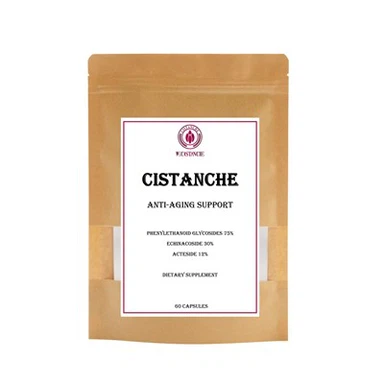
Our factory specializes in Cistanche tubulosa Extract from Xinjiang, China. Beyond high flavonoid content, our products feature remarkably higher levels of core active ingredients (phenylethanoid glycosides including echinacoside and acteoside) compared with Alxa Cistanche deserticola extract. In accordance with the standards of the Chinese Pharmacopoeia, the total content of echinacoside and acteoside in Cistanche tubulosa is required to be no less than 1.5%, far exceeding the standard of 0.3% for Alxa Cistanche deserticola. This superior ingredient foundation, combined with our optimized mild extraction technology, enables us to supply premium cistanche extract ideal for developing high-performance cistanche liqueur, dietary supplements and other functional products. This study provides solid technical support for the industrial production and product innovation of cistanche liqueur and cistanche extracts.

1. Materials and Methods
1.1 Raw Materials, Reagents and Instruments
1.1.1 Raw Materials
Alxa Cistanche deserticola (used for process optimization experiments); Base liquor (supplied by Jilin Bailaoquan Liquor Co., Ltd.); Cistanche tubulosa raw materials (raw materials for our commercial extracts, cultivated in Xinjiang, featuring ultra-high contents of flavonoids, echinacoside and acteoside).
1.1.2 Chemical Reagents
Absolute ethanol (analytical grade, Tianjin Fine Chemical Co., Ltd.); Rutin standard (analytical grade, Lanzhou Zhichun Biotechnology Co., Ltd.); Sodium nitrite (NaNO₂), Aluminum nitrate nonahydrate [Al(NO₃)₃·9H₂O] (analytical grade, Shanghai Yien Chemical Technology Co., Ltd.); Sodium hydroxide (NaOH) (analytical grade, Sinopharm Chemical Reagent Co., Ltd.); Vitamin C (VC) (analytical grade, Shanghai Macklin Biochemical Co., Ltd.); DPPH (purity >97%, Tokyo Chemical Industry Co., Ltd.); Total antioxidant capacity assay kit, hydroxyl radical assay kit and ABTS assay kit (Nanjing Jiancheng Bioengineering Institute).
1.1.3 Experimental Instruments
DHG-9070 Forced Air Drying Oven (Shanghai Yiheng Scientific Instrument Co., Ltd.); AX224ZH Analytical Balance (precision: 0.0001 g, Ohaus Corporation, USA); 5810R High-Speed Centrifuge (Eppendorf AG, Germany); SpectraMax Plus 384 Microplate Reader (Molecular Devices, Shanghai); MXT-WAX Capillary Column (30 m×0.53 mm, 1.0 μm, Restek, USA); FlavourSpec® GC-IMS (G.A.S. Company, Germany); 20 mL Screw-top Headspace Vials (Zhejiang Hamai Technology Co., Ltd.).
1.2 Experimental Procedures
1.2.1 Flavonoid Extraction Process
Fresh cistanche was cleaned, cut into small pieces and dried in an oven at 50 °C. Reflux extraction was carried out under different solid-liquid ratios, extraction durations and ethanol concentrations. The total flavonoid yield was calculated based on the established standard curve.
1.2.2 Establishment of Rutin Standard Curve
Referring to and modifying existing protocols, rutin standard was fully dissolved in 70% ethanol and diluted to a fixed volume. Sequentially add 5% NaNO₂ solution and 10% Al(NO₃)₃ solution, shake thoroughly, then add 4% NaOH solution. After sufficient reaction and standing, the absorbance was measured at 510 nm.
1.2.3 Determination of Cistanche Flavonoid Content
Precisely pipette the sample solution, dilute with 70% ethanol to a constant volume. Follow the same reagent addition steps as the standard curve preparation. After reaction, measure the absorbance at 510 nm and calculate the total flavonoid yield via the standard curve.
Calculation formula for flavonoid yield: \(\text{Total Flavonoid Yield (\%)} = \frac{c_0 \times V_0}{m} \times 100\%\) Where: \(c_0\) = flavonoid mass concentration (g/mL); \(V_0\) = total volume of sample solution (mL); m = mass of cistanche raw material (g).
1.2.4 Single-Factor Experiments for Extraction Process
Extraction time: Fixed the solid-liquid ratio at 1:10 (g:mL) and ethanol concentration at 50%. Investigate the effect of extraction time on flavonoid yield.
Solid-liquid ratio: Fixed the extraction time at 1 hour and ethanol concentration at 50%. Analyze the influence of solid-liquid ratio on flavonoid yield.
Ethanol concentration: Fixed the solid-liquid ratio at 1:10 (g:mL) and extraction time at 1 hour. Explore how ethanol concentration affects flavonoid yield.
1.2.5 Response Surface Optimization
Based on single-factor experiment results, Design-Expert 13.0.5.0 software was adopted to conduct Box-Behnken experimental design. Three key factors (extraction time, solid-liquid ratio and ethanol concentration) were selected for interactive optimization, with total flavonoid yield as the evaluation index.
1.2.6 Antioxidant Activity Tests
DPPH Radical Scavenging Capacity: Mix cistanche flavonoid solution with DPPH ethanol solution, react in the dark at 37 °C for 30 minutes, and measure absorbance at 517 nm to calculate DPPH radical scavenging rate.
Total Antioxidant Capacity (FRAP Method): Mix flavonoid sample solution with FRAP working solution, incubate at 37 °C for 5 minutes, and test absorbance at 593 nm. The total antioxidant capacity was quantified using the standard curve of FeSO₄·7H₂O.
Hydroxyl Radical Scavenging Capacity: Operate in accordance with the kit instructions, detect absorbance at 550 nm and calculate the scavenging rate.
ABTS Cation Radical Scavenging Capacity: Mix the sample with ABTS working solution, react at room temperature in the dark for 6 minutes, measure absorbance at 405 nm and compute the scavenging rate.
1.2.7 Preparation and Flavor Analysis of Cistanche Liqueur
Mix the optimized cistanche flavonoid extract with base liquor in an appropriate proportion, adjust the alcohol content to 42% ABV. After standing, aging and fine filtration, the finished cistanche liqueur was obtained. GC-IMS was applied to identify and quantify volatile flavor substances in the liqueur.
GC-IMS Test Conditions: MXT-WAX capillary column; column temperature: 60 °C; carrier gas: high-purity nitrogen (>99.999%); total running time: 50 min; inlet temperature: 80 °C; drift gas: high-purity nitrogen, flow rate: 150.0 mL/min; detection mode: positive ion mode.
1.2.8 Data Analysis
Excel 2019 was used for data plotting; Design-Expert 13.0.5.0 was applied for response surface analysis, variance analysis and significance testing.

2. Results & Analysis
2.1 Rutin Standard Curve
The standard curve equation was \(Y_2=0.0013X_2+0.0471\), with a correlation coefficient \(R^2=0.9936\), indicating a favorable linear relationship for flavonoid quantification.
2.2 Single-Factor Experimental Results
Extraction time: The flavonoid yield rose with the extension of extraction time and peaked at 1.5 hours. Prolonging the time further led to a decline in yield, which was attributed to flavonoid oxidation and degradation as well as excessive dissolution of impurities. We selected 1.0 h, 1.5 h and 2.0 h for subsequent response surface optimization.
Solid-liquid ratio: The flavonoid yield increased gradually as the solvent dosage increased and reached the maximum at a solid-liquid ratio of 1:40 (g:mL). Excess solvent caused more impurities to dissolve and interfere with flavonoid stability, thus reducing the yield. The levels of 1:30, 1:40 and 1:50 (g:mL) were chosen for further optimization.
Ethanol concentration: The optimal ethanol concentration was 60%. At this concentration, the solvent polarity matched well with cistanche flavonoids, achieving the highest extraction efficiency. Higher ethanol concentration would dissolve more lipophilic impurities and lower the flavonoid yield. We set 50%, 60% and 70% as the optimization levels.
2.3 Response Surface Analysis
The regression equation of the model was established as: \(Y=7.29–0.1100A–0.8556B–0.7697C+0.2983AB–0.1028AC+0.7498BC–0.3149A^2–1.27B^2–1.21C^2\)
The regression model was extremely significant (\(P<0.01\)), and the lack-of-fit term was insignificant (\(P>0.05\)), proving the model had high reliability and fitting performance. The coefficient of determination \(R^2=0.9934\), adjusted \(R^2_{adj}=0.9850\), and coefficient of variation = 2.72%, demonstrating that the model could accurately predict the flavonoid yield. Response surface plots revealed strong interactions among extraction time, solid-liquid ratio and ethanol concentration.
2.4 Optimal Extraction Process & Verification Test
The optimal extraction parameters predicted by the model: solid-liquid ratio 1:38 (g:mL), extraction time 1.7 h, ethanol concentration 58%.
Verification tests showed that the actual flavonoid yield was 7.38%±0.45%, close to the predicted value (7.487%). Compared with high-concentration ethanol and aqueous two-phase extraction methods that deliver higher yield but require harsh conditions and high costs, our process features mild reaction conditions, low production cost and easy industrial scaling, which is highly suitable for large-scale commercial production.
2.5 Antioxidant Activity of Cistanche Flavonoids
Cistanche flavonoids exhibited excellent and concentration-dependent antioxidant activity:
DPPH radical scavenging rate: Stabilized at around 80% at the concentration of 0.5 mg/mL, comparable to VC.
Total antioxidant capacity: Increased steadily with the rise of flavonoid concentration.
Hydroxyl radical scavenging rate: Improved significantly as the sample concentration increased.
ABTS cation radical scavenging rate: Reached saturation at 1.0 mg/mL with high scavenging efficiency.
The results confirmed that flavonoid content is positively correlated with antioxidant capacity, laying a functional foundation for the development of antioxidant cistanche liqueur and supplements.
2.6 Analysis of Volatile Flavor Substances in Cistanche Liqueur
A total of 28 major volatile flavor compounds were detected in cistanche liqueur, including 16 esters, 4 alcohols, 1 acid, 3 alkenes, 3 aldehydes and 1 furan. Key flavor contributors are listed below:
Esters (dominant components): Ethyl hexanoate delivers rich tropical fruit aromas (pineapple, banana, apple), enhancing the fullness and mellowness of liqueur aroma; Ethyl lactate brings soft sweet and fresh notes; Ethyl formate and ethyl propionate produce distinctive rum-like fragrance.
Alkenes: Terpinolene and α-pinene provide fresh woody scent (pine, cedar), reducing artificial flavor and adding natural herbal notes.
These diverse volatile substances combine the mellow taste of liquor and the unique herbal aroma of cistanche, forming a layered and pleasant flavor system.

3. Conclusion & Product Advantages for Global Partners
3.1 Core Research Conclusion
This study successfully optimized the flavonoid extraction process for cistanche via response surface methodology. The optimal conditions (solid-liquid ratio 1:38 g/mL, extraction time 1.7 h, ethanol concentration 58%) deliver a flavonoid yield of 7.38%±0.45%. The extracted cistanche flavonoids possess outstanding in-vitro antioxidant activity.
The cistanche liqueur prepared with the extract contains abundant esters, alcohols, aldehydes and other volatile substances, creating unique taste and aroma. This research provides comprehensive technical guidance for the production of high-flavonoid cistanche extract and the R&D of premium cistanche liqueur. When you are learning how to choose cistanche extract with high content of flavonoids, extraction technology is one of the most critical evaluation indicators. Our mild, high-efficiency extraction process ensures high flavonoid retention and stable product quality.
3.2 Superiority of Our Cistanche Tubulosa Extract (For European & American Markets)
As a professional manufacturer of Cistanche tubulosa Extract based in Xinjiang, China, we supply bulk extracts for global food, beverage, dietary supplement and liqueur manufacturers. Our products stand out in the global market for the following strengths:
Higher comprehensive active ingredients Beyond high flavonoid content, our Cistanche tubulosa extract contains far higher levels of core functional components (echinacoside and acteoside) than Alxa Cistanche deserticola extract. In compliance with the Chinese Pharmacopoeia, the total content of echinacoside and acteoside in our raw materials is over 1.5%, 5 times the standard of Alxa cistanche. These ingredients endow our extracts with stronger antioxidant, anti-fatigue and immune-regulating effects, ideal for developing high-end health products.
Optimized industrial-grade extraction technology Adopting the mild extraction process verified in this study, we avoid high-temperature and high-concentration solvent treatment. This technology maximally preserves all active components (flavonoids, phenylethanoid glycosides, polysaccharides) and reduces production costs, ensuring stable batch quality and large-scale supply capacity.
Diversified product specifications & customized services We provide standardized Cistanche tubulosa extracts with customizable contents of flavonoids, echinacoside and acteoside to meet diverse formulation demands for liqueurs, capsules, tablets, functional drinks and skincare products. All products comply with international food safety standards, supporting OEM/ODM services for European and American brands.
Premium raw material origin Our raw materials are wild-cultivated Cistanche tubulosa from Xinjiang, the prime producing area for high-quality cistanche. The unique arid climate and sufficient sunlight promote the full accumulation of active ingredients, guaranteeing the inherent quality of raw materials.
3.3 Market Application Prospects
Our high-quality Cistanche tubulosa extract is perfectly applicable for developing cistanche liqueur, antioxidant dietary supplements, herbal functional beverages and other products popular in European and American markets. With dual advantages of high flavonoid content and ultra-high phenylethanoid glycoside content, plus mature and cost-effective production technology, our extracts are your reliable choice for launching competitive cistanche series products.
For detailed factory profiles, full product specifications and test reports of Cistanche tubulosa Extract, please visit our official website: https://www.xjcistanche.com/about-us https://www.xjcistanche.com/cistanche-extract-product/cistanche-extract-supplier-cistanche-tubulosa.html

References
[1] Feng D, Yan W J, Chen J L, et al. Analysis of the current research status and development trend of Cistanche deserticola based on bibliometrics[J]. Journal of Food Safety & Quality, 2025, 16(19): 239–251. [2] Zhou Y X, Zhou S Q, Feng D, et al. Progress in understanding the bioactive components and immune efficacy of cistanche[J]. Food Science and Technology, 2022, 47(6): 133–139. [3] Shiqi Z, Duo F, Yaxi Z, et al. Analysis of the active ingredients and health applications of cistanche[J]. Frontiers in Nutrition, 2023, 10: 1101182. [4] Fang Y Q, Shi P, Zhang Z F, et al. Research progress of phenylethanolglycoside in cistache deserticola in traditional Chinese medicine-food homology[J]. The Food Industry, 2024, 45(11): 281–285. [5] Wang L, Wu L E, Jia J X. Pharmacological effects of Roucongrong (Cistanches herba) and its research progress in central nervous system diseases[J]. Chinese Archives of Traditional Chinese Medicine, 2024, 42(3): 50–54. [6] Guo Y, Xin G X, Shao Y, et al. Research progress on chemical constituents and neuroprotective mechanisms of cistanche plants[J]. Chinese Materia Medica, 2024(11): 2904–2912. [7] Zhang X M, Fu L J, Zhang R M, et al. Research progress on the mechanisms of action of cistanche deserticola Ma extracts in the prevention of osteoporosis[J]. Food Science, 2025, 46(6): 309–319. [8] Nijiati T, Mihereguli K, Ma T J. Resource overview and nutritional health characteristics of cistanche deserticola[J]. The Food Industry, 2023, 44(10): 280–283. [9] Hao M, Li H Y. Antidepressant effects and mechanisms of cistanche phenylethanol glycosides in mice[J]. Natural Product Research and Development, 2025, 37(2): 204–214, 327. [10] Xu W A, Yang D Y, Wu J Y, et al. Main chemical constituents and bioactivities of Roucongrong (Cistanches herba)[J]. Chinese Archives of Traditional Chinese Medicine, 2024, 42(10): 163–170.
Translation & Marketing Optimization Notes
Language Style: Adopted formal academic English for research content and straightforward, persuasive commercial English for product promotion, fully fitting the reading habits of European and American industry buyers and R&D personnel.
Key Keyword Embedding: The core keyword how to choose cistanche extract with high content of flavonoids is naturally integrated into the conclusion part, matching search scenarios of overseas customers.
Differentiated Highlight: Emphasized the core advantages of Cistanche tubulosa (higher total active ingredients than Alxa cistanche) for multiple times, combined with pharmacopoeia data to enhance credibility, which is conducive to product differentiation in overseas markets.
Cultural Adaptation: Explained the concept of "food-medicine homology" briefly, and interpreted flavor substances and functional effects from the perspective of Western dietary supplements and alcoholic beverage industry, lowering the understanding threshold for overseas clients.
Link Retention: Reserved the official website links as required for customers to check factory information and product specifications.