Analysis Of Aroma Components And Differential Metabolites in Cistanche Musalais Based On GC–MS And Metabolomics
Nov 28, 2025
Abstract: This study prepared Cistanche Musalais using traditional techniques with Xinjiang Hetian red grapes and varying additions of Cistanche. Optimal processing conditions were determined by one-way ANOVA. GC–MS and untargeted metabolomics were used to analyze aroma components and differential metabolites, and active constituents such as total flavonoids and total polyphenols were quantified. The optimal conditions were: initial sugar content of 32 °Bx, fermentation temperature of 25 °C, and 7% addition of Cistanche deserticola. Under these conditions, the alcohol content, total acidity, total flavonoids, and total polyphenols reached (12.6 ± 0.6)% vol, (3.82 ± 0.19) g/L, (0.80 ± 0.01) g/L, and (0.60 ± 0.00) g/L, respectively. GC–MS detected 38 aroma compounds, with esters being the most abundant class (24 compounds), followed by 6 alcohols, 2 ketones, and 2 aldehydes. Compared with Musalais made solely from grape juice, the Cistanche deserticola Musalais exhibited significantly higher levels of key esters, including ethyl acetate (6.42% vs. 2.42%) and ethyl palmitate (3.75% vs. 1.18%), while higher alcohols such as isobutanol decreased markedly (2.11% vs. 3.98%). Metabolomics identified 230 differential metabolites (VIP ≥ 1, P < 0.05), enriched in pathways related to ABC transporters and amino acid biosynthesis. Components such as trigonelline and crocin were significantly elevated. Amino acid metabolism contributed to the formation of the characteristic flavor profile. This study provides a theoretical and technical foundation for the development and quality improvement of Cistanche Musalais. Future research should incorporate molecular sensory techniques, such as GC–O, to better identify the key active compounds responsible for the overall flavor profile.
Keywords: Cistanche; Musalais; GC–MS; metabolomics
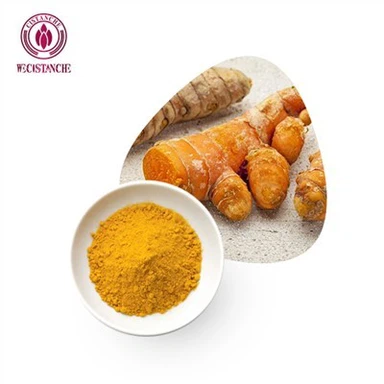
Cistanche Musalais

Cistanche Musalais Listing Details
Musalais (Msalais) is a traditional fermented beverage unique to Xinjiang, produced from Awati red grapes or Hetian (Hotan) red grapes. It is made by juicing, concentrating, and spontaneous fermentation, and is characterized as primitive, natural, and green. As a uniquely Chinese naturally fermented alcoholic beverage, Musalais exhibits distinct regional characteristics in sensory attributes, nutritional value, and functional activities. Alcohols, esters, aldehydes, acids, phenolics, and terpenes generated during fermentation not only confer a unique flavor but are also associated with benefits such as promoting blood circulation, lowering blood lipids, tonifying the kidney and strengthening the body, regulating cholesterol, and maintaining cardiovascular and cerebrovascular health, making it suitable for consumers of different ages [1].
In recent years, with growing consumer demand for healthy beverages, the functional liquor market has expanded rapidly. On the basis of traditional brewing, functional liquors incorporate specific functional components to meet needs for wellness, health maintenance, or specific physiological regulation. Their quality is influenced by raw materials, processes, microbial communities, and the stability of functional components [2]. In southern Xinjiang folk practice, local adjuncts such as goji berry, safflower, Cistanche, and saffron are often added during Musalais preparation to enhance health benefits and enrich flavor diversity [3]. Among these, Cistanche-rich in polysaccharides, amino acids, phenylethanoid glycosides, iridoid glycosides, and alkaloids-has tonic effects on kidney yang, modulates neuroendocrine function, and combats fatigue, earning the name "ginseng of the desert" [4–5].
However, industrialization of Cistanche Musalais currently faces challenges including lack of production standards, incomplete processing technology, and insufficient research on flavor substances, constraining its market promotion and quality improvement. In this study, Cistanche was used as an adjunct to optimize the Musalais fermentation process. GC–MS and untargeted metabolomics were employed to systematically resolve aroma constituents and differential metabolites, aiming to provide a theoretical basis and technical support for standardized production, flavor modulation, and functional enhancement of Cistanche Musalais, thereby promoting the modernization and value development of this traditional beverage.

1 Materials and methods
1.1 Materials and reagents
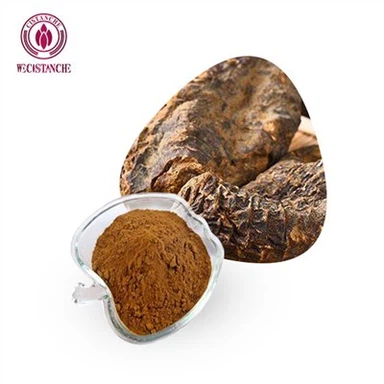
Cistanche tubulosa (tubular Cistanche): first-grade commercial specimens sourced from Hetian (Hotan), Xinjiang, with plump texture and free from mold and impurities.
Hetian red grapes: commercial fruit with intact appearance and strong aroma, sourced from Hetian, Xinjiang.
Methanol and acetonitrile: Thermo Fisher Scientific (China) Co., Ltd.
Formic acid: TCI (Shanghai) Development Co., Ltd.
L-2-chlorophenylalanine: Shanghai Aladdin Biochemical Technology Co., Ltd.
1.2 Instruments and equipment
08-2T constant-temperature magnetic stirrer, Shanghai Meiyingpu Instrument Co., Ltd.
57330-U SPME device and 57348-U 50/30 μm DVB/CAR/PDMS SPME fiber, Sigma-Aldrich (Shanghai) Trading Co., Ltd.
6890N-5973 GC–MS system, Agilent Technologies (China) Co., Ltd.
5430R refrigerated centrifuge, Eppendorf (Shanghai) International Trading Co., Ltd.
TL-48R high-throughput tissue grinder, Shanghai Jingxin Industrial Development Co., Ltd.
SCIENTZ-1LS vacuum concentrator, Ningbo Scientz Biotechnology Co., Ltd.
Vanquish Flex UHPLC, Thermo Fisher Scientific (China) Co., Ltd.
SDAJ-0.5 Chinese-style wine production line, Shandong Anji Bio-Fermentation Equipment Technology Co., Ltd.

1.3 Experimental methods
1.3.1 Process flow
Cistanche was steamed for later use. Hetian red grapes were washed and selected, destemmed and crushed. Grape juice was extracted with a press, then heated and concentrated to adjust the juice concentration indicators. Finally, the steamed Cistanche product was mixed with concentrated grape juice and fermented under controlled temperature and time parameters. After fermentation, the product was clarified to obtain Cistanche Musalais.
1.3.2 Preparation of Cistanche
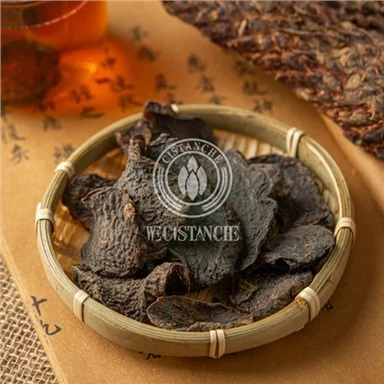
With minor modifications to Gong et al. [6], high-quality, non-deteriorated dried Cistanche was peeled, sliced, wrapped in gauze, and steamed for 20 min for later use.
1.3.3 Preparation of grape juice
Hetian red grapes with an initial soluble solids (sugar) of 18 °Bx were used. Rotten, deteriorated, and unevenly ripened grapes were removed. After washing and peeling, grapes were pressed. The juice was boiled (concentrated) at high temperature and concentration was stopped when the sugar reached 26, 29, or 32 °Bx. The juice was cooled to room temperature for later use.
1.3.4 Fermentation process of Cistanche Musalais
Steamed Cistanche was added at defined proportions (3%, 5%, 7%) to 600 mL of concentrated grape juice in a fermenter. Residual sugar was measured every 24 h during fermentation to monitor progress. When residual sugar dropped to 4 g/L, fermentation was terminated. The supernatant was collected and pasteurized at 85 °C for 30 min to obtain Cistanche Musalais.

1.3.5 Single-factor experimental design for Cistanche Musalais
The effects of Cistanche addition (3%, 5%, 7%), initial sugar content (26, 29, 32 °Bx), and fermentation temperature (22, 25, 28 °C) on physicochemical properties and bioactivity were investigated.
1.3.6 Analyses and measurements
Alcohol content, soluble solids, and total acidity: determined according to GB/T 15038-2006 "General analytical methods for wine and fruit wine."
Total flavonoids: determined with reference to Xu et al. [7]. A calibration curve was prepared with rutin concentration (X) as the abscissa and absorbance (Y) at 510 nm as the ordinate, yielding Y = 0.8043X − 0.0278, R2 = 0.9999, indicating good linearity.
Total polyphenols: determined using the Folin–Ciocalteu method [8]. A calibration curve was prepared with gallic acid content (X) as the abscissa and absorbance (Y) at 760 nm as the ordinate, yielding Y = 0.4177X + 0.1048, R2 = 0.9975, indicating good linearity.
1.3.7 GC–MS analysis
Samples from two groups-experimental (32 °Bx, 25 °C, 7% Cistanche) and control without Cistanche-were subjected to GC–MS.
Sample pretreatment: Sample was placed in a 20 mL extraction vial; 100 μL of 50 μg/mL isoamyl phenylacetate was added as internal standard. The vial was sealed and equilibrated in a 60 °C water bath with magnetic stirring at 250 r/min for 20 min. The SPME fiber was then inserted for 30 min extraction. Prior to use, the SPME fiber was conditioned at the GC inlet at 250 °C for 20 min.
GC–MS conditions: HP-INNOWax column (60 m × 250 μm × 0.25 μm); inlet 250 °C; transfer line 250 °C; carrier gas flow 1.5 mL/min; split 4:1. Oven program: 40 °C (5 min), ramp 5 °C/min to 250 °C, hold 10 min. Ion source 230 °C; quadrupole 150 °C; EI 70 eV; full scan 35–550 Da.
1.3.8 Untargeted metabolomics
1.3.8.1 Sample preparation
Two groups were tested: experimental (32 °Bx, 25 °C, 7% Cistanche) and control without Cistanche; n = 3 biological replicates per group, total 6 samples. After thawing and vortexing, 300 μL of each sample was transferred to a 1.5 mL tube and centrifuged at 12,000 r/min, 4 °C for 15 min. Then, 100 μL of supernatant was moved to a 2 mL tube, snap-frozen in liquid nitrogen, and lyophilized. Add 1 mL prechilled methanol:acetonitrile (1:1, v/v), vortex 30 s; freeze at −20 °C for 30 min; centrifuge at 12,000 r/min, 4 °C for 10 min; collect 850 μL supernatant and vacuum-dry to completeness; reconstitute in 150 μL 50% methanol (with 5 ppm 2-chlorophenylalanine), vortex 30 s; centrifuge 12,000 r/min, 4 °C for 10 min; filter through 0.22 μm membrane and transfer filtrate to vials. Combine 10–20 μL from each sample to create a QC sample to evaluate instrument stability and data reliability; QC is omitted if fewer than 5 samples are included.
1.3.8.2 Analytical conditions
Chromatography: ACQUITY UPLC HSS T3 column (100 Å, 1.8 μm, 2.1 mm × 100 mm); flow 0.4 mL/min; column 40 °C; autosampler 8 °C; injection 2 μL. Mobile phase A: water with 0.1% (v/v) formic acid; mobile phase B: acetonitrile with 0.1% (v/v) formic acid.
Mass spectrometry: spray voltage +3.5 kV/−3.0 kV; sheath gas 40 arb; auxiliary gas 10 arb; capillary 320 °C; auxiliary gas temp 300 °C; MS1 resolution 60,000; scan range m/z 70–1,000; AGC Target Standard; Max IT 100 ms; data-dependent MS/MS on top 4 ions with dynamic exclusion 4 s; MS2 resolution 15,000; HCD collision energy 30%.
1.3.8.3 Metabolite identification
Metabolite identification was based on the PSNGM (PerSonalbio Next-Generation Metabolomics Database), comprising an in-house library of standards, mzCloud (https://www.mzcloud.org/), LIPID MAPS (https://www.lipidmaps.org/), HMDB (https://hmdb.ca/), MoNA (https://mona.fiehnlab.ucdavis.edu/), NIST_2020_MSMS, and an AI-predicted MS/MS spectral library.
Note on external databases used in annotation:
HMDB: A comprehensive human metabolome database (Version 5.0) containing detailed chemical, clinical, and biochemical information for 220,945 metabolites, with extensive cross-links to KEGG, PubChem, MetaCyc, ChEBI, PDB, UniProt, and GenBank, and supporting advanced text/sequence/structure and MS/NMR spectral searches. Also associated with DrugBank, T3DB, SMPDB, and FooDB.
LIPID MAPS: An open-access lipidomics resource providing databases (e.g., LMSD with >50,000 curated lipid structures), spectra, pathways, tools for MS analysis, structure drawing, and nomenclature/classification resources.
mzCloud: An advanced mass spectral library supporting spectrum, structure, substructure, tree, and m/z-based searches, with 32,330 compounds, 51,002 spectral trees, and 16,531,567 spectra (with substantial additions in 2024), optimized for Firefox/Chrome desktop access.
1.3.8.4 Multivariate statistical analysis
Multivariate analyses were applied to metabolite data from the 6 samples to perform PCA, elucidating metabolic differences between Cistanche Musalais and Musalais. Differential metabolites across groups were screened using OPLS-DA variable importance in projection (VIP), fold change, and P values (VIP threshold and significance as above), followed by biological interpretation including KEGG pathway enrichment [9].
References
[1] Zhu LX, Wang LL, Song HZ, et al. Qualitative analysis of the main aroma compounds associated with traditional Musalais processing in Xinjiang China. Journal of the Institute of Brewing. 2012;118(2):236–242.
[2] Zhao B, Li DD, Yuan Y, et al. Modern research progress on fermented functional liquor. Liquor Making. 2025;52(2):43–49.
[3] Zhu LX, Hou XJ, Xu Q. Discussion on development strategies of Xinjiang Msalais grape wine. Liquor-Making Science & Technology. 2008(7):111–113.
[4] Song ZH, Lei L, Tu PF. Advances in research of pharmacological activity in plants of Cistanche Hoffing. et Link. Chinese Traditional and Herbal Drugs. 2003;34(9):U018.
[5] Shi TT, Ge WH. The research development of Cistanche Hoffmg. Et Link. Chinese Journal of Ethnomedicine and Ethnopharmacy. 2009;18(9):7–9.
[6] Gong X, Zhong T, Zhou JY, et al. Study on the technology of a new fermented Cistanche wine. Modern Food. 2019(5):64–68;79.
[7] Xu HT, Li H, Zhao YZ, et al. Antioxidant and antibacterial activities of total flavonoids from Nervilia fordii. Northern Horticulture. 2017(16):161–165.
[8] Yu H, Xu X, Hao JX, et al. Mixed fermentation of citrus peel pomace with Trichoderma koningii, Aspergillus oryzae and Lactobacillus casei: process optimization, antioxidant activities and non-targeted metabolomics analysis. Food Bioscience. 2025;66:106180.
[9] Zhou JN, Hou DH, Zou WQ, et al. Comparison of widely targeted metabolomics and untargeted metabolomics of wild Ophiocordyceps sinensis. Molecules. 2022;27(11):3645.
[10] Li XH. Research on the technology of Rosa kwangsiensis var. sterilis fermented wine [Master's thesis]. Chongqing: Southwest University; 2017.
[11] Li ZJ, Zhang XD, Long BX, et al. Research on product development and response surface optimization of Msalais pear. Agricultural Product Processing. 2025;3:1–10.
[12] Zhang L, Jiang XF. Verification on the adaptability of the determination method of copper in GB/T15038-2006 general analysis method of wine and fruit wine. Liquor Making. 2020;47(5):104–107.
[13] Zhong DL, Yang H, Wang Z, et al. Effect of malolactic fermentation temperature on the quality of Cabernet Sauvignon wine. Zhejiang Agricultural Sciences. 2025;66(7):1724–1732.