Cistanche: The Desert Ginseng — A Complete Science-Backed Guide To Its Health Benefits And Modern Products
Oct 26, 2026
From a parasitic desert plant to a rising star in wellness, nutrition, and skincare - here's everything you need to know about Cistanche
Introduction: A Treasure Hidden Beneath the Sand
Imagine a plant that grows in one of the most unforgiving environments on Earth - bone-dry deserts where rain rarely falls and temperatures swing violently between scorching days and freezing nights. Now imagine that this plant has been harvested and treasured by people for thousands of years, praised in ancient medical texts, and given one of the most flattering nicknames in the natural world: the "desert ginseng."
This is Cistanche deserticola, a remarkable herb that has quietly been making its way from remote desert regions into modern wellness products, functional foods, and even skincare. Today, as the global demand for natural, science-backed health ingredients grows, Cistanche is stepping into the spotlight.
But what exactly is this plant? What does modern science say about its benefits? And how is it being turned into the products you see on store shelves - from teas and yogurts to supplements and creams?
This guide takes a deep, evidence-based look at the "desert ginseng": its biological identity, the science behind its health-promoting properties, the wide range of products being developed from it, the challenges the industry faces, and where this remarkable herb is headed next.
1. What Is Cistanche? Meet the "Desert Ginseng"
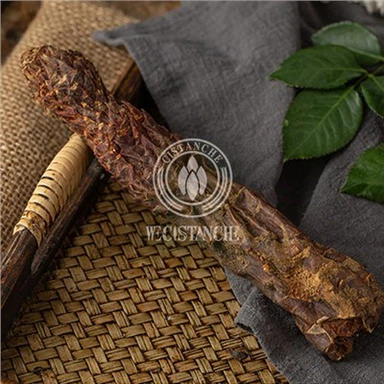
Scientifically known as Cistanche deserticola, this plant belongs to a family called Orobanchaceae - the broomrape family. It is a perennial parasitic herb, which means it does not grow on its own in the soil. Instead, it survives by attaching itself to the roots of other desert plants, drawing nutrients and water from its hosts. Its preferred hosts include shrubs like Haloxylon ammodendron (saxaul), tamarisk, and a plant called Atriplex canescens.
Despite this humble, parasitic lifestyle, Cistanche has earned an outsized reputation. In traditional Chinese medicine, it has been used for centuries as a tonic to support kidney health, nourish vitality, boost energy, and relieve constipation. Its many affectionate nicknames - including "desert ginseng" and a place among the "nine great celestial herbs" of Chinese tradition - reflect the deep respect it commands.
Where does it grow? Cistanche is native to arid and semi-arid regions across the Northern Hemisphere. In China, the richest natural resources are found in the western regions - including Inner Mongolia, Xinjiang, Gansu, Ningxia, and Qinghai. In recent years, successful cultivation has also been reported in Hebei and Jilin provinces, expanding its range.
What makes Cistanche so valuable is not just its history, but its chemistry. The plant is packed with a diverse array of bioactive compounds, including:
Polysaccharides (complex carbohydrates with immune-supporting properties)
Phenylethanol glycosides (potent antioxidant compounds)
Terpenoids
Flavonoids
Together, these compounds give Cistanche an impressively broad range of biological activities - which modern science is only beginning to fully map.
In 2023, Cistanche was officially added to China's list of "homologous substances of medicine and food" - a regulatory designation that permits it to be used not just as a medicine, but also as a food ingredient. This single policy change opened the door to a wave of new products, from beverages and snacks to supplements and beyond, and signaled the start of Cistanche's transformation from a traditional herb into a modern health-industry ingredient.
Let's now look at what the science actually says about its benefits.

2. The Science of Cistanche: Five Health-Promoting Properties
Researchers have spent years investigating Cistanche's biological activities, and the picture that has emerged is remarkably diverse. While much of the evidence comes from laboratory and animal studies (a point we'll return to later), the findings are consistently encouraging across several key areas.
2.1 Immune Support
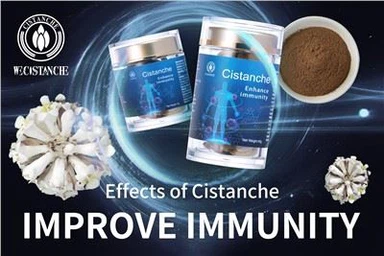
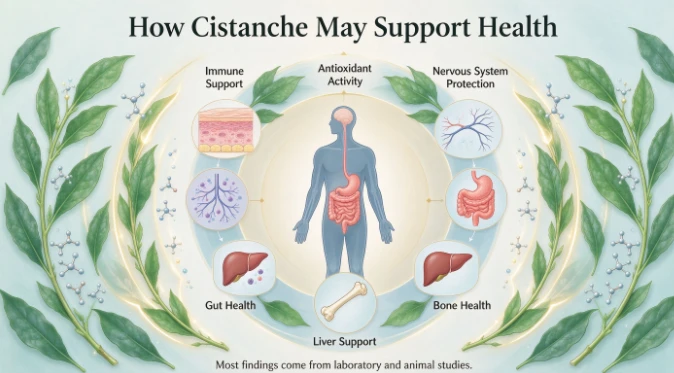
One of Cistanche's most studied properties is its ability to support the immune system. The main players here are its polysaccharides, glycosides, and flavonoids.
In laboratory studies, these compounds have been shown to:
Boost the activity of macrophages - the "first responders" of the immune system that engulf and destroy pathogens.
Increase the mass of immune organs and support the growth and maturation of immune cells.
Stimulate both T-cells and B-cells - the two main branches of the adaptive immune system - encouraging them to release signaling molecules (cytokines) that coordinate immune responses.
Enhance the activity of natural killer (NK) cells, which help target infected or abnormal cells.
Promote the release of key cytokines like IL-1 and IL-2, and increase the expression of important immune cell markers such as CD3, CD4, CD8, and CD28.
In short, Cistanche appears to work as a broad-spectrum immune modulator - helping the body's defenses respond more effectively without simply "revving up" the immune system in a harmful way.
2.2 Antioxidant Activity and Healthy Aging
Our bodies constantly produce unstable molecules called free radicals - specifically reactive oxygen species (ROS) and reactive nitrogen species (RNS). In small amounts, these are normal and even useful. But when they accumulate faster than our antioxidant defenses can neutralize them, they trigger a state called oxidative stress, which is closely linked to aging and to damage in cells and tissues throughout the body.
Cistanche has shown meaningful antioxidant power in multiple studies:
Superfine-ground Cistanche powder has demonstrated strong ability to scavenge DPPH and ABTS free radicals (two standard laboratory assays for antioxidant activity) and to reduce oxidizing molecules.
Cistanche extracts have been shown in animal studies to increase the activity of key antioxidant enzymes - including SOD (superoxide dismutase) and CAT (catalase) - in blood, liver, brain, and skin tissue. They also promote the secretion of glutathione peroxidase (GSH-Px), an enzyme that helps protect cells from oxidative damage.
At the same time, Cistanche has been found to reduce markers of oxidative damage, such as malondialdehyde (MDA) and lipofuscin (the "age pigment" that accumulates in aging cells).
These findings suggest Cistanche may help protect the skin from oxidative damage and support healthier aging at the cellular level - one reason it is attracting growing interest in both supplements and skincare.
2.3 Anti-Inflammatory and Cancer Research
Inflammation is a normal and necessary immune response, but chronic inflammation is linked to many diseases, including cancer. Cistanche's compounds have shown interesting activity on both fronts.
Anti-inflammatory activity: Cistanche polysaccharides appear to improve the function of cells under inflammatory stress and exert anti-inflammatory effects.
Cancer-related research: Studies suggest that certain Cistanche glycosides - including phenylethanol glycosides, echinacoside, and lignan glycosides - may inhibit the proliferation and migration of cancer cells and promote their programmed cell death (apoptosis).
Importantly, researchers note that Cistanche polysaccharides do not appear to directly kill cancer cells. Instead, they work indirectly, by modulating the immune system to help the body recognize and fight abnormal cells. The glycoside compounds, meanwhile, appear to act through more direct mechanisms - targeting key signaling pathways, influencing the cell cycle, activating anti-proliferation proteins, and even blocking the formation of new blood vessels that tumors need to grow.
It is crucial to emphasize: these are laboratory and preclinical findings. They point to promising mechanisms, but they are not evidence that Cistanche treats or cures cancer in humans. We'll return to this important caveat later.
2.4 Nervous System Support
One of the most exciting areas of Cistanche research involves the nervous system. Several compounds - including its peptides, polyphenols, and phenylethanol glycosides - have shown notable neuroprotective activity in animal and cellular models.
Here's what researchers have observed:
Protection against ischemic injury: Cistanche compounds appear to enhance cells' ability to withstand stress, improve mitochondrial function, and reduce the cell death triggered by ischemia-reperfusion (the damage that occurs when blood flow is restored to tissue after a period of deprivation - as in stroke). This has been linked to improved recovery of neural function.
Promoting neural repair: Some studies suggest Cistanche phenylethanol glycosides may support the regeneration of blood vessels and nerves in the brain, enhance antioxidant activity in brain tissue, and improve the integrity of the blood-brain barrier.
Alzheimer's disease research: Preclinical studies have explored Cistanche's potential against neurodegenerative conditions like Alzheimer's disease (AD). The proposed mechanisms include antioxidant and anti-apoptotic effects, reducing the deposition of amyloid-beta (Aβ) protein, and limiting abnormal phosphorylation of tau protein - both hallmarks of AD pathology.
Parkinson's disease research: Cistanche's echinacoside has been studied for its ability to target neuroinflammatory signaling pathways (such as TLR4/NF-κB), inhibit abnormal activation of microglia (the brain's immune cells), and help maintain the health of dopamine-producing neurons - the cells that degenerate in Parkinson's disease.
Again, these are promising preclinical leads - not proven human treatments. But they explain why Cistanche is attracting serious attention from neuroscience researchers.
2.5 Gut Health and the Microbiome
The relationship between Cistanche and the gut is a rapidly growing area of research, and one with fascinating and somewhat surprising findings.
Scientists have studied how different Cistanche extracts affect the community of microorganisms that live in our intestines - the gut microbiome. The results reveal that the type of extract matters:
At the phylum level, water extracts of Cistanche increased the ratio of Firmicutes to Bacteroidetes, while alcohol extracts had the opposite effect. Since an elevated Firmicutes/Bacteroidetes ratio is sometimes associated with obesity, this suggests water extracts might theoretically increase obesity risk, while alcohol extracts might help reduce it.
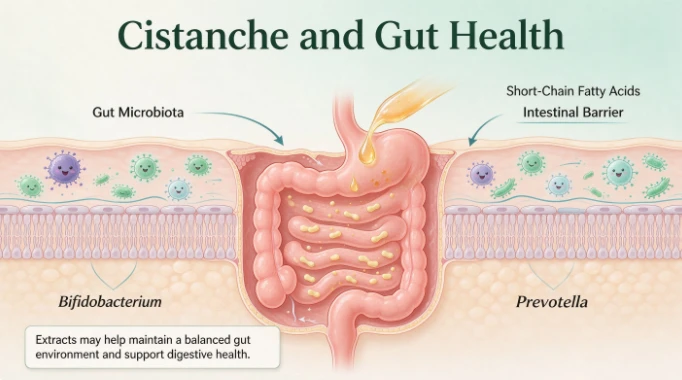
At the genus level, however, both types of extracts produced beneficial effects: they reduced the abundance of certain potentially problematic bacteria (like Bacteroides in the intestinal lumen) while promoting the growth of beneficial microbes such as Bifidobacterium and Prevotella.
Both extracts also significantly increased the production of short-chain fatty acids (SCFAs) - particularly butyrate - which are crucial for maintaining the gut barrier, fueling intestinal cells, and supporting overall digestive health.
This aligns beautifully with Cistanche's traditional use as a gentle laxative and digestive tonic. Modern research suggests that its polysaccharides and other compounds work in multiple ways: promoting intestinal movement, supporting a healthy microbial balance, increasing beneficial short-chain fatty acids, protecting the gut barrier, and calming inflammation - together helping to maintain a healthy digestive system.
2.6 Beyond the Big Five: Bone, Liver, and Fatigue
Cistanche's benefits extend even further, with research touching on bone health, liver health, and physical stamina:
Bone health: In traditional medicine, the kidney is linked to bone strength. Studies suggest Cistanche's glycosides and polysaccharides, through their strong anti-inflammatory properties, may promote the differentiation of bone-building cells (osteoblasts), inhibit bone-resorbing cells (osteoclasts), and slow bone loss - potentially helping maintain bone density after menopause.
Liver protection: Research on alcohol-induced liver damage in animals found that Cistanche phenylethanol glycosides could help regulate the genes and proteins involved in fat metabolism, reduce lipid accumulation in the liver, and ease the inflammation and oxidative stress caused by alcohol - suggesting potential for protecting against alcohol-related liver injury.
Anti-fatigue: Studies on Cistanche tubulosa oligosaccharides found they could help modulate the neuroendocrine axis, reduce the buildup of exercise-related metabolic byproducts, and lower markers of fatigue-related oxidative damage - pointing to genuine anti-fatigue potential.
Taken together, the science paints a picture of an exceptionally versatile botanical - one that touches immunity, aging, inflammation, the nervous system, gut health, bone, liver, and energy.
3. From Desert to Shelf: How Cistanche Is Becoming Modern Products
All of this biological activity is interesting - but for the health industry, the real question is: can it be turned into products people actually want to buy? The answer is a resounding yes, and the range of Cistanche products already on the market is far broader than most people realize.
3.1 Sliced and Dried Cistanche (The Traditional Form)
The most traditional Cistanche product is simply the sliced, dried herb. Harvesting is a careful process: fresh Cistanche stems are collected during specific seasons, and only mature stems meeting size standards are used. Because fresh stems contain a great deal of water, they spoil quickly and are prone to mold and enzymatic breakdown - so they must be dried quickly to preserve quality and active compounds.
Modern drying has moved well beyond simple sun-drying. Today's options include hot-air drying, microwave drying, vacuum freeze-drying, and far-infrared vacuum drying. Interestingly, while vacuum freeze-drying preserves the most active compounds, researchers have found that for large-scale production, a combination approach - gradient hot-air drying at 40–80°C combined with microwave enzyme inactivation - offers the best balance of quality and cost.
3.2 Cistanche Beverages: A Fast-Growing Category
One of the most exciting product categories is beverages. Cistanche is being transformed into everything from thick "puree" drinks to sophisticated functional beverages:
Cistanche pulp drinks (原浆): Made by pressing, extracting, concentrating, filtering, bottling, and sterilizing Cistanche into a thick, deep-brown, semi-transparent drink with a rich herbal flavor. Producers use enzymes (like cellulase and pectinase) to break down the plant material and release its active compounds into smaller, more easily absorbed molecules.
Compound functional beverages: Cistanche is being blended with a wide range of complementary ingredients - fruit juices (grape, melon, rose), other medicinal-food herbs (goji berry, red dates, hawthorn, ginseng, licorice, and more) - to create flavorful, health-positioned drinks. One notable formulation combined rose paste with Cistanche extract, producing a bright, sweet-tart drink with a pleasant floral aroma. Another combined 16% Cistanche juice with 40% jujube juice, showing strong antioxidant activity and a pleasing taste.
Fermented beverages: This emerging category includes Cistanche kombucha-style drinks, yogurts, and fermented teas. These combine Cistanche's active compounds with beneficial probiotics (like Lactobacillus), potentially improving both flavor and nutrient absorption. Cistanche-red-date yogurt, for example, showed significant antioxidant activity. However, this category is still largely in development.
Solid (instant) beverages: Using spray-drying, vacuum freeze-drying, fluidized-bed granulation, and ultra-fine grinding, Cistanche is being turned into convenient instant powders and teas - easy to dissolve, easy to absorb, and easy to carry. These are often blended with tea, coffee, goji, dates, and other functional ingredients for enhanced taste and nutrition.
3.3 Fermented Foods: Wine and Vinegar
Cistanche is also entering the world of fermented foods:
Cistanche wine: This comes in several forms. Fermented wine is made by co-fermenting Cistanche (as pulp, extract, or powder) with traditional ingredients like malt, glutinous rice, or grape juice - producing everything from low-alcohol drinks to distilled spirits. One study described a Cistanche-grape wine with a pleasant flavor and improved antioxidant activity. There are also blended medicinal wines and "dew wines" (a type of low-alcohol herbal tonic) that infuse Cistanche with other herbs for a gentle, aromatic health drink.
Cistanche vinegar: Both infused vinegar (soaking Cistanche slices in rice or aged vinegar for 1–3 months) and fermented vinegar (a more complex brewing process involving Cistanche, red dates, barley, and other grains) are being developed as nutritious health vinegars.
3.4 Sweet Treats: Pastes, Preserved Fruit, and Tablets
For those who want the benefits without the herbal taste, Cistanche is being turned into sweet, convenient products:
Cistanche paste (膏): Concentrated by boiling Cistanche with sugar syrup or honey, this rich paste delivers a high dose of nutrients in a small serving - used for bone health, gut health, and as a gentle laxative.
Cistanche preserved fruit (蜜饯): Cistanche soaked or simmered in honey produces a sweet, snackable form that's both tasty and nourishing.
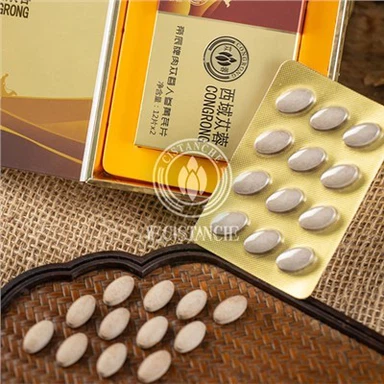
Cistanche tablets and candies: Cistanche powder or extract is pressed into tablets, gummies, and lozenges - sometimes blended with other ingredients - offering a convenient way to mask the herb's taste while providing daily nutritional support.
3.5 Supplements, Medicines, and Skincare
Beyond food, Cistanche has established itself in more formal health and beauty categories:
Health supplements: As of December 2024, regulatory records in China listed 44 health food products approved with Cistanche or its extracts as ingredients - including tablets (12), alcoholic preparations (10), capsules (7), teas (7), and other forms (8). Their approved health claims focus on anti-fatigue, immune support, antioxidant activity, and digestive regularity.
Medicines: Cistanche is an active ingredient in a number of traditional Chinese medicines, including kidney-supporting pills, memory-supporting capsules, and laxative preparations. Similar products exist internationally, such as Cistanche-based vitality capsules.
Skincare and cosmetics: Thanks to its antioxidant, brightening, and anti-aging properties, Cistanche is increasingly used in cosmetics - appearing in products positioned for whitening, anti-aging, sun protection, moisturizing, and soothing. Its natural, plant-derived profile makes it an appealing ingredient for consumers seeking "clean" beauty.

4. The Industry's Honest Challenges
For all its promise, the Cistanche industry is not without growing pains. A candid look at the current landscape reveals several challenges that the sector will need to address:
Inconvenient traditional forms. The most traditional products - sliced, dried Cistanche - require long cooking or steeping to be usable. This is a barrier for modern, busy consumers who want convenience.
Homogenization and vague positioning. Many newer products (beverages, wines, tablets) look and feel similar, with unclear functional positioning and poorly defined active-ingredient content. "Better-for-you" claims without precise, verifiable composition can erode consumer trust.
Gaps in product variety. Fermented Cistanche products and snack-style products remain scarce, leaving consumer needs unmet.
Limited distribution for medicines. Cistanche-based medicines are sold mainly through pharmacies, restricting their reach.
Outdated supplement formats. Many supplements still come in traditional forms (tablets, wines, teas) that struggle to excite younger, design-conscious consumers.
Skincare quality control. Some cosmetic products face issues with low extract purity, unclear ingredient amounts, and overly vague efficacy claims.
The bottom line: while the raw material is exceptional, the industry's product design, technological innovation, and new-product development still have significant room to grow.
5. Where Is Cistanche Headed Next?
Despite these challenges, the outlook for Cistanche is genuinely bright. Several converging trends point the way forward:
A strategic policy tailwind. Under China's "Healthy China" initiative and growing public interest in the "medicine and food homology" concept, Cistanche sits at the intersection of tradition and modern wellness - exactly where the health industry is heading.
An aging-focused wellness market. As populations age, demand for products supporting vitality, bone health, cognition, and graceful aging is surging - all areas where Cistanche shows promise.
Smarter, more personalized products. The future of Cistanche product development will likely be shaped by artificial intelligence, enabling more personalized and precisely formulated products. Researchers envision combining traditional herbal knowledge with modern nutritional science to build evidence-based formulation frameworks for different consumer groups.
Better science and quality control. Plans include developing processing "fingerprint" profiles for Cistanche, using multi-omics technologies to map the nutritional composition of different varieties and regions, and building accurate dose-response evaluation models. This would close the gap between basic research and real-world application.
The vision is a Cistanche industry that is more scientific, more transparent, and more diversified - serving everyone from seniors seeking vitality to young consumers looking for convenient, appealing wellness products.
6. An Honest Note: What the Evidence Really Supports
This is perhaps the most important section of this article, so please read it carefully.
The scientific evidence for Cistanche's benefits is genuinely promising, but it comes with an important qualification: the majority of the research has been conducted in laboratory (cell) and animal models, not in humans.
This matters for several reasons:
Laboratory findings don't always translate to humans. Our bodies are complex, and an effect seen in a petri dish or a mouse may not appear in a human, or may appear differently.
The amounts of active compounds used in studies often differ from what's actually in a consumer product.
Well-designed human clinical trials - the gold standard of evidence - are still limited for most Cistanche health claims.
So, what does this mean for you?
If you're a consumer, it means you should view Cistanche products as wellness supplements with promising preliminary evidence, not as proven treatments for any disease. It is not a substitute for medical care, and you should always consult a qualified healthcare professional about health concerns - especially for conditions like cancer or neurodegenerative disease.
If you're in the industry, it means the opportunity - and the responsibility - lies in investing in rigorous clinical research and honest product claims.
This honest framing isn't a reason to be pessimistic. On the contrary, the breadth and consistency of the preclinical evidence is exactly why Cistanche deserves serious scientific attention. It's simply a call for rigor and transparency as this remarkable herb makes its way from desert sands to global shelves.

7. Conclusion: A Desert Treasure for the Modern Age
The story of Cistanche is a story of remarkable continuity - a plant valued for thousands of years in traditional medicine, now being validated and reimagined by modern science and modern industry.
From its humble origins as a parasitic herb growing in the world's harshest deserts, Cistanche has emerged as:
A science-backed source of diverse bioactive compounds - polysaccharides, phenylethanol glycosides, terpenoids, and flavonoids.
A botanical with broad biological promise - supporting immunity, fighting oxidative stress, calming inflammation, protecting the nervous system, and promoting gut health.
A versatile ingredient already transforming into everything from instant teas and probiotic yogurts to wines, vinegars, supplements, medicines, and cosmetics.
An industry on the cusp of evolution - moving from traditional, hard-to-use forms toward personalized, convenient, science-driven products.
The "desert ginseng" has earned its nickname. As research advances, clinical evidence accumulates, and product innovation accelerates, this humble desert plant is well positioned to become a significant player in the global health and wellness industry.
For now, the story is one of potential - carefully studied, honestly presented, and genuinely exciting. The next chapter, written by researchers, formulators, and increasingly by you the consumer, is still being written.
References & Further Reading
This article is an English popular-science adaptation of the peer-reviewed review: Zhang Jun, Li Yang, Jiang Xiaoxian, et al. "The Research Status and the Development Prospect of Cistanche deserticola Ma Products." Food Industry (食品工业), 2025. All functional-property descriptions and product-development information are drawn from the studies cited in that review.
Important disclaimer: This article is for general informational and educational purposes only. It is not medical advice, and it does not claim that Cistanche treats, cures, or prevents any disease. Most described benefits come from laboratory and animal studies and have not been confirmed in human clinical trials. Always consult a qualified healthcare professional regarding any health condition or before using any supplement.