Protecting The Aging Brain: How Cistanche Tubulosa Targets The Root Causes Of Alzheimer's Disease
Jul 21, 2026
Alzheimer's disease (AD) is the most common cause of dementia, affecting an estimated 55 million people worldwide-a number projected to triple by 2050. It is a disease that strips away memory, personality, and independence, leaving families devastated and healthcare systems strained. Despite billions of dollars in research, the drugs that exist provide only modest, temporary symptom relief. None halt the underlying neurodegeneration. This failure has driven interest in preventive and multi-targeted strategies-approaches that address not one, but several of the pathological processes that conspire to destroy the Alzheimer's brain. Cistanche tubulosa, through its active ingredients echinacoside and acteoside, is showing precisely this multi-targeted profile in preclinical research. It does not cure Alzheimer's. But it may help address the three pathological hallmarks-amyloid plaques, tau tangles, and cholinergic degeneration-simultaneously, providing a broader foundation for neuroprotection than any currently approved single drug.

The Pathology of Alzheimer's: Three Hallmarks, One Disease
Alzheimer's disease is defined by three interconnected pathological features, each a potential target for intervention.
1. Beta-Amyloid Plaques
Amyloid-beta (Aβ) peptides are fragments cleaved from the larger amyloid precursor protein (APP). In the healthy brain, Aβ is cleared efficiently. In Alzheimer's, it accumulates-first as soluble oligomers that are directly toxic to synapses, then as insoluble fibrils that aggregate into extracellular plaques. Aβ oligomers disrupt synaptic function, impair long-term potentiation (the cellular basis of memory), and trigger a cascade of oxidative stress and inflammation. While anti-amyloid monoclonal antibodies (lecanemab, donanemab) have recently shown modest clinical benefit, they target only this single pathway.
2. Neurofibrillary Tangles of Tau Protein
Tau is a microtubule-associated protein that stabilizes the internal skeleton of neurons. In Alzheimer's, tau becomes hyperphosphorylated, causing it to detach from microtubules and aggregate into paired helical filaments that form neurofibrillary tangles inside neurons. These tangles disrupt axonal transport, impair neuronal function, and ultimately lead to cell death. Tau pathology correlates more closely with cognitive decline than amyloid burden. The spread of pathological tau from cell to cell is thought to drive disease progression through the brain.
3. Cholinergic Degeneration and Neurotransmitter Deficits
The cholinergic hypothesis of Alzheimer's-the basis for the first generation of AD drugs-holds that the degeneration of acetylcholine-producing neurons in the basal forebrain is a primary driver of cognitive decline. Acetylcholine is essential for attention, learning, and memory. In AD, these neurons are among the first to die, and the loss of cholinergic signaling correlates with the severity of dementia. Acetylcholinesterase inhibitors (donepezil, rivastigmine, galantamine) work by preserving existing acetylcholine, but they do not protect the neurons themselves.
Underlying all three of these pathologies are two deeper processes: oxidative stress and neuroinflammation. Reactive oxygen species (ROS) damage neurons, promote Aβ aggregation, and accelerate tau hyperphosphorylation. Chronically activated microglia release pro-inflammatory cytokines (TNF-α, IL-1β, IL-6) that further damage neurons and impair synaptic plasticity. Breaking this cycle requires a multi-targeted agent-one that can reduce Aβ toxicity, inhibit tau pathology, protect cholinergic neurons, quench oxidative stress, and suppress neuroinflammation simultaneously. This is the profile that Cistanche tubulosa's phenylethanoid glycosides are demonstrating.
How Cistanche Tubulosa Targets Alzheimer's Pathology
1. Inhibiting Beta-Amyloid Aggregation and Toxicity
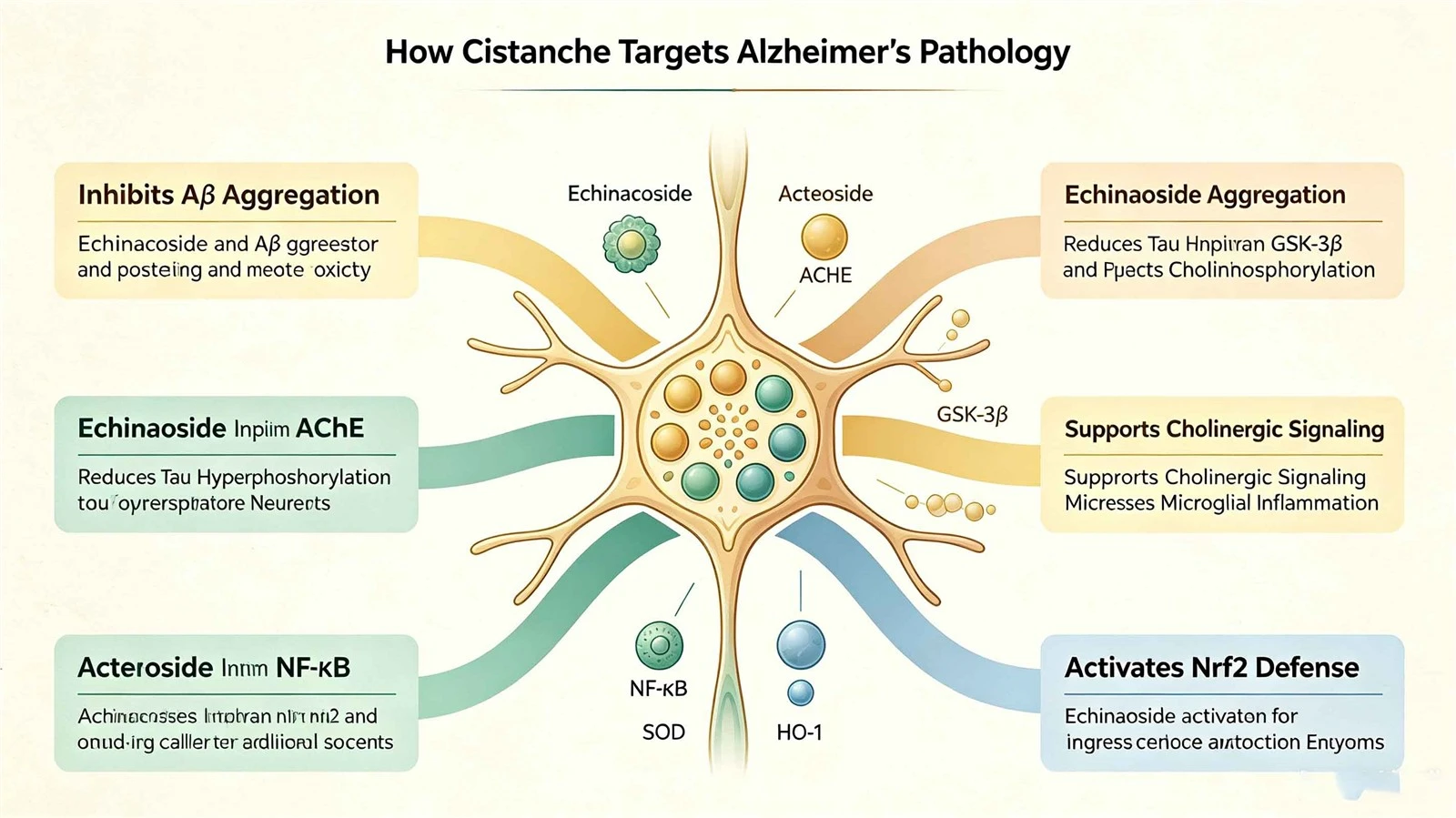
Echinacoside has been shown in multiple in vitro studies to directly inhibit the aggregation of Aβ into toxic oligomers and fibrils. By binding to Aβ peptides, it stabilizes them in a non-toxic conformation and prevents the formation of the β-sheet structures that characterize amyloid plaques. More importantly, echinacoside protects neurons from the toxic effects of existing Aβ oligomers. When cultured hippocampal neurons are exposed to Aβ, they undergo oxidative stress, mitochondrial dysfunction, and apoptosis. Pretreatment with echinacoside significantly reduces all three: ROS levels drop, mitochondrial membrane potential is preserved, and cell survival increases. This neuroprotective effect is mediated through Nrf2 activation and the subsequent upregulation of antioxidant enzymes.
Acteoside contributes by suppressing the inflammatory response to Aβ. Aβ activates microglia through toll-like receptors, triggering NF-κB-mediated cytokine release. Acteoside blocks this NF-κB activation, reducing the neuroinflammatory storm that amplifies Aβ toxicity.
2. Reducing Tau Hyperphosphorylation
Tau hyperphosphorylation is driven by several kinases, including GSK-3β. Echinacoside has been shown to inhibit GSK-3β activity in neuronal cells, reducing the abnormal phosphorylation of tau at multiple disease-relevant sites. In a transgenic mouse model expressing human tau, treatment with Cistanche extract reduced the accumulation of hyperphosphorylated tau in the hippocampus and cortex, preserved synaptic protein levels, and improved cognitive performance. This suggests that Cistanche may help address both the amyloid and tau arms of Alzheimer's pathology-a dual action that most existing drugs cannot achieve.
3. Protecting Cholinergic Neurons and Acetylcholine Signaling
The cholinergic hypothesis is the most pharmacologically validated target in Alzheimer's, and Cistanche addresses it directly. Echinacoside inhibits acetylcholinesterase (AChE), the enzyme that breaks down acetylcholine. By reducing AChE activity, it preserves acetylcholine levels in the synaptic cleft, supporting the cholinergic signaling essential for memory encoding. This mechanism is shared with prescription drugs like donepezil, though echinacoside acts with a gentler, modulatory profile.
Beyond simply preserving acetylcholine, echinacoside protects the cholinergic neurons themselves. In animal models of cholinergic degeneration, treatment with Cistanche extract reduced neuronal loss in the basal forebrain and maintained choline acetyltransferase activity-the enzyme that synthesizes acetylcholine. This means the extract supports both the supply of acetylcholine and the neurons that produce it, a more comprehensive approach than enzyme inhibition alone.
4. Suppressing Microglial Neuroinflammation
Neuroinflammation is no longer viewed as a mere consequence of Alzheimer's pathology; it is now recognized as a driver of disease progression. Chronically activated microglia cluster around amyloid plaques, releasing a continuous stream of inflammatory cytokines and ROS that damage surrounding neurons. Acteoside, as a potent NF-κB inhibitor, suppresses this microglial activation. In cellular models, acteoside-treated microglia exposed to Aβ produce significantly less TNF-α, IL-1β, and IL-6. In animal models of neuroinflammation, Cistanche extract reduces microglial activation markers and preserves synaptic density.
5. Antioxidant Protection Through Nrf2 Activation
Oxidative stress is the common soil in which all Alzheimer's pathologies grow. ROS promote Aβ aggregation, tau hyperphosphorylation, and neuronal death. Echinacoside's ability to activate the Nrf2 pathway provides a comprehensive, sustained antioxidant defense. By upregulating superoxide dismutase, glutathione, heme oxygenase-1, and catalase, it equips neurons with the enzymatic machinery to neutralize the oxidative burden of aging and amyloid toxicity. This is fundamentally different from taking a direct antioxidant supplement; it is the activation of the cell's own defense network, which is inherently more efficient and physiologically appropriate.
A comprehensive 2022 open-access review in Frontiers in Pharmacology summarizes these multi-target neuroprotective mechanisms, confirming that Cistanche tubulosa phenylethanoid glycosides act on amyloid, tau, cholinergic, inflammatory, and oxidative stress pathways-the full spectrum of Alzheimer's pathology. (Frontiers in Pharmacology review on Cistanche tubulosa)
The Active Ingredients: Echinacoside and Acteoside
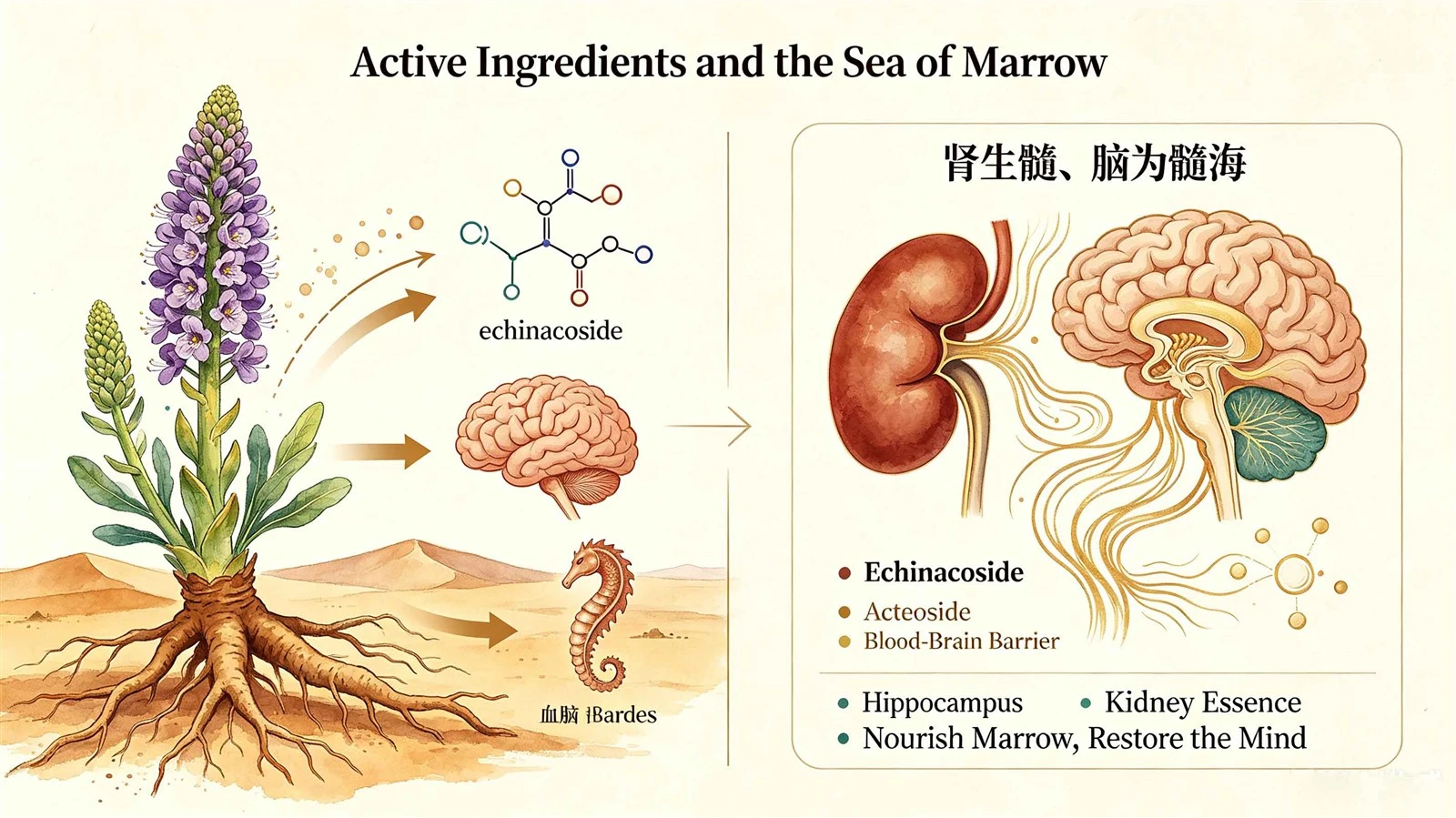
The anti-Alzheimer's effects of Cistanche are driven by its two signature active ingredients: echinacoside and acteoside (verbascoside). Echinacoside is the primary AChE inhibitor, Nrf2 activator, and Aβ aggregation inhibitor. Acteoside is the primary NF-κB inhibitor and anti-inflammatory agent. Both cross the blood-brain barrier and accumulate in brain regions relevant to Alzheimer's, including the hippocampus and cortex. A standardized extract containing 20–40% total phenylethanoid glycosides is essential to deliver the concentrations that research associates with these neuroprotective effects. Visit our product list and specification page to review products with verified active ingredient content.
Traditional Wisdom: "Replenishing the Marrow" for the Aging Brain
In classical Chinese medicine, Alzheimer's-like cognitive decline was attributed to "Kidney essence depletion" leading to "marrow deficiency." The brain is the "Sea of Marrow," and when Kidney essence wanes-as it does with age-the marrow is insufficient to nourish the brain, resulting in forgetfulness, confusion, and the gradual dissolution of memory and personality. Cistanche, as the supreme Kidney essence tonic, was prescribed for the elderly exhibiting these signs. It was said to "replenish the essence, nourish the marrow, and restore the mind." This two-thousand-year-old clinical observation now resonates with the modern finding that echinacoside and acteoside cross the blood-brain barrier and protect the very hippocampal and cholinergic neurons that degenerate in Alzheimer's.
Integration: A Preventive, Not a Cure
It must be stated clearly: Cistanche tubulosa is not a cure for Alzheimer's disease. It has not been tested in large-scale human clinical trials for AD outcomes. The evidence comes from preclinical models-cell cultures and animals-which provide mechanistic plausibility but do not guarantee clinical efficacy. Cistanche is best understood as a preventive or supportive agent, one that may help maintain cognitive resilience when used consistently over years, particularly when integrated into a comprehensive brain-health lifestyle: a Mediterranean or MIND diet, regular physical exercise (which is the most powerful known BDNF booster), cognitive stimulation, social engagement, and management of cardiovascular risk factors like hypertension and diabetes.
For individuals with a strong family history, subjective cognitive decline, or mild cognitive impairment (MCI), a daily dose of 400–600 mg of a standardized Cistanche tubulosa extract, taken long-term, provides the phenylethanoid glycosides that research links to anti-amyloid, anti-tau, cholinergic, and anti-inflammatory neuroprotection. The extract should be used in consultation with a healthcare provider, particularly for those already taking prescription Alzheimer's medications, as the combined cholinergic effects would require monitoring.
Our CogniProtect Cistanche Extract is sourced from authentic Cistanche tubulosa and standardized for a high concentration of echinacoside and acteoside-the active ingredients that research links to multi-target Alzheimer's pathology protection. Each batch is third-party tested for purity and potency.
Alzheimer's disease is a formidable adversary. No single compound, natural or synthetic, has conquered it. But a botanical that addresses not just one but five of its pathological pathways-amyloid, tau, cholinergic loss, oxidative stress, and neuroinflammation-deserves a place in the conversation about prevention and long-term cognitive resilience. Cistanche tubulosa may not be the magic bullet, but it is a compellingly multi-targeted arrow in a quiver that must include many.
Supportive Service Of Wecistanche-For more details about cooperation
Business contact: goujinsong@wecistanche.com