Cistanche Tubulosa Ethanol Extract: Can This Desert Ginseng Help Against Exercise‑Induced Fatigue?
Nov 03, 2026
Introduction: The Global Search for Natural Anti‑Fatigue Solutions
Physical tiredness triggered by strenuous exercise, clinically known as exercise‑induced fatigue, is not simply subjective exhaustion. It represents a temporary drop in maximum muscle contraction capacity and output power, accompanied by cascading physiological and biochemical shifts throughout multiple organ systems of the human body. For competitive athletes, fitness enthusiasts, people with physically demanding occupations, and anyone engaging in regular high‑intensity workouts, exercise‑related fatigue limits performance, slows post‑training recovery, and may contribute to long‑term physical strain when recovery cycles are repeatedly disrupted.
Conventional approaches to managing workout fatigue often rely on synthetic supplements, high‑dose caffeine, or simple carbohydrate loading. Yet a growing segment of sports‑nutrition consumers are turning toward plant‑derived ingredients with centuries‑long traditional use records, hoping to achieve sustained stamina support with fewer unwanted side‑effects. Among these botanicals, Cistanche tubulosa, frequently nicknamed "Desert Ginseng", stands out as a promising candidate for endurance support research.
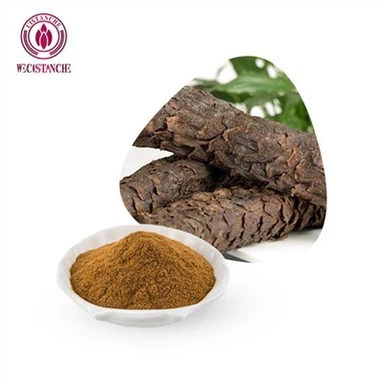
Cistanche tubulosa is a perennial parasitic herb from the Orobanchaceae plant family. It thrives in arid southern Xinjiang of China and nearby desert zones, drawing nutrients from host desert shrubs rather than photosynthesis. In Traditional Chinese Medicine practice, the fleshy scaly stems of Cistanche tubulosa have been applied for hundreds of years as a tonic for vitality, essence‑blood nourishment, and overall physical resilience. Modern phytochemical investigations show this desert‑dwelling herb is packed with phenylethanoid glycosides, terpenoids, alkaloids, polysaccharides, amino acids and trace minerals. Its signature compounds such as echinacoside and acteoside deliver antioxidant, immune‑modulating, neuroprotective and anti‑aging bioactivities, as documented in multiple pharmacological papers.
Even though many related herbs have been evaluated for fatigue relief in animal testing, concrete data specifically describing Cistanche tubulosa ethanol extract's impact on exercise‑triggered exhaustion remained limited until recent controlled animal research. This article unpacks real‑world laboratory observations from treadmill‑based mouse trials, explains core fatigue‑related biomarkers, clarifies how Cistanche tubulosa extract may alter physical endurance outcomes, discusses organ‑level physiological responses, and outlines key limitations of existing animal‑only evidence. Our goal is to translate academic lab work into accessible, actionable information for readers interested in herbal sports nutrition.
What Exactly Is Exercise‑Induced Fatigue, And How Do Scientists Measure It?
Before diving into Cistanche tubulosa test results, it helps to understand how researchers define and quantify physical fatigue in pre‑clinical settings. When the body undergoes progressive heavy exercise, two major forces drive fatigue onset: depletion of internal energy fuel storage, plus buildup of metabolic waste substances from muscle breakdown and incomplete oxygen‑driven respiration.
Scientists frequently employ rodent treadmill running or forced‑swimming animal models to replicate workout‑induced tiredness under standardized lab conditions. Among available protocols, the 10‑stage progressive‑load treadmill protocol originally created by Bedford and colleagues has become a gold‑standard method. The test gradually raises running belt speed, treadmill incline, and exercise duration step‑by‑step until test animals hit complete physical exhaustion (exhaustion status: animals cannot maintain required running speed despite repeated gentle electrical prompting).
Researchers do not only observe outward physical behaviors. They also analyze measurable biochemical markers from blood serum and tissue samples to judge fatigue severity. Below are core biomarkers mentioned in Cistanche tubulosa anti‑fatigue investigations:
Blood Glucose (GLU): Primary circulating energy substrate. Prolonged hard exercise sharply consumes blood glucose, and low glucose readings strongly correlate with fatigue feelings.
Hepatic Glycogen (HG) & Muscle Glycogen (MG): Glycogen represents stored carbohydrate energy kept inside liver and muscle tissue. Once glycogen reserves run low, physical performance rapidly deteriorates. Maintaining glycogen storage capacity is central for extended endurance capabilityPMC.
Blood Urea Nitrogen (BUN / UREA): When carbohydrate fuel runs short, the body begins breaking down protein for energy, generating urea nitrogen waste. Higher post‑exercise serum urea nitrogen signals greater physical stress and protein catabolism from overexertion.
Creatine Kinase (CK): This enzyme leaks into blood circulation after skeletal muscle cell injury or membrane damage. Elevated CK concentrations serve as a classic marker for exercise‑provoked muscle micro‑trauma.
Lactate Dehydrogenase (LDH): LDH participates in lactate‑pyruvate conversion. Severe muscle fiber disruption releases LDH into serum; preserving stable LDH levels points toward reduced exercise‑related tissue harm.
Lactic Acid (LAC): Metabolic by‑product of anaerobic muscle metabolism. While lactic acid is not the sole cause of muscle soreness, its rising concentration accompanies high‑intensity physical load.
Besides blood and tissue biochemistry, pathologists examine organ histology (microscopic tissue slices). Intense exhaustive running can inflict visible microscopic harm to lung tissue: alveolar dilation, fractured alveolar walls, alveolar fusion, widened interstitial spaces and local immune‑cell infiltration can appear after extreme exercise stress, even without obvious bacterial infection. Changes in relative organ weight (organ wet weight divided by total body weight percentage) offer extra clues regarding physiological adaptation or organ stress under physical challenge.
Combining behavioral performance metrics (total running distance, time‑to‑exhaustion, electrical‑stimulation frequency needed to compel running) with biochemistry and tissue morphology allows scientists to build comprehensive pictures of fatigue status in lab animal subjects.

Background Profile of Cistanche Tubulosa: "Desert Ginseng" of Xinjiang
Cistanche tubulosa grows wildly across arid zones of southern Xinjiang, Ningxia, Gansu, Qinghai and Inner Mongolia. Unlike green leaf plants, it is fully parasitic: it anchors itself onto root systems of drought‑resistant desert shrubs to absorb water and nutrition, producing thick, meaty underground stems covered by scale‑shaped leaves. Local communities in Xinjiang have harvested this plant for generations under the common local name "Da Yun".
Phytochemical analysis demonstrates that phenylethanoid glycosides constitute its most valuable bioactive fraction. Echinacoside and acteoside (verbascoside) function as benchmark marker compounds used in commercial extract quality‑control testing. Beyond glycosides, Cistanche tubulosa contains polysaccharides, betaine, various terpenoid molecules, amino acids and trace mineral elements, each contributing overlapping biological benefits including antioxidant defense, inflammatory response modulation, and energy‑metabolism regulation.
Ethanol liquid‑solvent extraction is a widespread industrial laboratory technique for concentrating phenylethanoid glycosides out of dried Cistanche tubulosa plant material. In the mouse anti‑fatigue experiment we reference, researchers crushed raw dried herb powder, soaked material in 75% ethanol solution at a material‑liquid ratio of 1:10 for 24 hours, filtered solids away, further purified filtrate with macroporous resin media, and vacuum‑rotary‑evaporated liquid solvent down to concentrated stock extract solution with 1 gram raw herb equivalent per milliliter liquid extract. Three distinct working concentrations were prepared for oral gavage administration: low‑dose (0.08 g/mL raw‑herb equivalent), medium‑dose (0.16 g/mL), and high‑dose (0.32 g/mL) groups. Test mice received daily oral dosing continuously over a 14‑day pretreatment window before treadmill fatigue testing began.
Important note: Doses implemented in mouse trials cannot be directly converted into human supplement serving sizes. Animal study outcomes supply mechanistic hints, yet human clinical trials remain absent for Cistanche tubulosa anti‑fatigue applications. We cover these limitations later in this article.
How Researchers Set Up The Treadmill Fatigue Trial for Mice
The experiment enlisted a total of 60 healthy young male Kunming‑strain laboratory mice, initial body‑weight range 18‑22 grams. All animal care and testing protocols obtained formal ethical review approval from the university animal welfare committee. Animals were housed under stable standardized laboratory conditions with unrestricted clean drinking water and commercial rodent pellet feed.
Before formal fatigue challenge, every mouse completed three‑day treadmill adaptive training sessions: zero‑degree slope, running speeds of 10 m/min and then 14 m/min for 15 minutes each session, so rodents grew accustomed to treadmill movement and electric‑shock stimulus environment, minimizing novelty‑driven stress variables.
Subjects were then sorted randomly into five experimental cohorts:
NE (Non‑Exercise control group): No treadmill running challenge; given identical‑volume saline oral gavage for 14 days. N=10 mice.
EC (Exercise Control group): Receiving saline gavage, subjected to full 10‑stage progressive treadmill exhaustion protocol. N=10 mice.
E+CtW‑L (Low‑dose Cistanche tubulosa ethanol extract + exercise): 0.08 g/mL extract oral dose, treadmill fatigue challenge. N=12 mice.
E+CtW‑I (Medium‑dose Cistanche tubulosa ethanol extract + exercise): 0.16 g/mL extract oral dose, treadmill fatigue challenge. N=12 mice.
E+CtW‑H (High‑dose Cistanche tubulosa ethanol extract + exercise): 0.32 g/mL extract oral dose, treadmill fatigue challenge. N=12 mice.
All supplemented groups were orally gavaged once each morning for 14 consecutive calendar days, using consistent volume 0.2 mL per 10 g body weight. EC and NE control groups got matching volume of sterile saline solution to isolate effects originating purely from Cistanche tubulosa extract components rather than gavage handling stress.
The 10‑phase progressive treadmill exercise scheme gradually elevated incline slope and belt velocity from phase 1 through phase 9. Each phase 1‑9 persisted for fixed three‑minute durations. Phase 10 raised slope to 11 degrees and running speed up to 22 m/min, and mice kept running until genuine physical exhaustion was achieved (animal repeatedly fell back onto stimulus zone and refused to resume running).
A clever split‑sampling strategy was adopted for CtW supplemented cohorts: half animals from each CtW‑supplemented group were humanely sacrificed for tissue and blood sampling immediately finishing stage 9 (the time‑point when plain exercise‑control EC animals already displayed obvious fatigue signs). The remaining half of CtW‑treated rodents continued onward through phase 10 all the way to complete exhaustion, allowing scientists to compare biomarker status both "at the fatigue threshold" and "at total physical collapse". After euthanasia, researchers harvested blood serum, heart, liver, spleen, lung, kidney, gastro‑intestinal tract, and femoral skeletal‑muscle tissue. Organ wet‑weight was recorded to compute relative‑organ‑weight percentages. Biochemical kits and clinical blood analyzers quantified serum markers plus liver‑muscle glycogen values. Lung specimens were fixed in formalin solution, paraffin‑embedded, sectioned, H‑E‑dyed, and inspected under optical microscope for tissue‑structure damage assessment.
Statistical analysis applied unpaired t‑test for contrasts between non‑exercise NE group and exercise‑only EC group, alongside one‑way ANOVA for cross‑group comparisons among EC vs CtW supplementation groups. P‑value thresholds were defined: p < 0.05 as statistically significant difference; p < 0.01 marked highly significant difference.

Key Observations Part One: Validating the Exercise‑Fatigue Mouse Model
First, researchers verified whether their 10‑stage treadmill procedure reliably produced reproducible exercise‑induced fatigue symptoms in EC exercise‑control mice.
When reaching phase 9 of treadmill testing (slope 10°, running speed 20 m/min), EC exercise‑control animals exhibited classic visible fatigue manifestations: they actively resisted forward running, frequently pressed their abdomen flat onto treadmill belt surface, required far‑more‑frequent electrical prompting to maintain movement, and demonstrated delayed reflex responses toward stimulation. In comparison, the non‑exercise NE control animals never underwent this physical stress and retained normal physiological baseline condition.
Body‑weight metrics revealed EC exercise‑control mice displayed statistically significant reduction in terminal body weight compared against NE non‑exercise counterparts (p < 0.05). Relative organ‑weight analysis uncovered that liver relative weight and kidney relative weight dropped significantly within EC group after heavy‑load exercise challenge (p < 0.05), while heart, spleen, and combined stomach‑intestine relative weight showed no meaningful inter‑group shifts.
Serum and tissue biochemistry differences were striking at stage 9 for EC animals:
Serum glucose (GLU), LDH activity, muscle glycogen (MG), hepatic glycogen (HG): highly significant reduction (p < 0.01) compared with NE non‑exercise baseline. Heavy physical exertion depleted circulating sugar and internal carbohydrate energy reserves.
Serum urea nitrogen (UREA) and creatine kinase (CK): highly significant elevation (p < 0.01). This reflected amplified protein breakdown for fuel and skeletal‑muscle cellular membrane leakage after exhaustive physical strain.
Serum lactic acid (LAC) trended higher in EC group, yet this difference narrowly missed formal statistical significance (p = 0.099).
Microscopic lung‑tissue inspection exposed distinct exercise‑provoked tissue harm within EC group specimens: local alveolar over‑expansion, fractured alveolar walls, merged alveolar cavities, broadened interstitial gaps, plus scattered lymphocyte immune‑cell infiltration inside lung interstitium. No heavy intra‑alveolar inflammatory fluid exudate was seen. NE non‑exercise mouse lung histology presented neatly organized alveolar architecture without those pathological changes.
Taken collectively, outward behavioral signs, body‑weight shifts, serum biochemical‑marker patterns, glycogen‑depletion data and lung‑histopathology all confirmed that the 10‑stage progressive treadmill model successfully generated stable exercise‑induced fatigue phenotype in control mice, laying solid groundwork for assessing Cistanche tubulosa extract intervention effects.
Key Observations Part Two: Cistanche Tubulosa Ethanol Extract Effects At Stage 9 (Fatigue‑Threshold Time‑Point)
Remember: at treadmill stage 9, EC exercise‑control mice already showed unambiguous fatigue symptoms. By contrast, mice receiving 14‑day pre‑treatment with Cistanche tubulosa ethanol extract (all three dosage levels: low, medium, high) did not display obvious outward exhaustion behaviors at this identical exercise phase.
For body‑weight and relative‑organ‑weight outcomes measured at stage 9: overall body weight across CtW supplementation cohorts did not statistically diverge from EC exercise‑control animals. When examining organ‑relative‑weight percentages, the medium‑dose E+CtW‑I group demonstrated significantly elevated lung relative weight and kidney relative weight compared to EC exercise‑control (p < 0.05). Heart, liver, spleen and combined stomach‑intestine relative weight values lacked significant differences between groups.
Biochemical marker data further illustrated protective metabolic profiles in CtW‑pre‑treated mice at stage 9 treadmill exercise:
Blood glucose: Low‑dose CtW group retained markedly higher serum glucose concentration versus EC exercise‑control (p < 0.001), helping sustain energy supply.
Serum urea nitrogen (UREA): Low‑dose CtW cohort showed significantly lower urea‑nitrogen readings relative to EC (p < 0.05), signaling diminished protein breakdown under physical stress load.
Lactate dehydrogenase (LDH): Every three CtW dosage groups registered significantly higher serum LDH activity than EC exercise‑control (p < 0.01), pointing toward less severe muscle‑cell membrane injury during exercise.
Muscle glycogen (MG): Medium‑dose and high‑dose CtW groups maintained substantially higher muscle‑glycogen storage compared with EC control (p < 0.001).
Hepatic glycogen (HG): Both medium‑dose and high‑dose supplementation groups preserved significantly elevated liver‑glycogen levels against EC exercise‑control (p < 0.05).
Creatine kinase (CK): CtW groups displayed downward CK tendency versus EC control (p = 0.052 borderline significance).
Lactic‑acid serum concentrations showed no major statistical differences among experimental groups at stage 9 testing window.
To summarize stage‑9 findings: when exercise‑control mice were already hitting fatigue threshold, animals pre‑supplemented with Cistanche tubulosa ethanol extract managed to preserve key energy‑storage molecules (liver and muscle glycogen), maintain blood‑glucose homeostasis, limit protein‑catabolic waste buildup, and reduce markers of muscle cellular damage. Their biochemical profiles stayed much closer to non‑exercise NE baseline reference values, demonstrating that CtW supplementation delayed the biochemical onset of exercise‑triggered fatigue, before physical collapse occurs.

Key Observations Part Three: Performance & Biomarker Outcomes At Stage 10 (Full Exhaustion End‑Point)
Half of each CtW‑supplemented mouse group kept running through phase 10 treadmill settings until reaching absolute physical exhaustion. This phase allowed researchers to measure how Cistanche tubulosa extract altered total endurance capacity, i.e., how long animals could keep pushing past stage‑9 fatigue threshold.
Endurance‑Performance Readouts
Compared with EC exercise‑control animals:
Low‑dose E+CtW‑L group achieved statistically longer total running duration and total running distance (p < 0.05).
Medium‑dose E+CtW‑I and high‑dose E+CtW‑H groups produced highly significant extension of exhaustive running time and covered distance (p < 0.01). The frequency of electrical stimulation required to drive running movement showed no meaningful inter‑group differences once all groups finally arrived at full‑exhaustion endpoint.
In plain language: even though CtW‑treated mice still eventually reached total physical exhaustion, they could sustain physical effort considerably longer and cover greater total exercise distance than exercise‑only control animals. This represents classic improved endurance performance phenotype from herbal pre‑treatment.
Exhaustion‑Stage Biochemical‑Marker Results
At phase‑10 exhaustion endpoint, distinctions between groups partially narrowed because all subjects had undergone maximal physical exertion:
Serum glucose (GLU): All CtW supplementation cohorts' glucose dropped substantially below NE non‑exercise baseline; no significant glucose gaps existed between CtW groups and EC exercise‑control at this late exhaustion time‑point.
Serum urea nitrogen (UREA): Low‑dose and medium‑dose CtW groups maintained significantly lower urea‑nitrogen concentrations than EC exercise‑control (p < 0.05). High‑dose CtW group urea nitrogen lacked statistical separation versus EC control.
Lactate dehydrogenase (LDH): Every three CtW dosage groups maintained significantly higher LDH levels than EC exercise‑control (p < 0.01), suggesting mitigation of exhaustive‑exercise‑related muscle‑tissue injury.
Creatine kinase (CK): All CtW‑supplemented groups displayed significantly reduced serum CK compared with EC exercise‑control (p < 0.05), consistent with less skeletal‑muscle membrane damage under extreme physical challenge.
Glycogen storage: Medium‑dose E+CtW‑I group possessed highly significantly higher muscle‑glycogen and liver‑glycogen content in comparison with EC exercise‑control (p < 0.01). Low‑dose and high‑dose groups showed upward glycogen trends without reaching equivalent statistical strength.
Relative organ‑weight percentages for heart, liver, spleen, lung, kidney and gastrointestinal tract showed no statistically‑significant differences across EC and CtW supplementation groups at phase‑10 exhaustion time‑point.
Overall phase‑10 data indicates that Cistanche tubulosa ethanol extract supplementation extended exhaustive exercise capability, moderated post‑exertion muscle‑damage biomarkers (CK, LDH), restrained excessive protein‑waste accumulation (UREA), and best preserved liver‑muscle glycogen energy reserves particularly within medium‑dosage treatment group, even when animals ultimately achieved full physical exhaustion state.

Discussion: What Mechanisms Might Explain Cistanche Tubulosa Anti‑Fatigue Activity?
Based on combined stage‑9 and stage‑10 lab measurements, we can outline several plausible mechanistic pathways for CtW ethanol‑extract anti‑fatigue action, though these remain hypotheses needing further mechanistic verification:
1. Preserving Glycogen Energy Reserves
Glycogen stored inside liver and skeletal muscle constitutes the body's primary rapid‑access endurance‑fuel depot. CtW‑pre‑treated animals retained higher hepatic‑glycogen and muscle‑glycogen concentrations at both fatigue‑threshold and exhaustion time‑points. Slower depletion of carbohydrate energy stockpile directly postpones fatigue arrival and permits longer total exercise duration. This mechanism aligns with findings reported for other well‑studied natural anti‑fatigue plant extracts, such as maple‑syrup extracts, blueberry concentrates and allicin preparations from garlic, which also work partially through glycogen‑sparing effects.
2. Reducing Skeletal‑Muscle Cellular Injury From Strenuous Exercise
Serum creatine kinase (CK) rises when skeletal‑muscle cell membranes sustain micro‑damage under heavy‑load workout. Consistently lower CK plus better‑preserved LDH serum profiles in CtW groups suggest CtW extract constituents may stabilize muscle‑cell membrane integrity against physical‑stress‑provoked leakage, lowering exercise‑induced muscle trauma. Phenylethanoid‑glycoside antioxidant activity likely contributes here, neutralizing reactive‑oxygen‑species oxidative stress generated during intensive muscular contraction.
3. Reducing Accelerated Protein Catabolism Under Physical Stress
When carbohydrate fuel supplies dwindle during prolonged exertion, human and animal bodies switch toward burning body‑protein for energy, producing urea‑nitrogen waste by‑product. Lower serum‑urea‑nitrogen levels in CtW‑treated mice imply CtW extract helps the organism retain carbohydrate‑based energy metabolism longer, delaying emergency protein breakdown triggered by fuel shortage.
4. Organ‑System Adaptations
At stage‑9 fatigue‑threshold, medium‑dose CtW mice demonstrated increased relative lung and kidney organ weight versus exercise‑only controls. Researchers point out this observation does not automatically equal "organ‑protective repair effect". It may reflect physiological adaptive organ‑weight shift in response to 14‑day CtW extract intake plus physical exercise stress. Importantly, once reaching full exhaustion phase‑10, those organ‑weight differences disappeared, reminding us organ‑weight changes should be interpreted cautiously and require follow‑up histopathology work beyond simple relative‑weight percentage metrics.
5. Antioxidant Properties of Phenylethanoid Glycosides
Cistanche tubulosa's signature phenylethanoid‑glycoside molecules (echinacoside, acteoside) are powerful natural free‑radical scavengers. Intense exercise generates large volumes of reactive oxygen species that assault muscle‑cell structures, speed glycogen consumption and amplify fatigue signals. Neutralizing oxidative burden is widely believed to form one foundational pillar for CtW anti‑fatigue biological function, even though this particular treadmill trial did not directly measure tissue oxidative‑stress markers such as MDA or SOD enzyme activity.

Critical Limitations of Current Research (Important For Consumers)
While mouse‑treadmill results look encouraging, readers must keep these essential constraints clearly in mind when interpreting Cistanche tubulosa anti‑fatigue science:
All data are from rodent animal‑model testing only. No human clinical trial results are available confirming Cistanche tubulosa ethanol‑extract anti‑fatigue or endurance‑boosting outcomes in human athletes or fitness users. Mouse metabolic physiology differs meaningfully from human beings. Positive mouse findings do not guarantee identical results translate to humans.
Dosage cannot be simply scaled‑over for human‑supplement usage. Oral gavage concentrations applied for 14‑day mouse pre‑treatment cannot be directly converted into milligram‑per‑day human serving recommendations. Safe and effective human dose ranges still remain undetermined.
This specific experiment used ethanol liquid extract from Cistanche tubulosa herb material. Commercial consumer Cistanche supplements vary enormously in extraction solvents, phenylethanoid‑glycoside content standardization, raw‑material sourcing, processing methods, and filler ingredients. Not every retail Cistanche product will reproduce experimental‑study extract composition. Product quality inconsistency represents a major real‑world challenge for herbal‑supplement shoppers.
We observe dose‑related trends (medium‑dose frequently delivering strongest biomarker‑sparing effect in this test), but the study design does not fully unpack exact molecular‑level signaling pathways. Additional lab investigation will be needed to pinpoint which exact Cistanche tubulosa chemical fractions drive anti‑fatigue benefits, and how those compounds interact with energy‑metabolism pathways inside muscle and liver tissue.
The trial focused exclusively on short‑term 14‑day pre‑supplementation followed by single‑bout exhaustive treadmill challenge. We lack information about long‑term multi‑week or multi‑month CtW supplementation combined with repeated cycles of physical training. How CtW interacts with chronic exercise training adaptation remains an open research question.
Safety evaluation scope was limited: researchers noted no obvious abnormal daily‑life behavioral signs in CtW‑dosed mice over two‑week feeding window. However, thorough multi‑generational toxicology, liver/kidney safety profiling has not been comprehensively completed for high‑dose long‑term CtW‑extract consumption.
Practical Take‑Aways For Fitness Enthusiasts & Supplement Shoppers
What lessons can readers draw from this animal‑model science for real‑world wellness context?
Exercise‑induced fatigue arises from intertwined energy‑storage depletion, metabolic‑waste accumulation, oxidative stress and subtle organ‑system physiological adjustments. Multiple biochemical markers together describe fatigue status; no single lab value tells the complete story.
Pre‑clinical mouse treadmill evidence shows standardized ethanol extract derived from Cistanche tubulosa ("Desert Ginseng") can delay biochemical fatigue markers, spare liver‑muscle glycogen energy stores, mitigate exercise‑related muscle‑damage indicators, and prolong total time‑to‑exhaustion in laboratory‑animal settings. Medium dosage in this trial delivered many of the most pronounced protective biomarker shifts.
These promising pre‑clinical results justify further scientific exploration, yet they are not human‑proof performance claims. At present there exists no gold‑standard human clinical data validating endurance‑enhancement benefits for people taking Cistanche tubulosa supplements.
If you choose to explore Cistanche‑containing herbal products for personal wellness purposes, prioritize products that publish third‑party testing verifying phenylethanoid‑glycoside marker compound content (echinacoside and acteoside). Avoid purchasing untested, low‑quality bulk raw‑herb powders with unknown active‑ingredient concentrations.
Always consult your healthcare provider or sports‑medicine physician before adding new herbal supplements, especially if you manage chronic medical conditions, take prescription medications, are pregnant, or are breastfeeding. Herbal substances are not automatically risk‑free merely because they originate from natural‑plant sources.
Conclusion
Cistanche tubulosa, the "Desert Ginseng" long‑valued within traditional herbal healing systems, has emerged as an intriguing candidate for natural exercise‑fatigue support thanks to modern pre‑clinical animal‑laboratory investigation. Under controlled 10‑stage progressive treadmill‑exhaustion mouse trials, 14‑day oral pre‑treatment with Cistanche tubulosa ethanol extract effectively delayed the onset of exercise‑induced fatigue biomarkers, preserved critical liver‑muscle glycogen energy reserves, lowered markers for muscle‑cell injury and protein‑catabolic waste, and significantly extended total running‑time‑to‑exhaustion distance in test rodents.
The biological effects are most likely multi‑factorial: glycogen‑sparing energy‑metabolism regulation, muscle‑cell‑membrane stabilization, mitigation of exercise‑driven protein breakdown, plus potent antioxidant activity from signature phenylethanoid‑glycoside phytochemicals all plausibly contribute. Even so, we need to emphasize again that all current positive evidence comes strictly from mouse‑model work. High‑quality human clinical trials are still absent.
Moving forward, further scientific work should focus on: human‑subject intervention trials, identifying which specific molecular fractions are responsible for anti‑fatigue potency, exploring long‑term supplementation safety profiles, and establishing clear industrial‑standard quality benchmarks for commercial Cistanche tubulosa extracts. Bridging the gap between promising desert‑plant pre‑clinical results and verified human wellness outcomes remains the next frontier for this fascinating herbal ingredient.
Disclaimer: This article serves educational‑informational purposes only, and does not constitute medical advice, dietary‑supplement claims, or performance‑enhancement recommendations. Animal‑study results cannot substitute human clinical‑trial proof. Always seek advice from qualified healthcare professionals prior to using any herbal supplement.