Cistanche Tubulosa Polysaccharides Alleviate Cognitive Impairment By Modulating Gut Microbiota And The Gut-Brain Axis: A Mechanistic Review
Oct 09, 2026
Abstract
Cognitive dysfunction represents the core manifestation of aging and neurodegenerative disorders such as Alzheimer's disease (AD). Emerging evidence indicates that gut microbiota-brain axis disruption plays a pivotal role in the pathogenesis of cognitive decline. Cistanche tubulosa polysaccharides (CDPS), the primary bioactive components of the traditional Chinese herb known as "desert ginseng," exhibit diverse pharmacological activities including immunomodulation, antioxidant activity, and gut microbiota regulation. This review synthesizes recent in vivo and in vitro findings to delineate the mechanisms by which CDPS ameliorates cognitive impairment. The proposed pathways involve reshaping gut microbial homeostasis, regulating microbial metabolites (short-chain fatty acids and amino acids), and suppressing peripheral inflammation and oxidative stress. These insights provide a theoretical foundation for the translational application of CDPS in memory and learning disorders.

Cistanche prevents Alzheimer's disease
Keywords: Cistanche tubulosa polysaccharides; gut microbiota; cognitive dysfunction; gut-brain axis; short-chain fatty acids; oxidative stress
1. Introduction
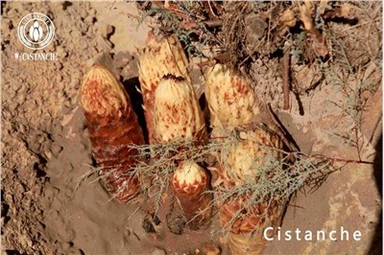
Cistanche tubulosa Y.C. Ma (Orobanchaceae family) is a perennial root-parasitic plant traditionally used as a tonifying herb in Asia. It was officially included in the Food-Medicine Dual-Use Directory in 2023. Its major bioactive constituents include phenylethanoid glycosides, polysaccharides, and cycloartenolides. Among these, polysaccharides are regarded as the principal active components, demonstrating immunomodulatory, anti-aging, neuroprotective, and gut microbiota-regulating properties.
Cognitive impairment is a hallmark of aging and Alzheimer's disease (AD), a progressive neurodegenerative disorder affecting millions worldwide with limited therapeutic options. The "gut-brain axis" concept has revealed that gut microbiota and their metabolites can influence central nervous system function via neural, immune, and endocrine pathways. Microbial dysbiosis has been consistently implicated in AD pathogenesis through amyloid-β (Aβ) aggregation, tau hyperphosphorylation, and neuroinflammation. Therefore, targeting the gut microbiota has emerged as a promising strategy for cognitive intervention.

Main Chemical Constituents of Cistanche tubulosa
2. Ameliorative Effects of CDPS on Cognitive Impairment in Animal Models
Multiple in vivo studies have confirmed the cognition-enhancing effects of CDPS across diverse experimental models:
D-galactose-induced aging model: Prolonged subcutaneous administration of D-galactose induces cognitive decline, gut microbial dysbiosis, peripheral inflammation, and oxidative stress in mice. CDPS treatment significantly improves performance in novel object recognition and Morris water maze tests, restoring spatial and learning memory.
APP/PS1 transgenic AD model: CDPS administration markedly ameliorates cognitive deficits in APP/PS1 double-transgenic mice, reduces cerebral Aβ deposition and tau hyperphosphorylation, and suppresses pro-inflammatory cytokine expression in the brain.
Scopolamine-induced memory impairment model: CDPS shortens escape latency in the water maze and reduces error counts in step-down tests. Mechanistically, this correlates with upregulated expression of synaptophysin (SYP) and GAP-43 in the hippocampus, restoring synaptic plasticity.

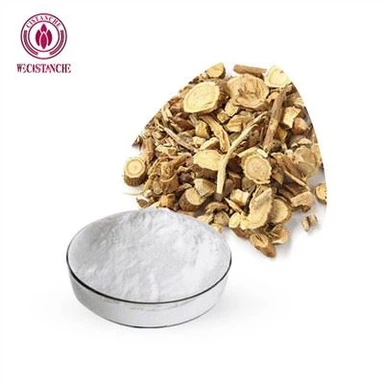
Phenylethanol glycoside is the main active component of Cistanche tubulosa
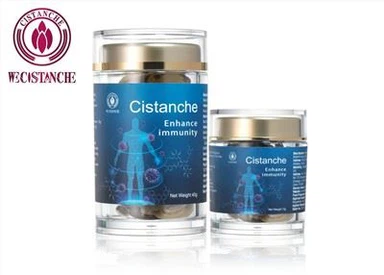
Click here to view Cistanche Enhance Immunity products
【Ask for more】 Email:cindy.xue@wecistanche.com / WhatsApp: 0086 18599088692 / WeChat: 18599088692
3. Core Mechanisms of CDPS in Regulating Gut Microbiota
3.1 Restoring Gut Microbial Homeostasis and Structural Remodeling
CDPS exerts profound modulatory effects on the gut microbiota composition:
Modulating the Firmicutes/Bacteroidetes (F/B) ratio: In D-galactose aging models, CDPS restores gut microbial homeostasis. In APP/PS1 models, CDPS dynamically regulates the F/B ratio-a key indicator of dysbiosis-alongside alterations in Desulfovibrio and Atopobiaceae species abundance.
Enriching beneficial taxa and suppressing pathogens: 16S rRNA sequencing reveals that CDPS elevates the abundance of beneficial, short-chain fatty acid (SCFA)-producing bacteria, including Akkermansia muciniphila, Bifidobacterium, Ligilactobacillus, and Lachnospiraceae_NK4A136_group, while suppressing potential pathogens such as Escherichia-Shigella and Klebsiella.
Microbiota-dependence validation: Critical experiments demonstrate that the cognitive benefits of CDPS are markedly weakened or abolished under conditions of gut microbiota ablation (via antibiotics) or immunosuppression (via cyclophosphamide). This provides direct evidence that the pro-cognitive effects of CDPS are strictly dependent on an intact gut microbiota and immune system.

Desert-living cistanche-Antioxidant
3.2 Regulating Microbial Metabolites: SCFAs and Amino Acids
Fermentation of CDPS by gut microbiota yields multiple neuroprotective metabolites:
Increased short-chain fatty acid (SCFA) production: During colonic fermentation, CDPS is degraded by fecal microbiota, leading to massive production of SCFAs including acetic acid, propionic acid, and butyric acid. Butyrate concentration can increase by over three-fold compared to model groups. SCFAs subsequently regulate Treg cell differentiation via G protein-coupled receptor (GPCR) signaling and inhibit histone deacetylase (HDAC) activity, exerting anti-inflammatory and neuroprotective effects.
Restoration of amino acid metabolism: Serum metabolomic profiling shows that D-galactose-treated mice exhibit altered levels of creatinine, valine, L-methionine, uric acid, and proline. CDPS intervention restores these metabolites to near-normal levels, alleviating amino acid imbalance-induced neuronal damage.
The protective role of D-proline and histidine: In APP/PS1 models, CDPS modulates D-proline and histidine metabolism. In vitro and in vivo validation confirms that these two key CDPS-associated metabolites protect against Aβ-induced apoptosis and oxidative stress in neurons.
3.3 Suppressing Peripheral Inflammation and Oxidative Stress
Restoration of gut microbiota homeostasis translates into systemic anti-inflammatory and antioxidant effects:
Alleviating oxidative stress: CDPS reduces malondialdehyde (MDA) levels and elevates superoxide dismutase (SOD) activity in brain tissue and serum, mitigating reactive oxygen species (ROS)-mediated damage to hippocampal neurons.
Inhibiting peripheral inflammation: Microbial restoration downregulates pro-inflammatory cytokines (e.g., TNF-α, IL-6) in serum, reducing the transmission of peripheral inflammatory signals to the central nervous system and thereby attenuating neuroinflammation and neuronal degeneration.

desert ginseng-anti-inflammatory
4. Integrated Pathway: The "Gut Microbiota-Metabolite-Neuroinflammation" Axis
Synthesizing current evidence, the mechanism by which CDPS improves cognitive function can be summarized as an integrated axis (Figure 1, not shown):
Oral CDPS → Fermentation and degradation by gut microbiota → Enrichment of beneficial taxa (Akkermansia, Bifidobacterium, etc.) → Production of SCFAs and regulation of amino acid metabolism → Restoration of intestinal barrier integrity, reduction of peripheral inflammation and oxidative stress → Microbial metabolites translocate to the CNS via circulation or vagus nerve → Inhibition of cerebral Aβ deposition and tau hyperphosphorylation, attenuation of neuroinflammation → Improvement of synaptic plasticity → Cognitive restoration
This pathway parallels the "gut microbiota-fatty acid metabolism-neuroinflammation" axis recently uncovered for Cistanche tubulosa glycosides (GCT) in APP/PS1 mice, wherein GCT rapidly enriches Akkermansia and suppresses Firmicutes, leading to increased neuroprotective SCFAs and decreased pro-inflammatory long-chain fatty acids. These convergent findings robustly support the gut-brain axis as the primary route through which low-bioavailability phytochemicals from Cistanche exert systemic neuroprotective benefits.

Cistanche herb-anti-inflammatory
5. Conclusion and Future Perspectives
Cistanche tubulosa polysaccharides exert multi-target, multi-pathway effects in modulating the gut microbiota-brain axis and demonstrate clear neuroprotective potential in aging-related cognitive decline and AD models. Current evidence is predominantly derived from animal studies; future clinical trials are essential to validate efficacy in humans. Additionally, the differential effects of CDPS fractions with varying molecular weights, the impact of processing methods (e.g., wine processing), and the structure-activity relationships between specific polysaccharide structures and bacterial taxa represent promising avenues for further investigation.