The Impact Of Cistanche On Intestinal Health
Oct 09, 2026
Abstract: Cistanche deserticola (known as Rou Cong Rong in Traditional Chinese Medicine) is a rare medicinal plant reputed as the "Ginseng of the Desert." Traditionally used to tonify the kidneys and moisten the intestines, modern pharmacological studies have unveiled its profound effects on the gastrointestinal system. This article reviews the mechanisms by which Cistanche regulates intestinal motility, reshapes the gut microbiota, repairs the intestinal barrier, and exerts systemic effects via the "Gut-Metabolism-Organ Axis."

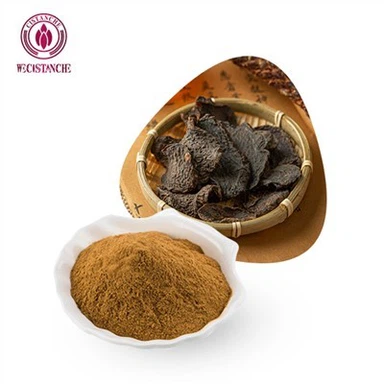
cistanche powder
1. Active Constituents and Processing
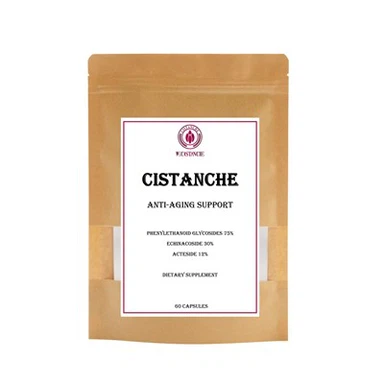
The pharmacological basis of Cistanche lies in its diverse chemical profile, primarily including Phenylethanoid Glycosides (PhGs) (e.g., echinacosides, acteosides), Cistanche polysaccharides (CDPS), lignans, and betaine. Notably, processing methods significantly alter their efficacy. Raw Cistanche may cause loose stools due to its laxative properties, whereas wine-processed Cistanche increases the content of PhGs, enhances kidney-yang tonifying effects, and avoids diarrhea.

Main Chemical Constituents of Cistanche tubulosa
2. Mechanisms of Action on the Gut
2.1 Regulation of Intestinal Motility and Secretion
Cistanche promotes intestinal peristalsis by regulating gastrointestinal smooth muscle contraction and modulating the expression of Aquaporins (AQP3 and AQP8). It also influences neurotransmitter levels (e.g., 5-HT), which helps increase intestinal fluid secretion, effectively softening stools and facilitating bowel movements-a mechanism described in TCM as "increasing fluids to propel the boat".

Effects of cistanche-treat constipation
Click here to view Cistanche constipation-relieving products
【Ask for more】 Email:cindy.xue@wecistanche.com / WhatsApp: 0086 18599088692 / WeChat: 18599088692
2.2 Modulation of Gut Microbiota and Metabolism
Cistanche polysaccharides act as prebiotics, significantly improving the gut microenvironment:
Microbiota remodeling: Promoting the proliferation of beneficial bacteria such as Bifidobacterium and Lactobacillus, while reducing the Firmicutes/Bacteroidetes ratio.
SCFA production: Enhancing the production of short-chain fatty acids (especially butyrate and propionate), which serve as energy sources for colonocytes and improve intestinal barrier function.

2.3 Intestinal Barrier Protection and Anti-inflammation
CDPS upregulates the expression of tight junction proteins (e.g., ZO-1, Occludin), strengthening the intestinal mucosal barrier. Mechanistically, it inhibits the activation of the NLRP3 inflammasome by reducing LPS levels, thereby blocking the release of inflammatory cytokines (IL-1β/IL-18) and alleviating the inflammatory microenvironment that damages intestinal stem cells.

Benefits of Cistanche tubulosa: anti-inflammatory
2.4 Systemic Regulation via the Gut-Metabolism-Organ Axis
Recent reviews highlight that the health effects of Cistanche are systemic. Metabolites produced by the gut microbiota from Cistanche components enter systemic circulation to regulate distant organs. This includes the Gut-Brain Axis (neuroprotection), Gut-Liver Axis (hepatic protection), and Gut-Kidney Axis (correlating with its traditional kidney-tonifying property).
3. Clinical Evidence in Constipation
Cistanche is clinically indicated for kidney-yang deficiency constipation, characterized by dry stools, clear and frequent urination, and lower back coldness.
Clinical Studies: A multi-center, randomized, double-blind, placebo-controlled Phase II trial evaluating "Congrong Runtong Oral Liquid" (containing Cistanche extract) demonstrated significant efficacy in adults with Yang-deficiency functional constipation. After 8 weeks, the CSBM (Complete Spontaneous Bowel Movement) response rate in the 6g/day group reached 60.7% (vs. 18.6% in placebo), with a low incidence of treatment-related adverse events (1.6%).
Dosage: Clinical practice suggests 25- 30 g decoction for habitual constipation, though the Chinese Pharmacopoeia recommends 6- 9 g for general use.

Cistanche tubulosa extract
4. Safety and Contraindications
Contraindications: It should not be used in patients with Yin deficiency and fire exuberance, diarrhea, or excess-heat constipation.
Safety Profile: At conventional doses (6-10g/day), Cistanche is well-tolerated. However, excessive doses (> 50 g) may induce gastrointestinal reactions such as vomiting and diarrhea.