Cistanche Tubulosa (Schenk) Wight in Mainland China: A Review Of Its Current Industrial Applications
Nov 09, 2026
Abstract
Cistanche tubulosa (Schenk) Wight (Orobanchaceae), commonly known as "Guanhua Roucongrong" or "desert ginseng," is one of the two official botanical origins of the traditional Chinese medicine Cistanches Herba recorded in the Chinese Pharmacopoeia. While C. deserticola has historically dominated clinical and dietary use, C. tubulosa has emerged over the past two decades as the preferred industrial raw material for standardized extracts, formula granules, proprietary Chinese medicines, and functional foods, owing to its consistently high content of phenylethanoid glycosides (PhGs). This paper reviews the botanical basis, geographical distribution, phytochemical profile, and six major application streams of C. tubulosa in mainland China, and contrasts its regulatory positioning with that of C. deserticola. The review is intended to provide a reference for pharmaceutical, nutraceutical, and cosmetic professionals entering or expanding within the Chinese Cistanche market.

Cistanche body building
1. Introduction
Cistanches Herba (Roucongrong) is a prized tonic medicinal material first recorded in Shennong Bencao Jing and classified as a "superior grade" drug. Modern practice recognizes two pharmacopoeial species: Cistanche deserticola Y. C. Ma and Cistanche tubulosa (Schenk) Wight. Both are holoparasitic plants growing in arid and semi-arid regions of northwest China, but they parasitize different host species and occupy distinct ecological niches.
Wild Cistanche populations have declined sharply due to over-harvesting and desertification. All Cistanche species are listed in Appendix II of the Convention on International Trade in Endangered Species of Wild Fauna and Flora (CITES). As a result, the domestic supply chain in China has shifted almost entirely to cultivated material, with C. tubulosa plantations concentrated in the Hotan (Hetian) region of southern Xinjiang.
Against this backdrop, C. tubulosa has evolved from a local crude drug into a multi-stream industrial ingredient. This review maps its current mainstream applications within mainland China and identifies the regulatory and scientific boundaries that shape those applications.

Superman herbs cistanche
2. Botanical Origin and Pharmacopoeial Status
Cistanche tubulosa is a chlorophyll-lacking root parasite that attaches to species of Tamarix L. (Tamaricaceae). Its fleshy, scale-leaved stem is harvested before flowering, then sun-dried or oven-dried. It is officially recognized in the Chinese Pharmacopoeia as one of the two sources of Cistanches Herba. The National Pharmacopoeia Committee has also published a dedicated quality standard for Roucongrong (Guanhua Roucongrong) Formula Granules, in which marker compounds including echinacoside, verbascoside (acteoside), and geniposidic acid are used for chromatographic fingerprint identification.
The distinction between the two pharmacopoeial species is not merely taxonomic: it carries direct implications for clinical use, industrial processing, and regulatory compliance.

Fresh Cistanche
3. Geographical Distribution and Cultivation Base
C. tubulosa is naturally distributed along the southern rim of the Tarim Basin, with its core production area in Hotan Prefecture (Yutian, Minfeng, Qira, and Lop counties). Over the past two decades, Chinese researchers and agricultural extension services have established approximately 11.51 million mu (about 767,000 hectares) of Cistanche plantations and host-plant forests across Xinjiang, Inner Mongolia, and Gansu, producing roughly 24,000 tonnes of dried crude drug annually and meeting more than 90% of domestic demand.
Within this national picture, Xinjiang contributes about 6,000 tonnes of dried material annually, or roughly 80% of the national supply. Hotan Prefecture alone cultivates over 700,000 mu of medicinal plants, with C. tubulosa and Rosa rugosa among the leading regional products; the total value of the local TCM industrial chain exceeds RMB 2.8 billion. Yutian County hosts the largest C. tubulosa Good Agricultural Practice (GAP) base in China and operates a dedicated research institute in partnership with Peking University and local pharmaceutical companies.
These figures indicate that C. tubulosa in China is no longer a wild-harvested commodity but a standardized, regionally concentrated supply chain.

4. Phytochemical Basis
The characteristic chemical markers of C. tubulosa are the phenylethanoid glycosides (PhGs), dominated by echinacoside and verbascoside (acteoside), together with minor Cistanche glycosides, iridoids, lignans, polysaccharides, amino acids, and trace elements. Echinacoside is the primary index compound used for pharmacopoeial quality control of Cistanches Herba.
Comparative studies conducted by Peking University's State Key Laboratory of Natural and Biomimetic Drugs, using a comprehensive profiling strategy that has identified more than 500 constituents across the genus, have shown that:
C. tubulosa contains markedly higher PhG levels than C. deserticola, and is associated with stronger antioxidant, anti-aging, neuroprotective, and cognition-enhancing activities;
C. deserticola contains higher polysaccharide and extractive yields, and is more commonly associated with immune-supporting and laxative effects.
This chemical-activity distinction underpins the differentiated industrial positioning of the two species.

Phenylethanol glycoside is the main active component of Cistanche tubulosa
5. Major Application Streams in Mainland China
5.1 Decoction Pieces (Yinpian)
The most traditional use of C. tubulosa is as a processed decoction piece. After cleaning, softening, slicing, and drying, raw slices are further processed by steaming with wine (to produce "wine-processed Roucongrong"). Raw pieces are traditionally used for moistening the intestines and relieving constipation, while wine-processed pieces are used to tonify kidney yang and replenish essence.
Because C. tubulosa produces a thicker, more uniform fleshy stem with higher out-turn, it is preferred by piece-processing factories. Clinicians in TCM hospitals may specify "Dan Dayun" (the trade name for C. tubulosa) or "Dayun" (C. deserticola) depending on the therapeutic aim.
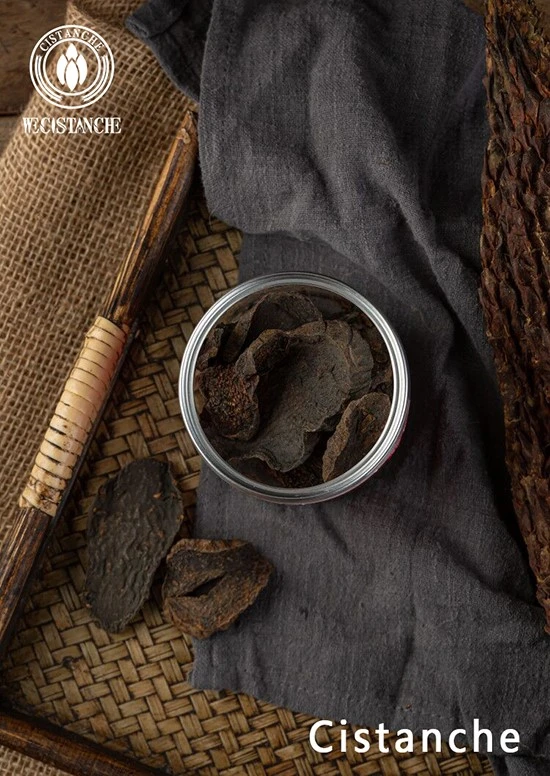
Cistanche tubulosa slice
5.2 Formula Granules
Formula granules are a modern, hospital-ready form of TCM decoction. The official National Pharmacopoeia Committee standard for Roucongrong (Guanhua Roucongrong) Formula Granules establishes its source as the processed fleshy stem of C. tubulosa, and requires multi-marker chromatographic profiling. As Chinese hospitals continue to shift from raw decoction pieces to granule dispensing, C. tubulosa formula granules have become a stable, large-volume industrial product line for major TCM manufacturers.
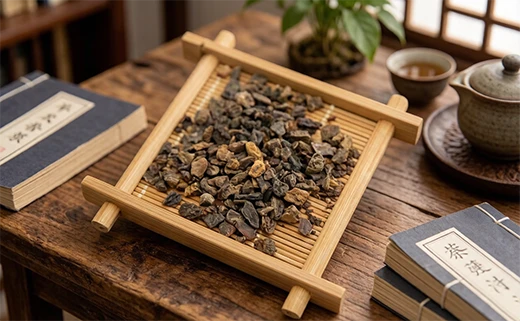
Cistanche tubulosa Granules
5.3 Raw Material for Proprietary Chinese Medicines
C. tubulosa is used as a raw material in several categories of proprietary Chinese medicines:
Kidney-yang tonifying and essence-replenishing formulas, used for lumbago, impotence, nocturia, and related presentations;
Cerebrovascular and neuroprotective preparations, including a Class II new drug developed in China for vascular dementia, justified by the species' high PhG content and demonstrated neuroprotective and cognition-enhancing effects;
Intestinal-moistening formulas, used in elderly and postpartum constipation;
Andrological and gynecological conditioning formulas, for menstrual disorders, uterine coldness and infertility, and menopausal complaints.
Its consistent PhG profile makes C. tubulosa particularly suitable for standardized, large-batch production into modern proprietary products.

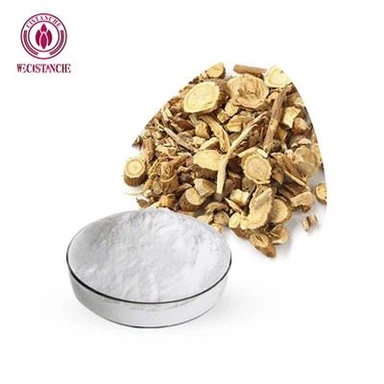
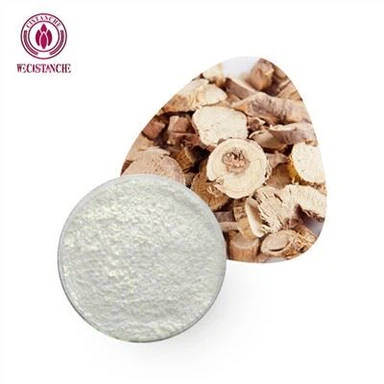
cistanche extract powder
Click here to view Cistanche Tubulosa Extract Natural Supplement Powder
【Ask for more】 Email:cindy.xue@wecistanche.com / WhatsApp: 0086 18599088692 / WeChat: 18599088692
5.4 Functional Foods and Dietary Supplements
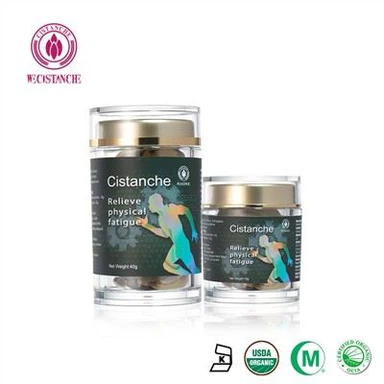
Functional foods have been the fastest-growing application of C. tubulosa over the past decade. Approved health-food functions associated with C. tubulosa-based products include relief of physical fatigue, immune support, memory improvement, antioxidant activity, and bowel regulation. Dosage forms include capsules, tablets, oral liquids, medicated wines, and herbal teas.
A critical regulatory caveat applies here: the Chinese National Health Commission's "dual-use" (medicine and food) pilot list currently includes only Cistanche deserticola, not C. tubulosa. Consequently, C. tubulosa may legally be used only as a medicinal material, a raw material for registered or filed health foods, or a raw material for pharmaceuticals. It cannot be marketed as an ordinary food ingredient through general retail or food-service channels.
5.5 Standardized Extracts
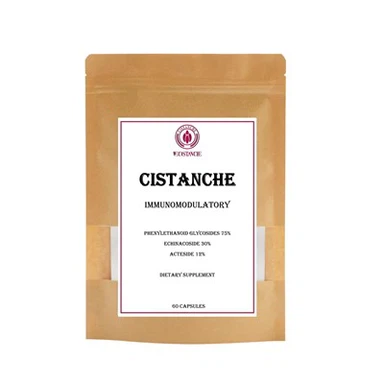
C. tubulosa extract is an established category in the Chinese botanical-extract industry. Mainstream commercial specifications include:
Total phenylethanoid glycosides (PhGs) at 10%, 20%, 40%, and 50%;
Echinacoside at ≥20% or ≥30%;
Echinacoside plus verbascoside combined at ≥30% or ≥50%.
These extracts supply both domestic health-food manufacturers and international traders. Because the genus is CITES Appendix II, exports require corresponding CITES documentation, creating a barrier that favors companies with integrated GAP bases, extraction licenses, and import–export qualifications.
5.6 Cosmeceuticals
Over the past five years, the strong free-radical-scavenging activity of PhGs has attracted attention from the cosmetics industry. C. tubulosa extracts are increasingly incorporated into anti-aging, firming, and skin-repair formulations. This stream is more cost-sensitive than pharmaceutical use and more flexible in extract specification, representing a high-value downstream extension of the C. tubulosa chain.
6. C. tubulosa versus C. deserticola: Differentiated Positioning

Cistanche tubulosa and Cistanche deserticola
|
Dimension |
C. tubulosa |
C. deserticola |
|
Host plant |
Tamarix spp. |
Haloxylon ammodendron |
|
Core region |
Hotan, southern Xinjiang |
Western Inner Mongolia, Gansu, northern Xinjiang |
|
Chemical strength |
High phenylethanoid glycosides |
High polysaccharides and extractives |
|
Traditional emphasis |
Kidney yang, essence, neuroprotection |
Bowel moistening, immune support |
|
Industrial fit |
Standardized extracts, proprietary medicines, formula granules |
Decoction pieces, dietary uses, medicine-food dual-use |
|
Medicine-food status |
Not listed |
Included in the national pilot list |
|
Typical downstream |
Class II new drugs, PhG extracts, health foods |
Herbal teas, medicinal wines, dietary recipes |
In practice, Chinese manufacturers have converged on a division of labor that can be summarized as "C. tubulosa for medicine, C. deserticola for food."
7. Regulatory Considerations
Professionals entering the Chinese Cistanche market should observe the following boundaries:
Botanical identity: Only the two pharmacopoeial species are legally recognized; other Cistanche species cannot be marketed as Cistanches Herba.
Wild versus cultivated material: Wild populations are controlled under both CITES and domestic wild-plant protection regulations; trade and export require appropriate permits.
Medicine-food dual use: The pilot currently covers only C. deserticola. Using C. tubulosa as an ordinary food ingredient carries regulatory risk.
Health-food claims: Products claiming fatigue relief, memory improvement, or other regulated functions must follow the national registration or filing process; such claims cannot be attached to ordinary foods.
Extract specification: PhG and echinacoside content must be verified using pharmacopoeial or registered test methods, and must match the product specification.
8. Outlook
Looking ahead, three trends will shape C. tubulosa applications in mainland China:
Concentration of raw material supply toward Hotan-based GAP bases, driven by tightening CITES controls and downstream demand for traceability;
Upgrading of product value, from crude extracts toward higher-PhG specifications, innovative TCM, hospital preparations, and cosmeceutical-grade ingredients;
Broadening of health scenarios, from a traditionally male-oriented "tonic" narrative toward neuroprotection, anti-aging, geriatric constipation, menopausal health, and exercise recovery.
From a wild-harvested desert herb to a standardized ingredient in formula granules, Class II new drugs, PhG extracts, and anti-aging skincare, C. tubulosa has completed the transition from crude drug to modern health-industry commodity. For industry participants, the three most consequential strategic choices over the next decade are to understand the species distinction, respect the regulatory boundary, and position upstream on high-value, science-backed products.
References (selected)
Chinese Pharmacopoeia Commission. Pharmacopoeia of the People's Republic of China, Vol. I (species: Cistanches Herba).
National Pharmacopoeia Committee. Quality standard for Roucongrong (Guanhua Roucongrong) Peifang Keli (Formula Granules).
Information released by the People's Government of Xinjiang Uyghur Autonomous Region and the Xinjiang Forestry and Grassland Administration (2023–2026) regarding Cistanche cultivation area and output.
State Key Laboratory of Natural and Biomimetic Drugs, Peking University. Public reports on comparative chemistry and pharmacology of C. deserticola and C. tubulosa.
People's Daily Online (Xinjiang Channel) and Guangming Daily report on the Yutian C. tubulosa industrial chain.