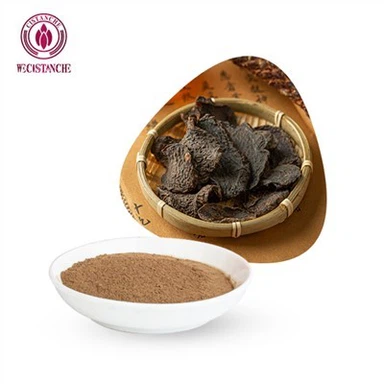
Cistanche Tubulosa, The Anti-allergic Treasure in The Desert
Oct 20, 2025
Get to know Cistanche deserticola
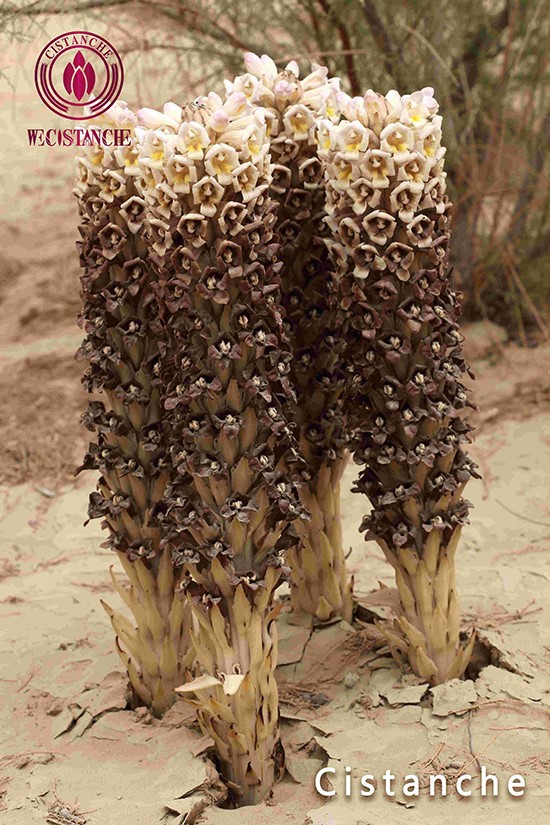
In the treasure trove of traditional Chinese medicinal herbs, Cistanche deserticola has always held a very special position and is known as the "desert ginseng". It grows in the desert and is a parasitic plant that parasitizes the roots of the desert plant Salix matsudana, with low requirements for soil and water. Cistanche deserticola is mainly distributed in Inner Mongolia, Ningxia, Gansu, Xinjiang, and other places in China. It grows tenaciously in the extremely arid climate, strong sunshine, annual precipitation of less than 250 millimeters, drastic changes in temperature, strong winds and sand, poor soil development, high salt content, and lack of organic matter in the Gobi desert environment.
Dragon Herbs Cistanche
The medicinal history of Cistanche deserticolosa is long and rich. As early as in the "Shennong Bencao Jing", it was listed as a top-grade herb, known for its "five works and seven injuries, nourishing the middle, removing cold, heat, and pain from the stem, nourishing the five organs, strengthening yin, nourishing essence and qi, treating women's ailments, and taking it for a long time to lighten the body". The Compendium of Materia Medica also records: "Cistanche deserticola has a sweet and slightly warm taste, is non-toxic, and is nourishing but not steep, hence it is called calm. From ancient times to the present, it has been a commonly used medicinal herb for tonifying the kidney and yang, moisturizing the intestines, and promoting bowel movements. Among many prescriptions for tonifying the kidney and yang, it is one of the most frequently used tonics. Traditional medicine believes that Cistanche deserticola can nourish kidney yang and benefit essence and blood. It has a good regulating effect on symptoms such as impotence, infertility, sosorenessand weakness of the waist and knees, and muscle and bone weakness caused by insufficient kidney yang and deficiency of essence and blood. Meanwhile, it is rich in dietary fiber, which can promote gastrointestinal peristalsis, soften feces, effectively alleviate intestinal dryness and constipation, especially suitable for middle-aged and elderly people as well as those with h weak constitution.
However, in recent years, with a deeper understanding of the medicinal value of Cistanche deserticola, its scope of use has gradually expanded. Researchers have begun to pay attention to the potential anti-allergenic effects of Cistanche deserticola, which has opened a new chapter in the medicinal research of Cistanche deserticola.

Chinese herb cistanche
The hazards and current situation of allergies
In modern society, allergies have become an extremely common health problem that troubles countless people. The White Paper Report of the World Allergy Organization (WAO) shows that nearly 40% of people worldwide are troubled by allergies, making allergies the sixth most common disease worldwide. In China, the incidence of allergic diseases is also rapidly increasing, gradually approaching or even surpassing that of developed Western countries.

Cistanche male benefits-anti-inflammatory
There are various types of allergies, including food allergies, environmental allergies, drug allergies, insect bite allergies, and more. In terms of food allergies, common foods such as nuts, seafood, milk, eggs, etc., can become the "trigger" for allergic reactions, usually manifested as skin redness, itching, or digestive system discomfort symptoms such as vomiting and diarrhea. In environmental allergies, common environmental allergens such as pollen, dust mites, animal dander, and mold can easily lead to allergic rhinitis, asthma, and other diseases. For every specific season or environment, allergic symptoms will be reported on time. Like pollen allergy sufferers, during the season of pollen transmission, tiny pollen particles spread with the air flow. When inhaled by the human body, they may cause a series of annoying symptoms such as nasal congestion, runny nose, sneezing, coughing, etc; Individuals with dust mite allergies may frequently experience skin itching and respiratory discomfort in their daily lives, especially in environments where cleaning is not done promptly and dust mites are prone to breed, resulting in more pronounced symptoms. Drug allergies should not be ignored. Certain drugs, such as penicillin and aspirin, may cause skin reactions, difficulty breathing, and other allergic reactions during use, and in severe cases, even endanger life. Insect bite allergies should not be underestimated. The bites of bees, wasps, and other insects can cause local swelling or systemic allergic reactions. For some people with allergies, it may even lead to extremely dangerous situations, such as anaphylactic shock.
The impact of different types of allergy symptoms on daily life and health should not be underestimated. Taking asthma as an example, patients may experience symptoms such as difficulty breathing, chest tightness, cough, etc. when exposed to allergens. In severe cases, it may lead to hypoxia, shortness of breath, bluish lips, pale complexion, and even life-threatening conditions. It not only affects daily life but also damages cardiovascular function. Skin allergies are also common types of allergies, such as eczema, urticaria, atopic dermatitis, etc., manifested as various types of rashes, most of which have the characteristics of redness, swelling, and itching. They not only affect appearance, but also cause serious itching and discomfort, affecting sleep and quality of life. In addition to skin symptoms, patients with allergic purpura may also involve the kidneys, gastrointestinal tract, joints, and other parts, causing complications such as purpura nephritis, abdominal pain, and joint pain.
Faced with such a high incidence and significant harm of allergy problems, it is urgent to find effective anti-allergy methods. Traditional anti-allergy methods, such as avoiding contact with allergens, using antihistamines, and undergoing desensitization therapy, although they can alleviate allergy symptoms to some extent, also have their own limitations. For example, avoiding contact with allergens is difficult to completely eliminate in real life, and there will always be some unintentional contact; Antihistamines may cause side effects such as drowsiness and dry mouth. Desensitization treatment has a longer course of treatment, higher costs, and is not suitable for all allergy patients. Therefore, finding new anti-allergic pathways from traditional Chinese medicinal materials has become an important direction of medical research, and the potential role of Cistanche deserticola in anti-allergic treatment has also received increasing attention.

Desert ginseng-anti-inflammatory
Click here to view Cistanche Enhance Immunity products
【Ask for more Email: 】 Email:cindy.xue@wecistanche.com / WhatsApp: 0086 18599088692 / Wechat: 18599088692
Research evidence on the anti-allergenic effect of Cistanche deserticola
(1) Animal experiment results
In recent years, the scientific community has conducted in-depth research on the anti-allergenic effects of Cistanche deserticola, and numerous experimental results have provided strong evidence to support its anti-allergenic efficacy. A research team from Southwest Jiaotong University conducted a highly significant study, focusing on the effects of Cistanche deserticola on asthmatic mice.
During the experiment, researchers carefully selected C57BL/6 mice and randomly divided them into multiple groups, including a control group (receiving PBS), a Cistanche deserticola group (receiving Cistanche deserticola), a house dust mite (HDM) group (receiving HDM), and an HDM+Cistanche deserticola group (receiving HDM and Cistanche deserticola). Among them, the mice in the HDM group received a tracheal injection of 3 μ g HDM on the day before the experiment, and then received nasal drops of 10 μ g HDM on days 6 to 10 to construct an asthma animal model. The mice in the HDM+Cistanche deserticola group received intraperitoneal injections of Cistanche deserticola solutions at doses of 20 mg/kg, 40 mg/kg, 50 mg/kg, and 60 mg/kg daily throughout the entire experiment, while the mice in the control group and Cistanche deserticola group received PBS or Cistanche deserticola treatment, respectively.
On the 14th day, the mice were euthanized, and researchers collected samples for further analysis. The results were encouraging, as compared to the control group, the HDM group mice showed a significant increase in airway hyperresponsiveness (measured by Penh value), indicating enhanced airway responsiveness to acetylcholine and significant asthma symptoms. However, mice treated with Cistanche deserticola showed a significant decrease in Penh values, which clearly indicates that Cistanche deserticola can significantly alleviate airway hyperresponsiveness.
Moreover, the cell count results of bronchoalveolar lavage fluid (BALF) are also noteworthy. The total cell count, neutrophils, and eosinophils in the HDM group mice significantly increased, indicating an exacerbation of lung inflammation and allergic reactions. The mice in the HDM+Cistanche deserticola group showed a significant reduction in various cell types in BALF, indicating that Cistanche deserticola can effectively reduce the infiltration of inflammatory cells. Histopathological examination further confirmed this point, with lung tissue sections from the HDM group mice showing significant infiltration of inflammatory cells and increased mucus secretion. After treatment with Cistanche deserticola, these pathological changes were significantly improved. In addition, the levels of serum IgE and IL-5, and IL-13 in BALF were significantly increased in HDM group mice, but returned to normal levels after treatment with Cistanche deserticola.

Cistanche deserticola experiment
These results fully demonstrate that Cistanche deserticola has shown significant anti-allergic effects in animal experiments, and can significantly alleviate pathological changes in asthmatic mice, including airway hyperresponsiveness, inflammatory cell infiltration, and mucus secretion.
(2) Composition analysis and mechanism of action
Why can Cistanche deserticola play such an excellent role in anti-allergy? This starts with its component analysis and mechanism of action. Cistanche deserticola contains various active ingredients, such as phenylethanolic glycosides and polysaccharides, which play a key role in regulating immune responses and inhibiting allergic reactions.
Taking phenylethanolic acid as an example, it can regulate the activity of immune cells, balance the function of the immune system, and reduce allergic symptoms caused by excessive immune reactions. When the human body comes into contact with allergens, the immune system is abnormally activated, releasing inflammatory mediators such as histamine and leukotrienes, causing allergic symptoms. The active ingredients in Cistanche deserticola can act on immune cells, inhibit the release of inflammatory mediators, and reduce the degree of allergic reactions.
Through advanced technologies such as transcriptome analysis, researchers have discovered that Cistanche deserticola can target key genes and signaling pathways related to allergies. In the study of allergic asthma, after treatment with Cistanche deserticola, the IL-5 and IL-4 pathways closely related to allergic asthma were downregulated in mice. IL-5 and IL-4 are important cytokines involved in allergic inflammatory reactions, and their overexpression can lead to an increase in eosinophils, activation of B cells to produce IgE, and exacerbation of allergic symptoms. Cistanche deserticola suppresses the occurrence and development of allergic reactions at the root by regulating these key genes and pathways.
Cistanche deserticola may also enhance the body's immune regulatory ability by regulating the balance of T cell subsets, enabling the immune system to better respond to allergen stimulation and avoid overreaction. These mechanisms of action work together to explain the anti-allergic effects of Cistanche deserticola and provide a solid theoretical basis for its application in the field of anti-allergy.
Clinical application cases
The clinical application of Cistanche deserticola in anti-allergic treatment has brought new hope to many allergy patients. One real case vividly demonstrates the significant effect of Cistanche deserticola in combating allergic problems.
At the dermatology clinic, there is a patient who has been suffering from eczema for a long time. The symptoms of eczema have been persistent for many years, and they worsen every season or when exposed to some irritating substances. The patient's skin surface is covered with erythema and papules, and the itching is unbearable. They often cannot resist scratching, resulting in skin damage and exudation, which not only affects their appearance but also seriously affects their daily life and sleep quality. I have tried various Western medicine treatments and topical steroid ointments, but the condition always recurs and cannot be completely cured.

Effects of Cistanche-anti-inflammatory
The doctor decided to use extracts of Cistanche deserticola combined with traditional Chinese medicine formulas for treatment. In the early stage of treatment, patients take traditional Chinese medicine preparations containing extracts of Cistanche deserticola daily according to medical advice, and apply ointments containing Cistanche deserticola components externally. In the first few days, the patient did not feel any significant changes. Still, as the treatment continued, about a week later, the itching symptoms gradually decreased, and the redness and papules were no longer as red and swollen as before. Two weeks later, the damaged area of the skin began to heal gradually, the exudate decreased, and the erythema and papules also significantly disappeared. After continuing to adhere to treatment for one month, the symptoms of eczema basically disappeared, the skin regained smoothness, and itching no longer appeared. In subsequent follow-up, the patient reported that there was no recurrence of eczema, and their quality of life was greatly improved during a period of time after stopping treatment.
There is also a patient with allergic dermatitis who frequently comes into contact with allergens due to the working environment, resulting in repeated allergic symptoms on the skin. Every time I have an allergy, my skin will experience large areas of redness, swelling, itching, and flaking, which seriously affects my work and social life. The patient has tried various anti-allergy drugs, but they can only temporarily relieve symptoms. Once the medication is stopped, symptoms will reappear.
The doctor developed a treatment plan containing Cistanche deserticola, which was combined with other traditional Chinese medicines that have the effects of clearing heat, detoxifying, dispelling wind, and relieving itching to make a decoction for oral consumption, and combined with an external preparation of Cistanche deserticola extract. After a period of treatment, the patient's allergy symptoms gradually improved, the redness and swelling of the skin subsided, the itching sensation significantly decreased, and the shedding phenomenon also improved. With the deepening of treatment, patients' tolerance to allergens gradually increases. Even if they come into contact with some allergens in the work environment, they are no longer as easily allergic as before. The frequency and severity of allergic attacks have significantly decreased.
These clinical cases are not isolated, and extensive clinical practice has shown that Cistanche deserticola has significant effects in treating allergic skin diseases such as eczema and dermatitis. It can effectively alleviate skin inflammation, relieve itching symptoms, promote skin repair and regeneration, help patients get rid of allergies, and restore a healthy skin condition.