Cistanches Herba, From An Endangered Species To A Big Brand Of Chinese Medicine--Part III
Mar 16, 2022
Contact: joanna.jia@wecistanche.com / WhatsApp: 008618081934791
Click here for information about Part II of this article.
Yuelin Song1,2 et al
6 | PHARMACOKINETICS AND METABOLISM
Pharmacokinetics and metabolism investigations serve as an integral part of innovative drug development, particularly when preclinical assays. In a comparison of phytochemical and pharmacological studies, relatively less information is available, so far, regarding the pharmacokinetic and metabolic behaviors of CH (Cistanche Herba) extract as well as the primary components. Indeed, CH (Cistanche Herba) is lacking unique chemical types, and the primary compound families such as PhGs, iridoids, and lignans, can also be extensively found in other plants. The pharmacokinetic and metabolic characteristics of iridoids and lignans have been summarized in some previous publications. Moreover, the pharmacokinetic information concerning PhGs that is this primary effective chemical cluster of CH has been recently summarized in another review. Here, we therefore only underline the metabolic properties of PhGs.

Cistanche tubulosa has many effects, click here to know more
Judging from the chemical structure of a given PhG, theoretically, hydrolytic enzymes are able to dissociate both the ester moieties and ether‐type glucosidic bonds between sugar residues as well as between phenethyl aglycone and glucosyl residue, resulting in the extensive occurrences of hydrolyzed products. These hydrolyzed products such as caffeic acid, tyrosol, and hydroxytyrosol, usually exist as the theoretical intermediates because they usually bear more than one labile site, for example, hydroxyl and carboxyl groups to receive subsequent glucuronidation and/or sulfation.
Judging from the chemical structure of a given PhG, theoretically, hydrolytic enzymes are able to dissociate both the ester moieties and ether‐type glucosidic bonds between sugar residues as well as between phenethyl aglycone and glucosyl residue, resulting in the extensive occurrences of hydrolyzed products. These hydrolyzed products such as caffeic acid, tyrosol, and hydroxytyrosol, usually exist as the theoretical intermediates because they usually bear more than one labile site, for example, hydroxyl and carboxyl groups to receive subsequent glucuronidation and/or sulfation. So far, a set of publications are available concerning the metabolism of PhGs in vitro and in vivo when administrating a single component or the extract.
Lei et al. first studied the metabolism in the gastro intestine of beagle dogs receiving the treatment of the total glycoside extract of Cistanche tubulosa. Four components, including ECH, VB, isoacteoside, and 2′‐acetylacteoside, all of which are also distributed in the original extract were purified from feces by preparative LC. Because ECH can be transferred into VB via losing the outer glucosyl residue, and inter‐transformation has been demonstrated between VB and isoacteoside, it is, therefore, challenging to definitely point out the original sources of these two compounds.

Aiming to explore in-depth the metabolic capacity of human intestinal microflora toward the components in CH (Cistanche Herba), mainly PhGs, Li et al. comprehensively characterized the metabolites when incubating the aqueous extract of either Cistanche deserticola or Cistanche tubulosa with human gastric juice, intestinal juice, intestinal bacteria, and intestinal microsomes, and a total of 18 metabolites that were formed through reduction, methylation, demethylation, deglycosylation, decaffeination, rhamnose cleavage, dehydrogenation, and glucuronidation, were captured. The same group also traced the entire metabolic course except for the intestinal tract. To achieve universal metabolite characterization, orthogonal partial least squared discriminant analysis (OPLS‐DA) was innovatively applied to pursue the differences between UPLC–Qtof‐MS datasets of drug‐free and administrated groups, and afterward, the components initiated by Cistanche deserticola and Cistanche tubulosa water extract treatments were rapidly leached out via analyzing those distinctive dots. As a result, a total of 71 metabolites from Cistanche deserticola including 25 prototype components and 46 metabolites, together with 45 metabolites from Cistanche tubulosa including 18 prototype components and 27 metabolites were screened out and tentatively identified. The authors also proposed metabolic pathways, such as hydrolysis, oxidation, glucuronidation, and sulfation, to link those putative chemical structures related to PhGs in rats.
Because of the insufficient metabolic stability, the bioavailability of both VB and ECH has been demonstrated, as expected, to be quite low, merely 0.83% for ECH and 0.12% for VB. As a consequence, many concerns have been paid to the metabolism profiles of these individual components, in particular, VB, ECH, podium side,205,206 isoacteoside, and 2′‐acetylacteoside. All the studies concluded that deglycosylation, hydroxytyrosol cleavage, decaffeination, deacetylation, reduction, acetylation, glucuronidation, and sulfation were primarily responsible for the low bioavailability as well as for the generation of most metabolites.
Because of the inherent “isomer‐blind” drawback of LC-MS/MS, the chemical structures of the metabolites were merely identified tentatively in most studies. To accomplish confirmative structural identification, interesting studies have been conducted in our group.190,204 After intravenous injection of ECH toward rats, the bile was collected and subjected for chromatographic separations, resulting in the purification of eight phases II metabolites generated from methylation, glucuronidation, and sulfation. However, either the total glycoside extract of CH (Cistanche Herba) or individual compounds was orally treated in most cases; hence, attempts were subsequently made to definitely identify the metabolites after intragastric administration. Quantitative structure‐retention relationships were modeled via assaying a large number of authentic compounds on RPLC, HILIC, and serially coupled RPLC and HILIC (RPLC‐HILIC). Online energy‐resolved MS was also carried out to offer breakdown graphs and optimal collision energies (OCEs) that are able to pointedly denote the bonds of interest being responsible for the generation of concerned ion transitions. Nineteen metabolites (M1–M19, Figure 15) were unambiguously identified in biological samples from ECH‐treated rats by analyzing m/z values, retention times (tR), and OCEs. Structural identification was further justified by oral administration of three relevant compounds, such as VB, caffeic acid, and hydroxytyrosol, in parallel, and chromatographic purification as well. Above all, the real metabolic profile of ECH in rats was ultimately proposed as Figure 15, and in consistence with previous reports, step‐wise hydrolysis, and follow‐up sulfation, glucuronidation to the hydrolyzed products such as caffeic acid and hydroxytyrosol came out as the primary metabolic pathways.
As illustrated in Figure 15, PhGs have been demonstrated to be able to produce neurotransmitter analogs, such as hydroxytyrosol, 3‐hydroxyphenylpropionic acid, homovanillic acid as well as their derivatives, indicating that direct supplement of the insufficient neurotransmitter pool in disease status (e.g., vascular dementia, PD, and AD) might contribute partially toward the therapeutic mechanisms of CH (Cistanche Herba), and actually more solid evidence are needed for clarifying this issue. The pharmacokinetics of the primary components after oral treatment of crude extract and the metabolic and pharmacokinetic properties of either exact or pure components in pathological model animals have not been disclosed although the information is of extreme importance to reveal the underlying therapeutic mechanisms, in particular the neuro‐degenerative diseases. Consequently, future concerns should be paid to pharmacokinetic and metabolic characterization of both extract and individual components on pathological animals.

FIGURE 15 Confidently metabolic pathways of ECH in the rat after oral administration (Reprinted from ACS Publications). ECH, echinacoside
7 | RELEVANT PRODUCT RESEARCH AND DEVELOPMENT
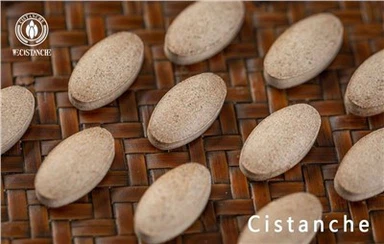
The sustainable development of the CH (Cistanche Herba) industry heavily relies on the products and market demands. Similar to other Chinese medicine, in particular those tonic ones, such as ginseng, not ginseng, and American ginseng, the demands of CH (Cistanche Herba) are sustainably increasing in recent years, attributing to the rapid growth of economics and people's demands of health. Now, the cultivation of CH (Cistanche Herba) is widely implemented and the resource shortage has been completely addressed, the next step should be moved to the research and development of the relevant products, such as new drugs and health products. CH (Cistanche Herba) exhibits the most frequency of occurrence in the tonic TCM decoctions, and one of the most famous ones is Dihuang Yinzi that has been widely applied to tonify Kidney‐Yang. In the last decades, except that the medicinal slices and crude extracts are widely popular in the market, an array of modern TCM prescriptions have been developed on the basis of the traditional decoction formulae. After retrieving in the website of China Food and Drug Administration (CFDA, https://www.nmpa.gov.cn/), TCM prescriptions involving CH (Cistanche Herba), such as Biantong Capsule, Tianmaxingnao Capsule, Quanlu Pill, Shihuyeguang Pill, Hupohuanjing Pill, and so forth, 23 ones in total have been authentically approved. Sometimes, CH (Cistanche Herba) serves as the monarch drug and provides the determinant contribution toward the entire therapeutic spectrum, and in most cases, CH (Cistanche Herba) acts as the complementary role following relevant TCM theories. Several medicinal liquor brands, such as China Jin liquor (Jin), Qiwei Congrong Liquor, Yangming Liquor, Guling Shen Liquor, and so forth are extensively favored in the market because of the involvement of CH (Cistanche Herba). A panel of herbal teas, such as Congrong Tea, Morong Tea, and so forth, are widely consumed now. A total of 47 dietary supplements of CH (Cistanche Herba) have been registered in CFDA (https://www.nmpa.gov.cn/), such as Amway Nutrilite Memory Builder With Ginkgo, Dichen Kanka tablet, Congrong Love, Infinitus Shizhen Tablet, Guorong Capsule, and so on. As desired, these products have drawn significant interest in the market. Moreover, some cosmetic products are also available in the market owing to the whitening and antiaging effects of CH(Cistanche Herba).

Herein, we would like to emphasize the new drug development of CH (Cistanche Herba), including the total glycosides of Cistanche tubulosa, the oligo‐saccharides of Cistanche deserticola, and ECH by our group. After 10 years of continuous efforts, the total glycosides of Cistanche tubulosa have been certificated by CFDA as a new agent for the treatment of vascular dementia in 2005, trademarked as Memoregain and produced by Sinphar Tianli Pharmaceutical Company. The production permit was handed over recently to Jiangsu Kanion Pharmaceutical Co., Ltd. An open‐label, no placebo‐controlled clinical trial was conducted to confirmative assess the therapeutic performance of Memoregain toward AD,
Herein, we would like to emphasize the new drug development of CH (Cistanche Herba), including the total glycosides of Cistanche tubulosa, the oligo‐saccharides of Cistanche deserticola, and ECH by our group. After 10 years of continuous efforts, the total glycosides of Cistanche tubulosa have been certificated by CFDA as a new agent for the treatment of vascular dementia in 2005, trademarked as Memoregain and produced by Sinphar Tianli Pharmaceutical Company. The production permit was handed over recently to Jiangsu Kanion Pharmaceutical Co., Ltd. An open‐label, no placebo‐controlled clinical trial was conducted to confirmative assess the therapeutic performance of Memoregain toward AD, and 18 AD patients, in total, were administered with 300 mg capsules, three times per day for 48 weeks. All of the Mini‐Mental State Examination scores, Disease Assessment Scale‐cognitive subscale scores, Activities of Daily Living score, Blessed Behavioral Scale, and Clinical Global Impression scales did not show significant difference from baseline, indicating that significant aggravation of cognitive function is failed to the AD patients even though48‐week treatment. Information collected from another 131 vascular dementia patients proved that Memoregain(300 mg/capsule, six capsules per day for 3 months) possessed greater therapeutic performances against vascular dementia than the positive control (hydergine, 1 mg/tablet, six tablets per day for 3 months). Peng et al. and Yuan et al. declared that Memoregain (300 mg/capsule, six capsules per day for 48 weeks) can restore cognitive function in early dementia and mild dementia patients. From the website (http://apps.who.int/trialsearch/), a clinical trial regarding Memoregain for treatment of amyotrophic lateral sclerosis is undergoing (Main ID: ChiCTRIOR‐15006524), and the results regarding the clinical trial are expected to be published in the near future. Noteworthily, the toxicological assessments have demonstrated the safety of Memoregain for human consumption.
Above all, some representative consumable products related to CH (Cistanche Herba) are summarized in Figure 16. Furthermore, ECH is one of the effective ingredients in CH (Cistanche Herba) as well as the primary effective component of Memoregain. The content of ECH in Cistanche tubulosa is inherent amongst 3%–5%; however, after being processed by a patent method invented by our group, the content of ECH can reach greater than 40%,87,212 providing a high‐quality material for ECH purification. ECH as well as its preparation namely Naoqing Zhiming Tablet has been permitted for clinical trials by CFDA in 2017. Currently, ECH is undergoing a Phase I clinical trial, and the results will be published in the coming years. The oligosaccharide portion of Cistanche deserticola has been developed as a new agent for the treatment of constipation, attributing to the traditional efficacy of CH (Cistanche Herba) for relaxing bowel and modern pharmacological evaluations. After careful screening, the total oligosaccharides and their main constituent of mannitol were proven as the primary effective components being responsible for the laxative benefits of Cistanche deserticola. Because of the advantages featured with gentle laxative action, CH (Cistanche Herba) is especially suitable for the senile, pregnant woman, and children. Currently, the clinical application documents have been submitted to CFDA, and the approval was won in February 2020.

FIGURE 16 Various products, such as modern drugs, Chinese patent drugs, TCM decoctions, cosmetics, herbal teas, medicinal liquors, and dietary supplements related to CH. CH (Cistanche Herba), Cistanches Herba; TCM, traditional Chinese medicine
8 | CONCLUDING REMARKS AND PERSPECTIVES
As one of the most famous tonic TCMs, CH (Cistanche Herba) has been traditionally applied for tonifying kidneys and invigorating Yang in China for thousands of years. In recent decades, increasing interests are being drawn by CH (Cistanche Herba) because of its promising performances on modern pharmacological evaluations. Extensive attention from all over the world has been paid to the cultivation, phytochemical, pharmacological, and metabolic investigations aiming to develop, ultimately, a set of products from CH (Cistanche Herba), and the current review summarizes the research progress in such areas(Figure 17). After searching for suitable cultivation areas, investigating the seed germination mechanisms, and advancing cultivation techniques, significant achievements have been gained for Cistanche plant cultivation in the northwest of China, and the resource shortage of CH (Cistanche Herba) has been completely addressed. More than 150 compounds have been purified from Cistanche plants using conventional phytochemical means, and as many as 512 components have been tentatively identified with cutting‐edged LC-MS/MS technique, indicating that the chemome of CH (Cistanche Herba) has been clarified in depth. Among them, PhGs are the most important effective ingredients that have been proven as determinant roles for the broad pharmacological spectrum of CH (Cistanche Herba), in particular the neuroprotective benefits. Pharmacokinetic and metabolic evaluations indicated that the oral administration of PhGs might be able to strengthen the distributions of certain neurotransmitters via hydrolyzing into their chemical analogs, such as hydroxytyrosol, 3‐hydroxyphenylpropionic, and homovanillic acid. Two new agents, including the total glycoside of Cistanche tubulosa and ECH, have been developed for the treatments of neurodegenerative disorders. The oligosaccharide extract of Cistanche deserticola is also on the way to being a new agent for the treatment of senile constipation, which is consistent with the traditional usage of CH (Cistanche Herba). Moreover, a large array of health products, as well as TCM prescriptions, have entered the market (Figure 16). Currently, CH (Cistanche Herba) is on the highway toward a big brand of Chinese medicine, and the output value is expected to reach as many as 20 billion China Yuan in the coming years. A roadmap for the ecological industry chain of CH (Cistanche Herba) and nourishing the big brand Chinese medicine is drawn as Scheme 1.

FIGURE 17 Holistic summary for the progress concerning CH (Cistanche Herba) as a big brand of Chinese Medicine. CH, Cistanches Herba

However, there are still some obvious barriers to the way CH (Cistanche Herba) grew up to a great brand of Chinese medicine. To break through these bottlenecks, the further concerns should focus on:
(1) the clarification of the parasitic mechanism of Cistanche plants on their hosts. If the underlying mechanisms can be totally deciphered, the cultivation of Cistanche plants will be significantly promoted and the obtained findings are also envisioned to offer meaningful information for other parasitic plants.
(2) in‐depth product development. Owing to the great achievements in the cultivation of Cistanche plants, the agricultural outcomes are currently greater than the market demands, and it is, therefore, urgent to develop the downstream products. Diversified product development is the most appropriate way to digest the huge amount of raw materials. Presently, a pilot wok is carrying out to recommend Cistanche deserticola as both TCMand edible materials, together with other eight TCM(http://www.nhc.gov.cn/sps/s7885/202001/1ec2cca04146450d9b14acc2499d854f.shtml). Benefiting from that CH (Cistanche Herba) is listed in the catalog of the edible herbal medicines, a bigger development opportunity will emerge for CH (Cistanche Herba)as well as its relevant products.
(3) balance the environment and cultivation. In the new century, ecological agriculture serves as the theme for most countries, and exactly, the cocultivation of Cistanche plants and their hosts are playing an extraordinary role in controlling the deserts. It should be kept in mind that the desert ecology is quite brittle, and the balance between the cultivation and environment should be maintained carefully to ensure the healthy, sustainable development of the CH (Cistanche Herba) industry.
In conclusion, we summarized here the information available on CH (Cistanche Herba), including its distributions and cultivation, phytochemistry, pharmacology, metabolism, and relevant product development, to provide meaningful knowledge for future studies and for the commercial exploitation of this famous tonic Chinese medicine.
ACKNOWLEDGEMENTS
This study was financially supported by the National key research and development plan (Nos. 2017YFC702400and 2018YFC1707300), and the National Science Fund of China (Nos. 81773832, 81530097, 81773875 and81973444).
CONFLICT OF INTERESTS
The authors declare that there is no conflict of interest.

From: ' Cistanches Herba, from an endangered species to a big brand of Chinese medicine ' by Yuelin Song1,2 et al
---Med Res Rev. 2021;41:1539–1577. wileyonlinelibrary.com/journal/med © 2021 Wiley Periodicals LLC DOI: 10.1002/med.21768