Desert Ginseng And Cistanche Deserticola, Originating From Hotan, Xinjiang
Nov 26, 2024
There are records of Cistanche deserticola in the classics of the Qin and Han dynasties, and it has been a precious tribute to the court since the Han dynasty. Until today, it has become a popular health supplement for urban aristocrats.
The main production area of Cistanche deserticola is Hotan, Xinjiang. Due to its growth in the desert and its many therapeutic and regulating effects such as tonifying the kidneys and nourishing essence, moistening the intestines and promoting bowel movements, and delaying aging, Cistanche deserticola is also known as "Desert Ginseng" in folk culture.

cistanche tubulosa
The 'Past Lives' of Cistanche deserticola
Cistanche deserticola has been used as a traditional Chinese medicine for more than 2000 years, and its earliest record can be found in the "Shennong Bencao Jing" during the Spring and Autumn and Warring States periods.
The Shennong Bencao Jing states: "It has a sweet taste and a slight warmth. It can treat the five pains and seven injuries, nourish the middle, eliminate cold and heat diseases in the stem, nourish the five organs, strengthen yin, nourish essence and qi, have more children, treat women's ailments, and take it for a long time to lighten the body.
In ancient times, Cistanche deserticola was mostly offered as tribute. There is a legend among the Mongolian people that Cistanche deserticola was a food bestowed upon Genghis Khan by heaven, which helped Genghis Khan and his generals win the war.
Throughout history, emperors have also taken Cistanche deserticola to nourish the kidneys, strengthen yang, and prolong life. It is said that Emperor Qianlong passed away at the age of 89 because he drank Cistanche deserticola wine every day for daily health care.

Desert living cistanche
The 'This Life' of Cistanche deserticola
Cistanche deserticola belongs to parasitic plants, which have no roots and do not have the ability of photosynthesis. It relies entirely on absorbing water and nutrients from its host plants to grow. The host of Cistanche deserticola is the sand fixing plant in the desert - the red willow.
Red willows grow rapidly, are easy to plant, and are easy to survive; Planting red willows must be carried out in the desert. In the Hotan area, 500000 acres of Cistanche deserticola have been promoted for planting, which has also built a huge ecological barrier for the Hotan oasis and played a role in preventing and fixing sand and reducing sandstorms.
The host of Cistanche deserticola, the red willow, can grow in extremely rare arid desert areas such as minus 40 ℃ and above 60 ℃. The harsh living environment has shaped the tough quality and extraordinary value of Cistanche deserticola, coupled with sufficient Kunlun Mountain glacier meltwater and atmospheric precipitation supplementation.
The entire process strictly prohibits the use of any pesticides, fertilizers, hormones, etc. Survival, inoculation, and harvesting in the wild rely entirely on manual labor, making Cistanche deserticola a highly nutritious traditional Chinese medicine in the local area.
The active ingredient phenylethanolic total glycosides in Cistanche deserticola can improve microcirculation, soften blood vessels, increase peripheral vascular circulation in the heart, brain, and outer limbs, and protect the blood, brain, blood vessels, and nervous system. Many people are prone to feeling cold in their hands and feet and limbs during autumn and winter, and Cistanche deserticola can effectively alleviate these symptoms.

Main Chemical Constituents of Cistanche deserticola
In addition, Cistanche deserticola also has the effect of moistening the intestines and promoting bowel movements. In autumn and winter, the climate is dry, and people are prone to constipation. The dietary fiber in Cistanche deserticola can promote gastrointestinal peristalsis, reduce the absorption of food water by the intestine, and thus achieve the effect of softening stool and accelerating stool excretion.
In terms of eating methods, Cistanche deserticola can be soaked in wine, fried in soup, boiled in Congee, etc. Put a proper amount of Cistanche deserticola into a glass jar, pour it into Baijiu, and soak it for about two weeks before drinking. Take an appropriate amount of Cistanche deserticola and put it in a clay pot. Add water and boil for fifteen minutes, then take the juice and drink. It is also a good way to prepare a proper amount of cistanche and millet and cook Congee together.
In short, as a treasure of autumn and winter nourishment, Cistanche deserticola has various effects and can be consumed in various ways. In autumn and winter, choosing Cistanche deserticola for nourishment can bring many benefits to the body.
Unique efficacy, showcasing advantages
(1) Nourish the liver and kidneys, strengthen the body and keep fit
Cistanche deserticola has significant effects in nourishing the liver and kidneys. Traditional Chinese medicine believes that the liver controls the tendons and the kidneys control the bones. Weak liver and kidney deficiency often manifest as soreness and weakness in the waist and knees. Cistanche deserticola has a sweet and salty taste, which is beneficial for the kidney and colon meridians. It can warm and tonify kidney yang, nourish essence and blood, and improve symptoms such as soreness and weakness in the waist and knees. For fatigued individuals, Cistanche deserticola can replenish physical strength and enhance the body's endurance. Insomnia is often caused by heart kidney dysfunction. Cistanche deserticola supplements kidney yang, which helps regulate heart kidney balance and alleviate insomnia. Anemic patients often have insufficient qi and blood. Cistanche deserticola benefits essence and blood, and can promote blood production. In addition, Cistanche deserticola can enhance physical strength and immunity. Research has shown that polysaccharides and other components in Cistanche deserticola can stimulate the immune system, enhance the body's resistance, and reduce people's susceptibility to diseases during autumn and winter seasons.

effects of cistanche-improve kidney function
(2) Warm and tonify kidney yang, nourish blood and moisten dryness
Cistanche deserticola enters the kidney and colon meridians and has the effects of warming and tonifying kidney yang, nourishing blood, and moistening dryness. Insufficient kidney yang can lead to symptoms such as chills, impotence, and premature ejaculation, while deficiency of essence and blood can cause dizziness, fatigue, and pale complexion. Cistanche deserticola is good at smoothing the large intestine, promoting internal circulation without damaging body fluids. In autumn and winter, the body's body fluid is relatively insufficient, which can easily lead to constipation and other conditions. Cistanche deserticola can not only warm and nourish kidney yang, but also nourish blood and moisten dryness. It has good therapeutic effects on diseases caused by insufficient kidney yang and deficiency of essence and blood. For example, for elderly people with kidney deficiency, intestinal dryness, and constipation, Cistanche deserticola can be combined with honey, Angelica sinensis, Polygonum multiflorum, etc. to improve gastrointestinal motility and promote fecal excretion.
(3) Relieve five hardships and seven injuries
Cistanche deserticola can effectively cope with five types of fatigue such as "prolonged vision and blood damage" and seven types of injuries such as "excessive satiety and spleen damage", and regulate various aspects of the human body. The "Five Labors" recorded in the Yellow Emperor's Inner Canon: Su Wen include prolonged visual impairment causing blood damage, prolonged lying down causing qi damage, prolonged sitting causing meat damage, prolonged standing causing bone damage, and prolonged walking causing muscle damage. The "Seven Injuries" refer to the damage to the spleen caused by excessive satiety, the damage to the liver caused by excessive anger, heavy weightlifting, prolonged sitting in wetlands that can damage the kidneys, cold body, cold drinking that can damage the lungs, physical fatigue, mental damage that can damage the spirit, wind, rain, cold, and heat that can damage the body, and uncontrolled fear that can damage the mind. Cistanche deserticola has a sweet and slightly warm taste, which can nourish the five organs, strengthen yin, and benefit essence and qi. For problems such as physical weakness and mental exhaustion caused by "five hardships and seven injuries", Cistanche deserticola can play a comprehensive regulatory role, helping people restore health and vitality.
Diversified dietary therapy, delicious health preservation
(1) Congee with Cistanche
Cistanche Congee is a delicious and nutritious health Congee. Firstly, prepare an appropriate amount of Cistanche deserticola, white rice, and lamb. Boil the Cistanche deserticola in a clay pot until soft, removing the surface scum. During this process, the active ingredients of Cistanche deserticola will gradually blend into the water. Then add the sliced lamb and white rice and simmer together. During the boiling process, the nourishing effect of Cistanche deserticola blends with the deliciousness of the lamb. When cooking, garlic and ginger slices can be added for seasoning, which not only adds flavor, but also has the effect of removing fishy smell and dispelling cold. This Congee of Cistanche deserticola has the effects of tonifying the kidney, essence, liver and kidney, especially suitable for eating in autumn and winter, and can provide sufficient energy and nutrition for the body.
(2) Cistanche deserticola lamb
First, decoct cistanche in water, and then remove the scum on the surface. At this time, the essence of cistanche has been fully integrated into the soup. Then cut the lamb into slices and stir fry it in a pot until cooked. The cooked lamb emits a tempting aroma. Then add the cooked Cistanche deserticola juice to the stir fried lamb and let it sit for a while, allowing the lamb to fully absorb the nutrients of Cistanche deserticola. Finally, add the seasoning and stir well before serving. This dish can warm the kidneys and promote yang. When consumed in autumn and winter, it can effectively resist the cold and enhance the body's resistance.
(3) Cistanche deserticola tea
Cistanche tea is easy to make and convenient to drink. Put Cistanche deserticola, longan, and wolfberry together in a teapot and brew with boiling water. Cistanche deserticola has the effects of tonifying the kidneys, promoting yang, nourishing essence, and nourishing blood; Longan can nourish the heart and spleen, nourish the blood and calm the mind; Goji berries can nourish the liver and kidneys, and improve eyesight. The combination of the three complements each other. When brewing, water can be added repeatedly until the tea is colorless and odorless. This type of Cistanche tea not only has a rich and mellow taste, but also has good health benefits, suitable for busy modern people to drink at any time during autumn and winter seasons.
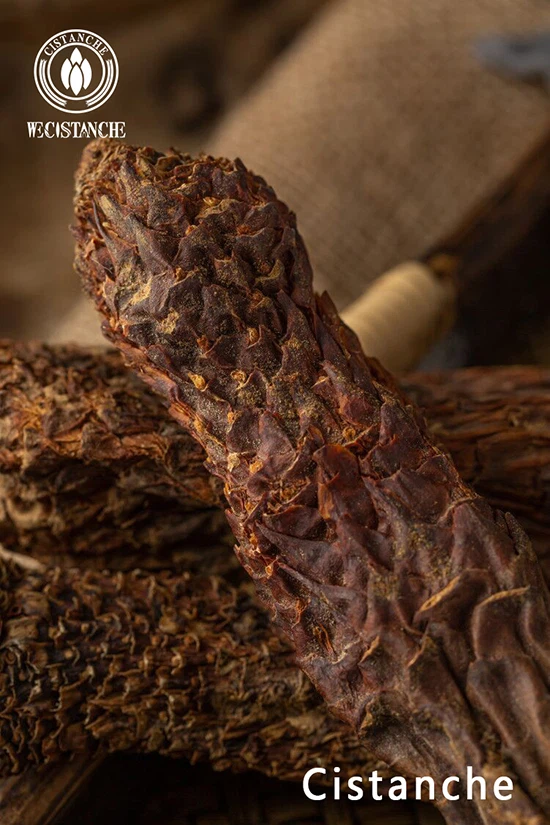
cistanche body building
Click here to view Cistanche deserticola tea products
【Ask for more】 Email:cindy.xue@wecistanche.com / Whats App: 0086 18599088692 / Wechat: 18599088692
(4) Cistanche deserticola infused liquor
Soaking Cistanche deserticola in wine is a traditional method of health preservation. Prepare Cistanche deserticola, Lycium barbarum, Cynomorium songaricum and other materials, and soak them in high concentration Baijiu. Cistanche deserticola can tonify the kidneys, promote yang, nourish essence and blood; Goji berries nourish the liver and kidneys, improve eyesight; Lockyang tonifies kidney yang and benefits essence and blood. With the function of Baijiu, these materials can give full play to their effects. After soaking for a period of time, the wine appears light yellow and emits a strong aroma. Drinking small cups in the morning and evening can have the effect of warming and tonifying kidney yang, and strengthening the body. However, it should be noted that excessive consumption of medicinal liquor is not advisable to avoid adverse effects on the body.