Desert Ginseng And Spinal Cord Injury: How Network Pharmacology Is Unlocking Cistanche’s Healing Secrets
Nov 04, 2026
Introduction: A Devastating Injury in Search of a Remedy
Few injuries carry as heavy a weight as a spinal cord injury (SCI). In an instant, a traumatic event - a fall, a vehicle accident, a sports collision - can strip a person of movement and sensation below the site of damage. The spinal cord is the body's central information highway, a bundled cable of nerve fibers that shuttles commands from the brain to every muscle, organ, and sense receptor. When that cable is severed or crushed, the consequences ripple through every aspect of daily life.
The scale of the challenge is sobering. Globally, more than 27 million people are living with the effects of spinal cord injury, struggling with motor and sensory impairment that currently has no reliable cure. The central nervous system - the brain and spinal cord - has a very limited capacity for self‑repair. Once neurons are damaged, they do not regenerate readily the way skin or liver tissue might. This makes spinal cord injury one of the most daunting frontiers in modern medicine.
Conventional Western treatment approaches focus on reducing acute damage and supporting what can be preserved: medications that calm inflammation, surgical decompression, cell transplantation, tissue‑engineering scaffolds, rehabilitation therapy, and more experimental strategies. Some of these show promise, but many are limited by side effects or incomplete outcomes. This has led researchers to look beyond conventional pharmacology - toward time‑tested natural remedies whose active chemistry might help restore the fragile environment around an injured spinal cord.
One such candidate, increasingly in the spotlight, is Cistanche - a desert‑dwelling parasitic plant long celebrated in traditional Chinese medicine under the nickname "Desert Ginseng." This article takes a dense, technical research paper and translates it into plain language. We will explore how scientists used cutting‑edge computational tools - network pharmacology and molecular docking - to map exactly how Cistanche's compounds might protect injured spinal tissue, and how they verified their predictions in living cells.
Understanding the Injury: Why the Spinal Cord Is So Hard to Heal
To understand why scientists are so interested in Cistanche, we first need to grasp what happens inside the spinal cord after injury. Damage unfolds in two overlapping waves.
The Primary Injury
The first wave is the trauma itself - the mechanical crushing, tearing, or compression of the cord. This immediately destroys neurons and blood vessels at the site of impact. Local bleeding begins, and the physical disruption of the tissue sets the stage for everything that follows.
The Secondary Injury - The Real Enemy
Here is the crucial insight: much of the eventual damage is not caused by the initial blow, but by the destructive cascade that follows. This is called secondary injury, and it is the primary target for therapeutic intervention.
When blood vessels rupture at the injury site, inflammatory cells flood in. These cells, along with injured tissue, release a storm of inflammatory signaling molecules called cytokines - most notably TNF‑α and IL‑1β. Meanwhile, the disruption of blood supply starves the region of oxygen, triggering ischemia. Damaged cells begin to die through programmed cell death called apoptosis. The protective fatty insulation around nerve fibers, known as myelin, breaks down - a process called demyelination. The vascular barrier that normally shields the cord weakens, allowing further infiltration and swelling.
Together, these processes create a hostile environment: oxidative stress, inflammation, cell death, and physical swelling that compounds the original mechanical compression. The once‑orderly local microenvironment of the spinal cord collapses entirely. This is why researchers say that regulating the microenvironment around the injury is the key to any effective therapy - not just repairing the initial wound, but calming the secondary storm that follows.
Introducing Cistanche: The Desert Ginseng with a Gentle Reputation
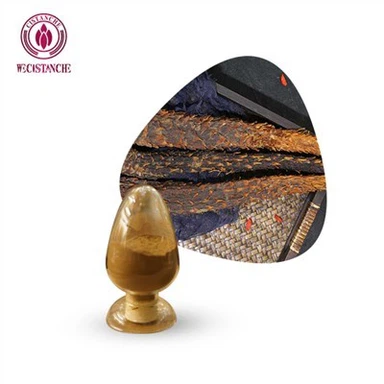
Cistanche is a parasitic plant that grows in arid desert regions, drawing water and nutrients from the roots of drought‑resistant shrubs. Its thick, fleshy, scale‑covered stems have been harvested for centuries and are prized in traditional medicine as a tonic said to nourish essence, support kidney yang, moisten the intestines, and build overall vitality.
Modern pharmacology has given this ancient reputation a scientific foundation. Research has shown that Cistanche‑derived extracts possess a broad range of biological activities, including the ability to:
Scavenge free radicals and lower oxidative stress;
Inhibit lipid peroxidation (the process by which free radicals damage fats in cell membranes);
Suppress inflammation;
Display anti‑tumor properties;
Protect nerve tissue.
Several studies have already reported that Cistanche extract can improve outcomes in spinal cord injury models. What has remained frustratingly unclear, however, is the precise molecular mechanism - exactly which compounds are responsible, and through which signaling pathways do they act. Answering that question is essential if we hope to move from promising animal observations to a reliable, well‑understood therapy. And that is precisely the gap this study set out to close.

The Tools of Modern Discovery: Network Pharmacology and Molecular Docking
Traditional medicines are chemically complex. A single plant like Cistanche contains many compounds, each of which can interact with multiple proteins, which in turn participate in numerous interconnected signaling networks. This "many‑to‑many" complexity is why a single active ingredient is rarely the whole story - and why older, one‑molecule‑at‑a‑time research approaches often fall short.
To tackle this complexity, researchers turned to two powerful computational strategies:
Network Pharmacology
Think of network pharmacology as a map‑making exercise. Instead of studying one drug and one target, it constructs an entire web of relationships: drug → active ingredients → target proteins → disease. Using large databases, scientists can:
Identify the active compounds in a plant and the proteins those compounds are predicted to act on.
Identify all proteins known to be involved in a disease.
Find the overlap - the targets where the drug's compounds and the disease's biology intersect.
Build interaction networks showing which proteins talk to each other most centrally.
Map the biological signaling pathways these targets feed into.
For this study, the team used the Traditional Chinese Medicine Systems Pharmacology database (TCMSP) to identify Cistanche's active ingredients and their targets, and drew disease‑related targets from four major databases: GeneCards, DrugBank, PharmGkb, and OMIM. Overlapping targets were then fed into network‑analysis software to reveal which proteins sit at the center of the web.
Molecular Docking
Once the key players are identified, molecular docking answers a different question: How tightly does a plant compound physically bind to its target protein? Picture a lock and key - the protein is the lock, and the compound is the key. Docking software simulates how the two fit together and calculates a binding energy. Lower (more negative) binding energy means a more stable, stronger interaction - a better "fit." This computational step helps prioritize which compounds are most likely to actually exert a biological effect on their predicted targets.
Together, these tools allow researchers to make informed predictions about a herbal remedy's mechanism of action - before ever touching a living cell - and then to test those predictions in the laboratory. It is a powerful marriage of big‑data analysis and wet‑lab verification.
How the Researchers Carried Out the Investigation
Let us walk through the study step by step.
Step 1: Identify Cistanche's Active Ingredients
Using the TCMSP database, the researchers screened Cistanche for all its active compounds and associated targets. They applied standard filter criteria - an oral bioavailability score of at least 30% (a measure of how well a compound is likely to be absorbed when taken by mouth) and a drug‑likeness score of at least 0.18 (a measure of how "drug‑like" the molecule is). This rigorous screening narrowed the field dramatically: from 75 compounds, only 6 passed the criteria as genuinely promising active ingredients:
Quercetin - a flavonoid with well‑known antioxidant and anti‑inflammatory properties.
Beta‑sitosterol - a plant sterol associated with cholesterol‑lowering, anti‑inflammatory, and immune‑modulating effects.
Arachidonic acid - a polyunsaturated fatty acid with anti‑inflammatory potential.
Suchilactone - a lignan‑type compound.
Yangambin - a lignan with various bioactivities.
Marckiin - an additional lignan‑type compound.
These six compounds mapped to a total of 85 predicted target proteins.
Step 2: Find the Overlap with Spinal Cord Injury
Next, the researchers gathered every protein known to be associated with spinal cord injury from the four disease databases. This produced a large pool of 6,737 disease‑related targets. By overlapping these with the 85 targets predicted for Cistanche's compounds, they identified 74 common targets - the specific proteins where Cistanche's chemistry and spinal cord injury biology intersect. These 74 became the focus of the mechanistic analysis.

Step 3: Build the Interaction Network
When these 74 targets were mapped into a "drug–compound–target–disease" network, the picture grew clearer. The network contained 81 nodes and 168 connections. Among Cistanche's six active ingredients, quercetin stood out unmistakably: it connected to 68 of the 74 targets, placing it at the very center of the network. Beta‑sitosterol connected to 15 targets, while the others showed more modest connectivity. This immediately flagged quercetin as the lead candidate driving Cistanche's effects on spinal cord injury.
Step 4: Identify the Core Target Proteins
The researchers then built a protein‑protein interaction (PPI) network - a map showing which of the 74 proteins physically interact with each other. The most highly connected proteins - those interacting with the greatest number of partners - are considered the network's "hubs," and they are usually the most functionally important. The top six core targets identified were:
FOS (degree 26) - a transcription factor involved in cell growth and inflammation responses;
EGFR (degree 22) - the epidermal growth factor receptor, a cell‑surface protein regulating growth and survival;
RELA (degree 22) - a subunit of NF‑κB, a master regulator of inflammation;
AR (degree 18) - the androgen receptor;
CCND1 (degree 18) - cyclin D1, a key controller of the cell division cycle;
HIF1A (degree 18) - hypoxia‑inducible factor 1‑alpha, the cell's primary sensor and responder to low oxygen.
These six proteins became the prime suspects for how Cistanche might protect the injured spinal cord.
Step 5: Map the Signaling Pathways
To understand how these targets cooperate, the team performed a KEGG pathway enrichment analysis - a bioinformatics method that groups the target proteins into the biological pathways they belong to. This revealed 124 enriched pathways, prominently including:
The PI3K‑Akt signaling pathway - a central regulator of cell survival, growth, and proliferation;
The TNF signaling pathway - a driver of inflammation and programmed cell death;
The MAPK signaling pathway - a cascade that links surface signals to changes in cell behavior, including stress responses.
The involvement of these pathways made biological sense: they are all intimately connected to the secondary‑injury mechanisms of inflammation, oxidative stress, cell survival, and cell death that dominate spinal cord injury pathology.
Step 6: Molecular Docking - Testing the Fit
The researchers then used molecular docking to test how well quercetin - the central compound - physically binds to the six core target proteins. The results were reassuring. Quercetin showed strong, stable binding to multiple targets, with the most favorable (most negative) binding energy against the androgen receptor AR at −38.22 kJ/mol, followed by the epidermal growth factor receptor EGFR at −34.44 kJ/mol, and the other core targets also showing meaningful affinity. In plain terms, quercetin appears to "fit" these key proteins well enough to plausibly modulate their activity - computational support for its central role.
Verification in Living Cells: Does the Prediction Hold Up?
Computational predictions, however elegant, are only as valuable as their ability to predict reality. So the researchers moved from the computer to the laboratory, testing quercetin directly on PC12 cells - a well‑established nerve‑cell line widely used to study neuronal injury and protection.
Protecting Nerve Cells Against Oxidative Damage
Oxidative stress is a core component of secondary injury. To model it, the team exposed PC12 cells to hydrogen peroxide (H₂O₂), a potent source of damaging free radicals. As expected, the H₂O₂‑treated model cells suffered badly - their survival rate fell to around 50%. When quercetin was added, the picture improved: cell survival rose progressively with increasing quercetin concentration, reaching its highest level at 50 μmol/L.
The biochemical markers told the same story. H₂O₂ exposure drove up levels of MDA (a marker of lipid damage) and ROS (reactive oxygen species), while draining the protective enzyme SOD (superoxide dismutase). Quercetin reversed all three in a dose‑dependent manner - lowering MDA and ROS back toward normal while restoring SOD activity. In short, quercetin helped nerve cells weather an oxidative assault.

Calming the Inflammatory Response
Inflammation is the other pillar of secondary injury. To model it, the researchers exposed PC12 cells to lipopolysaccharide (LPS), a bacterial component that triggers a strong inflammatory reaction. LPS drove cell survival down to roughly 50% and caused inflammatory cytokines - IL‑6, IL‑8, and TNF‑α - to surge. Quercetin again intervened: it significantly raised cell survival and suppressed all three inflammatory cytokines in a dose‑dependent manner.
These laboratory results align precisely with the computational predictions. The computer said quercetin should act through inflammation‑ and oxidation‑related pathways centered on targets like RELA (NF‑κB, the inflammation master switch) and HIF1A (the oxygen‑sensing protein). The cells confirmed that quercetin does indeed suppress inflammation and oxidative damage, improving the survival of nerve cells under stress. This convergence of computation and experiment is exactly what researchers hope to see - it gives real weight to the proposed mechanism.
What It All Means: A Plausible Mechanism for Cistanche in Spinal Cord Injury
Pulling everything together, the study builds a coherent mechanistic picture:
The active compounds. Among Cistanche's six drug‑like active ingredients, quercetin is clearly the central player, connecting to the vast majority of SCI‑related targets. Beta‑sitosterol and arachidonic acid also contribute, but quercetin dominates.
The key targets. Cistanche's compounds converge on a set of core proteins - including the inflammation regulator RELA (NF‑κB), the oxygen sensor HIF1A, the growth receptor EGFR, the cell‑cycle controller CCND1, the androgen receptor AR, and the transcription factor FOS - that sit at the hub of spinal cord injury biology.
The pathways. These targets feed into signaling cascades - PI3K‑Akt, TNF, MAPK - that are the recognized central regulators of the secondary‑injury storm: inflammation, oxidative stress, cell survival, and apoptosis.
The physical interaction. Quercetin binds stably to these core targets, most strongly to AR and EGFR, suggesting a real physical basis for its effects.
The living‑cell confirmation. Quercetin protects nerve cells against both oxidative (H₂O₂) and inflammatory (LPS) challenges - improving survival, restoring antioxidant defenses, and suppressing inflammatory cytokines - in a dose‑dependent fashion.
The emerging picture is that Cistanche, through quercetin in particular, may help calm the destructive microenvironment around a spinal cord injury - damping down inflammation and oxidative stress, supporting cell survival, and giving the damaged tissue a better chance to recover. This aligns with the growing scientific consensus that regulating the local microenvironment is the key to spinal cord injury therapy.

A Broader Perspective: Why Network Pharmacology Matters for Traditional Medicine
This study is also an instructive example of how modern science is re‑evaluating traditional medicines. Herbal remedies have been dismissed for years by some as too vague or poorly characterized for rigorous study. Network pharmacology offers a path forward: it treats a plant not as an undifferentiated "black box" but as a system of identifiable molecules acting on identifiable targets through identifiable pathways.
This matters because spinal cord injury - like most chronic and traumatic conditions - is not a single‑target disease. Its secondary‑injury cascade involves many pathways that interact with each other like a giant web. Studying one pathway in isolation gives limited insight. A systems‑level approach, by contrast, examines how pathways connect and where interventions might best be placed. For a complex, multi‑mechanism injury, this holistic strategy is arguably better suited to the problem than a single‑molecule reductionist approach.
That said, network pharmacology is a predictive and hypothesis‑generating tool. Its power lies in pointing researchers in the right direction - as it did here, by identifying quercetin and the inflammation‑/oxidation‑related pathways. The decisive evidence still comes from verification in living cells, animals, and eventually humans. This study's blend of computation and wet‑lab confirmation models the kind of rigor the field needs.
Important Limitations: Reading the Results with Honest Eyes
For all its promise, this research must be interpreted carefully and honestly. Here are the key limitations to keep in mind:
1. It is largely a computational study
Much of the analysis - target identification, network building, pathway enrichment, and docking - is done in silico (on computers). These are powerful predictive tools, but predictions are not proof. They generate hypotheses that require experimental confirmation.
2. Verification was limited to a cell line
The experimental verification used PC12 cells, a rat adrenal‑derived neuronal cell line. A cell line in a dish is a far cry from the complex, blood‑supplied, immune‑active environment of an injured spinal cord in a living body. Results in cells may or may not translate to animals or humans.
3. No whole‑animal or human data yet
The study does not include spinal cord injury in live animals or clinical trials in patients. Moving from cellular evidence to a real therapeutic effect in a human spinal cord injury is a long, uncertain road.
4. Cistanche is not quercetin
The study identifies quercetin as the central compound and verifies its effects in isolation. But Cistanche as a whole contains many compounds - beta‑sitosterol, arachidonic acid, lignans, polysaccharides, and others - that may act synergistically. Effects of the whole extract may differ from, or exceed, the effects of quercetin alone.
5. The extract is not a standardized product
Different Cistanche products vary enormously in species, growing region, harvesting, extraction method, and active‑compound content. Findings from a research‑grade preparation do not automatically extend to every commercial product labeled "Cistanche" or "Desert Ginseng."
6. Spinal cord injury is extraordinarily complex
Even the most compelling mechanism addresses only part of the problem. No single compound is likely to "cure" SCI; realistic progress will probably come from combination strategies that target multiple mechanisms simultaneously.
Practical Takeaways for Readers
If you are reading this out of personal interest or health curiosity, here is how to hold this information:
The science is genuinely exciting but early. Computational analysis plus cell‑based evidence points to a coherent, plausible mechanism - quercetin from Cistanche helping to calm inflammation and oxidative stress in injured nerve tissue. This is a meaningful foundation for further research.
This is not a treatment recommendation. No one should interpret these findings as advice to self‑treat spinal cord injury with Cistanche supplements. Spinal cord injury requires urgent, specialized medical care. Herbal supplements are not a substitute for - and must never delay - professional treatment.
Product quality matters enormously. If you are considering any Cistanche‑containing supplement for general wellness, prioritize products with third‑party analytical testing confirming species identity and marker‑compound content. The label "Desert Ginseng" alone tells you little about what is actually inside.
Expect gradual, incremental progress. The realistic promise of this research is not a dramatic cure, but a better‑understood adjunctive approach that might one day support standard spinal cord injury care - after rigorous animal and human trials.
Where the Research Should Go Next
This study opens a door rather than closes one. Natural next steps would include:
Testing quercetin and whole Cistanche extract in live animal models of spinal cord injury, to see whether the cellular benefits translate to real functional recovery;
Investigating the other active compounds - beta‑sitosterol, arachidonic acid, the lignans - for additive or synergistic effects;
Confirming the proposed pathways through targeted experiments, such as blocking specific signaling proteins and observing whether the protective effect disappears;
Developing standardized, reproducible Cistanche preparations with consistent active‑compound content;
Ultimately, designing careful human studies to evaluate safety and any genuine clinical benefit.
The distance between a promising computational model and a validated human therapy is a long one - and it is crossed only through patient, rigorous, and transparent research.

Conclusion
Spinal cord injury remains one of medicine's most devastating unsolved challenges, defined as much by the destructive secondary cascade of inflammation, oxidative stress, and cell death as by the initial trauma. Cistanche - the desert‑dwelling "Desert Ginseng" - has long been valued in traditional medicine, and modern research has associated its extracts with antioxidant and anti‑inflammatory activity.
This study used network pharmacology and molecular docking to map Cistanche's mechanism of action in spinal cord injury with remarkable clarity. Among its six drug‑like active ingredients, quercetin emerged as the central compound, connecting to nearly all relevant targets. The analysis pointed to a set of core hub proteins - including the inflammation regulator RELA, the oxygen sensor HIF1A, and the growth receptor EGFR - feeding into the PI3K‑Akt, TNF, and MAPK signaling pathways that govern the secondary‑injury response. Molecular docking confirmed that quercetin binds stably to these key targets. And crucially, living‑cell experiments verified the prediction: quercetin protected nerve cells against both oxidative and inflammatory injury, restoring antioxidant defenses, lowering damaging by‑products, and suppressing inflammatory cytokines in a dose‑dependent manner.
Together, these findings sketch a plausible mechanism: Cistanche, acting primarily through quercetin, may help stabilize the injured spinal cord's microenvironment by curbing inflammation and oxidation, giving damaged nerve tissue a better chance to survive and recover. The work is a powerful demonstration of how modern computational tools can systematically unpack the complexity of a traditional remedy.
Still, the honest caveat remains: this is a computational study verified in cells, not in patients. The road from a promising mechanism to a validated therapy is long, and it demands rigorous animal trials, standardized products, and ultimately human clinical research. For now, the Desert Ginseng's promise in spinal cord injury is best understood as a scientifically grounded hope - one more piece of evidence that even the oldest healing traditions can offer modern medicine new directions worth pursuing.
Disclaimer: This article is provided for educational and informational purposes only. It is not medical advice and makes no health or efficacy claims. The findings described come from a computational and cell‑based laboratory study and do not constitute evidence of therapeutic effect in humans. Spinal cord injury is a medical emergency requiring immediate professional care. Always consult qualified healthcare professionals regarding any injury, condition, or supplement use.