Stop Mislabeling Cistanche Tubulosa As Cistanche Deserticola: How To Authenticate The Hardcore Cistanche Raw Material
Nov 04, 2026
In the Cistanche trade, one confusion keeps recurring: buyers write "Cistanche" on the purchase order, labs report "Cistanche" on the CoA, and nobody in the warehouse can tell which species actually arrived. Open the Chinese Pharmacopoeia (ChP, Cistanches Herba), however, and you will find two official botanical origins listed side by side: Cistanche deserticola Y. C. Ma and Cistanche tubulosa (Schrenk) Wight. Both are legal. Both are medicinal. But on the pharmacologically decisive metric, their required active-marker content differs by a factor of five.
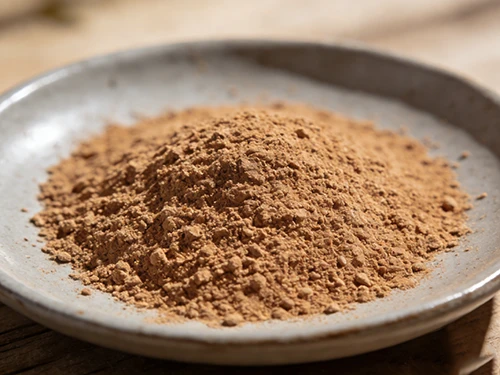
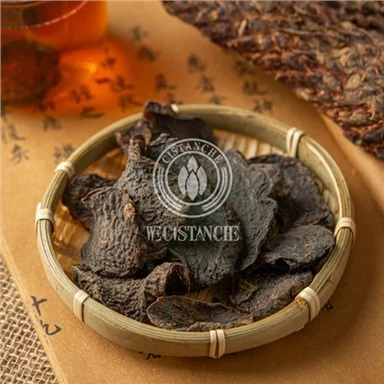
Cistanche tubulosa extract
This is not semantics. For extract houses, finished-dose formulators, and exporters shipping to FDA, Health Canada, or Korea MFDS, failing to separate the two origins means sub-potent batches, wrong formulation math, and - at the border - a rejected shipment. This article lays out, once and for all, why C. tubulosa is the "hardcore" raw material of the genus, and the four-layer verification protocol every incoming lot should go through before it hits the warehouse.
1. Two species, not one: what the Pharmacopoeia actually says
The habit of calling the Alxa (Inner Mongolia) material "Roucongrong" and the Hotan (Xinjiang) material "Guanhua Roucongrong" implies that the latter is a variety of the former. Botanically, it is not. They are two distinct species in the genus Cistanche (Orobanchaceae), with different host plants, different ranges, different fracture anatomy, and - crucially - different ChP content specifications.

Cistanche deserticola

Cistanche tubulosa
|
Parameter |
C. deserticola Y. C. Ma |
C. tubulosa (Schrenk) Wight |
|
Host plant |
Parasitizes roots of Haloxylon ammodendron (Chenopodiaceae) |
Parasitizes roots of Tamarix ramosissima and other Tamarix spp. (Tamaricaceae) |
|
Main producing area |
Alxa League, Inner Mongolia; western Gansu |
Southern rim of the Tarim Basin, Xinjiang - centered on Hotan and Kashgar |
|
Macroscopic shape |
Flattened-cylindrical, slightly curved, 3–15 cm long, 2–8 cm in diameter; externally brown to gray-brown; densely imbricated fleshy scale leaves; heavy, firm, slightly flexible |
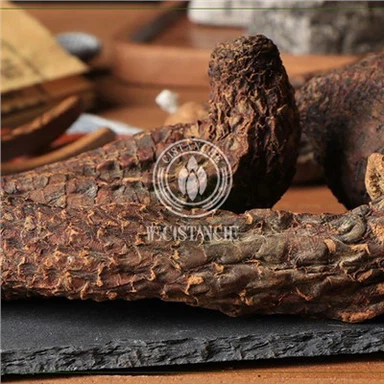
Subfusiform, flattened-fusiform, or flattened-cylindrical, 5–25 cm long, 2.5–9 cm in diameter; externally brown to dark brown; hard texture; granular fracture |
|
Vascular bundles on fracture |
Light-brown dots arranged in a wavy ring |
Gray-brown dots scattered, not forming a ring |
|
Ethanol-soluble extractives (ChP) |
≥ 35.0% (dilute ethanol, cold maceration) |
≥ 25.0% (dilute ethanol, cold maceration) |
|
ChP assay limit |
Echinacoside + verbascoside ≥ 0.30% (dried basis) |
Echinacoside + verbascoside ≥ 1.5% (dried basis) |

Cistanche deserticola

Cistanche tubulosa
Read the last row again. The Pharmacopoeia demands five times the marker content from C. tubulosa before it can even be released as "qualified" - because that is what the plant naturally delivers.
2. Why tubulosa is the "hardcore" player: a quantitative gap, not a cosmetic one
The kidney-tonifying and essence-nourishing activity of Cistanche is attributed primarily to phenylethanoid glycosides (PhGs). The two reference markers singled out by ChP 2025 are echinacoside and verbascoside (acteoside) - the only two compounds required by the monograph assay.
In field samples from Hotan, echinacoside content in C. tubulosa routinely reaches several-fold - sometimes an order of magnitude - the level seen in C. deserticola. The PhG profile of C. tubulosa is further enriched by tubuloside A, isoacteoside, and geniposidic acid. This is why the global extract market, when it needs high-echinacoside raw material, almost exclusively sources Hotan C. tubulosa: it is not a marketing preference; it is a yield-and-cost calculation.

cistanche extract powder
Click here to view Cistanche Tubulosa Extract Natural Supplement Powder
【Ask for more】 Email:cindy.xue@wecistanche.com / WhatsApp: 0086 18599088692 / WeChat: 18599088692
C. deserticola is not "inferior" - it simply has a different chemistry. It is the species that carries 2′-acetylacteoside, a marker essentially absent in C. tubulosa, and it is comparatively richer in betaine and the oligosaccharide fraction associated with the laxative indication. The two species share the core PhG pharmacophore but diverge clearly on the secondary markers and on the HPLC fingerprint. Treating them as interchangeable means running every batch against the wrong baseline.

Phenylethanol glycoside is the main active component of Cistanche tubulosa
3. The four-layer incoming-goods verification protocol
Authentication is not artisanal guesswork. The Pharmacopoeia and modern molecular taxonomy provide a layered protocol - cheap and fast at the front, expensive and definitive at the back. Work through them in order.
Layer 1 - Macroscopic check: read the fracture in ten seconds
Zero-cost, zero-equipment. Take a whole tuber or a transverse slice and look at the vascular bundles:
Bundles arranged in a wavy ring → lean C. deserticola;
Bundles as scattered dark dots, no ring, granular fracture → lean C. tubulosa.
Shape reinforces the read: C. deserticola feels like a heavy, slightly flexible piece of brown wood; C. tubulosa feels like a hard, spindle-shaped club. This layer will not settle a disputed lot, but it will immediately screen out look-alikes such as C. salsa and C. sinensis, and obvious adulterants.
Layer 2 - Thin-layer chromatography (TLC): the pharmacopoeial identity test
Follow the ChP method: sonicate 1 g of powdered sample in 20 mL methanol for 15 min, concentrate, and reconstitute in 2 mL methanol. Spot sample solution alongside echinacoside and verbascoside reference standards on a polyamide TLC plate; develop with methanol–acetic acid–water (2:1:7); air-dry; inspect under UV 365 nm. The sample must show fluorescent spots of the same color at the reference positions.
TLC confirms "this is Cistanche and contains the markers" - but it cannot distinguish the two origins, because both markers are present in both species. TLC is the gate, not the verdict.

Cistanche tubulosa experiment
Layer 3 - HPLC assay: quantify the "hardcore" margin
Run ChP method 0512: C18 column, methanol (A) vs. 0.1% formic acid (B) gradient, detection at 330 nm; theoretical plates ≥ 3000 on the echinacoside peak. On the dried basis:
Total markers ≥ 0.30% but well below 1.5% → consistent with C. deserticola;
Total markers ≥ 1.5%, often reaching 3–5% → typical C. tubulosa;
Intermediate value with a clean fingerprint → escalate to Layer 4.
Always run a characteristic fingerprint alongside the assay. C. tubulosa shows prominent peaks for geniposidic acid, tubuloside A, and isoacteoside; C. deserticola shows the 2′-acetylacteoside peak. UPLC-QTOF/MS combined with PCA and OPLS-DA separates the two origins cleanly in published work.
Layer 4 - ITS2 DNA barcoding: the definitive ID
Once the material is sliced, powdered, or extracted, morphology and TLC lose their resolving power. Only molecular identification gives a final answer. ChP general chapter 9402 designates the nuclear ribosomal internal transcribed spacer 2 (ITS2) as the primary barcode for medicinal plants, with psbA-trnH as supplementary.
Published comparisons of C. deserticola and C. tubulosa ITS2 sequences show dozens of stable interspecific variable sites. A PCR-RFLP assay, selecting a diagnostic restriction enzyme on the ITS2 amplicon, separates the two species on an agarose gel within hours. For export lots, customs inspection, and DMF/API dossiers, this layer is not optional - it is the backstop.

cistanche powder
4. What the purchase contract must lock down
Most trade disputes trace back to a contract that says only "Cistanche." A specification that survives a QC audit should specify, at minimum:
Botanical origin to species level - e.g., "dried fleshy stem with scales of Cistanche tubulosa (Schrenk) Wight." Never accept "Cistanche" alone.
Geographic origin and host - e.g., "Hotan Prefecture, Xinjiang; cultivated on Tamarix spp.," supported by a place-of-processing certificate.
Assay specification - per ChP 2025, echinacoside + verbascoside ≥ 1.5% (tubulosa) or ≥ 0.30% (deserticola), dried basis.
Documentation - third-party HPLC assay report and TLC identification chromatogram per shipment; add an ITS2 molecular ID report for high-value or export lots.
Limit tests - loss on drying ≤ 10.0%; total ash ≤ 8.0%; no insects, mold, or discoloration on receipt.
Retention samples - retain per-lot samples until six months after the labeled shelf life, for retest and re-export review.
One extra line in the contract saves ten rounds of arbitration later.