History And Development Of “One Root Of Medicine And Food Ⅱ
Feb 18, 2025
3. The Historical Origins of "Dual-Purpose Substances for Medicine and Food"
Although medicine and food share the same origin, there is a clear boundary between the two. While ancient people explored these boundaries, they also identified substances that could serve as both medicine and food, referred to as "dual-purpose substances for medicine and food." These substances were extensively documented in medical texts and materia medica.

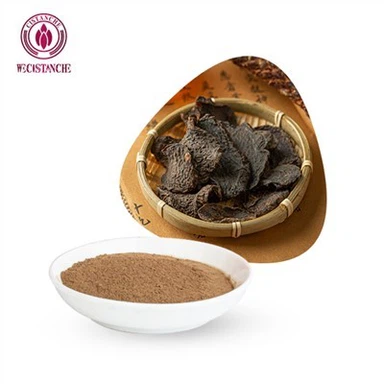
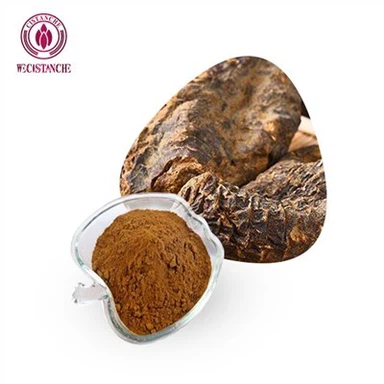
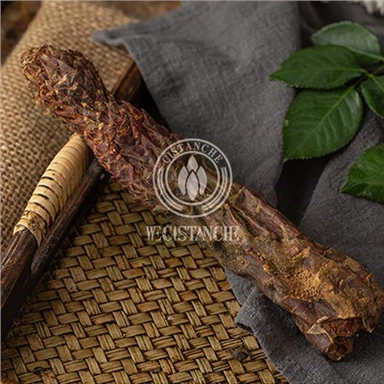
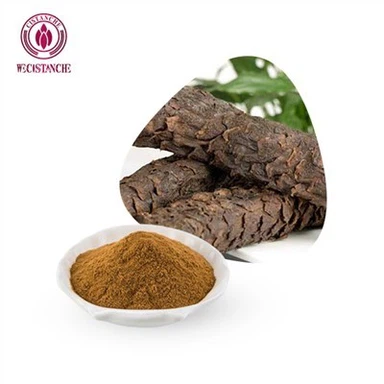
Dual-purpose Substances For Medicine And Food Herb Cistanche For Male Sexual Enhancement
Contact us for more details about cistanche
3.1 Ancient Discussions on the Boundary Between Medicine and Food
Both food and medicine exhibit biased properties (pian xing), characterized by the four natures (cold, hot, warm, cool) and five tastes (sour, bitter, sweet, pungent, salty). They both have functions related to nutritional maintenance and therapeutic effects. However, this does not mean there is no distinction between food and medicine. The differentiation between natural medicines and food was a gradual process, evolving from vagueness to clarity.
Safety as the Primary Standard
Safety was the first and most important criterion for ancient people in identifying food. The story of "Shennong tasting hundreds of herbs and encountering seventy poisons in a single day" reflects the emphasis on safety as a standard for identifying food.
In the Shennong Bencao Jing (Shennong's Materia Medica Classic), the presence and degree of toxicity were key standards for classifying substances into three grades:
Superior-grade medicines: 120 types, primarily for nourishing life and aligning with natural principles. They are non-toxic, safe for long-term consumption, and provide benefits such as lightening the body, enhancing vitality, and prolonging life [8]. Superior-grade medicines often included food-like substances.
Middle-grade and inferior-grade medicines, on the other hand, often contained toxic elements. For example, the Rites of Zhou: Offices of Heaven records:
"Physicians are responsible for managing medical affairs and storing poisonous medicines for medical use" [7].
Traditional Chinese medicine's adage, "All medicines are three parts poison," further illustrates the connection between toxicity and medicine. The use of "toxicity" as a boundary between food and medicine reflects the ancient belief that food must be safe and non-toxic.
Functional Differences Between Medicine and Food
The second distinction between food and medicine lies in their fundamental roles in sustaining human life. For instance, the Plain Questions: Discussion of the Law of the Five Viscera states:
"Toxic medicines expel pathogens, while grains nourish, fruits assist, livestock benefit, and vegetables replenish. These should be combined to nourish essence and enhance qi" [11].
This indicates that both medicine and toxicity are primarily used to treat illnesses, while food serves to nourish and replenish essence and qi. Similarly, the Prescriptions Worth a Thousand Gold notes:
"The foundation of survival depends on food, while the rapid resolution of illnesses relies on medicine" [12].
This clearly defines food as a provider of nutrition, while medicine is primarily used for treating diseases.
Differences in Strength and Nature
A third distinction lies in the intensity and strength of their properties. The Prescriptions Worth a Thousand Gold states:
"A good physician must first thoroughly understand the source of the illness and treat it with food. If food does not cure the illness, then use medicine. Medicines are as fierce as military weapons" [12].
This emphasizes the strong, intense nature of medicine compared to the mild, balanced nature of food.
This difference also reflects the ancient belief that food and medicine regulate the body differently. Medicine's intense properties target specific treatments, while food's mildness supports overall nourishment and prevention. Food is primarily used in nutritional maintenance (food therapy) and preventative care (treating diseases before they arise). For example, the Prescriptions Worth a Thousand Gold states:
"When the body is balanced, it is important to focus on proper nourishment and avoid unnecessary medication. Medicines are biased in their effects, which can disrupt the balance of internal organs, leaving the body vulnerable to external harm. All living beings rely on food for survival, yet people often fail to recognize the successes and failures of food. Though water and fire are close at hand, they are difficult to understand" [12].
This highlights the importance of food therapy and reflects modern concepts of health preservation.

3.2 The Historical Development of "Dual-Purpose Substances for Medicine and Food" in Materia Medica
The records of "dual-purpose substances for medicine and food" in ancient China primarily appeared in mainstream materia medica texts and specialized food-related materia medica. Mainstream materia medica documented many items with both medicinal and dietary uses, while the emergence of food-specific works reflected the importance ancient people placed on the roles of "dual-purpose substances" in food therapy and nutritional maintenance. These texts provide a rich source of information for modern research, highlighting the broad applications of the "unity of medicine and food" concept.
As the first mainstream materia medica text in China, the Shennong Bencao Jing (Shennong's Materia Medica Classic) recorded a significant number of dual-purpose substances [17]. Examples include jujube, goji berries, job's tears, ginger, apricot kernels, black plums, walnuts, lotus seeds, honey, and lilies, many of which were common foods in daily life. The text primarily emphasized their tonic effects, noting that they could be consumed frequently and for long periods. While all these items were classified under the broad label of "medicine," the distinction between food and medicine was not explicitly defined at the time.
In the Liang Dynasty, Tao Hongjing's Collected Annotations on the Materia Medica Classics (Bencao Jing Jizhu) was the first text to classify medicines based on their natural attributes, creating a separate category for "fruits, vegetables, and grains" within materia medica. This category included 23 types of fruits, 30 types of vegetables, and 29 types of grains [8]. Subsequent mainstream materia medica texts, such as the Newly Revised Materia Medica (Xinxiu Bencao) and Classified Materia Medica (Zhenglei Bencao), continued Tao's classification system, grouping edible medicines into specific categories.
The influential Ming Dynasty text, Compendium of Materia Medica (Bencao Gangmu), compiled by Li Shizhen, included approximately 300 food-related medicines [18]. Li divided medicines into five sections: herbs, grains, vegetables, fruits, and other items, and also included discussions on dietary restrictions and contraindications.
In addition to mainstream materia medica, specialized food-related materia medica also developed. For example:
In the Tang Dynasty, Sun Simiao's Prescriptions Worth a Thousand Gold (Qian Jin Yao Fang) included a dedicated section on "Food Therapy", which was divided into five chapters: Introduction, Fruits, Vegetables, Grains, and Birds & Beasts (with insects and fish included) [12]. This work recorded 155 types of food, including 29 fruits, 58 vegetables, 27 grains, and 40 birds, beasts, insects, and fish.
Sun Simiao's disciple, Meng Shen, expanded upon the Food Therapy section of Prescriptions Worth a Thousand Gold and authored the Supplementary Nourishment Prescriptions (Buyang Fang), which was later revised by Zhang Ding in the Ming Dynasty and renamed Food Therapy Materia Medica (Shiliao Bencao) [13]. This is China's earliest surviving monograph on food therapy, recording a total of 227 food items.

During the Song Dynasty, the government-compiled Imperial Grace Formulary of the Taiping Era (Taiping Shenghui Fang) included a specific section called "Food Therapy", which listed 160 medicinal food recipes.
In the Yuan Dynasty, Hu Sihui, a dietary physician, compiled Proper and Essential Diet Principles (Yinshan Zhengyao) [14], China's earliest monograph on dietary hygiene and nutrition. Volume three of this text records 230 single-ingredient foods, categorized as 49 grains, 35 animals, 18 birds, 22 fish, 39 fruits, 40 vegetables, and 28 seasoning items.
During the Ming Dynasty, the Food Materia Medica (Shiwu Bencao), attributed to Li Gao, recorded 1,689 food-related medicines, making it the most comprehensive food-related materia medica of its time [19].
The Ming and Qing dynasties saw the emergence of numerous food-related materia medica texts, such as:
Lu He's Food Materia Medica (Shiwu Bencao),
Ning Yuan's Food Guide Materia Medica (Shijian Bencao),
Jia Ming's Dietary Essentials (Yinshi Xuzhi),
Wang Mengying's Dietary Manual of Sui Xi Ju (Suixi Ju Yinshi Pu).

3.3 Overview of the Usage of Dual-Purpose Substances for Medicine and Food
The proliferation of food-related materia medica systematically summarized the uses of dual-purpose substances for medicine and food, not only in terms of their therapeutic and health-preserving functions but also with regard to dietary contraindications and proper usage. The explanations of the uses and precautions for such substances in various materia medica reflect their distinct characteristics compared to ordinary foods, with particular emphasis on safety and proper methods of use.
The Prescriptions Worth a Thousand Gold: Food Therapy Section (Qian Jin Yao Fang: Shi Zhi Pian) built upon and developed earlier dietary theories from pre-Tang Dynasty physicians and the Huangdi Neijing (The Yellow Emperor's Inner Canon) [12]. It proposed principles such as "food has biases", "the five flavors should not dominate excessively", and "moderation in eating and drinking". For each food, it included details on properties and flavors, benefits and harms, dietary contraindications, and diseases it could treat, with some entries also describing specific preparation methods.
The Food Therapy Materia Medica (Shiliao Bencao) provided even more detailed descriptions of the medicinal properties, effects, and contraindications of various foods [13]. It covered a wide range of considerations, including timing, dosage, methods of consumption, origin, and specific guidelines for pregnant women, children, diseases, overconsumption, and long-term consumption.
The Proper and Essential Diet Principles (Yinshan Zhengyao) dedicated sections in Volume Two to topics such as "seasonal dietary recommendations", "the tendencies of the five flavors", "dietary contraindications when taking medicine", "benefits and harms of food", "incompatible food combinations", and "food poisoning" [14]. In Volume Three, it recorded individual foods with details on their properties and flavors, effects, toxicity, and dietary precautions.
A notable feature of the Proper and Essential Diet Principles was its meticulous classification of food properties into 12 specific levels, including neutral, extremely cold, cold, slightly cold, mild cold, extremely warm, warm, slightly warm, extremely hot, hot, cool, and cold. This classification reflected the author's emphasis on the impact of a food's bias on the human body. Overconsumption of foods with certain properties or flavors was noted to easily cause illness. Consequently, the text explicitly listed 42 foods that should not be consumed in excess or for long periods.
This detailed attention to biases, contraindications, and precautions underscores the distinct approach to dual-purpose substances for medicine and food, differentiating them from ordinary foods and highlighting their importance in food therapy and health preservation.