Differences In Root Exudates Of Haloxylon Ammodendron Across Stand Ages And The Germination Response Of Cistanche Deserticola Seeds
Oct 08, 2026
Abstract
To clarify how root exudates of Haloxylon ammodendron (saxaul) vary across stand ages and how Cistanche deserticola (Cistanche) seed germination responds to these differences, we investigated saxual stands of 1, 3, and 6 years old in the Alar region, Xinjiang, China. Root-exudate samples were collected and analyzed using LC–MS-based untargeted metabolomics to characterize compositional differences. In parallel, Cistanche seeds were treated with root exudates from different stand-age groups, and seed germination rates were determined.
Results showed significant differences in Cistanche germination rate among treatments. The 3-year stand exudate treatment produced the highest germination rate, significantly higher than treatments using exudates from 1-year and 6-year stands, whereas no significant difference was detected between 1-year and 6-year treatments. Metabolomics analysis demonstrated that overall metabolic profiles of saxual root exudates were clearly distinguishable among stand ages, and the largest number of differential metabolites occurred between 3-year and 1-year stands. Differential metabolites were mainly enriched in sugars, vitamin B6-related molecules, flavonoids/phenolics, and lipid-related molecules. The major pathway differences involved alpha-linolenic acid metabolism, vitamin B6 metabolism, and flavonoid-related pathways. Further screening by integrating germination phenotypes indicated that representative differential features consistent with higher germination were also concentrated in these metabolite categories and pathways.
These findings indicate clear chemical differentiation of saxual root exudates among stand ages, and suggest that 3-year-old saxaul stands may develop an exudate chemical background more favorable for Cistanche seed germination. The results provide a theoretical basis for developing and optimizing Cistanche inoculation techniques.
Keywords: Haloxylon ammodendron; Cistanche deserticola; root exudates; metabolomics; stand-age gradient

Introduction
Restoration of arid desert ecosystems often relies on the establishment and continued expansion of key shrubs [1–2]. Haloxylon ammodendron is a typical sand-fixing tree species in Northwest China's desert regions and plays an outstanding role in windbreak and sand fixation, surface stabilization, and maintenance of vegetation structure [3–4]. Around the management and ecological function improvement of saxaul plantations, a comprehensive pathway of "ecological restoration–forest management–resource utilization" has gradually formed [5–7]. Among these approaches, inoculating Cistanche deserticola under saxaul plantations is regarded as a representative development model that balances ecological and industrial benefits [8–9].
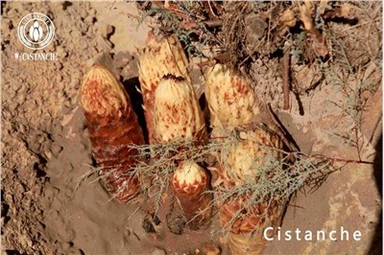
Cistanche Cultivation Base In Xinjiang, China

Cistanche deserticola has notable economic value and has stimulated demand for artificial cultivation [10–11]. However, in large-scale production, the success rate of parasitic inoculation fluctuates greatly, affecting the stability and scalability of this model [12].
In the saxaul–Cistanche system, seed germination and early host recognition are critical steps that determine whether a parasitic relationship can be established [12–13]. Cistanche seeds are extremely small, and germination initiation strongly depends on stimulation from host root exudates [14–15]. After germination, seedlings must locate host roots within a short time and enter the haustorium formation process [16]. Therefore, the intensity and composition of host signals are directly reflected in germination efficiency and subsequent parasitism success rates [16–17]. For obligate parasitic plants, these signals can also form a time–space "combination of conditions" that is more likely to trigger germination, i.e., a so-called germination window [18–19].
Saxaul root exudates contain multiple classes of compounds that may participate in host recognition and induction processes, such as quinones, organic acids, and hormone-related molecules. Their composition is influenced by both plant developmental stage and environmental background [20–21]. Previous studies suggest that root exudates vary dynamically across seasons or growth stages, which may further lead to differences in Cistanche germination rate, haustorium formation efficiency, and parasitism establishment [22]. From a plantation management perspective, a stand-age gradient often corresponds to development of host root systems, accumulation of carbon inputs, and stabilization of the rhizosphere microenvironment. Consequently, the exudate chemical background may undergo systematic adjustments [23–26].
However, evidence remains insufficient regarding how stand-age differences reshape the chemical spectrum of saxaul root exudates and whether such changes can produce quantifiable germination responses. This gap also limits direct quantitative guidance for selecting host stand age and scheduling key management periods.
Metabolomics can reveal changes in root-exudate metabolite profiles. Multivariate statistical methods such as principal component analysis (PCA) and orthogonal partial least squares discriminant analysis (OPLS-DA) can be used to distinguish groups and identify differential metabolites [27–28]. Further pathway annotation and enrichment analysis helps interpret the direction of biochemical changes [29–30]. By synchronously comparing metabolomics outputs with functional phenotypes (e.g., seed germination rate), chemical differences in exudates can be linked to measurable outcomes-"whether germination is promoted, and to what extent"-providing more direct support for management and application decisions [31–33].
Therefore, this study focused on saxaul stands of different ages in the Alar region on the edge of the Taklamakan Desert. We collected root exudates from different stand ages for LC–MS untargeted metabolomics profiling, and conducted Cistanche seed germination assays using these exudates as treatments. We investigated stand-age–driven changes in root-exudate metabolite profiles (overall separation, differential metabolite screening, and pathway enrichment) and matched them to differences in germination rate. The study provides quantitative references for improving Cistanche inoculation success and offers empirical metabolomics evidence for chemical interactions between host and parasitic plants in arid regions.
1 Materials and Methods
1.1 Study Area
The study area is located in the desert–oasis transition zone of Alar City, on the northern edge of the Taklamakan Desert, Xinjiang, China. The region has a typical warm temperate, extremely arid climate, with strong wind–sand activity, scarce precipitation, and intense evaporation. Annual mean precipitation is 40.1–82.5 mm, while annual mean evaporation is 1876.6–2558.9 mm. Light and heat resources are abundant, and diurnal temperature differences are large. Surface vegetation is dominated by desert shrubs and sparse herbs. Saxaul is the major constructive species used for local windbreak and sand-fixation belts, and the region is also an important production area for saxaul-inoculated Cistanche.
1.2 Sample Collection and Processing
Sampling was conducted in April 2025 (spring) in the Alar region. Root exudates and synchronous soil samples were collected from saxaul stands aged 1, 3, and 6 years. Cistanche seed germination experiments were carried out after sampling.
The 1-, 3-, and 6-year stand-age treatments were designated as AO, AT, and AS, respectively. Each treatment included three biological replicates, labeled AO1–AO3, AT1–AT3, and AS1–AS3. The 1-year stands represent the early establishment stage; 3-year stands represent a vigorous growth stage with active rhizosphere processes; and 6-year stands represent a relatively stable stage. Based on differences in host developmental stages, we compared root-exudate chemical variation across stand ages and its relationship with Cistanche seed germination.
1.2.1 Root Exudate Collection
Root exudates were collected using an in situ field extraction method. In each stand-age plot, saxaul individuals with similar growth status and no obvious pests or diseases were selected. Three plants were sampled per stand age as biological replicates. Roots were carefully excavated around the plant base, minimizing mechanical injury. Adhering soil was gently removed; roots were rinsed with deionized water; then roots were bagged and reburied in situ for a 24 h pre-treatment.
After pre-treatment, roots were removed and gently rinsed again with deionized water. Root segments were wrapped with moistened filter paper to maintain humidity, placed into 50 mL centrifuge tubes, sealed with parafilm, and reburied in situ. After 24 h, the filter-paper-wrapped root segments were collected, kept on ice, and transported to the laboratory.
In the lab, 100 mL deionized water was added, and samples were shaken for 30 min for extraction. The extract was vacuum-filtered, concentrated under reduced pressure, and stored at −80 °C for subsequent LC–MS untargeted metabolomics analyses. The same extracts were also used for seed-treatment assays.
1.2.2 Soil Sampling and Determination of Soil Physicochemical Properties
Soil samples were collected simultaneously with root exudates. Samples were air-dried naturally, impurities removed, and passed through a 2 mm sieve for physicochemical measurements including pH, total nitrogen (TN), total phosphorus (TP), total potassium (TK), alkali-hydrolyzable nitrogen (AN), available phosphorus (AP), available potassium (AK), and soil organic matter (SOM). Detailed methods are provided in Table 1.
Table 1. Soil physicochemical indicators and analytical methods
| Indicator | Abbreviation | Analytical method |
|---|---|---|
| pH | - | Potentiometric method |
| Total nitrogen | TN | Kjeldahl method |
| Total phosphorus | TP | NaOH fusion – molybdenum antimony colorimetry (spectrophotometry) |
| Total potassium | TK | NaOH fusion method |
| Alkali-hydrolyzable nitrogen | AN | Alkaline diffusion method |
| Available phosphorus | AP | Spectrophotometric method |
| Available potassium | AK | Ammonium acetate extraction method |
| Soil organic matter | SOM | Potassium dichromate oxidation method |
1.3 LC–MS Untargeted Metabolomics and Data Preprocessing
Root-exudate samples were analyzed using ultra-high-performance liquid chromatography–high-resolution mass spectrometry (UHPLC–HRMS) in both positive and negative electrospray ionization modes. Raw data were subjected to peak extraction, retention-time correction, peak alignment, missing value handling, and normalization prior to downstream analyses.
Quality-control samples and blank controls were used to remove background interference peaks and features with poor reproducibility to improve data stability and comparability. Metabolite identification and annotation were based mainly on accurate mass, retention time, and MS/MS fragmentation patterns, matched to HMDB, METLIN, MassBank, and mapped to KEGG for pathway analysis. Annotation results were filtered by matching confidence, and chemical class categorization and pathway-level summarization were conducted.
1.4 Cistanche Seed Germination Experiment
1.4.1 Seed Pretreatment
Collected Cistanche seeds were placed at 30 °C in a constant-temperature incubator for 1 h. Seed coats were removed, and seeds were surface-sterilized in 2% sodium hypochlorite for 15 min, rinsed three times with sterile distilled water, and blotted dry on sterile filter paper.
1.4.2 Pre-Experiment and Determination of Basal Pro-Germination Conditions
To ensure comparability among treatments with exudates from different stand ages, a pre-experiment was conducted to screen the addition conditions for gibberellin and fluridone. Based on pre-test results, a combination with better germination performance and stable repeatability was selected as the basal pro-germination condition: addition of 1 mL of 1 g·L−1^{-1}−1 gibberellin and 1 mL of 10 mg·L−1^{-1}−1 fluridone.
1.4.3 Treatments with Root Exudates from Different Stand Ages
Under the unified basal pro-germination condition, equal volumes of root exudate samples from 1-, 3-, and 6-year saxaul stands were added to compare Cistanche seed germination responses. This study focused on treatment effects of exudates from different stand ages and did not include an exudate concentration gradient.
For each treatment, 50 pretreated seeds were placed in Petri dishes using the filter-paper method and incubated at 25 °C in the dark. Germination rate was recorded after 10 days. A radicle (germ tube) length > 1 mm was used as the germination criterion. Each treatment had three replicates.
1.5 Statistical Analysis
After preprocessing and normalization, metabolomics data were analyzed using hierarchical clustering analysis, PCA, and OPLS-DA to evaluate overall differences among stand ages. Differential metabolites were screened using VIP > 1 and P < 0.05. Venn diagrams, volcano plots, clustered heatmaps, and KEGG pathway enrichment analyses were used to interpret major differential metabolic features.
Cistanche seed germination rates were analyzed by one-way ANOVA; post hoc comparisons were performed using Tukey's test. The significance level was set at α=0.05\alpha = 0.05α=0.05.
2 Results and Analysis
2.1 Soil Physicochemical Characteristics
Soil physicochemical indicators showed some variation among different stand ages, but the overall magnitude of change was limited (Table 2). Soils were alkaline in all plots, with pH ranging from 8.35 to 8.83. Contents of total nitrogen, total phosphorus, total potassium, and organic matter were generally low. The 3-year stands had relatively higher TN, TK, SOM, and AK; the 6-year stands had slightly higher TP and AP; and the 1-year stands had relatively higher AN. Overall, soil backgrounds fluctuated somewhat across stand ages without a consistent directional trend. Therefore, subsequent analyses mainly focused on root-exudate differences and their correspondence with Cistanche seed germination responses.
Table 2. Soil physicochemical properties
| Treatment | pH | TN (g·kg⁻¹) | TP (g·kg⁻¹) | TK (g·kg⁻¹) | AN (mg·kg⁻¹) | AP (mg·kg⁻¹) | AK (mg·kg⁻¹) | SOM (g·kg⁻¹) |
|---|---|---|---|---|---|---|---|---|
| AO | 8.83 | 0.129 | 0.591 | 6.76 | 11.672 | 7.171 | 159.783 | 2.660 |
| AT | 8.35 | 0.165 | 0.604 | 10.69 | 9.114 | 7.381 | 377.900 | 3.186 |
| AS | 8.82 | 0.101 | 0.649 | 7.08 | 10.697 | 8.086 | 185.962 | 2.547 |
Notes: AO = 1-year stand; AT = 3-year stand; AS = 6-year stand.
2.2 Effects of Root Exudates from Different Stand Ages on Cistanche Seed Germination
Cistanche seed germination rates differed significantly among treatments with root exudates from different stand ages (Figure 1). The 3-year stand exudate treatment (AT) produced the highest germination rate at 84.66% ± 1.15%. The 1-year (AO) and 6-year (AS) treatments yielded 80.89% ± 2.04% and 80.67% ± 0.67%, respectively. One-way ANOVA indicated a significant difference among treatments (P = 0.022). Tukey's post hoc test showed that AT was significantly higher than AO (P = 0.038) and AS (P = 0.030), while AO and AS did not differ significantly (P = 0.980).

Fig. 1 Differences in germination rate of Cistanche deserticola seeds under root-exudate treatments from Haloxylon ammodendron stands of different ages
These results suggest that during the spring window period, root exudates from different stand ages correspond to clear differences in Cistanche seed germination responses, and exudates from 3-year stands show stronger germination-promoting potential. To further explain these differences, we next analyzed overall metabolite-profile separation and differential metabolic features.
2.3 Overall Differences in Root Exudates Across Stand Ages
2.3.1 Overall Separation of Root-Exudate Metabolic Profiles
Metabolic profiles of root exudates were clearly differentiated among stand ages. The global heatmap (Figure 2) showed that most samples within the same stand age clustered on the same branch, indicating good within-group consistency. Samples from different stand ages showed relatively clear grouping patterns, suggesting that exudate composition was reorganized with stand age.
PCA results (Figure 3) indicated that the first two principal components explained 46.5% of total variance; PC1 and PC2 explained 32.1% and 14.4%, respectively. Samples from different stand ages showed distinguishable distributions in the ordination space. In particular, 1-year samples showed an overall distribution trend different from 3- and 6-year samples, indicating structural differentiation in overall exudate composition with stand age. Although some within-group variability remained, the stand-age-related separation trend was clear.

2.3.2 Between-Group Discrimination
To further compare differences among stand ages, pairwise comparisons (AO vs. AT, AO vs. AS, AT vs. AS) were conducted based on negative-ion-mode data (Figure 4). All three comparisons showed clear separation and good clustering of biological replicates, demonstrating stable metabolic differences among stand ages.
All OPLS-DA models exhibited good fitting and predictive performance, with R2Y = 0.998–1.000 and Q2 = 0.663–0.873, indicating robust discrimination of root-exudate samples among stand ages. Separation was most pronounced between AS and AO, suggesting the largest overall compositional difference between 1- and 6-year stand exudates. AT also showed stable separation from AO and AS, indicating that 3-year exudates already possess distinct stage-specific characteristics. Overall, root-exudate metabolite profiles were highly discriminable across stand ages, supporting downstream analyses of differential metabolites and their linkage to germination differences.

Fig. 3 Principal component analysis

Fig. 4 Pairwise comparison of OPLS-DA scores of root exudates from Haloxylon ammodendron of different ages
2.4 Major Differential Metabolic Features of Saxaul Root Exudates
2.4.1 Numbers of Differential Metabolites and Shared Features
Each pairwise comparison among stand ages contained a certain number of differential metabolites (Figure 5). The largest number occurred in AT vs. AO, with 31 differential metabolites. AS vs. AO and AS vs. AT had 24 and 18 differential metabolites, respectively, indicating that differences between 3-year and 1-year exudates were the most pronounced.
Seven differential metabolites were shared across all three comparisons, indicating a relatively stable set of metabolites responding to stand-age changes. Meanwhile, each comparison retained some unique differential metabolites, reflecting clear stage-specific features in exudate changes. Overall, stand-age differences were expressed not only in metabolite counts but also in a structure where shared and stage-specific differential metabolites coexisted.

Fig. 5 Venn diagram of differential metabolites in root exudates of Haloxylon ammodendron across stand ages
2.4.2 Patterns of Change in Differential Metabolites
Volcano plots and clustered heatmaps indicated modular patterns of change in root exudates across stand ages. In all three comparisons (Figure 6), significant metabolites were distributed on both sides of volcano plots, indicating both up- and down-regulated metabolites among stand ages. Many significant features showed large fold changes and strong significance, suggesting that group separation was jointly driven by a set of concentrated metabolic shifts rather than scattered individual variations.
Based on metabolite annotations, major differential categories were concentrated in sugars, vitamin B6-related molecules, flavonoids/phenolics, and lipid-related molecules. Representative differential metabolites included sucrose, isopyridoxal, linolenate (18:3), PA 40:7, methyl gibberellin A9, and secologanin.
AT vs. AO contained the largest number of differential metabolites, suggesting a stronger chemical-output shift from 1-year to 3-year stands. Differences between AT and AS were also stable, indicating that the 3-year stage is not simply a linear transition between 1-year and 6-year stands but has distinct stage-specific features. Overall, differences among stand ages mainly reflected coordinated changes among the above metabolite categories rather than isolated fluctuations in single metabolites.

Fig. 6 Volcano plots of differential metabolites in root exudates of Haloxylon ammodendron across stand ages
A heatmap of representative differential metabolites (Figure 7) further showed good clustering of biological replicates and clear separation among stand ages, indicating that stand-age differences were reflected directly in differential-metabolite profiles. The 3-year group (AT) showed partial similarities with AO or AS across different metabolite modules but retained its own distinct features. Some metabolites peaked in AT while remaining lower in AO and AS; others were lower in AT but higher in AO or AS. Thus, the 3-year stage did not follow a simple monotonic increase/decrease pattern, but rather a clear stage-specific reorganization. Notably, vitamin B6-related molecules (e.g., isopyridoxal, pyridoxate), flavonoids/phenolics (e.g., quercetin, isoquercitrin, scopolin), and lipid-related molecules (e.g., linolenate 18:3, PA 40:7, FA 18:1;O2) showed consistent modular patterns among stand ages, consistent with the discrimination analyses.

Fig. 7 Hierarchical clustering heat map of representative differential metabolites
2.4.3 Major Metabolic Pathways Involved
KEGG pathway analysis indicated that stand-age-related differences in saxaul root exudates primarily involved lipid metabolism, vitamin/cofactor metabolism, and flavonoid-related secondary metabolism (Figure 8). Alpha-linolenic acid metabolism appeared with a relatively high pathway-impact factor, representing a prominent lipid-related pathway under stand-age differences. Vitamin B6 metabolism also showed high significance, suggesting substantial changes in cofactor-related and redox-homeostasis-related small molecules.
In secondary metabolism, flavonoid biosynthesis, flavone and flavonol biosynthesis, and degradation of flavonoids were all enriched, indicating that the phenolic–flavonoid module is a major direction of stand-age variation. Additionally, aromatic-compound pathways such as benzoate degradation showed certain responses. Overall, stand-age-driven differences in saxaul root exudates were mainly structured around lipid metabolism, vitamin B6 metabolism, and flavonoid/phenolic secondary metabolism.
2.5 Representative Differential Metabolites Screened Based on Germination Phenotypes
To further clarify links between exudate differences and Cistanche germination phenotypes, differential metabolites were integrated with germination-rate patterns. Germination assays showed that the AT treatment had the highest germination rate, whereas AO and AS were lower and did not differ significantly. This pattern suggests that 3-year saxaul exudates may contain chemical components more favorable for promoting Cistanche seed germination.
Based on this phenotype, we prioritized metabolites that (i) appeared in both AT vs. AO and AT vs. AS comparisons and (ii) exhibited change trends consistent with higher germination (Table 3). These candidate differential features were mainly concentrated in sugars, lipid-related molecules, vitamin B6-related molecules, and flavonoids/phenolics, and were associated with alpha-linolenic acid metabolism, vitamin B6 metabolism, and flavonoid-related pathways. These results indicate clear category clustering among candidate metabolic features consistent with higher germination, suggesting that these metabolites or related pathways may contribute to the germination phenotype.

Fig. 8 Bubble diagram of metabolic pathway influencing factors
Tab. 3 Correspondence between differential features of root exudates from Haloxylon ammodendron stands of different ages and seed germination of Cistanche deserticola
| Comparison group | Germination response type | Main differential categories | Difference characteristics | Representative differential metabolites |
|---|---|---|---|---|
| AT vs AO | Germination rate in AT higher than AO | Sugars, Vitamin B6–related, Flavonoids/phenolic acids, Lipids | Significant modular reorganization in exudates at 3-year stand age | Sucrose; Isopyridoxal; Pyridoxate; Quercetin; Isoquercitrin; Linolenate (18:3) |
| AS vs AT | Germination rate in AS lower than AT | Sugars, Flavonoids, Gibberellins | Differentiation between 6-year and 3-year stands at the signaling and secondary-metabolism levels | Sucrose; Isoquercitrin; Methyl gibberellin A9 |
| AS vs AO | Germination-rate difference not significant | Vitamin B6–related, Lipids | Large metabolic differences between 1-year and 6-year stands, but no significant germination difference | Isopyridoxal, etc. |
3 Discussion
3.1 Stand Age Drives Chemical Differentiation of Saxaul Root Exudates
Plant root exudates are not static; they dynamically adjust with developmental stage, resource allocation, and rhizosphere environmental changes. McLaughlin et al. [22] showed that root exudates vary substantially across plant species and time scales, indicating strong spatiotemporal dynamics. Chen et al. [23] further reported that both tree age and season significantly alter root exudation strategies and metabolite composition in Chinese fir plantations, demonstrating clear age-stage differences in metabolic outputs. These studies support a physiological–ecological basis for developmental-stage-driven differentiation of root-exudate chemistry.
In this study, saxaul root exudates showed clear differentiation among stand ages at the overall metabolite-profile level. Heatmap clustering, PCA, and OPLS-DA all demonstrated stable separation among stand ages, indicating that stand age can drive stage-specific chemical reorganization of saxaul root exudates. This agrees with existing knowledge that plant growth stage affects exudate composition, and suggests that in the saxaul–Cistanche host system, stand-age variation may be an important ecological factor shaping the background of root-derived signals.
Moreover, stand-age changes correspond not only to host developmental stage but also to shifts in rhizosphere environmental background. Soil nutrient levels, pH, organic matter, and salinity conditions may influence plant nutrient acquisition, carbon allocation patterns, and rhizosphere stability, thereby further regulating the composition and release processes of root exudates.
3.2 Exudates from 3-Year Saxaul Correspond to Higher Cistanche Seed Germination Rates
Seed germination of parasitic plants is highly dependent on host-derived chemical signals. Nelson [16] noted that root-parasitic plants in Orobanchaceae typically rely on host root-released signal molecules to detect host presence and initiate germination; such "host-induced germination" is a key adaptive mechanism.
In this study, Cistanche seed germination rate was highest under the 3-year saxaul exudate treatment, significantly higher than treatments with 1-year and 6-year exudates, while no significant difference was observed between 1-year and 6-year treatments. This indicates that different stand-age hosts likely provide not merely different quantities of exudates, but chemically different germination-promoting backgrounds. The fact that AT vs. AO had the most differential metabolites suggests that chemical reorganization from 1-year to 3-year stands was the largest, consistent with the direction of higher germination.
This pattern may relate to growth-stage differences in saxaul and corresponding resource allocation strategies. One-year saxaul is at an early establishment stage, where plants are not fully stabilized, root systems and resource acquisition are relatively limited, and metabolic outputs may be more focused on self-growth maintenance. Six-year saxaul is in a relatively mature stage, where resource allocation may shift toward maintenance, structural stability, and environmental adaptation, leading to more stable exudation strategies. In contrast, 3-year saxaul is generally in a vigorous growth stage, with more active root expansion, nutrient uptake, and belowground metabolism, making it more likely to form a richer and more variable root-exudate profile. On this basis, the pronounced metabolite reorganization and higher germination rate in the 3-year treatment may reflect a more favorable rhizosphere signal environment for initiating Cistanche seed germination during the spring window period.
3.3 Major Differential Metabolic Features Consistent with Germination Responses
Metabolomics effectively reveals metabolite-profile changes in complex samples. When integrated with pathway enrichment analysis, it enables system-level identification of major change directions. Previous studies [31–33] suggest that combining metabolomics results with functional phenotypes such as seed germination helps target candidate metabolites or pathways consistent with phenotypic changes. For root exudates, a "phenotype-first, metabolite-tracing" strategy is especially useful for identifying candidate metabolic features associated with specific biological effects.
In this study, phenotype-guided screening showed that representative differential features consistent with the higher germination rate in the 3-year treatment were mainly concentrated in sugars, vitamin B6-related molecules, flavonoids/phenolics, and lipid-related molecules, involving alpha-linolenic acid metabolism, vitamin B6 metabolism, and flavonoid-related pathways. Mechanistically, sugars may reflect changes in rhizosphere carbon supply and allocation; lipid-related molecules may relate to membrane lipid remodeling and stress-signal regulation; flavonoids/phenolics may participate in host–parasite recognition and rhizosphere signal transmission; and vitamin B6-related molecules may be linked to metabolic homeostasis and stress buffering. These metabolic categories showed coordinated changes in the AT group.
Cistanche-related research indicates that host-derived phenolic acids can influence induction processes, and phenolic/aromatic secondary metabolites in host roots may play roles in parasitic responses [14]. Although the present study cannot directly prove that a single metabolite is the decisive factor driving enhanced germination, the category-clustered changes observed in the 3-year group suggest that the germination-promoting advantage more likely derives from a coordinated reorganization of multiple metabolite classes forming a composite chemical background, rather than an accidental increase of a single molecule.
3.4 Practical Implications and Study Limitations
From a production-practice perspective, results suggest that during the spring window period, 3-year saxaul may have better potential for Cistanche inoculation, providing a reference for host stand-age selection in under-forest Cistanche cultivation and possible directions for technical development to improve inoculation success.
However, this study is based on a single spring sampling, and conclusions mainly reflect relationships during the spring window; direct extrapolation to the whole year is not yet supported. In addition, the role of soil background in shaping exudate metabolite features remains largely inferential and should be further validated via correlation analyses, controlled experiments, or multi-omics approaches. Untargeted metabolomics also has limitations such as isomer interference and limited identification confidence for some metabolites. Therefore, lipid-related, vitamin B6-related, and flavonoid/phenolic molecules should be considered candidate directions rather than fully confirmed key induction factors. Finally, practical inoculation outcomes are influenced by multiple factors including parasitic establishment, haustorium formation, subsequent growth, field water–salt conditions, and management practices. Further work combining field inoculation trials, parasitism establishment surveys, and targeted validation of key candidate metabolites is needed to strengthen translation to real-world production.
4 Conclusions
Chemical reorganization of saxaul root-exudate composition across stand ages corresponded clearly with differences in Cistanche seed germination responses, highlighting the importance of host developmental stage in regulating parasitic seed germination phenotypes. In April, root exudate metabolic profiles differed markedly among stand ages. The 3-year saxaul exudates showed the most pronounced differences and corresponded to the highest Cistanche seed germination rate. Representative differential features consistent with higher germination were mainly concentrated in sugars, vitamin B6-related molecules, flavonoids/phenolics, and lipid-related molecules, involving alpha-linolenic acid metabolism, vitamin B6 metabolism, and flavonoid-related pathways. The stand-age–exudate–germination relationship did not follow a simple linear enhancement; intermediate stand age was more likely to form a chemical background consistent with higher germination response.
Author Contributions
Zhao Zhen: conceptualization, methodology, investigation, data curation, data analysis, drafting, visualization.
Fan Jinglong: methodology, review and editing, visualization, supervision, project administration, funding acquisition.
Dong Weikang: investigation, data curation.
Zhou Zhibin: resources, supervision, funding acquisition.
Li Bingwen, Wang Shijie: methodology, resources, supervision, funding acquisition.