Does Running Increase Testosterone?
Jun 14, 2023
The physical and mental health benefits of running are well documented, but does this exercise increase testosterone levels? This male hormone, secreted by both men and women, increases bone density, promotes muscle growth, and improves mood. Lifting weights is often seen as the best way to boost testosterone levels — but can running do the same?

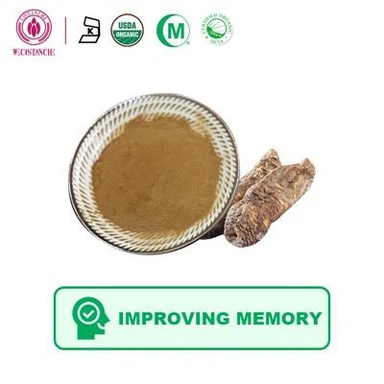
Click to cistanche tubulosa extract for testosterone
Pros and Cons of Elevated Testosterone Levels
Higher levels of testosterone have been linked to improved bone density, increased muscle growth, and improved mood. It's easy to think that more of it is better, but that's not the case. Consuming too much testosterone can lead to skin and hair problems, as well as problems like an enlarged prostate.
It can lead to decreased fertility, weight gain, increased cholesterol and blood pressure, and increased risk of cardiovascular disease. Therefore, it is important to maintain healthy and reasonable testosterone levels, as both low and high testosterone levels have been associated with adverse effects. When testosterone levels are optimal, it is associated with increased energy, heart health, good mood, improved memory, normal libido, stronger bones, and increased lean muscle mass.

Kinesiologists have examined the physiological changes of testosterone during resistance exercise training, gaining insight into the hormone's positive effects on muscle growth. Results showed that testosterone is one of the most potent naturally secreted androgens, with biological effects including promoting muscle growth. In muscle, testosterone stimulates protein synthesis and inhibits protein degradation.
Taken together, these effects explain how testosterone promotes muscle growth. Higher testosterone levels not only benefit those looking to achieve muscular build-up, it also has a positive effect on the skeletal system. Testosterone is important for bone density, which decreases with age in men. Aging weakens bones and increases the risk of osteoporosis, which can be reduced by higher levels of testosterone.
What is Testosterone?
You've probably heard the term a lot, but what exactly is testosterone? Testosterone is a steroid hormone responsible for the development of so-called secondary sex characteristics. In men, it causes a thickening of the throat, a deep voice, growth of beard and pubic hair, and development of the penis and testicles. Crucially, testosterone enhances athletic performance, helps build muscle and bone strength, and drives libido and sperm production. It is commonly called an androgen and is produced by the testicles. It is found in lower amounts in women and is produced by the adrenal glands and ovaries. In women, it is responsible for libido and arousal and also plays a role in building muscle and bone strength.
Running may affect testosterone levels, but it depends on the intensity of the run. Evidence suggests that running at a higher intensity is necessary to increase testosterone levels. Generally, running at 90% of your VO2 max is required to see this effect. It only takes 90 seconds of running at this pace to boost testosterone. This mechanism is thought to be due to the body's response to exercise, which releases various hormones that break down energy stores (such as adrenaline and cortisol) and help build and repair muscle.
However, running for too long can lead to a drop in testosterone levels. This is due to the effects of cortisol. Cortisol, the stress hormone, has a seesaw relationship with testosterone. As cortisol production increases, testosterone decreases, and vice versa. That is, prolonged exercise can cause cortisol levels to increase and testosterone levels to decrease. Running puts stress on the body, which affects the endocrine system. The endocrine system is responsible for the production and secretion of all body hormones and is sensitive to stress. Hormones related to the reproductive system, such as testosterone, are particularly sensitive to stress.

When the body is under stress, functions critical to survival are prioritized. Since reproduction is less important for survival, stress lowers testosterone levels. However, the drop in testosterone caused by running is usually not high enough to cause any major health concerns.
Best Exercises to Increase Testosterone Levels
Anyone seeking to engage in physical activity that boosts testosterone levels should turn to resistance training methods, such as bodybuilding or weightlifting. Sports scientists have discovered that testosterone levels in men are directly elevated after strenuous resistance exercise. However, the testosterone response to resistance exercise in women was not as pronounced.
Resistance training, or strength training and weight training, are especially good for boosting testosterone levels. This effect is seen as more muscles are activated. Therefore, doing squats instead of bicep curls, and using free weights instead of stationary machines, is more effective for increasing testosterone levels, because the former recruits larger muscle groups, such as the core, back, and legs muscle groups. However, exercising to the point of exhaustion can cause testosterone to drop, so don't overwork yourself and allow plenty of time during your workout for recovery.
Other Factors That Can Stimulate Testosterone Production
Stress and the resulting cortisol lower testosterone levels, and reducing stress lessens this effect. Methods like mindfulness meditation and deep breathing can be used to lower stress levels. Practicing good “sleep hygiene” habits can also reduce stress. Lack of sleep increases stress hormones in the body, which lowers testosterone levels. Psychologists at the University of São Paulo in Brazil found that sleeping just five hours a day for five days dropped testosterone levels by 10 to 15 percent. So, if you want to boost your testosterone levels, aim to get 7-9 hours of quality sleep every day.
Several dietary factors affect testosterone levels. Make sure you get enough magnesium and zinc in your diet. Zinc is involved in the production of testosterone, and zinc deficiency has been linked to low testosterone levels. Low magnesium levels have also been linked to lower testosterone levels, although the exact role it plays in testosterone production is unclear. Good sources of zinc include pumpkin seeds, spinach, and chia seeds, while good sources of magnesium include spinach, kale, and beans.

The mechanism of Cistanche boosts the testosterone effect
Cistanche has been found to boost testosterone levels in several ways. Firstly, it contains compounds known as echinacoside and acteoside, which have been shown to enhance the production of luteinizing hormone (LH) in the pituitary gland. LH stimulates the Leydig cells in the testes to produce testosterone. Cistanche also contains polysaccharides and phenylethanoid glycosides, which have been shown to have antioxidant and anti-inflammatory properties. This can help reduce oxidative stress and inflammation in the testes, which can impair testosterone production Additionally, Cistanche has been found to increase the expression of genes involved in testosterone synthesis and reduce the activity of enzymes that break down testosterone, such as 5-alpha-reductase. Overall, the combination of these mechanisms is thought to contribute to Cistanche's testosterone-boosting effects.