Cistanche Formula Patent: Ataxia Research & R&D Insights
Nov 11, 2026
Meta description: Explore a Cistanche-containing formula patent, its 16 ingredients, extraction methods, animal data, and 17-patient study-with practical R&D insights.
Suggested URL slug:
/cistanche-herbal-formula-patent-ataxia-research/
Primary keyword: Cistanche herbal formula research
Secondary keywords: Cistanche formulation development, Cistanche extraction process, Chinese herbal patent, cerebellar ataxia research, botanical ingredient quality control
Suggested excerpt:
A Chinese patent disclosure describes a 16-ingredient formula containing Cistanche, with animal experiments and a small uncontrolled clinical study in cerebellar ataxia. This translated review presents the formulation, preparation methods, and reported results, while explaining what botanical developers can-and cannot-infer from the evidence.
Cistanche in a 16-Ingredient Herbal Formula: Patent Translation, Ataxia Research, and Product-Development Insights
Cistanche, known as Rou Cong Rong in traditional Chinese medicine, appears in many multi-herb formulations. For ingredient manufacturers and product developers, these formulations can provide useful information about ingredient combinations, processing methods, and research design.
However, a patent describing a therapeutic application is not the same as a clinically validated supplement ingredient.
The document translated below concerns a Cistanche-containing formula proposed for cerebellar ataxia syndrome, a neurological condition involving impaired coordination. It includes:
A 16-ingredient composition.
Ingredient ranges expressed as parts by weight.
A preparation process involving Chinese rice wine and water.
Three formulation examples and four comparative formulations.
A chemically induced rat model.
A 90-day, single-arm clinical study involving 17 patients.
One illustrative clinical case.
For businesses interested in reproductive-health supplements, the main value of this disclosure lies in formulation methodology and evidence assessment, not proof of reproductive benefits.
Scope and evidence notice: The following is an English translation of the supplied patent text, with its tables incorporated. Statements about treatment effects, mechanisms, and advantages are statements made in the source disclosure. They are not independent medical endorsements. The supplied material does not include a patent publication number, applicant information, filing date, or legal-status record, so patent identity and status have not been verified.
This translation is intended for technical and editorial use, not as a certified legal translation, manufacturing authorization, or self-treatment guide.
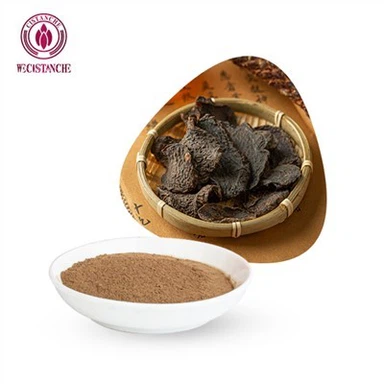
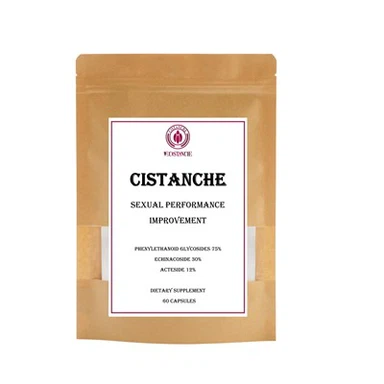
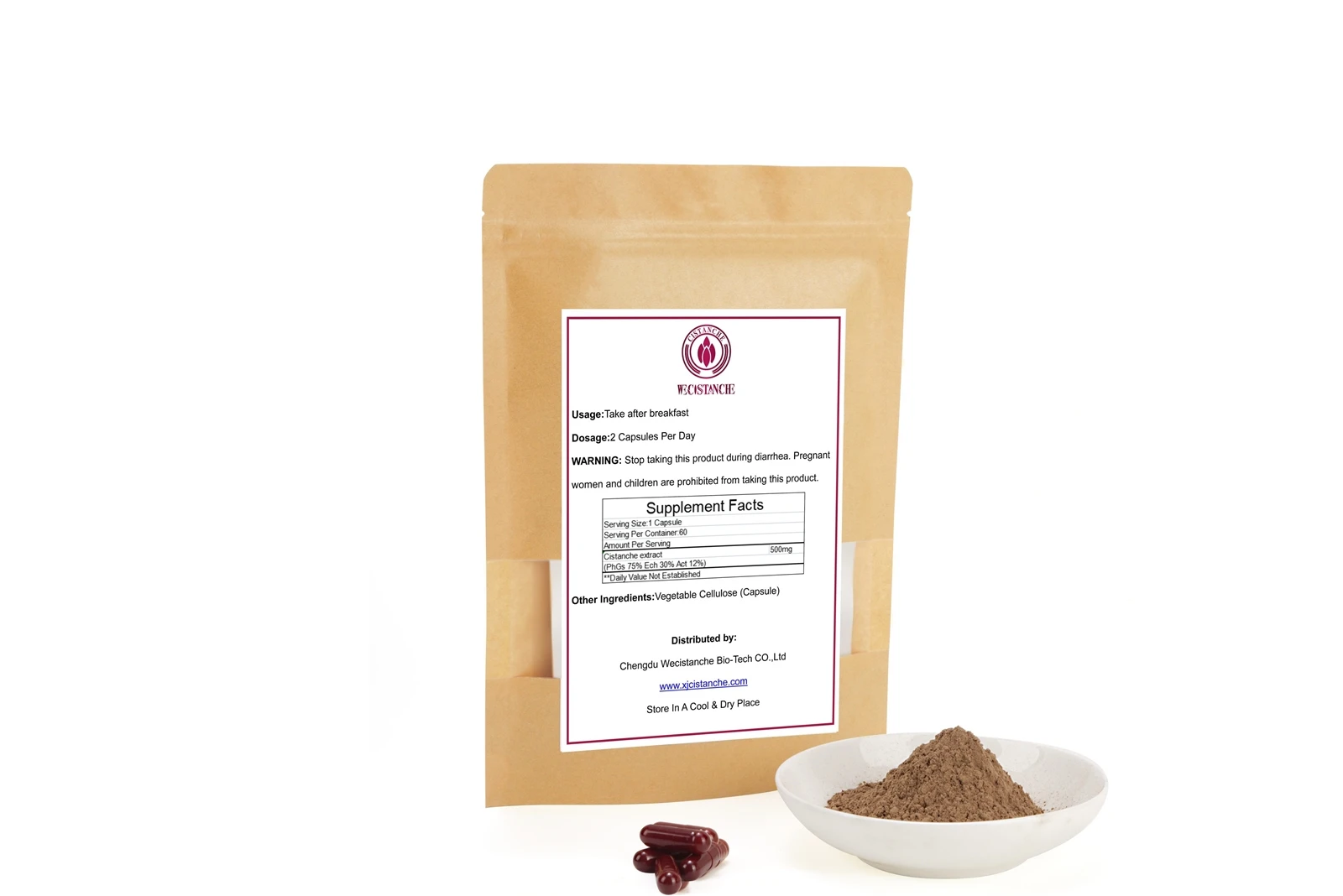
A supplement made from Cistanche extract standardized to 12% verbascoside, a herbal extract commonly used in traditional Chinese medicine to treat neurosis.
Click for more details of herb cistanche
Ingredient Terminology
The following names are used consistently throughout the translated text. The medicinal names do not, by themselves, establish the botanical species or processing specifications used in the experiments.
| Chinese name | Name used in this translation | Medicinal-material terminology |
|---|---|---|
| 生地黄 | Unprepared Rehmannia root | Rehmanniae Radix |
| 熟地黄 | Prepared Rehmannia root | Rehmanniae Radix Praeparata |
| 肉苁蓉 | Cistanche | Cistanches Herba |
| 巴戟肉 | Morinda root flesh | Morindae Officinalis Radix, with the woody core removed |
| 山茱萸 | Cornus fruit | Corni Fructus |
| 石斛 | Dendrobium stem | Dendrobii Caulis |
| 仙茅 | Curculigo rhizome | Curculiginis Rhizoma |
| 人参 | Ginseng root | Ginseng Radix et Rhizoma |
| 麦冬 | Ophiopogon root | Ophiopogonis Radix |
| 远志 | Polygala root | Polygalae Radix |
| 制远志 | Processed Polygala root | Processed Polygalae Radix |
| 石菖蒲 | Acorus tatarinowii rhizome | Acori Tatarinowii Rhizoma |
| 白芷 | Angelica dahurica root | Angelicae Dahuricae Radix |
| 茯苓 | Poria | Poria |
| 五味子 | Schisandra fruit | Schisandrae Chinensis Fructus |
| 陈皮 | Aged tangerine peel | Citri Reticulatae Pericarpium |
| 砂仁 | Amomum fruit | Amomi Fructus |
| 黄酒 | Huangjiu, or Chinese rice wine | A fermented alcoholic processing medium |
| 仙灵脾 | Epimedium leaf | Epimedii Folium |
| 白豆蔻 | Round cardamom fruit | Amomi Fructus Rotundus |
Terminology note: "Unprepared Rehmannia root" should not automatically be interpreted as fresh root. Likewise, Angelica dahurica root is not dong quai, which is a different medicinal material.
(54) Title of the Invention
A Chinese Herbal Composition for Treating Cerebellar Ataxia Syndrome, a Preparation Method, a Pharmaceutical Formulation, and Uses Thereof
(57) Abstract
The present invention belongs to the technical field of traditional Chinese medicine and specifically relates to a Chinese herbal composition for treating cerebellar ataxia syndrome, a preparation method, a pharmaceutical formulation, and uses thereof.
The composition comprises the following ingredients:
Unprepared Rehmannia root, prepared Rehmannia root, Cistanche, Morinda root flesh, Cornus fruit, Dendrobium stem, Curculigo rhizome, ginseng root, Ophiopogon root, Polygala root, Acorus tatarinowii rhizome, Angelica dahurica root, Poria, Schisandra fruit, aged tangerine peel, and Amomum fruit.
The preparation method comprises first soaking the unprepared and prepared Rehmannia roots to obtain Mixture A; mixing the remaining raw materials and soaking them in water to obtain Mixture B; and finally combining Mixture A with Mixture B and decocting the combined mixture.
The herbal formula is described as treating cerebellar ataxia syndrome and improving its principal symptoms, including unsteady walking, impaired balance, and dysarthria. Through the traditional actions of its assistant and guiding ingredients in resolving turbidity, it is also described as improving secondary symptoms, including bowel and urinary dysfunction, sleep disturbances, and mental disturbances.
These effects are intended to improve treatment adherence, slow or stabilize disease progression, and improve patients' quality of life.
Claims
Claim 1
A Chinese herbal composition for treating cerebellar ataxia syndrome, characterized in that its raw materials comprise the following ingredients in parts by weight:
| Ingredient | Parts by weight |
|---|---|
| Unprepared Rehmannia root | 20–50 |
| Prepared Rehmannia root | 30–100 |
| Cistanche | 15–30 |
| Morinda root flesh | 15–30 |
| Cornus fruit | 15–30 |
| Dendrobium stem | 10–15 |
| Curculigo rhizome | 10–20 |
| Ginseng root | 5–10 |
| Ophiopogon root | 6–9 |
| Polygala root | 5–10 |
| Acorus tatarinowii rhizome | 6–12 |
| Angelica dahurica root | 6–15 |
| Poria | 15–30 |
| Schisandra fruit | 6–15 |
| Aged tangerine peel | 10–15 |
| Amomum fruit | 5–10 |
Claim 2
A Chinese herbal composition for treating cerebellar ataxia syndrome, characterized in that its raw materials comprise the following ingredients in parts by weight:
| Ingredient | Parts by weight |
|---|---|
| Unprepared Rehmannia root | 20–50 |
| Prepared Rehmannia root | 30–100 |
| Cistanche | 15–30 |
| Morinda root flesh | 15–30 |
| Cornus fruit | 15–30 |
| Dendrobium stem | 10–15 |
| Curculigo rhizome | 10–20 |
| Ginseng root | 5–10 |
| Ophiopogon root | 6–9 |
| Polygala root | 5–10 |
| Acorus tatarinowii rhizome | 6–12 |
| Angelica dahurica root | 6–15 |
| Poria | 15–30 |
| Schisandra fruit | 6–15 |
| Aged tangerine peel | 10–15 |
| Amomum fruit | 5–10 |
| Huangjiu | 30–100 |
The Polygala root is processed Polygala root.
Claim 3
The Chinese herbal composition according to Claim 1, characterized in that its raw materials comprise the following ingredients in parts by weight:
| Ingredient | Parts by weight |
|---|---|
| Unprepared Rehmannia root | 50 |
| Prepared Rehmannia root | 50 |
| Cistanche | 30 |
| Morinda root flesh | 30 |
| Cornus fruit | 30 |
| Dendrobium stem | 15 |
| Curculigo rhizome | 10 |
| Ginseng root | 10 |
| Ophiopogon root | 9 |
| Processed Polygala root | 10 |
| Acorus tatarinowii rhizome | 12 |
| Angelica dahurica root | 12 |
| Poria | 15 |
| Schisandra fruit | 10 |
| Aged tangerine peel | 10 |
| Amomum fruit | 10 |
Claim 4
A method for preparing the Chinese herbal composition according to any one of Claims 1–3, characterized in that it comprises the following steps:
Place the unprepared and prepared Rehmannia roots in a solvent and soak them to obtain Mixture A.
Mix Cistanche, Morinda root flesh, Cornus fruit, Dendrobium stem, Curculigo rhizome, ginseng root, Ophiopogon root, Polygala root, Acorus tatarinowii rhizome, Angelica dahurica root, Poria, Schisandra fruit, aged tangerine peel, and Amomum fruit; add water and soak to obtain Mixture B.
Combine Mixture A with Mixture B, decoct, and collect the decoction liquid to obtain the composition.
Claim 5
The preparation method according to Claim 4, characterized in that the solvent in Step 1 is Huangjiu and the soaking time is 10–50 minutes.
Claim 6
The preparation method according to Claim 4, characterized in that, in Step 2, the quantity of water is 2–8 times the total mass of Cistanche, Morinda root flesh, Cornus fruit, Dendrobium stem, Curculigo rhizome, ginseng root, Ophiopogon root, Polygala root, Acorus tatarinowii rhizome, Angelica dahurica root, Poria, Schisandra fruit, aged tangerine peel, and Amomum fruit.
The soaking time is 10–40 minutes.
Claim 7
The preparation method according to Claim 4, characterized in that, in Step 3, decoction is performed 1–3 times and the decoction liquids are combined. The decoction time is 30–50 minutes.
And/or, in Step 3, the collected decoction liquid is further concentrated and dried.
Claim 8
A pharmaceutical formulation, characterized in that it is made from the Chinese herbal composition according to any one of Claims 1–3, or the Chinese herbal composition obtained by the preparation method according to any one of Claims 4–7, together with pharmaceutically acceptable excipients.
Claim 9
Use of the Chinese herbal composition according to any one of Claims 1–3, or the Chinese herbal composition obtained by the preparation method according to any one of Claims 4–7, in the manufacture of a medicament for treating cerebellar ataxia syndrome.
Description
A Chinese Herbal Composition for Treating Cerebellar Ataxia Syndrome, a Preparation Method, a Pharmaceutical Formulation, and Uses Thereof
Technical Field
[0001] The present invention belongs to the technical field of traditional Chinese medicine and specifically relates to a Chinese herbal composition for treating cerebellar ataxia syndrome, a preparation method, a pharmaceutical formulation, and uses thereof.
A supplement made from Cistanche extract standardized to 12% verbascoside, a herbal extract commonly used in traditional Chinese medicine to treat neurosis.
Background Art
Editorial context: The following paragraphs reproduce the background assertions in the patent. Cerebellar ataxia has diverse causes, and the source's statements about inheritance, irreversibility, prognosis, and available treatment should not be generalized to every form of ataxia or treated as a current clinical guideline.
[0002] Cerebellar ataxia syndromes are described as a group of chronic, progressive neurodegenerative disorders characterized by cerebellar dysfunction, with or without other neurological abnormalities.
Clinical manifestations include abnormal gait, impaired balance, poor limb coordination, and speech disturbances.
The source states that the disease progresses over time, that patients may lose the ability to walk in the middle or advanced stages, and that the disease may ultimately lead to death. It further describes the course as irreversible after onset, with serious effects on patients' quality of life and substantial pressure on healthcare systems.
The mechanisms of cerebellar ataxia are complex, and its causes are diverse. The source describes most cases as autosomal dominant, a smaller proportion as autosomal recessive, and some as sporadic.
It also states that no effective medication capable of preventing or delaying progression is available as routine treatment, and that existing medications provide only temporary relief of ataxia symptoms.
[0003] According to the source, most medications for cerebellar ataxia syndrome remain in clinical trials. Most improve only the principal symptoms of certain types of ataxia, have limited effects, and do not improve the secondary symptoms of the syndrome.
Traditional Chinese herbal combinations are described as having limitations, including insufficient symptom-specific efficacy, inconsistent outcomes, and difficulty of application. These limitations may reduce adherence and prevent the intended slowing or stabilization of disease progression.
Summary of the Invention
[0004] In view of the problems in the existing technology, the invention provides a Chinese herbal composition for treating cerebellar ataxia syndrome, a preparation method, and uses thereof.
[0005] To achieve the objectives of the invention, the following technical solutions are adopted.
[0006] A Chinese herbal composition for treating cerebellar ataxia syndrome comprises:
Unprepared Rehmannia root, prepared Rehmannia root, Cistanche, Morinda root flesh, Cornus fruit, Dendrobium stem, Curculigo rhizome, ginseng root, Ophiopogon root, Polygala root, Acorus tatarinowii rhizome, Angelica dahurica root, Poria, Schisandra fruit, aged tangerine peel, and Amomum fruit.
[0007] Preferably, the composition comprises the following ingredients in parts by weight:
Unprepared Rehmannia root, 20–50 parts; prepared Rehmannia root, 30–100 parts; Cistanche, 15–30 parts; Morinda root flesh, 15–30 parts; Cornus fruit, 15–30 parts; Dendrobium stem, 10–15 parts; Curculigo rhizome, 10–20 parts; ginseng root, 5–10 parts; Ophiopogon root, 6–9 parts; Polygala root, 5–10 parts; Acorus tatarinowii rhizome, 6–12 parts; Angelica dahurica root, 6–15 parts; Poria, 15–30 parts; Schisandra fruit, 6–15 parts; aged tangerine peel, 10–15 parts; and Amomum fruit, 5–10 parts.
[0008] Preferably, the Polygala root is processed Polygala root, and the composition further comprises 30–100 parts by weight of Huangjiu.
[0009] Preferably, the composition comprises the following ingredients in parts by weight:
Unprepared Rehmannia root, 50 parts; prepared Rehmannia root, 50 parts; Cistanche, 30 parts; Morinda root flesh, 30 parts; Cornus fruit, 30 parts; Dendrobium stem, 15 parts; Curculigo rhizome, 10 parts; ginseng root, 10 parts; Ophiopogon root, 9 parts; processed Polygala root, 10 parts; Acorus tatarinowii rhizome, 12 parts; Angelica dahurica root, 12 parts; Poria, 15 parts; Schisandra fruit, 10 parts; aged tangerine peel, 10 parts; and Amomum fruit, 10 parts.
[0010] A second objective of the invention is to provide a method for preparing the above Chinese herbal composition, comprising the following steps.
[0011] Step 1: Place the unprepared and prepared Rehmannia roots in a solvent and soak them to obtain Mixture A.
[0012] Step 2: Mix Cistanche, Morinda root flesh, Cornus fruit, Dendrobium stem, Curculigo rhizome, ginseng root, Ophiopogon root, Polygala root, Acorus tatarinowii rhizome, Angelica dahurica root, Poria, Schisandra fruit, aged tangerine peel, and Amomum fruit; add water and soak to obtain Mixture B.
[0013] Step 3: Combine Mixture A with Mixture B, decoct, and collect the decoction liquid to obtain the composition.
[0014] Preferably, the solvent in Step 1 is Huangjiu, and the soaking time is 10–50 minutes.
[0015]–[0016] Preferably, in Step 2, the quantity of water is 2–8 times the total mass of Cistanche, Morinda root flesh, Cornus fruit, Dendrobium stem, Curculigo rhizome, ginseng root, Ophiopogon root, Polygala root, Acorus tatarinowii rhizome, Angelica dahurica root, Poria, Schisandra fruit, aged tangerine peel, and Amomum fruit.
The soaking time is 10–40 minutes.
[0017] Preferably, in Step 3, decoction is performed 1–3 times and the decoction liquids are combined. The decoction time is 30–50 minutes.
[0018] Preferably, in Step 3, the collected decoction liquid is further concentrated and dried.
[0019] Another objective of the invention is to provide a pharmaceutical formulation comprising the above Chinese herbal composition, or the composition obtained by the above preparation method, together with pharmaceutically acceptable excipients.
[0020] A further objective is to provide use of the above Chinese herbal composition, or the composition obtained by the preparation method, in manufacturing a medicament for slowing the progression of or treating cerebellar ataxia syndrome.
[0021] Compared with the existing technology, the invention is described as having the following advantages.
[0022] First, the invention provides a Chinese herbal formula centered on the traditional principles of nourishing the Kidney, replenishing marrow, and benefiting the brain, with supporting actions of strengthening the Spleen and resolving turbidity.
Its principal ingredients are intended to provide a focused action against major symptoms of ataxia, including unsteady walking, balance impairment, and dysarthria.
Its assistant and guiding ingredients are intended to resolve turbidity and improve secondary symptoms, including bowel and urinary dysfunction, sleep disturbances, and mental disturbances.
The intended effects are improved treatment adherence, slower or stabilized disease progression, and improved quality of life.
[0023] Second, the composition is based on the theories of state–target differentiation and treatment and the dose–effect relationships of Chinese medicinal materials.
High doses of prepared and unprepared Rehmannia roots serve as the principal, or "chief," ingredients to nourish the Kidney and replenish marrow. According to the traditional rationale, these ingredients address the functional state of Kidney deficiency and marrow depletion while targeting clinical manifestations associated with declining cerebellar function.
Relatively large amounts of Cistanche, Morinda root flesh, Cornus fruit, and Curculigo rhizome serve as deputy ingredients to reinforce these actions.
Dendrobium stem, Ophiopogon root, and Schisandra fruit also serve as deputy ingredients. They are intended to nourish the Lung and Kidney, reflecting the traditional relationship of mutual generation between Metal and Water and the principle of strengthening Water to balance Fire.
Polygala root, Acorus tatarinowii rhizome, and Angelica dahurica root are added to resolve phlegm, open the orifices, and arouse the brain, with the stated aim of improving what the source calls "cerebellar aphasia."
Poria, aged tangerine peel, and Amomum fruit strengthen the Spleen and assist its transporting function, while counteracting the tendency of rich, essence-nourishing ingredients to impede digestion.
The source states that these ingredients act together to nourish the Kidney and replenish marrow and have favorable effects in cerebellar ataxia syndrome characterized primarily by Kidney deficiency.
Terminology note: These are traditional Chinese medicine explanations, not experimentally established molecular mechanisms. "Cerebellar aphasia" is retained from the source; it should not be assumed to mean the same thing as dysarthria.
Detailed Embodiments
[0024] The technical solutions of the invention are described clearly and fully below with reference to examples.
The examples described constitute only some embodiments of the invention rather than all possible embodiments.
Although representative embodiments are described in detail, a person skilled in the relevant technical field will understand that various modifications and changes may be made without departing from the scope of the invention.
Accordingly, the scope of the invention should not be limited to the embodiments but should be defined by the appended claims and their equivalents.
Example 1
[0025]–[0026] A Chinese herbal composition for treating cerebellar ataxia syndrome comprises the following raw materials in parts by weight:
| Ingredient | Parts |
|---|---|
| Unprepared Rehmannia root | 50 |
| Prepared Rehmannia root | 50 |
| Cistanche | 30 |
| Morinda root flesh | 30 |
| Cornus fruit | 30 |
| Dendrobium stem | 15 |
| Curculigo rhizome | 10 |
| Ginseng root | 10 |
| Ophiopogon root | 9 |
| Processed Polygala root | 10 |
| Acorus tatarinowii rhizome | 12 |
| Angelica dahurica root | 12 |
| Poria | 15 |
| Schisandra fruit | 10 |
| Aged tangerine peel | 10 |
| Amomum fruit | 10 |
[0027] Preparation method:
[0028] Step 1: Soak the unprepared and prepared Rehmannia roots in Huangjiu for 30 minutes to obtain Mixture A.
[0029] Step 2: Mix the remaining raw materials, add 500 mL of purified water, and soak for 30 minutes to obtain Mixture B.
[0030] Step 3: Combine Mixture A with Mixture B, decoct, and collect the decoction liquid to obtain the Chinese herbal composition.
[0031] In Step 3, decoct the combined raw materials twice and combine the resulting liquids.
The first decoction lasts 40 minutes. For the second decoction, add 600 mL of water and decoct for 40 minutes.
Example 2
[0032]–[0033] A Chinese herbal composition for treating cerebellar ataxia syndrome comprises the following raw materials in parts by weight:
| Ingredient | Parts |
|---|---|
| Unprepared Rehmannia root | 20 |
| Prepared Rehmannia root | 30 |
| Cistanche | 15 |
| Morinda root flesh | 15 |
| Cornus fruit | 15 |
| Dendrobium stem | 10 |
| Curculigo rhizome | 10 |
| Ginseng root | 5 |
| Ophiopogon root | 6 |
| Processed Polygala root | 5 |
| Acorus tatarinowii rhizome | 6 |
| Angelica dahurica root | 6 |
| Poria | 15 |
| Schisandra fruit | 6 |
| Aged tangerine peel | 10 |
| Amomum fruit | 5 |
[0034] Preparation method:
[0035] Step 1: Soak the unprepared and prepared Rehmannia roots in Huangjiu for 10 minutes to obtain Mixture A.
[0036] Step 2: Mix the remaining raw materials, add 500 mL of purified water, and soak for 10 minutes to obtain Mixture B.
[0037] Step 3: Combine Mixture A with Mixture B, decoct, and collect the decoction liquid to obtain the Chinese herbal composition.
[0038] In Step 3, decoct the combined raw materials twice and combine the resulting liquids.
The first decoction lasts 30 minutes. For the second decoction, add 600 mL of water and decoct for 30 minutes.
Example 3
[0039]–[0040] A Chinese herbal composition for treating cerebellar ataxia syndrome comprises the following raw materials in parts by weight:
| Ingredient | Parts |
|---|---|
| Unprepared Rehmannia root | 40 |
| Prepared Rehmannia root | 100 |
| Cistanche | 25 |
| Morinda root flesh | 25 |
| Cornus fruit | 25 |
| Dendrobium stem | 12 |
| Curculigo rhizome | 15 |
| Ginseng root | 8 |
| Ophiopogon root | 8 |
| Processed Polygala root | 8 |
| Acorus tatarinowii rhizome | 10 |
| Angelica dahurica root | 10 |
| Poria | 25 |
| Schisandra fruit | 15 |
| Aged tangerine peel | 10 |
| Amomum fruit | 10 |
[0041] Preparation method:
[0042] Step 1: Soak the unprepared and prepared Rehmannia roots in Huangjiu for 50 minutes to obtain Mixture A.
[0043] Step 2: Mix the remaining raw materials, add 800 mL of purified water, and soak for 40 minutes to obtain Mixture B.
[0044] Step 3: Combine Mixture A with Mixture B, decoct, and collect the decoction liquid to obtain the Chinese herbal composition.
[0045] In Step 3, decoct the combined raw materials twice and combine the resulting liquids.
The first decoction lasts 50 minutes. For the second decoction, add 800 mL of water and decoct for 50 minutes.
[0046] The following are selected formulations screened during the preliminary experimental stage.
Comparative Example 1
[0047]–[0048] This comparative example differs from Example 1 in that Curculigo rhizome is replaced with Epimedium leaf.
[0049] The composition comprises the following raw materials in parts by weight:
| Ingredient | Parts |
|---|---|
| Unprepared Rehmannia root | 50 |
| Prepared Rehmannia root | 50 |
| Cistanche | 30 |
| Morinda root flesh | 30 |
| Cornus fruit | 30 |
| Dendrobium stem | 15 |
| Epimedium leaf | 10 |
| Ginseng root | 10 |
| Ophiopogon root | 9 |
| Processed Polygala root | 10 |
| Acorus tatarinowii rhizome | 12 |
| Angelica dahurica root | 12 |
| Poria | 15 |
| Schisandra fruit | 10 |
| Aged tangerine peel | 10 |
| Amomum fruit | 10 |
[0050] Preparation method:
[0051] Step 1: Soak the unprepared and prepared Rehmannia roots in Huangjiu for 30 minutes to obtain Mixture A.
[0052] Step 2: Mix the remaining raw materials, add 500 mL of purified water, and soak for 30 minutes to obtain Mixture B.
[0053] Step 3: Combine Mixture A with Mixture B, decoct, and collect the decoction liquid to obtain the composition.
[0054] Decoct the combined raw materials twice and combine the resulting liquids.
The first decoction lasts 40 minutes. For the second decoction, add 600 mL of water and decoct for 40 minutes.
Comparative Example 2
[0055]–[0056] This comparative example differs from Example 1 in its raw-material formulation.
[0057] The composition comprises the following raw materials in parts by weight:
| Ingredient | Parts |
|---|---|
| Unprepared Rehmannia root | 50 |
| Prepared Rehmannia root | 50 |
| Cistanche | 30 |
| Morinda root flesh | 30 |
| Dendrobium stem | 15 |
| Curculigo rhizome | 40 |
| Ginseng root | 10 |
| Ophiopogon root | 9 |
| Processed Polygala root | 10 |
| Acorus tatarinowii rhizome | 12 |
| Angelica dahurica root | 12 |
| Poria | 15 |
| Schisandra fruit | 10 |
| Aged tangerine peel | 10 |
| Amomum fruit | 10 |
Cornus fruit is absent from this formulation.
[0058] Preparation method:
[0059] Step 1: Soak the unprepared and prepared Rehmannia roots in Huangjiu for 30 minutes to obtain Mixture A.
[0060] Step 2: Mix the remaining raw materials, add 500 mL of purified water, and soak for 30 minutes to obtain Mixture B.
[0061] Step 3: Combine Mixture A with Mixture B, decoct, and collect the decoction liquid to obtain the composition.
[0062] Decoct the combined raw materials twice and combine the resulting liquids.
The first decoction lasts 40 minutes. For the second decoction, add 600 mL of water and decoct for 40 minutes.
Comparative Example 3
[0063]–[0064] This comparative example differs from Example 1 in its raw-material formulation.
[0065] The composition comprises the following raw materials in parts by weight:
| Ingredient | Parts |
|---|---|
| Unprepared Rehmannia root | 50 |
| Prepared Rehmannia root | 50 |
| Cistanche | 30 |
| Morinda root flesh | 30 |
| Cornus fruit | 40 |
| Dendrobium stem | 15 |
| Ginseng root | 10 |
| Ophiopogon root | 9 |
| Processed Polygala root | 10 |
| Acorus tatarinowii rhizome | 12 |
| Angelica dahurica root | 12 |
| Poria | 15 |
| Schisandra fruit | 10 |
| Aged tangerine peel | 10 |
| Amomum fruit | 10 |
Curculigo rhizome is absent from this formulation.
[0066] Preparation method:
[0067] Step 1: Soak the unprepared and prepared Rehmannia roots in Huangjiu for 30 minutes to obtain Mixture A.
[0068] Step 2: Mix the remaining raw materials, add 500 mL of purified water, and soak for 30 minutes to obtain Mixture B.
[0069] Step 3: Combine Mixture A with Mixture B, decoct, and collect the decoction liquid to obtain the composition.
[0070] Decoct the combined raw materials twice and combine the resulting liquids.
The first decoction lasts 40 minutes. For the second decoction, add 600 mL of water and decoct for 40 minutes.
Comparative Example 4
[0071]–[0072] This comparative example differs from Example 1 in that Amomum fruit is replaced with round cardamom fruit.
[0073] The composition comprises the following raw materials in parts by weight:
| Ingredient | Parts |
|---|---|
| Unprepared Rehmannia root | 50 |
| Prepared Rehmannia root | 50 |
| Cistanche | 30 |
| Morinda root flesh | 30 |
| Cornus fruit | 30 |
| Dendrobium stem | 15 |
| Curculigo rhizome | 10 |
| Ginseng root | 10 |
| Ophiopogon root | 9 |
| Processed Polygala root | 10 |
| Acorus tatarinowii rhizome | 12 |
| Angelica dahurica root | 12 |
| Poria | 15 |
| Schisandra fruit | 10 |
| Aged tangerine peel | 10 |
| Round cardamom fruit | 10 |
[0074] Preparation method:
[0075] Step 1: Soak the unprepared and prepared Rehmannia roots in Huangjiu for 30 minutes to obtain Mixture A.
[0076] Step 2: Mix the remaining raw materials, add 500 mL of purified water, and soak for 30 minutes to obtain Mixture B.
[0077] Step 3: Combine Mixture A with Mixture B, decoct, and collect the decoction liquid to obtain the composition.
[0078] Decoct the combined raw materials twice and combine the resulting liquids.
The first decoction lasts 40 minutes. For the second decoction, add 600 mL of water and decoct for 40 minutes.
Experiment 1: Herbal Intervention in a Rat Model of Ataxia
[0079] Experiment 1: Drug intervention in a rat model of ataxia.
[0080] Male specific-pathogen-free Sprague–Dawley rats weighing 220 ± 10 g were acclimatized for one week before allocation to groups.
Nine groups were established, with eight rats in each group:
Normal control.
Model control.
Example 1.
Example 2.
Example 3.
Comparative Example 1.
Comparative Example 2.
Comparative Example 3.
Comparative Example 4.
Rotarod Test
[0081]–[0082] Balance and motor coordination were evaluated using a Rotamex-5 Rota Rod apparatus manufactured by Columbus Instruments.
Testing used a rod with a diameter of 7 cm.
Rats were placed on the rod rotating at 20 rpm for 180 seconds per trial, three trials per day, for three days of adaptation, so that they could remain on the rod without falling.
Baseline Latency to Fall
[0083] Baseline performance was assessed in acceleration mode on Days 4 and 7.
The initial rotational speed was 4 rpm, with an acceleration stated in the source as "0.2 revolutions/second." Three trials were performed each day.
Baseline latency to fall was calculated as the mean of the three longest times the animal remained on the rod across the two assessment days.
Methodological note: The acceleration unit is reproduced as supplied. A rate of change in rotational speed requires a clearly specified acceleration unit; the source wording is insufficient for exact replication.
Model Induction
[0084] On the day after the Day 7 baseline assessment, all rats except those in the normal group received an intraperitoneal injection of 3-AP at 60 mg/kg.
The normal group received an equivalent administration of physiological saline.
Gait was observed the following day. Successful model induction was defined by difficulty and clumsiness in moving the ipsilateral limbs, side-to-side swaying, failure to raise the tail, and impaired coordination and balance.
Administration
[0085] Oral gavage of the herbal preparations began three hours after model induction.
The normal and model groups received physiological saline by gavage.
The Example 1–3 and Comparative Example 1–4 groups received their corresponding herbal preparations at a dose equivalent to 30 g of crude medicinal material per kilogram of body weight.
Gavage continued for 21 consecutive days.
[0086] Latency to fall was reassessed on Days 2 and 21 after treatment began. Three trials were performed at each assessment, and the mean was calculated.
[0087] Behavioral coordination and latency-to-fall results are shown in Table 1.
Table 1. Rat Rotarod Performance and Behavioral Observations
| Group | Baseline latency to fall, seconds | Day 2 latency to fall, seconds | Day 21 latency to fall, seconds | Behavioral observations on Day 2 |
|---|---|---|---|---|
| Normal control | 106.5 ± 10.3 | 102.2 ± 8.6 | 100.2 ± 9.1 | Normal gait and coordinated movement |
| Model control | 107.2 ± 8.9 | 53.5 ± 8.0 | 36.4 ± 8.3 | Difficulty moving the ipsilateral limbs; tail not raised; impaired body coordination and balance |
| Example 1 | 104.7 ± 10.2 | 89.7 ± 9.5 | 93.2 ± 7.4 | Some swaying while walking; mild motor incoordination |
| Example 2 | 105.3 ± 9.5 | 89.5 ± 9.6 | 91.9 ± 8.2 | Some swaying while walking; motor incoordination |
| Example 3 | 108.5 ± 9.8 | 84.2 ± 10.8 | 90.7 ± 10.5 | Some swaying while walking; mild motor incoordination |
| Comparative Example 1 | 102.9 ± 10.9 | 78.3 ± 8.4 | 79.6 ± 9.3 | Difficulty moving the ipsilateral limbs; some swaying; poor motor coordination |
| Comparative Example 2 | 108.0 ± 10.4 | 70.1 ± 9.7 | 74.2 ± 10.1 | Slight swaying while walking; motor incoordination |
| Comparative Example 3 | 106.3 ± 9.9 | 64.4 ± 9.0 | 67.7 ± 9.8 | Greater difficulty moving the ipsilateral limbs; some swaying; poor motor coordination |
| Comparative Example 4 | 107.1 ± 10.6 | 76.8 ± 8.2 | 80.2 ± 9.8 | Difficulty moving the ipsilateral limbs; marked swaying; poor motor coordination |
Table transcription note: Numerical entries and behavioral descriptions have been transcribed from the supplied image. The source table contains statistical superscripts, but the accompanying legend was not supplied and some symbols are not sufficiently clear to reproduce reliably. No significance thresholds or comparison groups have therefore been assigned to those symbols here. Paragraphs [0088]–[0090] were not present as readable text in the supplied material.
Experiment 2: Single-Arm Clinical Study of the Herbal Composition
[0091] Experiment 2: A single-arm study of the clinical efficacy of the Chinese herbal composition.
1. Patient Information
1.1 Source of Cases
[0092]–[0093] Seventeen patients with cerebellar ataxia syndrome who met the study criteria were recruited from the outpatient clinic of Chief Physician Zhu Wenzong between March 2023 and August 2024.
1.2 Diagnostic Criteria
[0094]–[0095] Modern medical diagnostic criteria were applied as follows.
[0096] For this study, cerebellar ataxia syndrome included:
Hereditary ataxia.
Multiple system atrophy, cerebellar type.
Sporadic adult-onset ataxia.
Hereditary Ataxia
[0097] Diagnosis referred to the 2024 Chinese Expert Consensus on the Diagnosis and Treatment of Hereditary Ataxia.
Molecular genetic testing and family history were used as the diagnostic basis, with the following supporting clinical features:
Chronic onset.
Progressively worsening, symmetrical cerebellar ataxia.
Supporting neuroimaging, electrophysiological, and biochemical evidence.
Exclusion of other degenerative diseases involving the cerebellum and brainstem.
Multiple System Atrophy, Cerebellar Type
[0098] Diagnosis primarily referred to the Chinese Expert Consensus on Diagnostic Criteria for Multiple System Atrophy, 2022.
The criteria classify multiple system atrophy into four levels:
Neuropathologically established MSA.
Clinically established MSA.
Clinically probable MSA.
Possible prodromal MSA.
The study included patients meeting the criteria for clinically established, clinically probable, or possible prodromal MSA in whom cerebellar ataxia was the initial and/or principal clinical manifestation.
Sporadic Adult-Onset Ataxia
[0099]–[0100] Diagnosis referred to the criteria for sporadic adult-onset ataxia in the 2018 Handbook of Clinical Neurology:
Progressively worsening, symmetrical cerebellar ataxia.
Adult onset.
Exclusion of acute or subacute onset.
A complete family history excluding familial ataxia.
Exclusion of evidence of a causative genetic mutation.
Exclusion of an identified acquired cause.
Absence of severe autonomic failure.
1.2.2 Traditional Chinese Medicine Diagnostic Criteria
[0101]–[0102] The traditional Chinese medicine criteria were developed with reference to the "Kidney essence deficiency pattern" in Diagnostic Criteria for Common Traditional Chinese Medicine Patterns, together with the clinical manifestations of cerebellar ataxia characterized by Kidney deficiency and marrow depletion and the traditional definition of yin fei, a condition involving speech impairment and motor disability.
[0103] Principal symptoms:
Impaired speech.
Unsteady standing.
Difficulty walking.
Action tremor.
Fatigue and weakness.
[0104] Secondary symptoms:
Dizziness.
Insomnia.
Forgetfulness.
Blurred vision.
Tinnitus or hearing loss.
Soreness and weakness of the lower back and knees, or lower-back pain.
A subdued demeanor, reduced speech, and diminished cheerfulness.
Cold limbs.
Weak defecation or dry, hard stools.
Urinary frequency, nocturia, or urinary incontinence.
Erectile dysfunction or reduced sexual desire.
A deficient or thready pulse, or a weak pulse at the chi position.
[0105] Diagnosis required at least two principal symptoms and at least two secondary symptoms.
1.3 Inclusion Criteria
[0106]–[0109]
Meeting the modern medical diagnostic criteria.
Meeting the traditional Chinese medicine diagnostic criteria.
Willingness to follow the physician's diagnostic and treatment arrangements and cooperate with information collection and rating-scale assessments.
Regarding concomitant medication, patients were eligible if they:
Had not previously received Chinese or Western medication for the condition; or
Had not taken Kidney-tonifying, essence-replenishing Chinese medicines within the two weeks before enrollment; or
Were taking Western medication with effects stable for at least 30 days.
During the three-month follow-up treatment period, the Western medication regimen was to remain unchanged or its dosage could be reduced.
1.4 Exclusion Criteria
[0110]–[0111] Patients were excluded if they had:
Severe impairment of consciousness preventing effective communication.
Coexisting cerebrovascular disease or cerebral white-matter lesions.
Serious primary cardiovascular, renal, pulmonary, hepatic, or hematopoietic disease.
Psychiatric illness.
1.5 Withdrawal and Exclusion From Analysis
[0112]–[0113] The following conditions were specified:
Serious complications or disease progression during treatment that threatened life.
Withdrawal or loss to follow-up during observation, including patients who benefited but did not complete treatment, leaving insufficient data for efficacy or safety assessment.
Discontinuation of the herbal treatment without authorization.
Concurrent use of other medications or treatments related to the condition.
Trauma, fracture, or major surgery during treatment that affected assessment results.
A request to withdraw from the study.
1.6 Ethical Requirements
[0114]–[0115] The study should strictly follow the Declaration of Helsinki and relevant Chinese regulations governing clinical research.
Each participant should carefully read and sign an informed-consent form.
Reporting note: The supplied text states ethical requirements but does not provide an ethics committee approval number, a trial-registration number, or documentary confirmation of completed consent procedures.
2. Study Protocol
2.1 Intervention
[0116]–[0118] All patients received the herbal composition prepared according to Example 1.
One daily dose was reported as 288 g crude-drug equivalent in 400 mL, taken in two divided portions.
A treatment course lasted 90 days. Assessments were conducted before and after the course.
2.2 Outcome Measures
[0119]–[0120] Rating scales were administered before and after treatment, and scores were compared.
Assessments were performed jointly by two neurology postgraduate researchers who had received professional training in the scales.
The measures included:
SARA: Scale for the Assessment and Rating of Ataxia.
ICARS: International Cooperative Ataxia Rating Scale.
ADL: Activities of Daily Living scale.
A traditional Chinese medicine symptom-pattern score.
2.3 Safety Assessment
[0121]–[0122] Safety assessments were performed before and after the intervention.
Vital signs and general condition were monitored regularly at follow-up visits.
Adverse events occurring during the study were addressed promptly and recorded.
2.4 Statistical Methods
[0123]–[0124] Statistical analyses were performed using SPSS 25.0.
Normally distributed continuous data were expressed as mean ± standard deviation.
Non-normally distributed continuous data were expressed using the median and quartiles.
When the within-patient differences were normally distributed, comparisons used a paired-samples t-test.
When the differences were not normally distributed, nonparametric tests were used.
A value of p < 0.05 was considered statistically significant.
3. Results
3.1 Ataxia Scores Before and After Treatment
[0125]–[0126] Comparisons of ataxia scores before and after treatment are shown in Table 2.
Table 2. SARA and ICARS Scores Before and After Treatment
| Outcome | Before treatment | After treatment | Reported score change | Statistical test | Statistic | df | p |
|---|---|---|---|---|---|---|---|
| SARA | 16.94 ± 4.32 | 14.82 ± 4.14 | 2.12 ± 2.29 | Paired-samples t-test | t = 3.816 | 16 | 0.002 |
| ICARS | 30.59 ± 9.71 | 26.94 ± 9.13 | 2 (1, 6) | Paired-sample Wilcoxon test | Z = −3.052 | - | 0.002 |
Table note: The source labels the nonparametric procedure as a paired-sample "Wilcoxon rank-sum" test. For paired before–after observations, the standard terminology is the Wilcoxon signed-rank test. The reported statistics are retained without reconstructing the analysis.
[0129] According to the source, after 90 days of treatment, SARA scores decreased significantly, with p < 0.05.
ICARS scores also decreased significantly, with p < 0.05.
3.2 Activities of Daily Living Scores
[0130]–[0131] ADL scores before and after treatment are shown in Table 3.
Table 3. ADL Scores Before and After Treatment
| Outcome | Before treatment | After treatment | Reported score change | Statistical test | Z | p |
|---|---|---|---|---|---|---|
| ADL | 35.59 ± 9.84 | 33.53 ± 9.41 | 2 (0, 3) | Paired-sample Wilcoxon test | −2.680 | 0.007 |
Interpretation note: The source does not identify the exact ADL instrument or its scoring direction. The meaning of a lower score should therefore be confirmed from the original study documentation.
3.3 Traditional Chinese Medicine Symptom-Pattern Scores
[0134] Traditional Chinese medicine symptom-pattern scores before and after treatment are shown in Table 4.
Table 4. Traditional Chinese Medicine Symptom-Pattern Scores Before and After Treatment
| Outcome | Before treatment | After treatment | Reported score change | Statistical test | Z | p reported in source |
|---|---|---|---|---|---|---|
| TCM symptom-pattern score* | 17.65 ± 4.51 | 14.41 ± 3.79 | 2 (2, 4) | Paired-sample Wilcoxon test | −3.639 | 0.000 |
*The table heading and surrounding text identify this outcome as the traditional Chinese medicine symptom-pattern score, but the row label in the supplied image reads "ADL score." This appears to be a labeling inconsistency and requires verification.
Statistical note: A software output of p = 0.000 does not mean the probability is exactly zero. It should ordinarily be reported as p < 0.001.
[0137] The source states that after 90 days of treatment, the traditional Chinese medicine symptom-pattern score decreased significantly, with p < 0.05.
3.4 Adverse Reactions
[0138]–[0139] Three patients experienced diarrhea while taking the composition.
The diarrhea improved after the ingredient amounts were adjusted within the stated formulation ranges.
No other obvious adverse reactions were reported, and no patients discontinued treatment because of adverse drug reactions.
3.5 Conclusion Reported by the Applicant
[0140]–[0141] Based on the above results, the applicant concludes that the composition can improve ataxia symptoms, improve activities of daily living, reduce other associated symptoms, and improve quality of life.
By comparison with previously published data and standards, the applicant further claims that the composition may, to some extent, delay or even reverse disease progression.
Evidence limitation: The final claim exceeds what can be established from an uncontrolled 17-patient, 90-day before–after study. Improvements in symptom scores do not demonstrate reversal of the underlying disease, and comparisons with unspecified historical literature do not replace a concurrent control group.
Experiment 3: Illustrative Clinical Case
[0142] Experiment 3: An illustrative clinical case.
[0143] A 56-year-old employed man presented with unsteady walking and slurred speech lasting more than one year.
Approximately one year earlier, he had developed unsteady walking and poor balance without an obvious precipitating factor, accompanied by slurred speech. His symptoms gradually worsened.
He attended the hospital identified in the source as "Wen Fu Er Hospital," where investigations led to a diagnosis of spinocerebellar ataxia type 2, or SCA2.
Symptomatic treatment was given, although the specific regimen was not reported. The response was unsatisfactory, and symptoms continued to worsen, with abnormal balance, unsteady walking, and limb tremor during movement.
He attended the outpatient clinic in February 2024.
Presenting features included:
Unsteady walking.
Poor balance, particularly when climbing stairs.
A sense of imbalance while sitting.
Slurred speech.
Scanning speech.
Fair sleep.
Acceptable appetite.
Slightly hard stools.
No notable urinary abnormality.
Physical examination showed:
A wide-based gait.
A positive finger-to-nose test.
An equivocal rapid alternating movement test.
A positive Romberg test.
Inability to complete tandem walking.
Normal muscle strength.
Normal muscle tone.
The ICARS score was 37.
The diagnosis was SCA2. The traditional Chinese medicine pattern was Kidney deficiency with marrow depletion.
Treatment followed the traditional principles of nourishing the Kidney, replenishing essence, and benefiting marrow.
The patient received the disclosed herbal composition as a water decoction, one daily dose taken warm in two divided portions.
Treatment continued for three months, with several interim visits. Ingredient amounts were adjusted within the disclosed ranges according to traditional pattern differentiation.
At the three-month follow-up, unsteady walking and slurred speech were reported to have improved, and bowel movements were easier.
The repeat ICARS score was 33.
Treatment was continued to consolidate the reported response.
[0144] The foregoing detailed description concerns one feasible embodiment of the invention and is not intended to limit the patent scope.
Equivalent implementations or modifications that do not depart from the invention are intended to fall within the scope of its technical solution.
What This Patent Actually Shows
The following sections are editorial analysis, not part of the patent translation.
1. The Animal Results Are Relevant to Motor Coordination, Not Sperm Function
The rat experiment measured performance on a rotating rod and observed gait and coordination.
It did not measure:
Sperm concentration.
Progressive sperm motility.
Total sperm motility.
Sperm morphology.
Sperm DNA fragmentation.
Testosterone.
Testicular histology.
Pregnancy rates or live births.
The results therefore cannot substantiate reproductive-health claims.
A further limitation is the model itself: chemically induced ataxia does not reproduce every aspect of inherited or degenerative human cerebellar disease.
The source also does not describe random allocation, blinded assessment, a sample-size calculation, or a fully interpretable statistical legend for Table 1.
2. The Human Study Reports a Signal, Not Confirmed Efficacy
The clinical study reported statistically significant before–after changes in several scales.
However, its design leaves important alternative explanations unresolved:
Expectation and placebo effects.
Natural symptom variability.
Regression to the mean.
Changes in concomitant medication.
Unblinded assessment.
Differences among the underlying diseases.
Individualized changes to the formula.
The study combined diagnostic categories with different causes and natural histories, while the supplied text does not give the number of participants in each category.
Statistical significance also does not establish clinical importance. The interpretation of a change requires the scale, disease subtype, baseline severity, measurement reliability, and a suitable comparator.
The appropriate conclusion is that the disclosure reports preliminary observations warranting better-controlled research-not proof that the formula stops or reverses ataxia.
3. The Formula Does Not Establish a Cistanche-Specific Effect
Cistanche was one component of a complex formula.
The study did not include:
A Cistanche-only group.
The full formula without Cistanche.
A standardized Cistanche extract comparator.
A dose-response study isolating Cistanche.
A factorial design testing interactions among ingredients.
Consequently, the observed outcomes cannot be attributed specifically to Cistanche.
The comparative formulations also do not demonstrate synergy. Some change more than one ingredient variable at once, making the effects of individual substitutions difficult to isolate.
4. "Kidney-Tonifying" Does Not Mean "Clinically Proven for Fertility"
The formula's traditional rationale includes nourishing the Kidney and replenishing essence and marrow.
These concepts overlap with terminology used in some traditional reproductive-health formulas. That overlap does not make neurological and reproductive outcomes interchangeable.
The inclusion of erectile dysfunction or reduced sexual desire among possible secondary diagnostic symptoms also does not establish a sexual-health benefit: no separate outcome data for those symptoms are provided.
Traditional rationale can help generate a research hypothesis. It cannot replace direct evidence for the intended product claim.
Practical Lessons for Cistanche Factories and Botanical Product Developers
1. Treat the Patent as a Formulation Reference, Not a Ready-Made Supplement Formula
The document describes a medicinal decoction studied in patients with neurological disease.
It is not a validated specification for:
A daily wellness capsule.
A male fertility supplement.
A sperm-motility product.
A testosterone-support product.
A pregnancy or preconception supplement.
Transferring it into one of these categories would require a new assessment of composition, exposure, safety, regulatory eligibility, and efficacy.
2. Resolve Botanical Identity Before Discussing Standardization
The supplied disclosure does not specify the Cistanche species or provide an analytical profile.
For commercial development, a useful ingredient dossier should establish:
Accepted botanical name.
Plant part.
Geographic origin.
Authentication method.
Processing history.
Extraction solvent.
Extract yield.
Drug-to-extract ratio.
Marker-compound specifications.
Chromatographic fingerprint.
Contaminant limits.
Stability.
For example, a product containing Cistanche deserticola should not automatically be considered equivalent to one containing Cistanche tubulosa.
Likewise, standardizing an extract to echinacoside or acteoside does not establish equivalence to the crude Cistanche material used in this disclosure.
3. Separate Raw-Herb Ratios From Finished-Extract Ratios
The formulations use parts by weight of raw medicinal materials.
Those ratios are not necessarily preserved in the resulting dried extract because extraction yields differ among ingredients.
A formula containing 30 parts of Cistanche does not imply that:
Cistanche constitutes the same proportion of the extracted solids.
A blend of separately manufactured extracts reproduces the decoction.
The final product has a known quantity of Cistanche marker compounds.
A concentrated extract can be dosed by simply dividing the raw-herb amount by a marketed extract ratio.
For a reproducible product, both the starting formulation and the finished extract must be characterized.
4. The Preparation Method Leaves Important Manufacturing Questions Open
The patent provides soaking and decoction times, but not a complete manufacturing specification.
Key unresolved points include:
| Development question | Why it matters |
|---|---|
| What quantity and alcohol content of Huangjiu were used in each example? | Influences solvent composition and reproducibility |
| How many grams does one "part" represent in each experimental batch? | Needed to relate ratios to the stated water volumes |
| What was the actual temperature profile? | Affects extraction and degradation |
| Were vessels open, covered, or operated under reflux? | Affects evaporation and retention of volatile compounds |
| What were the filtration conditions? | Influences solids recovery and downstream processing |
| What was the extract yield? | Needed for crude-drug equivalence and dose calculations |
| How was the final 400 mL clinical preparation standardized? | Required for consistent patient exposure |
| What concentration and drying conditions were used? | Relevant to stability and comparability |
| What was the residual alcohol level? | Relevant to quality and population suitability |
| Were batches chemically comparable? | Necessary for interpreting pooled results |
These questions matter before scaling a hospital-style decoction into an industrial ingredient.
5. Clarify the Clinical Dose and Formula Scaling
The Example 1 formulation totals 313 parts by weight.
The clinical section reports a daily dose equivalent to 288 g of crude medicinal material in 400 mL.
These figures are not necessarily contradictory, because parts by weight can be scaled proportionally. However, the source does not explain the scaling relationship.
A manufacturing or clinical-development team should clarify:
Whether the 313-part formula was proportionally scaled to 288 g.
Whether any ingredient quantities differed in the clinical preparation.
Whether individualized modifications changed the daily crude-drug total.
How the crude-drug equivalent was calculated.
It would be inappropriate to assume that one part equals one gram.
The rat dose of 30 g crude-drug equivalent/kg must also not be transferred directly to humans.
6. Safety Must Be Assessed for the Actual Formulation
Three of the 17 patients reportedly experienced diarrhea, which improved after dose adjustment.
That observation is useful, but the study is too small and brief to establish comprehensive safety.
A development program should assess:
Gastrointestinal tolerability.
Liver and kidney safety.
Medication interactions.
Relevant botanical constituents of toxicological concern.
Species- and chemotype-related variability.
Residual solvents and alcohol.
Microbial contamination.
Pesticide residues and heavy metals.
Suitability for the intended population.
Particular attention is warranted for ingredients such as Acorus materials, for which asarone composition and market-specific restrictions may be relevant.
Pregnancy safety, reproductive safety, and long-term safety cannot be inferred from a neurological case series.
7. Build Reproductive-Health Evidence Around Reproductive Outcomes
For a company specifically developing a sperm-motility or male reproductive-health product, a more defensible research plan would be:
Define the intended population
Distinguish among:
Generally healthy men.
Men with persistently abnormal semen parameters.
Men receiving fertility treatment.
Men with diagnosed endocrine or genetic conditions.
These populations have different needs, risks, and clinical considerations.
Define the actual product
Specify the botanical species, extraction process, marker profile, ingredient ratios, excipients, and daily exposure.
Research on a different extract or multi-herb formula is not automatically transferable.
Choose relevant endpoints
Depending on the research question, endpoints might include:
Progressive sperm motility.
Total sperm motility.
Sperm concentration.
Total sperm count.
Morphology.
Sperm DNA integrity.
Relevant hormonal measures.
Adverse events.
Where fertility outcomes are claimed, pregnancy and live-birth outcomes require separate consideration and cannot be inferred from a single semen parameter.
Use an appropriate study design
A controlled study should account for factors that can affect semen measurements, including collection conditions, abstinence interval, recent illness, lifestyle factors, and concurrent treatment.
The intervention period should be justified by reproductive biology rather than copied from this 90-day ataxia study.
Substantiate the intended claim
"Supports reproductive health," "improves sperm motility," and "treats infertility" are not equivalent claims. They imply different levels of evidence and different regulatory consequences.
8. Distinguish Patent Rights From Product Authorization
A patent disclosure can describe an invention and its proposed use. It does not automatically establish:
Clinical effectiveness.
Regulatory approval.
Dietary-supplement eligibility.
Permission to make disease claims.
Freedom to manufacture or sell the claimed formulation.
Before commercialization, confirm:
The patent publication and application numbers.
Applicant and ownership information.
Whether claims were granted, amended, rejected, abandoned, or expired.
Relevant countries and territories.
Freedom to operate.
Ingredient and finished-product regulatory status in each market.
A patent may create legal constraints rather than an unrestricted recipe for commercial use.
Frequently Asked Questions
Does this patent prove that Cistanche improves sperm motility?
No. Neither the animal experiment nor the clinical study measured sperm motility or other semen parameters.
Does the clinical study prove that the formula reverses cerebellar ataxia?
No. The source makes that claim, but an uncontrolled 17-patient study cannot establish disease reversal.
Can the reported benefits be attributed to Cistanche?
No. Cistanche was part of a multi-ingredient formula, and the study did not isolate its contribution.
Can a Cistanche factory use the preparation method as an R&D reference?
Yes, as a technical starting point, subject to patent-rights review. However, the disclosure leaves unresolved questions about solvent specifications, batch scaling, extraction yield, analytical consistency, and finished-product safety.
Is the formula suitable for direct sale as a reproductive-health supplement?
The supplied evidence does not establish that suitability. A reproductive-health product would require its own formulation assessment, safety review, market-specific regulatory evaluation, and relevant substantiation.
Source Integrity and Publication Notes
Source Material Preserved
This translation includes:
The invention title.
The abstract.
All nine supplied claims.
The technical field and background.
The invention summary.
All three examples.
All four comparative examples.
The animal experiment.
The single-arm clinical study.
All four supplied tables.
The illustrative clinical case.
The closing scope statement.
Paragraph numbering follows the supplied text. Missing paragraph text has not been reconstructed.
Documents Cited Within the Patent
The source names the following documents but does not provide complete bibliographic references:
2024 Chinese Expert Consensus on the Diagnosis and Treatment of Hereditary Ataxia.
Chinese Expert Consensus on Diagnostic Criteria for Multiple System Atrophy, 2022.
Handbook of Clinical Neurology, 2018, in relation to sporadic adult-onset ataxia.
Diagnostic Criteria for Common Traditional Chinese Medicine Patterns.
The Declaration of Helsinki.
Unspecified previous literature and standards used to support the applicant's disease-progression comparison.
These references have been retained as named. Authors, publication details, DOIs, and links have not been invented.
Items to Verify Before Publication
The patent's publication number, applicant, inventors, date, and legal status.
The complete statistical legend for Table 1.
The exact acceleration setting used in the rotarod test.
The timing of model confirmation relative to the first treatment.
The scale version and scoring direction for ADL.
The apparent "ADL" labeling error in Table 4.
The precise Wilcoxon procedure used.
The scaling relationship between 313 formulation parts and the reported 288 g daily crude-drug equivalent.
Clinical ethics approval, registration, enrollment flow, and diagnostic subgroup data.
The identity of the hospital abbreviated in the case report.
The studies underlying the claim of delayed or reversed disease progression.
Bottom Line for Botanical Businesses
This disclosure offers a useful example of multi-herb formulation design, comparative formulation screening, and preliminary clinical reporting.
It does not provide direct evidence for sperm motility, male fertility, testosterone support, or a Cistanche-only effect.
For a Cistanche manufacturer, the strongest commercial lesson is to build products around authenticated ingredients, reproducible extraction, transparent specifications, appropriate safety testing, and evidence generated with the actual finished formulation.
That is a stronger foundation for long-term customer trust than extending a neurological patent into an unsupported reproductive-health claim.