Effects Of Cistanche Deserticola On Serum Creatine Kinase And Ultrastructure Of Skeletal Muscle in Mice
Mar 09, 2022
Contact: Audrey Hu Whatsapp/hp: 0086 13880143964 Email: audrey.hu@wecistanche.com
Intro
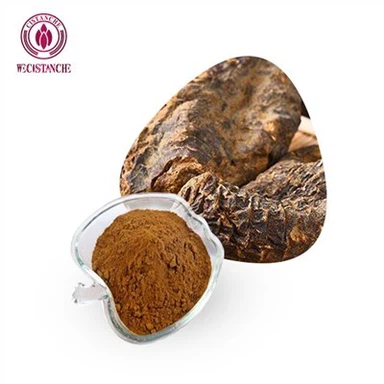
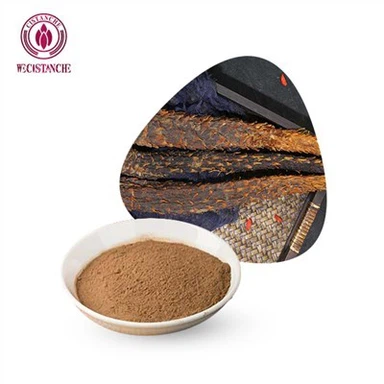
Cistanche deserticola decoction can prolong the swimming time and reduce the increase of serum creatine kinase after load exercise of mice. The ultrastructure of skeletal muscle showed that the content of muscle glycogen was rich. After exercise, mitochondria generally proliferated and hypertrophy, no swelling, vacuoles, etc. The structure of myofibrils remained intact without obvious damage. Cistanche deserticola is the fleshy stem with scales of Orobanchaceae plant-Cistanche deserticola, which is distributed in the Gobi Desert. It is a valuable tonic and has the functions of strengthening the liver and kidney and benefiting essence. According to statistics, it has the highest occurrence rate in the ancient prescriptions of enhancing strength traditional Chinese medicine in previous dynasties. Inner Mongolia Medical College has carried out a series of studies on Cistanche deserticola and its compound preparations through some animal experiments, This paper mainly introduces the effects of Cistanche deserticola on the changes of serum creatine kinase (CK) and skeletal muscle ultrastructure in mice after load exercise.

Experimental Material
Experimental animals: Kunming male healthy mice, weighing 20 ~ 25g, supplied by the animal room of Inner Mongolia Institute for drug control. Experimental drug: Cistanche deserticola is produced in Ejina Banner, Inner Mongolia. It is identified by Zhou Kai of Inner Mongolia Institute for drug control and meets the provisions of Chinese Pharmacopoeia. The crude medicine was made into 15% decoction, sterilized, and stored for future use.
Methods and results
1. Anti-fatigue effect (swimming test in mice)
The mice were randomly divided into two groups (n = 15). The experimental group was given orally (po) Cistanche deserticola Decoction with a daily dosage of 3g / kg. The control group was given orally (po) water in the same volume for 15 days. One hour after the last administration, the tail of the mice was tied with a 0.5g weight and placed into 30 ± 5 ℃ water for swimming to keep moving. The swimming time was recorded with the endpoint that the mice’s heads sank into the water for about 5S. Results: The swimming time of the Cistanche. deserticola group was 150.60±16.16 min, significantly higher than that of the control group (110.67±10.04 min) (P< 0.01). The experiment showed that Cistanche. deserticola could significantly prolong the swimming time of mice and had a strong anti-fatigue effect.
2. Effect on serum CK in mice after load exercise.
Mice were randomly divided into 4 groups. The administration method and dose were the same as above. One hour after the last administration, the tails of the mice were loaded with 1g and kept swimming in 30 ± 0.5 ℃ water for 90 minutes. After swimming, rest for 10 hours, take blood from the tail and separate the serum. The content of serum CK was measured at rest and after exercise respectively. The content of serum CK was measured by American BECKMAN-70 automatic biochemical analyzer and CK Kit (89007, produced by Zhongsheng company), an enzymatic method was used with the fully automated program, The results are shown in Table 1
The results showed that Cistanche deserticola had no significant effect on serum CK activity at rest, and there was no significant difference compared with the control group (P > 0.05). 10 hours after load swimming, the serum CK level of the two groups increased, but the increased range of the Cistanche deserticola group was significantly lower than that of the control group (P < 0.01), although it was higher than that at rest, there was no statistical significance. The serum CK level of the control group was significantly higher than that at rest (P < 0.01) The results showed that Cistanche deserticola could reduce the increase of serum CK after load exercise.

3. Effect of on ultrastructure of skeletal muscle after load exercise
The mice in the fourth experimental group were killed immediately after blood was taken from the tail. Samples were taken from the left biceps femoris for electron microscopic section. According to the routine, they were fixed with both glutaraldehyde and osmic acid, embedded with the Epon-812 epoxy resin, sliced with Type LKB Nora ultra-thin slicer, double stained with uranium and lead, observed by the H-700 transmission electron microscope, and photographed. The results are as follows
1. The control group was normal skeletal muscle structure at the rest; Myofibrils are orderly arranged by numerous myofilaments. A, I bands, Z lines, H areas, and M lines can be seen. The length of sarcomeres is the same. There are some mitochondria between the myofibrils, which are round, oval with long, and obvious cell ridge, the density of mitochondrial matrix is uniform, and few lipid droplets (Fig. 1)
2. In the control group, after exercise, the muscle fiber structure was disordered, the sarcomere length was different, and the lipid droplets increased. The mitochondria were generally swollen, the mitochondrial cristae were broken, the matrix density decreased, and even vacuolar fused to form giant mitochondria. The normal structure in some areas completely disappeared, the muscle filaments were distorted, and the mitochondria were swollen and fused (Fig. 2,3)
3. In the Cistanche deserticola group, glycogen particles are abundant and distributed between muscle fibers and muscle filaments at the rest. The structure of myofibrils is clear, which is the same as that in the control group (Fig. 4)
4. In the Cistanche deserticola group, after exercise, the muscle filaments were loose, the myofibril structure remained intact, the mitochondria were abundant, the volume increased, the performance was hyperplasia and hypertrophy, the cell cristae were complete, the matrix density did not decrease, and there were more glycogen particles (Fig. 5)

Discussions
CK is mainly distributed in skeletal muscle and cardiomyocytes. Under normal conditions, there are few CK escapes from the cells, so the concentration in serum is low, but vigorous and long-term exercise can significantly increase the level of CK. At present, the reasons are considered as follows:
① long-term vigorous exercise leads to glycogen depletion, insufficient ATP supply, reduced energy to maintain the cell structure, enzyme protein is not easy to maintain in the functional position, and cell membrane structure changes;
② Exercise causes muscle cell injury, steatosis, and focal necrosis. The result not only causes muscle pain after exercise but also a large number of enzyme molecules enter the blood. The increase of CK activity generally occurs after exercise, with significant and sensitive changes. Measuring its changes can evaluate the exercise ability and the impact of exercise on skeletal muscle and myocardium
After 90 min load exercise, the level of serum CK in the control group was significantly higher than that at rest, while the ultrastructure of skeletal muscle showed muscle fiber disorder and increased lipid droplets. Among them, the mitochondrial cristae were broken, the matrix density was reduced, and the production of ATP was bound to be reduced. The lack of muscle protein made mitochondria fuse to form giant mitochondria. These suggest that the damage of muscle fiber has not recovered, the membrane permeability could not be maintained and increased. The changes of serum CK and ultrastructural skeletal muscle in the control group were consistent with the literature reports. After taking Cistanche deserticola, the swimming time of mice was prolonged, and the electron microscope showed that the muscle glycogen was rich at rest, the number and volume of mitochondria increased after exercise, the cristae were complete, and there was no formation of vacuolar giant mitochondria. It suggested that Cistanche deserticola could increase glycogen reserve and reduce muscle protein decomposition after exercise, promoting the adaptive hypertrophy and proliferation of mitochondria to meet the energy required for muscle contraction and rehabilitation. The permeability of the cell membrane remains normal, and the muscle fiber structure is intact without obvious damage. Accordingly, after exercise, the change of serum CK is not significant, and the increased range is very small. The above results confirmed that Cistanche deserticola has the effect of strengthening and anti-fatigue.